
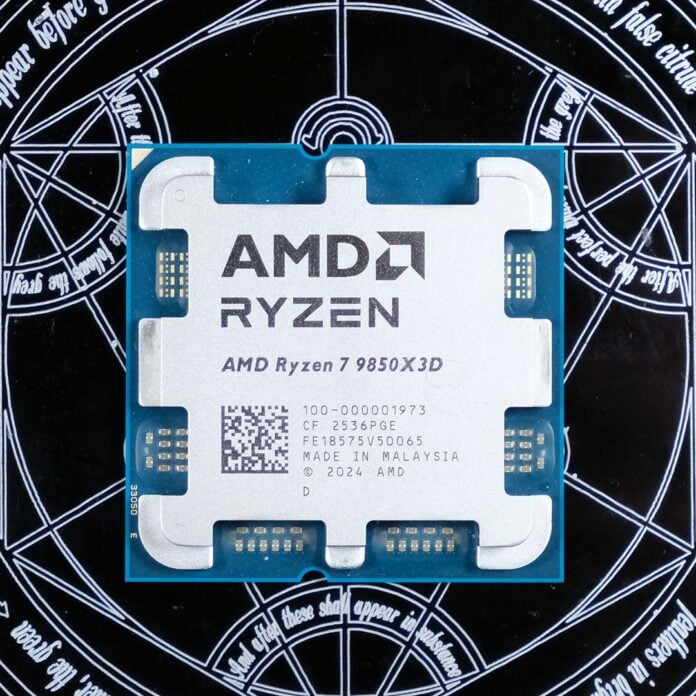
Meet the fastest gaming CPU on the planet, the AMD Ryzen 7 9850X3D. This new processor takes over from its closest relative, Ryzen 7 9800X3D, promising to push performance beyond the limits of its predecessor. However, the outgoing champion continues to cast a long shadow, one that AMD’s new chip has some difficulty escaping as it enters the spotlight.
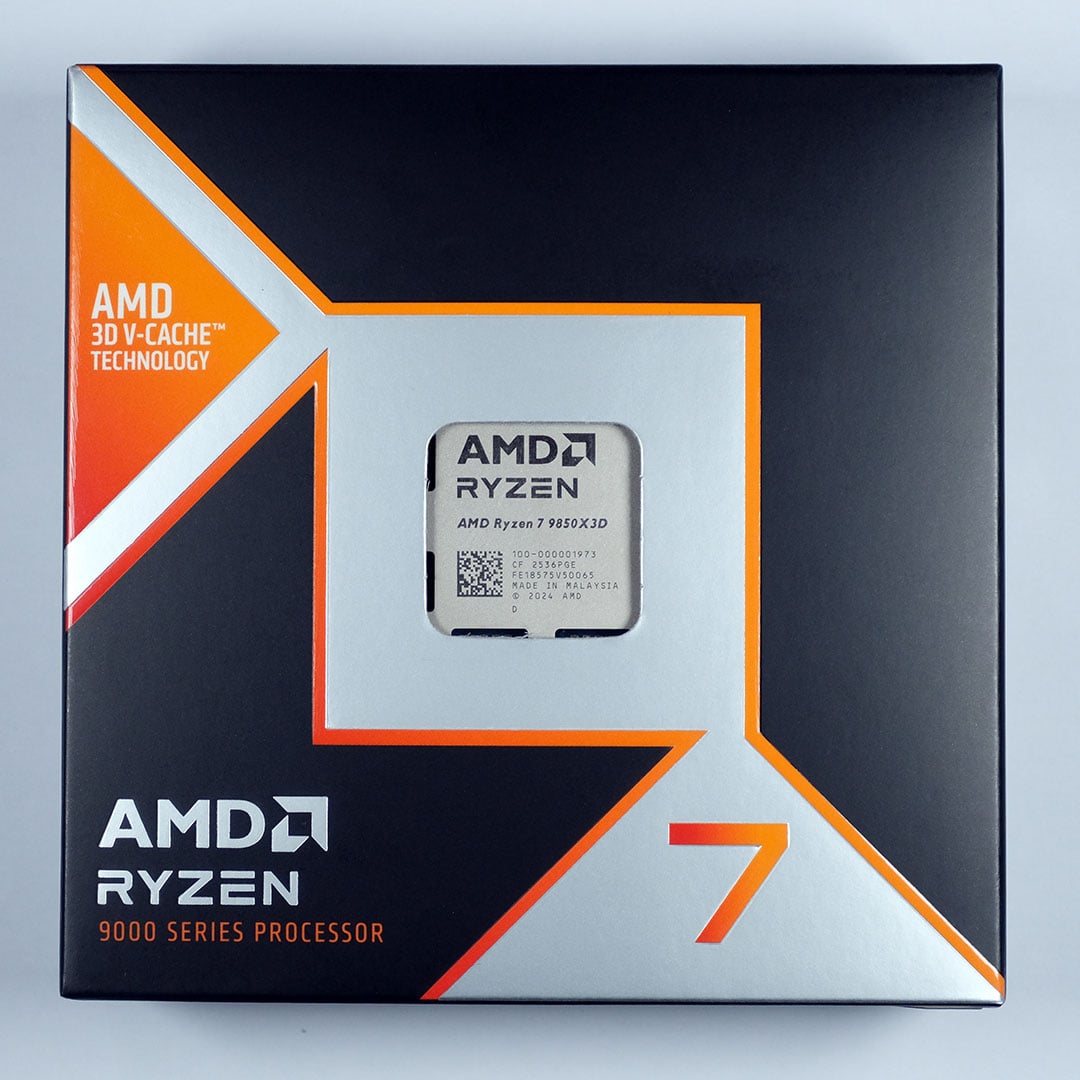

AMD Ryzen 7 9850X3D
$499
Pros
- Outstanding gaming performance
- Solid multi-core pace
- Reasonable efficiency
- Good thermals
- Drop-in AM5 upgrade
Cons
- Negligible uplift over 9800X3D
- 9800X3D offers better value
- Limited overclocking
Club386 may earn an affiliate commission when you purchase products through links on our site.
How we test and review products.
Retailing for $499, the Ryzen 7 9850X3D costs $20 more than a Ryzen 7 9800X3D in terms of MSRP. However, AMD claims there’s a mere 3% performance difference between the two chips. In that case, the question then becomes whether spending a little more for the absolute maximum performance possible is worthwhile.
Specs
Getting down to brass tacks, AMD’s Ryzen 7 9850X3D is identical to the Ryzen 7 9800X3D in every respect bar one. The newer chip boasts a 5.6GHz maximum boost clock, marking a 400MHz increase.
This frequency uplift isn’t seismically different relative to what AMD’s offered since November 2024, but it’s enough of an improvement to push application and gaming performance a touch further in some cases. In essence, AMD has taken the planet’s fastest gaming processor into the shop and tuned it up a little.
| Model | Cores / threads | TDP | L3 cache | Base clock | Boost clock | MSRP |
|---|---|---|---|---|---|---|
| 9000 Series | ||||||
| Ryzen 9 9950X3D | 16 / 32 | 170W | 128MB | 4.3GHz | 5.7GHz | $699 |
| Ryzen 9 9950X | 16 / 32 | 170W | 64MB | 4.3GHz | 5.7GHz | $649 |
| Ryzen 9 9900X3D | 12 / 24 | 120W | 128MB | 4.4GHz | 5.5GHz | $599 |
| Ryzen 9 9900X | 12 / 24 | 120W | 64MB | 4.4GHz | 5.6GHz | $499 |
| Ryzen 7 9850X3D | 8 / 16 | 120W | 96MB | 4.7GHz | 5.6GHz | $499 |
| Ryzen 7 9800X3D | 8 / 16 | 120W | 96MB | 4.7GHz | 5.2GHz | $479 |
| Ryzen 7 9700X | 8 / 16 | 65W | 32MB | 3.8GHz | 5.5GHz | $359 |
| Ryzen 5 9600X | 6 / 12 | 65W | 32MB | 3.9GHz | 5.4GHz | $279 |
| 7000 Series | ||||||
| Ryzen 9 7950X3D | 16 / 32 | 120W | 128MB | 4.2GHz | 5.7GHz | $699 |
| Ryzen 9 7950X | 16 / 32 | 170W | 64MB | 4.7GHz | 5.7GHz | $699 |
| Ryzen 9 7900X3D | 12 / 24 | 120W | 128MB | 4.4GHz | 5.6GHz | $599 |
| Ryzen 9 7900X | 12 / 24 | 170W | 64MB | 4.7GHz | 5.6GHz | $549 |
| Ryzen 7 7800X3D | 8 / 16 | 120W | 96MB | 4.2GHz | 5.0GHz | $449 |
| Ryzen 7 7700X | 8 / 16 | 105W | 32MB | 4.5GHz | 5.4GHz | $399 |
| Ryzen 5 7600X3D | 6 / 12 | 65W | 96MB | 4.1GHz | 4.7GHz | $299 |
| Ryzen 5 7600X | 6 / 12 | 105W | 32MB | 4.7GHz | 5.3GHz | $299 |
| Ryzen 5 7500X3D | 6 / 12 | 65W | 96MB | 4.0GHz | 4.5GHz | $269 |
As with all AM5 Ryzen 7 SKUs, the 9850X3D arrives with eight Zen 5 cores, the maximum AMD can fit into a single CCD (Core Complex Die), complete with 16 threads. As AMD’s Ryzen 7 9800X3D and 9700X have already proved, this is a perfectly powerful setup for gaming that will also reasonably handle a dash of workstation jobs in a pinch.
Through 3D V-Cache, AMD is able to stack an additional 64MB under the 32MB it usually packs into its single CCD Ryzen CPUs, giving this processor a total of 96MB. This is the secret sauce that makes X3D chips so appealing to gamers, as the high-speed cache can greatly boost frame rates through reduced reliance on RAM to hold instructions.
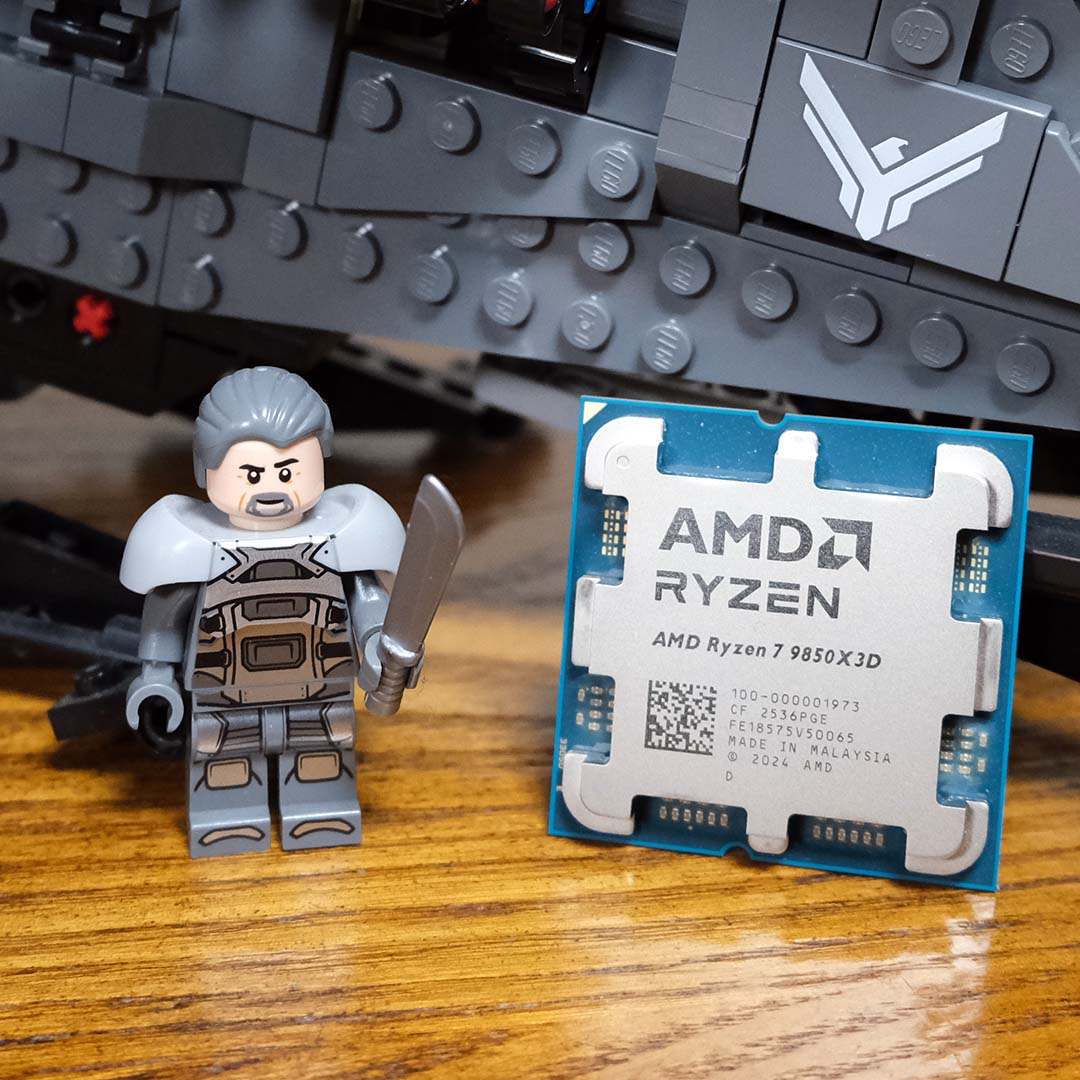
The Ryzen 7 9850X3D has 120W of power at its disposal, and AMD doesn’t supply a stock cooler, meaning you’ll need to source a moderately substantive cooling system to keep its temperatures in check. I recommend checking out Parm’s exploration of AIO cooling performance across various radiator sizes using a Ryzen 9 9950X for recommendations.
How we test
The Club386 test bench is ready to receive the Ryzen 7 9850X3D without a BIOS update, but your mileage may vary across motherboard models. I’m tagging in a GeForce RTX 5090 to eliminate graphics card bottlenecks, and to give this processor as much performance headroom as possible. Save for the change in CPU and GPU, it’s the same components as usual, with the full list detailed below.
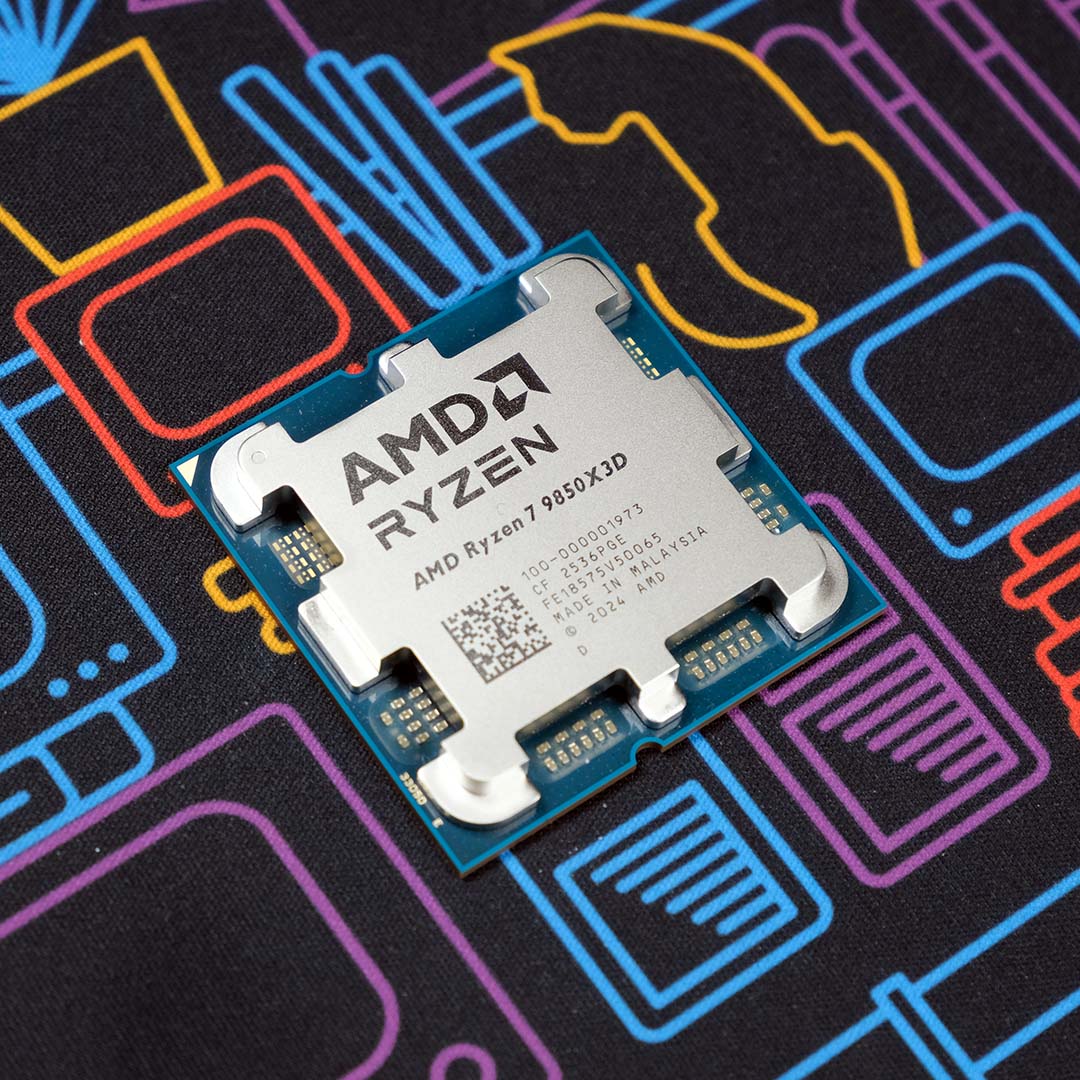
Ryzen 7 9850X3D CPU test PC
Club386 carefully chooses each component in a test bench to best suit the review at hand. When you view our benchmarks, you’re not just getting an opinion, but the results of rigorous testing carried out using hardware we trust.
Shop Club386 test platform components:
CPU: AMD Ryzen 7 9850X3D
Cooler: Arctic Liquid Freezer III
Motherboard: MSI MEG X670E ACE
GPU: Nvidia GeForce RTX 5090 Founders Edition
Memory: 64GB Kingston Fury Beast DDR5
Storage: 2TB WD_Black SN850X NVMe SSD
PSU: be quiet! Dark Power Pro 13 1,300W
Chassis: Fractal Design Torrent Grey
To put this processor through its paces, I’ve run a collection of productivity and gaming benchmarks. For the sake of scope and time, I’ve kept testing on the latter front exclusively to 1080p, the most demanding resolution for a CPU that you’re likely to use.
I’ve also taken the time to freshly benchmark the 9950X3D, 9800X3D, and 7950X3D. In doing so, we now have results that we can compare with the 7800X3D and 7500X3D, which I recently tested.
Apps
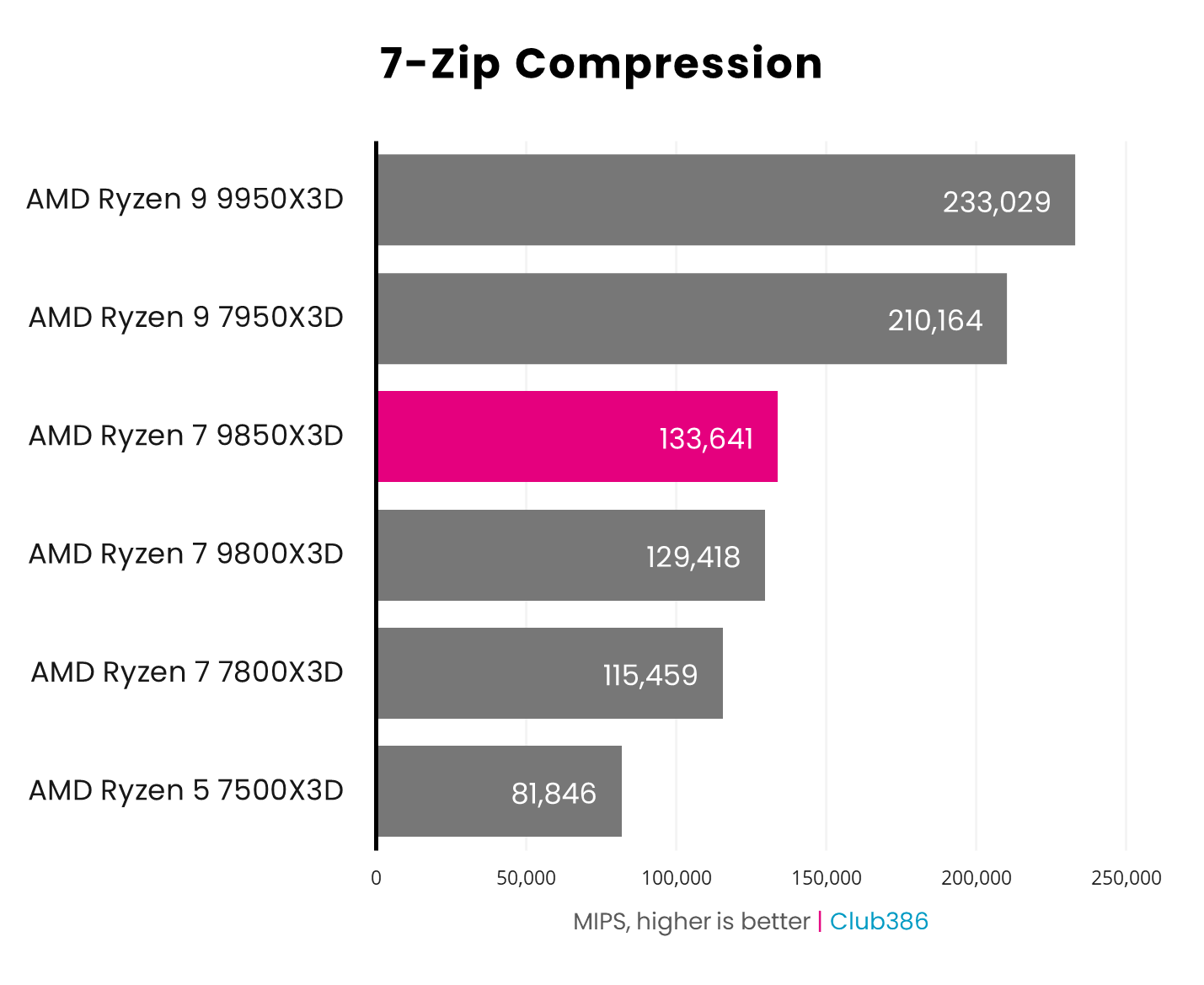
The more cores in your CPU, and the faster your clocks, the quicker your file compression performance in 7-Zip. A higher frequency ceiling allows the Ryzen 7 9850X3D to sneak ahead of the 9800X3D by 4,223MIPS (+3%).
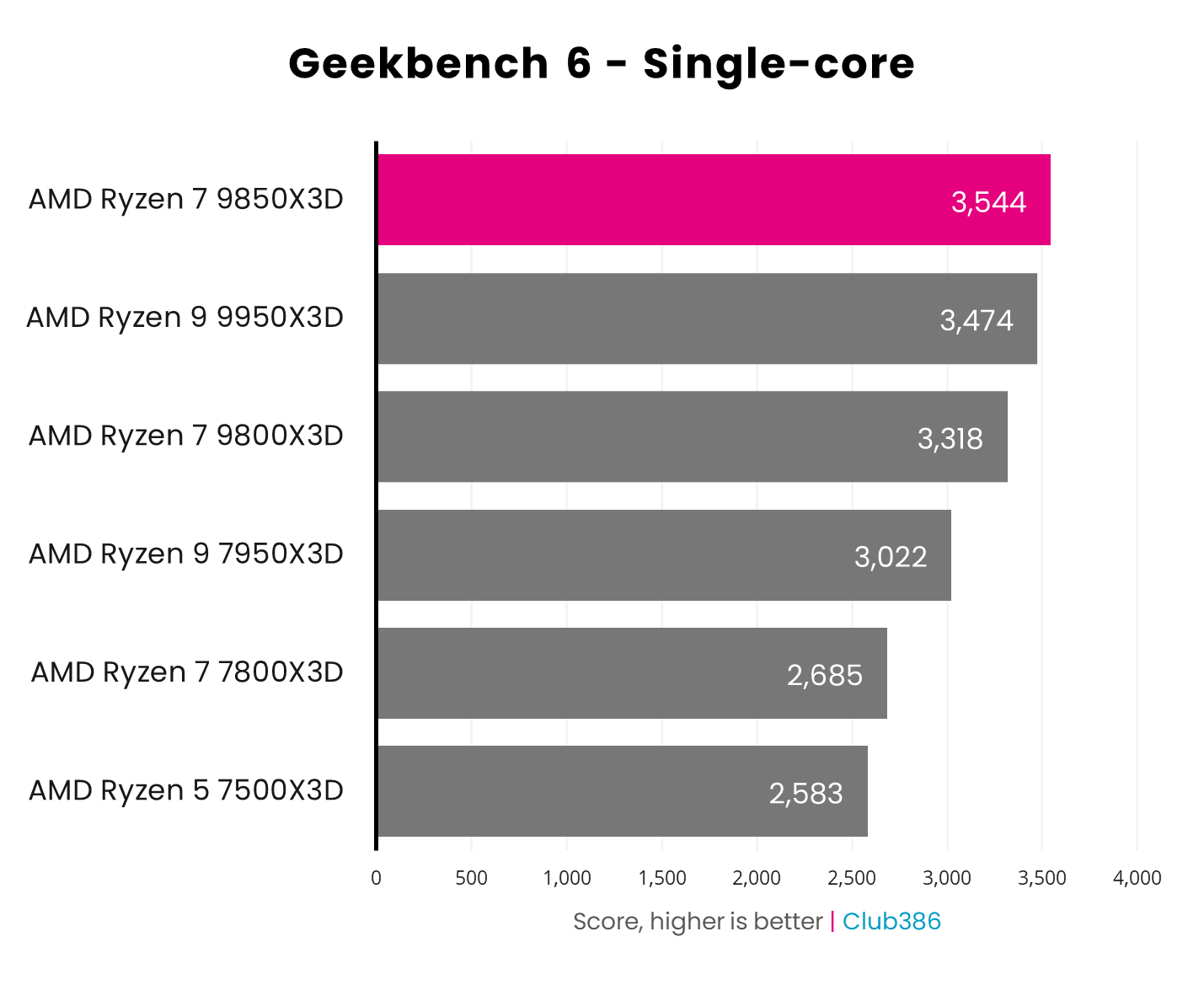
Despite the Ryzen 9 9950X3D boasting a 100MHz advantage over the 9850X3D, the latter clinches the win in our Geekbench 6 single-core benchmark by a narrow margin of 70pts (+2%). The gap between the 9800X3D is much wider, at 226pts (+6%).
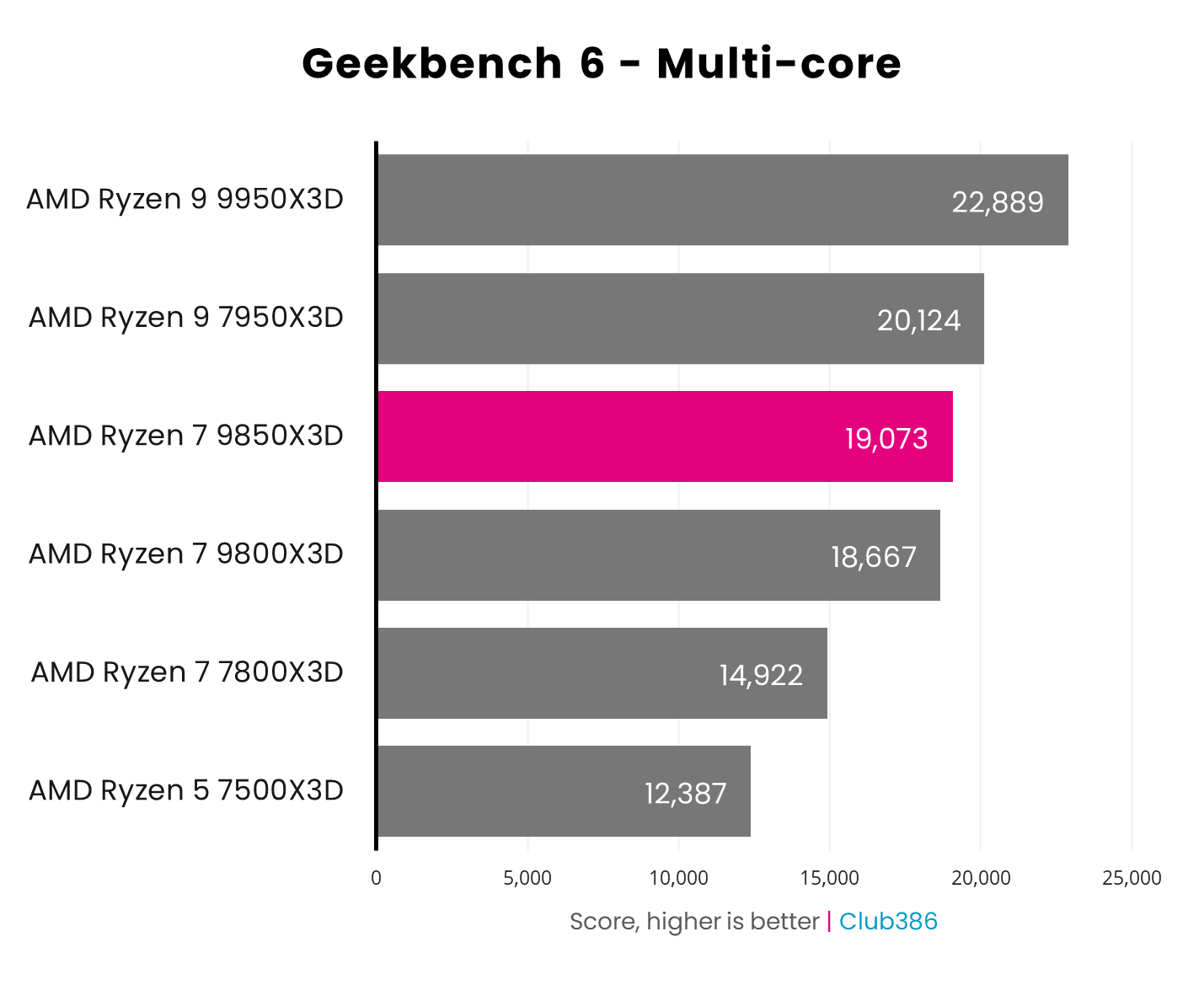
Switching to Geekbench 6 multi-core, the Ryzen 7 9850X3D finds itself unsurprisingly taking the bronze behind both 16-core processors. Higher clock speeds barely move the performance needle in this test, as the 9800X3D isn’t far behind.
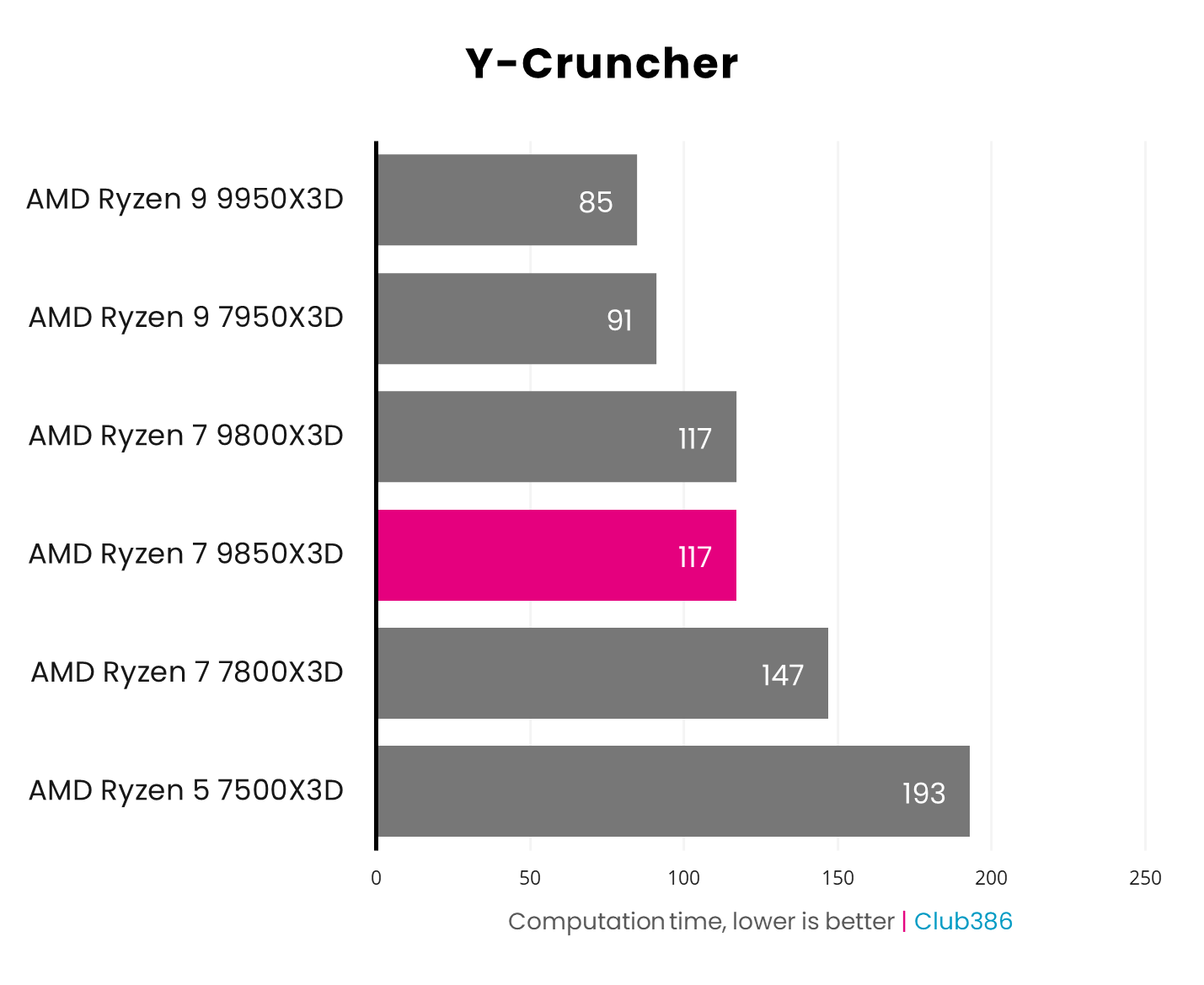
Calculating Pi up to 5b digits is no mean feat for any consumer processor, with more cores proving crucial to speeding up computation time. As such, it’s no wonder the Ryzen 7 9850X3D and 9800X3D are in a dead heat at 117 seconds, while the 9950X3D and 7950X3D pull ahead with a comfortable lead.
Content creation
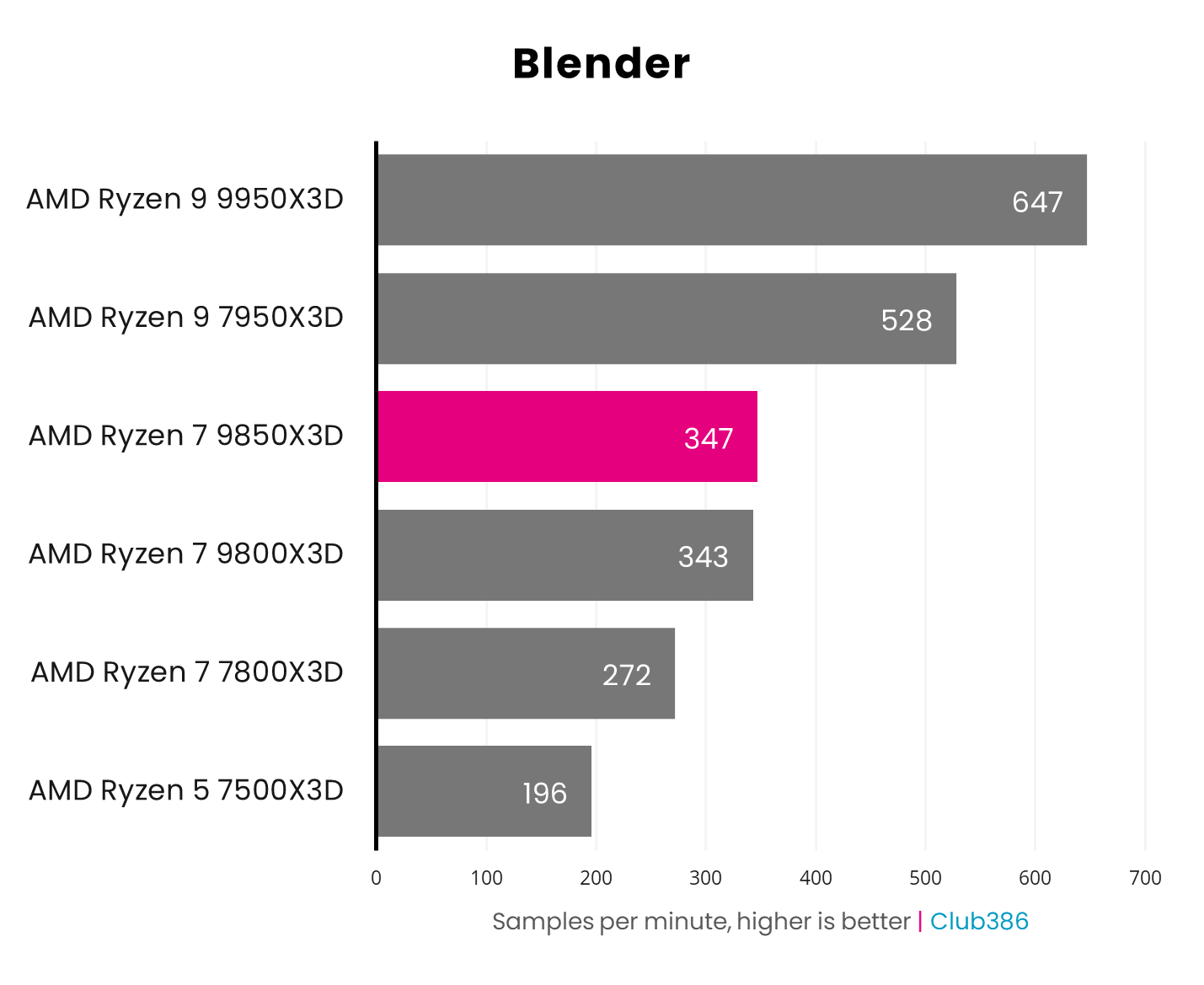
There’s no difference in integrated graphics between AMD’s Ryzen 9000 series processors, so it’s down to core counts and other variables to shape differences between them. Unsurprisingly, the Ryzen 9 chips sit at the top of this chart, while the 9850X3D earns third place over the 9800X3D by a measly four additional samples per minute.
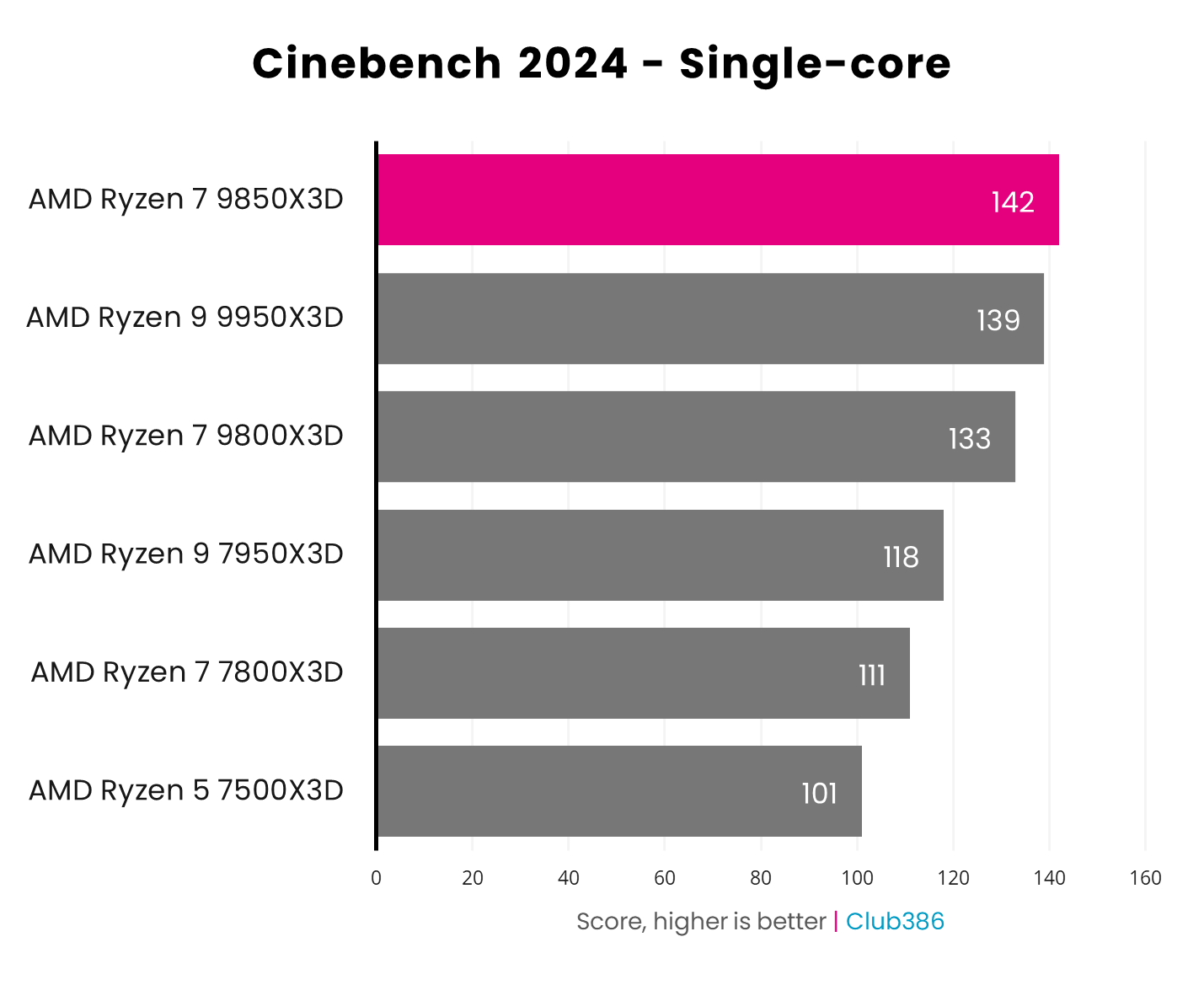
In Cinebench 2024, AMD’s Ryzen 7 9850X3D takes the single-core performance crown, at least when it comes to AMD chips. The Intel Core Ultra 9 285K is the king here in our tests, scoring 146. The 3pt (+2%) lead over the 9950X3D is welcome, but the 9pt (+6%) advantage over AMD’s 9800X3D is impressive.
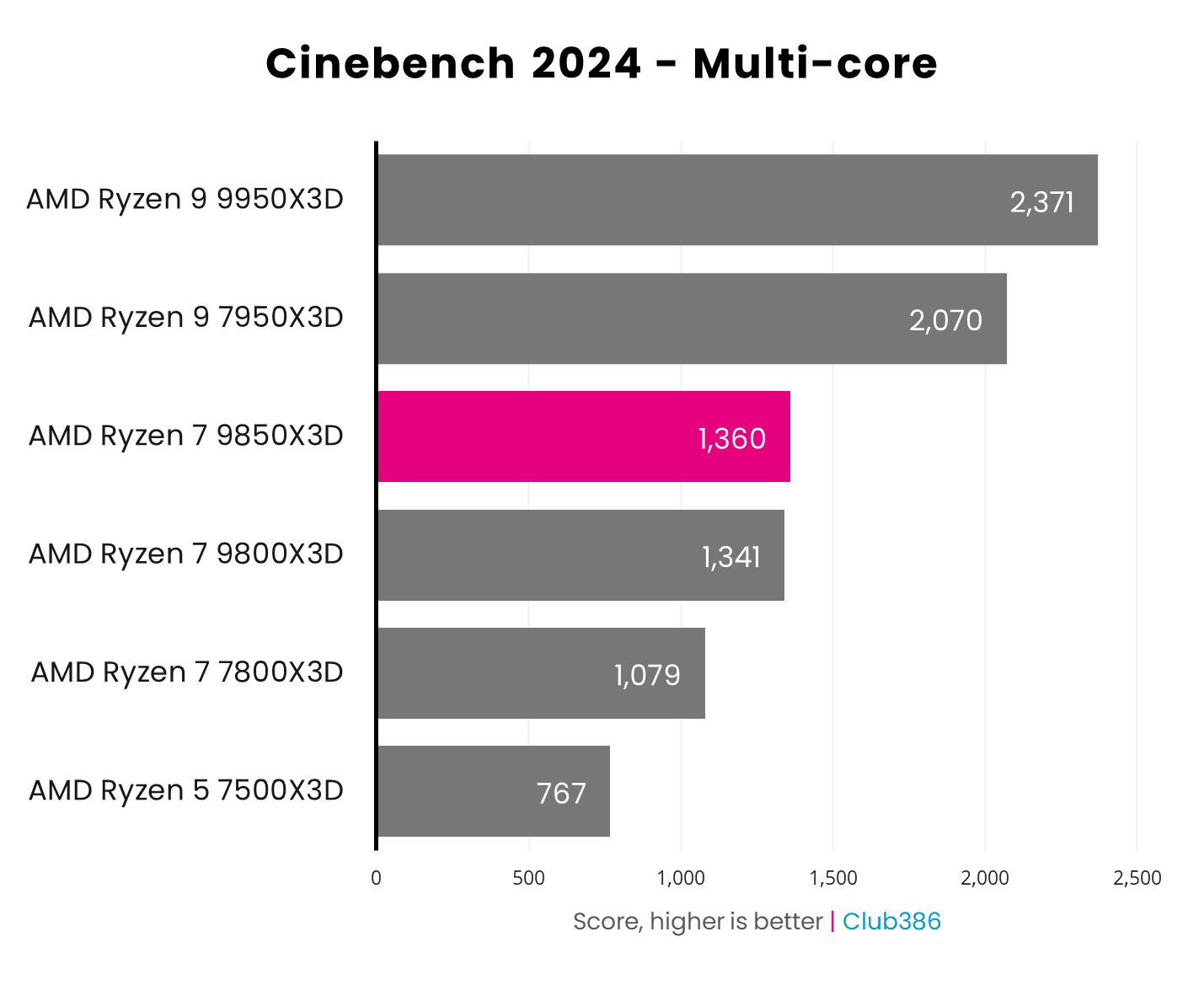
Switching to Cinebench 2024’s multi-core benchmark, the Ryzen 7 9850X3D puts in a solid performance with 1,360 points. Relative to the 9800X3D, though, the chip claws a minor 19pt (+1%) advantage, which is practically margin of error territory.
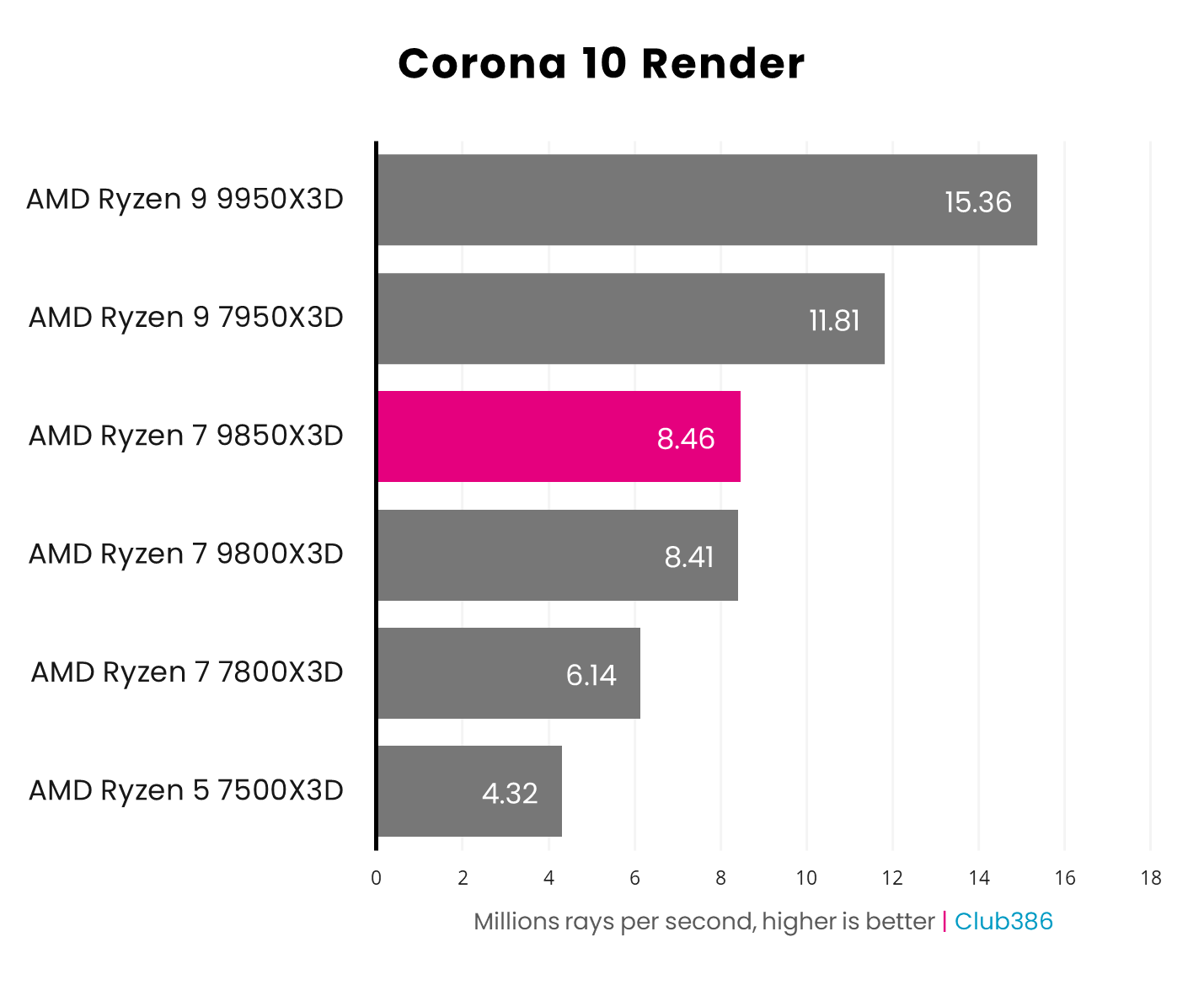
Corona 10 Render continues the trend of core and thread count trumping all other metrics. Chalk up another 1% lead for the 9850X3D over the 9800XD.
Memory
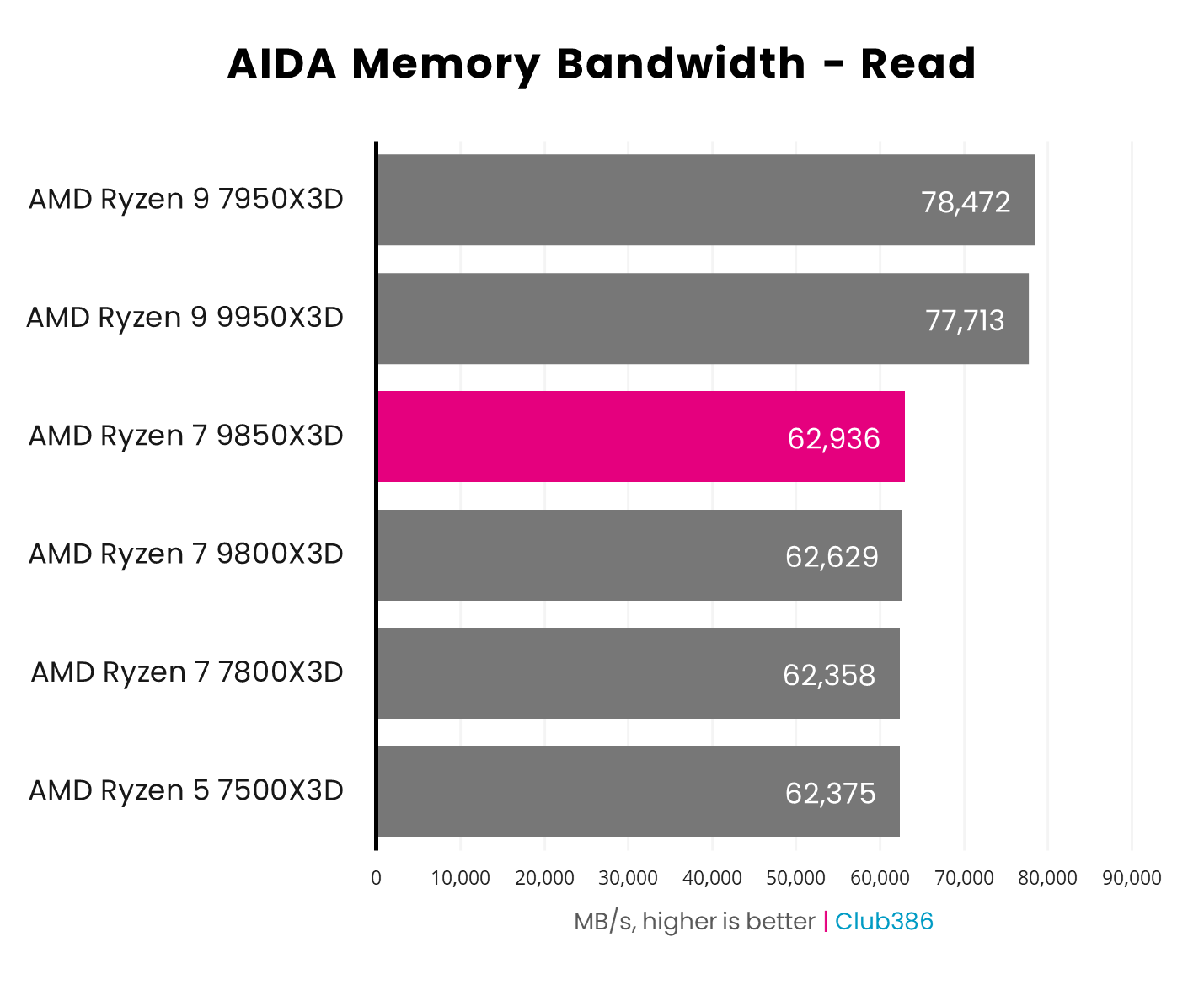
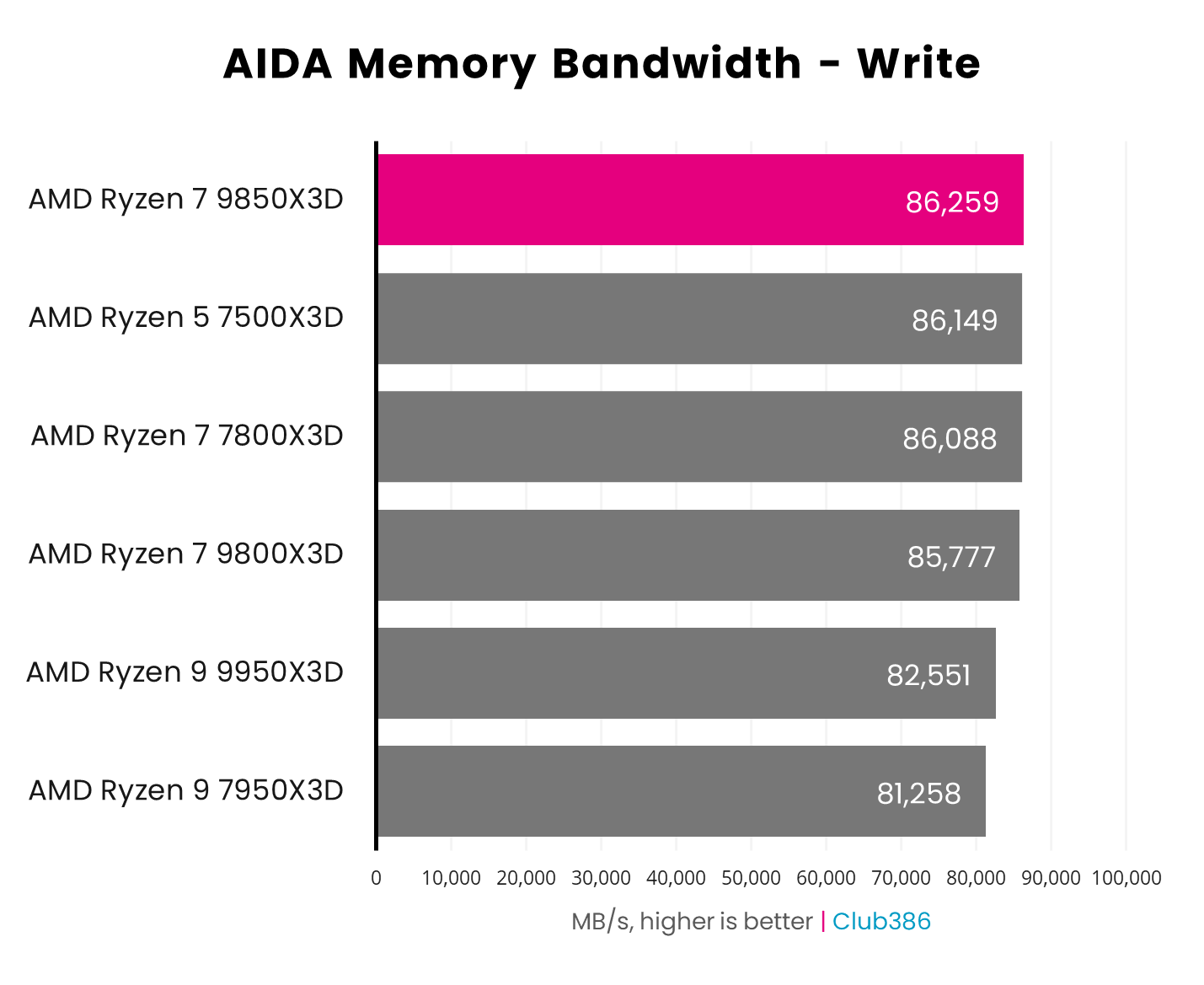
Memory performance on AM5 CPUs with 3D V-cache is near-identical on single-CCD models. Beefier dual-CCD models enjoy superior read rates, but fall to the back of the pack for writes. However, latency remains high on all Ryzen 9000-series processors, relative to the 7000 series.
Gaming
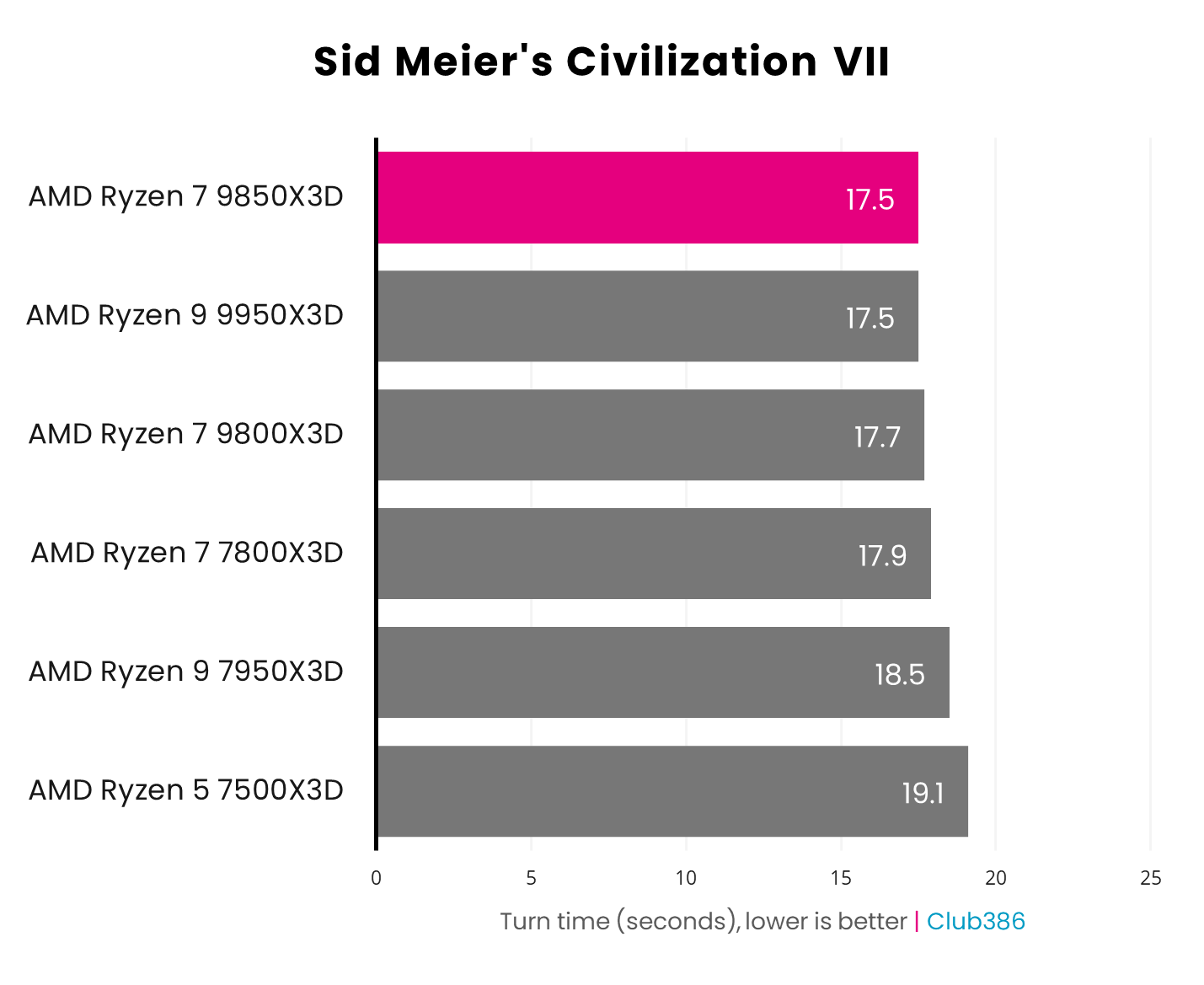
Facing off against ten turns of Civilization VII AI instructions, the Ryzen 7 9850X3D shares a technological victory with the 9950X3D, taking an average turn time of 17.5 seconds. Frequency is king in these parts, but all those hertz only amount to a range of 1.6 seconds.
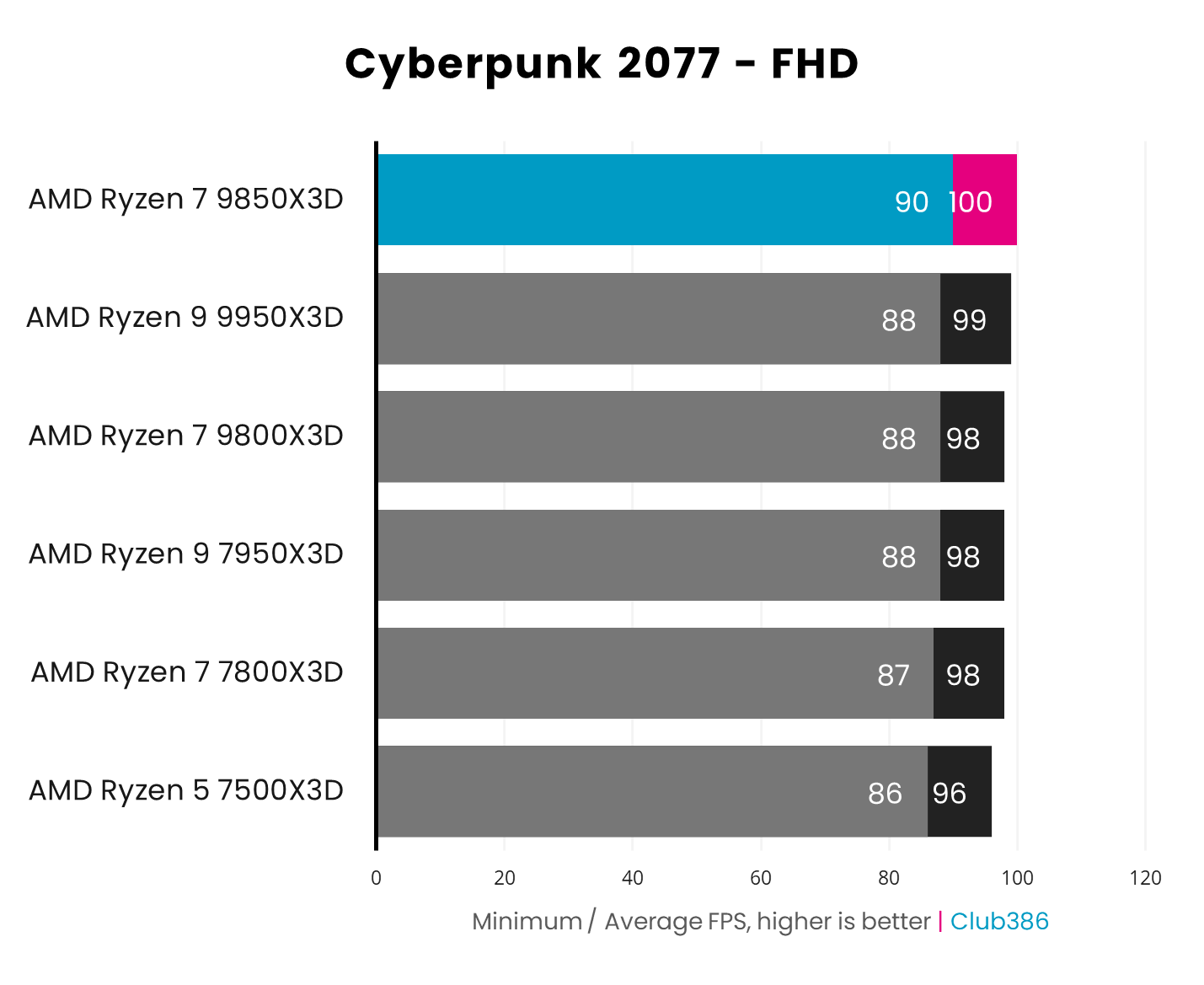
The path-traced streets of Night City create a predominantly GPU-bound scenario, but the Ryzen 7 9850X3D still manages to squeeze out a few extra frames to claim the top spot. It’s a blink and you’ll miss it lead, but it’s enough to secure triple-digit frame rate bragging rights.
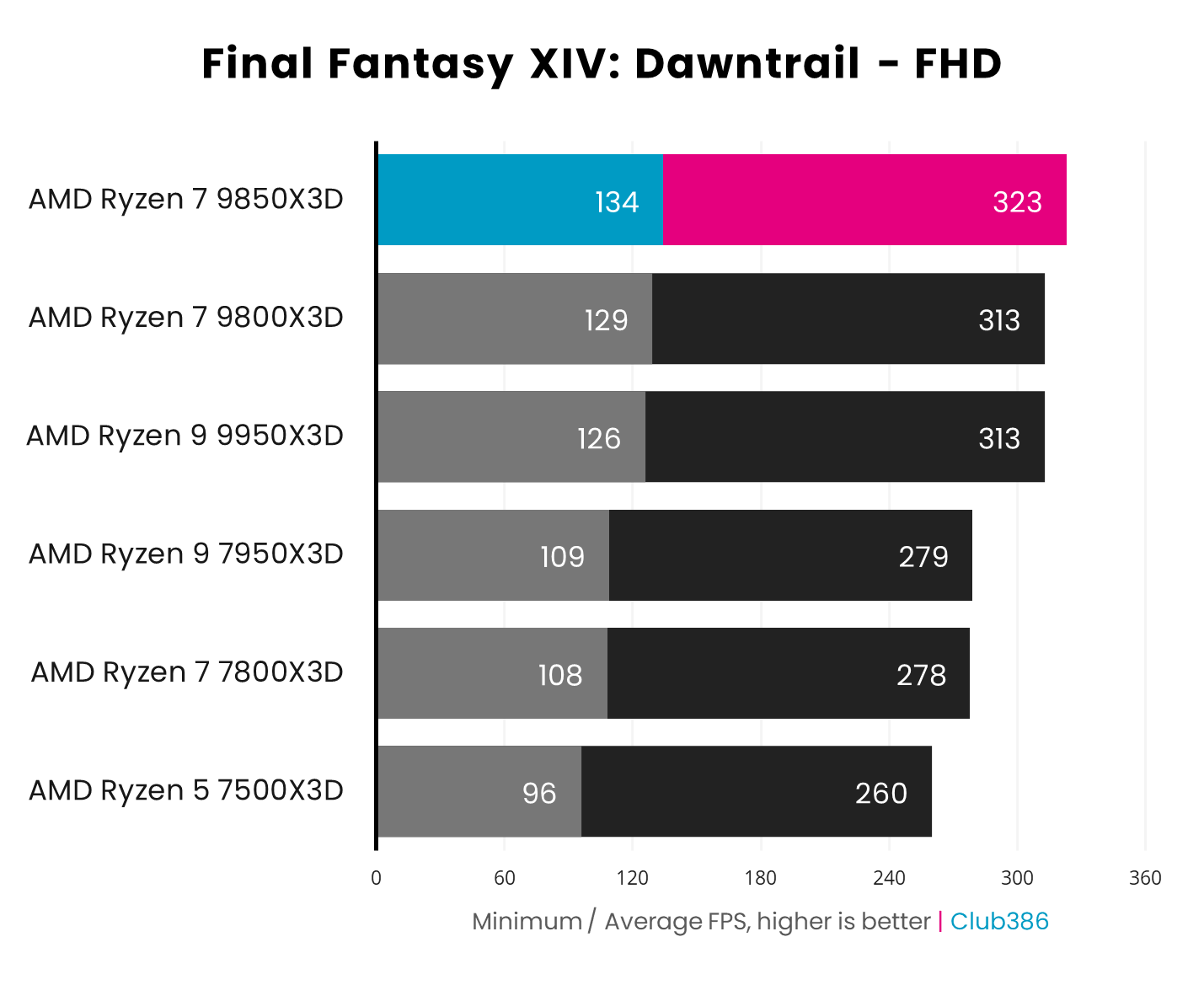
Loading up Final Fantasy XIV: Dawntrail reveals the biggest frame rate lead the Ryzen 7 9850X3D enjoys across our suite. Soak it in, this 10fps (+3%) lead is the best-case advantage over the 9800X3D.
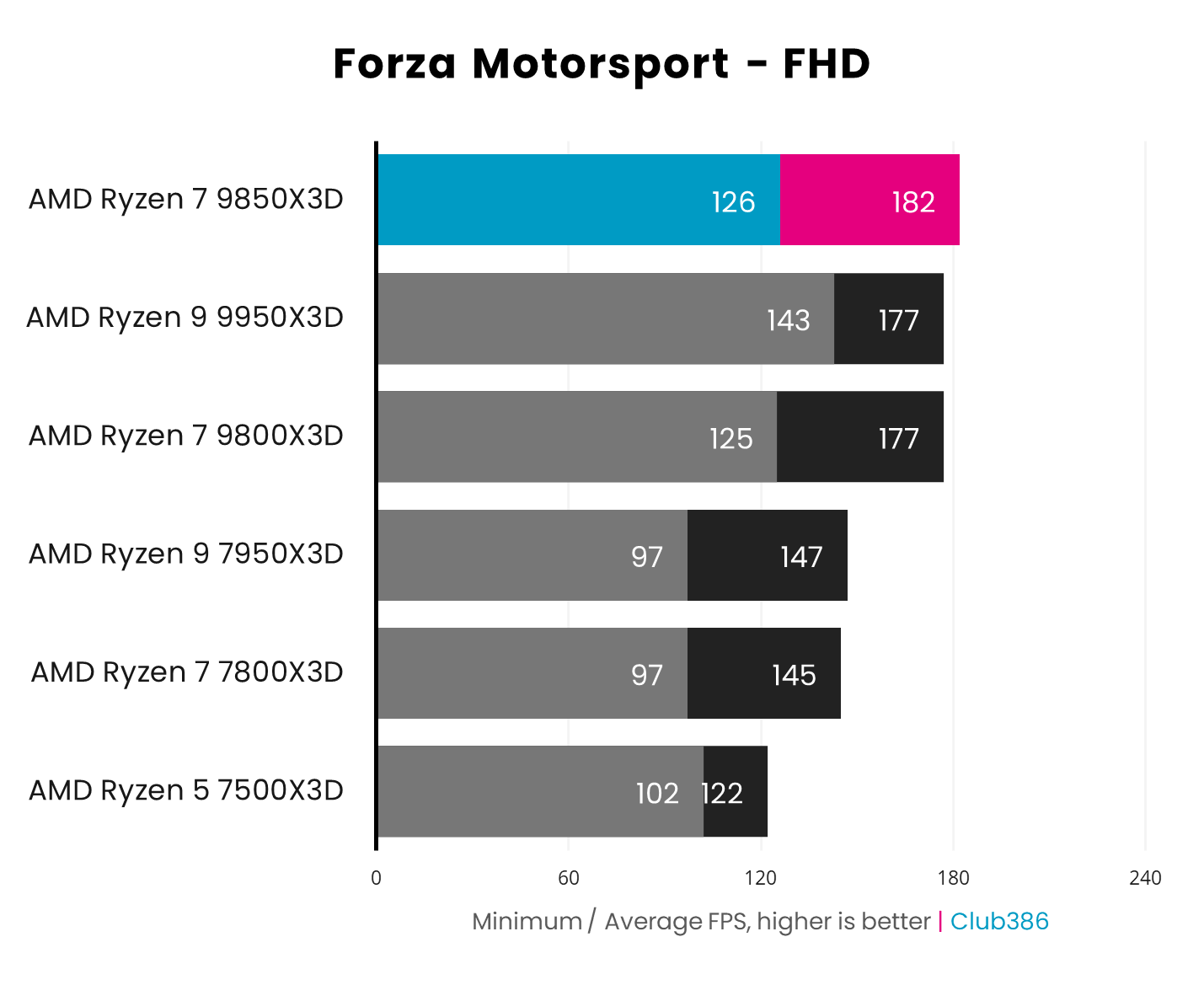
Hitting the ray-traced tarmac of Forza Motorsport, the Ryzen 7 9850X3D crosses the finish line with a speedy 182fps average. While that’s 5fps (+3%) ahead of the silver medalist, AMD’s 9950X3D, frame rate consistency is much better on the 16-core processor.
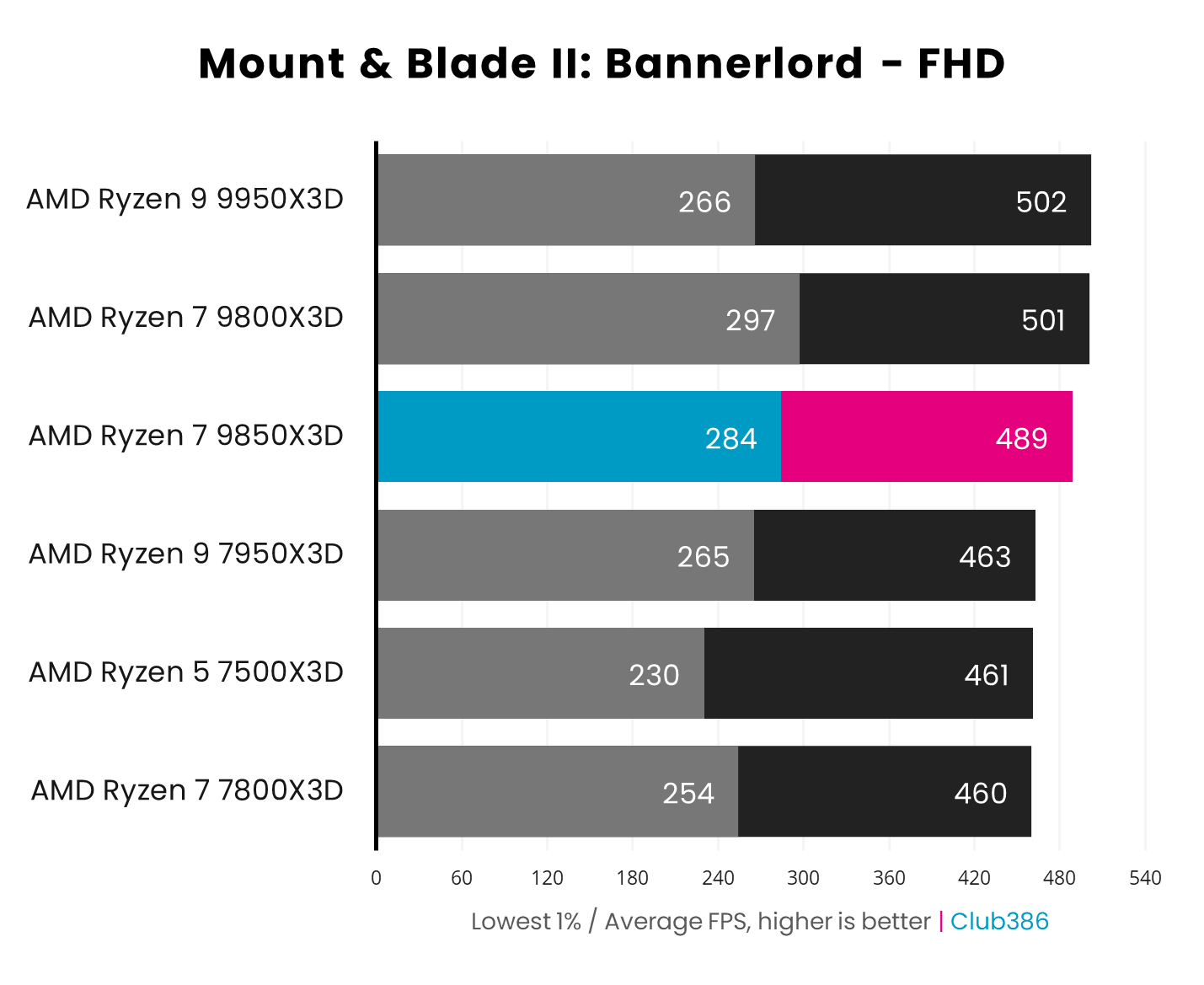
Curiously, Mount & Blade II sees the first upset for the Ryzen 7 9850X3D, falling behind both the 9950X3D and 9850X3D by 12-13fps (2-3%) in repeated tests. Considering this is the only inconsistency of its kind across the test suite, I think this is likely to be the result of some abnormal lack of optimisation for the new processor in this case.
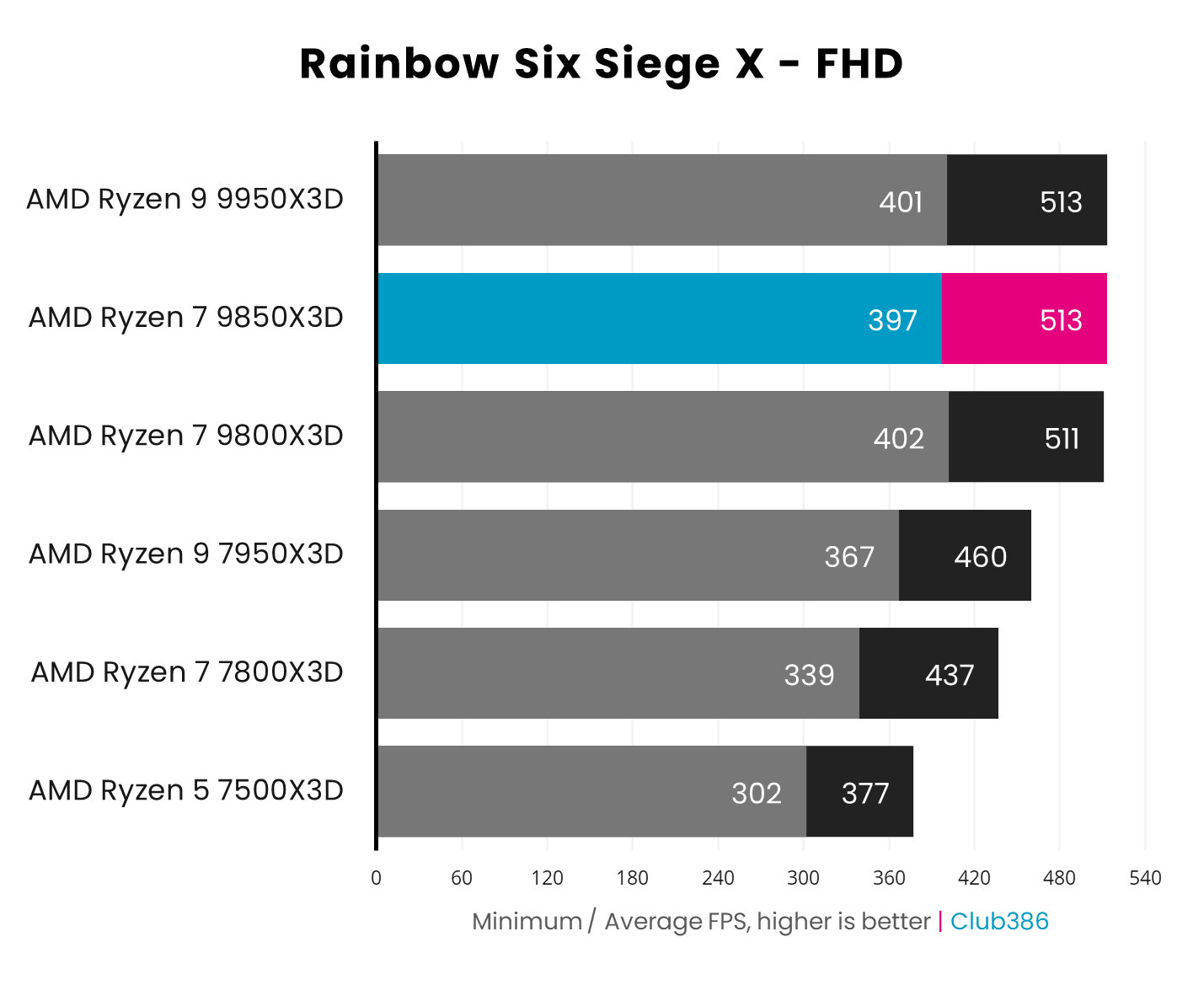
The Ryzen 7 9850X3D performs expectedly well in Rainbow Six Siege X, achieving average frame rates of 513fps. However, the CPU doesn’t move the needle beyond what the 9950X3D already achieves, and is only a piddly two frames per second ahead of the 9800X3D.
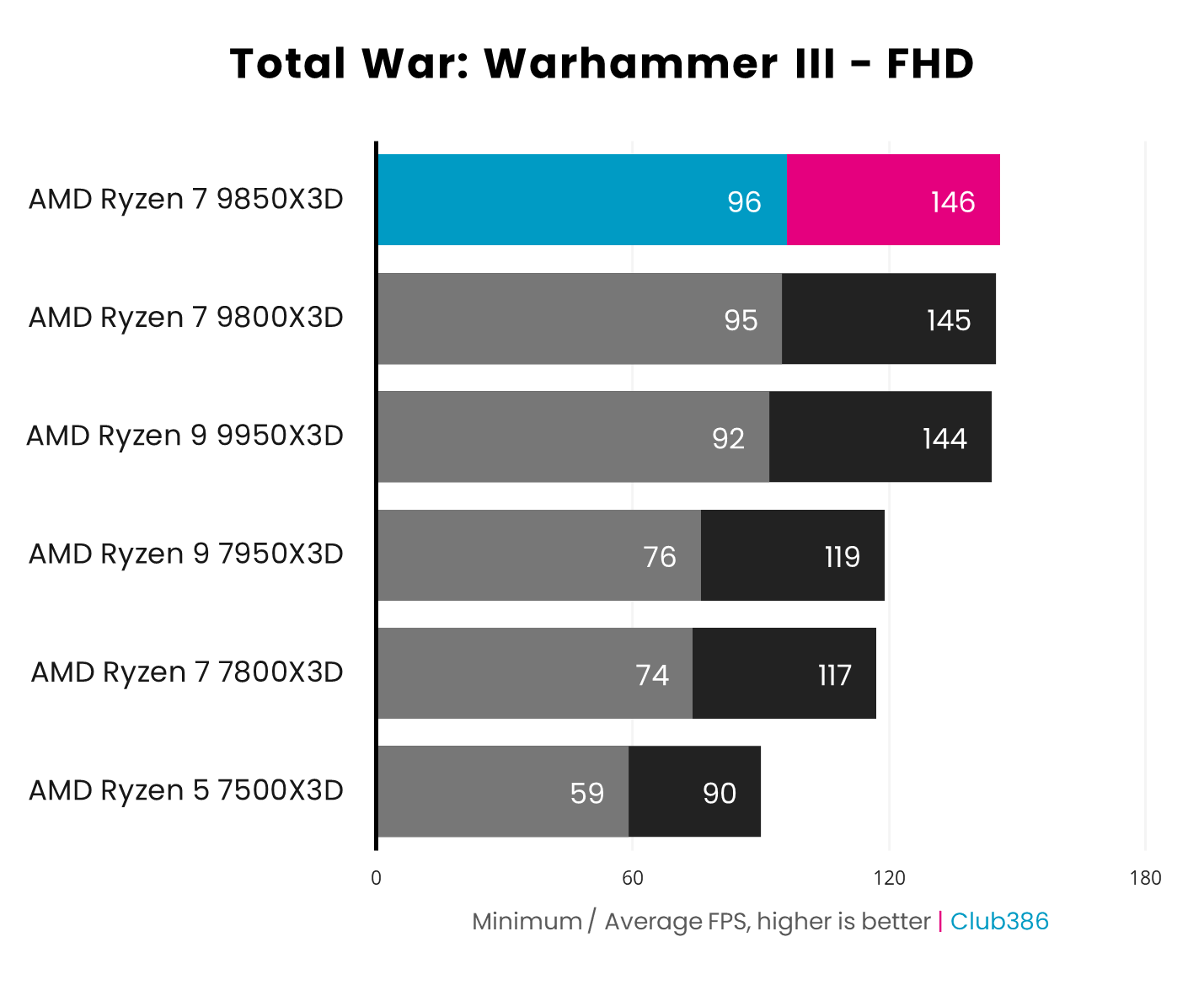
Even under the duress of Total War: Warhammer III’s Mirrors of Madness benchmark, the Ryzen 7 9850X3D finds a way to rise to the top of the board. It’s a close victory, of course, with just a single frame separating this processor from the 9800X3D across minimum and average rates.
Vitals
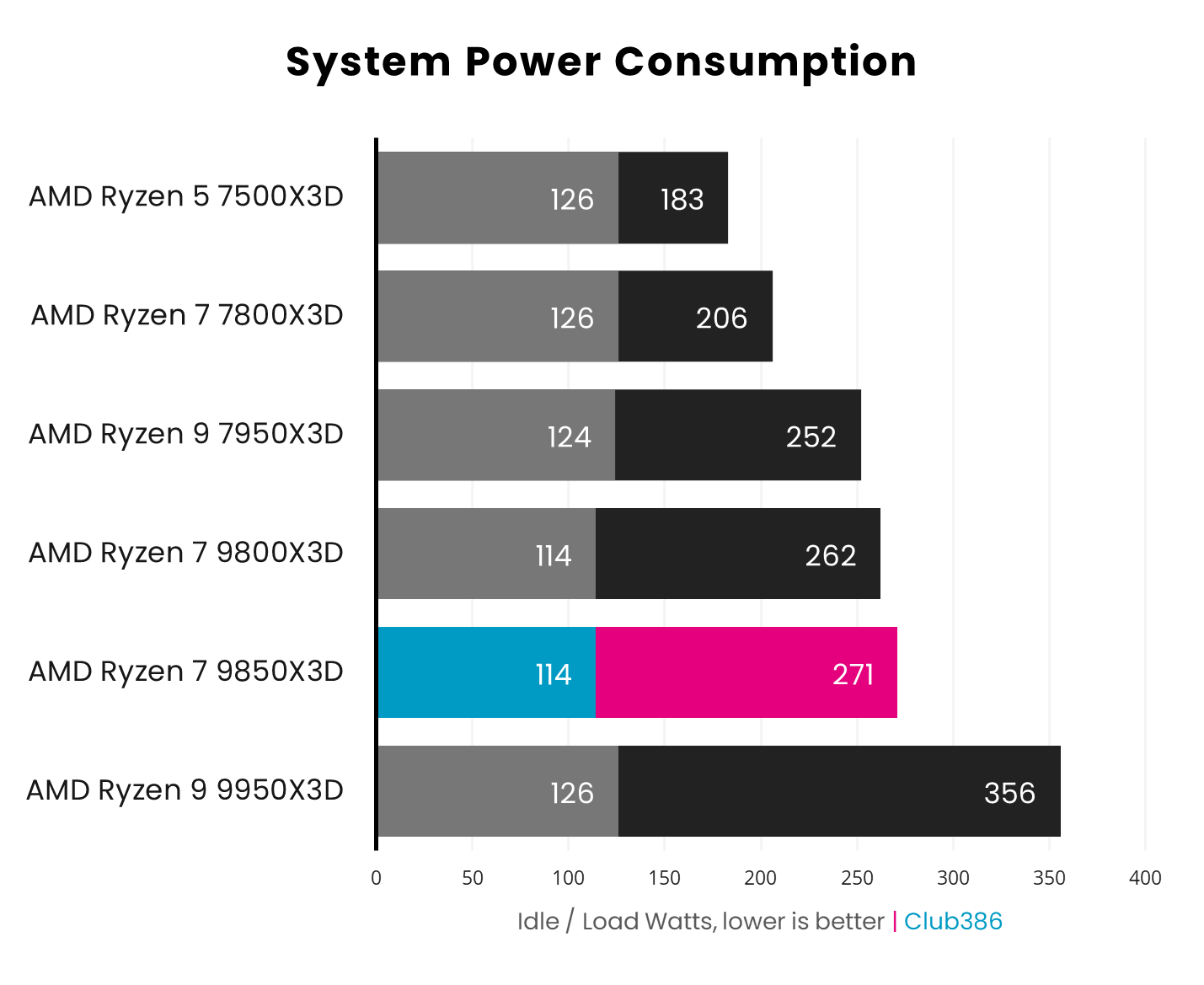
While AMD’s Ryzen 7 9850X3D shares the same 120W TDP as its 9800X3D, power consumption is slightly higher on the new chip. Running Cinebench 2024, I noted an increase of 9W (+3%) under load, relative to the older CPU.
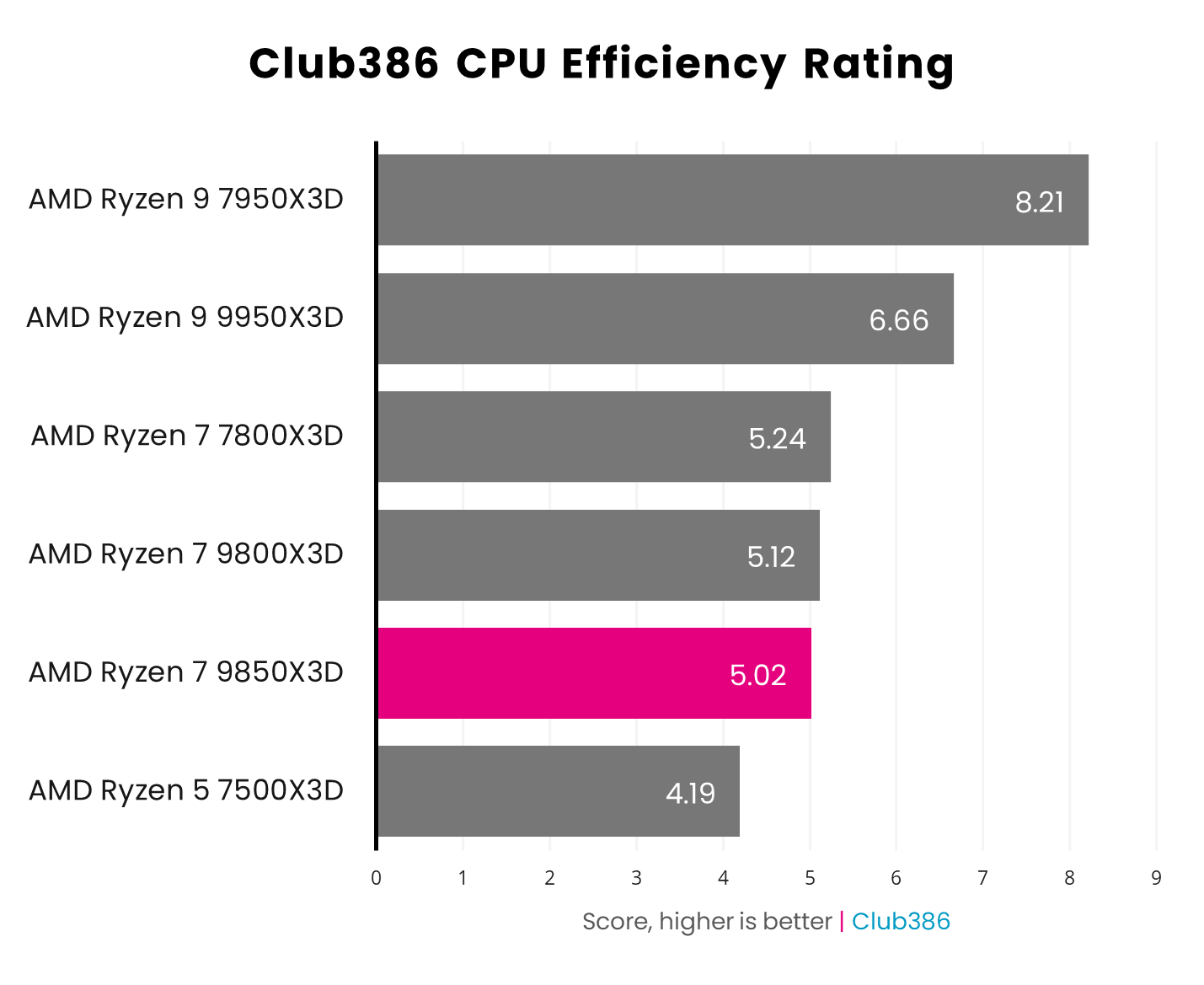
To calculate the Club386 CPU efficiency rating for each processor, I take the Cinebench 2024 multi-core score and divide it by system power consumption.
Given that the Ryzen 7 9850X3D was just 1% ahead of the 9800X3D, while consuming 3% more watts, the newer chip finishes below its closest relative. It’s a close race, though, to the point where either remains a fine choice, with the 7800X3D also keeping pace.
Overclocking
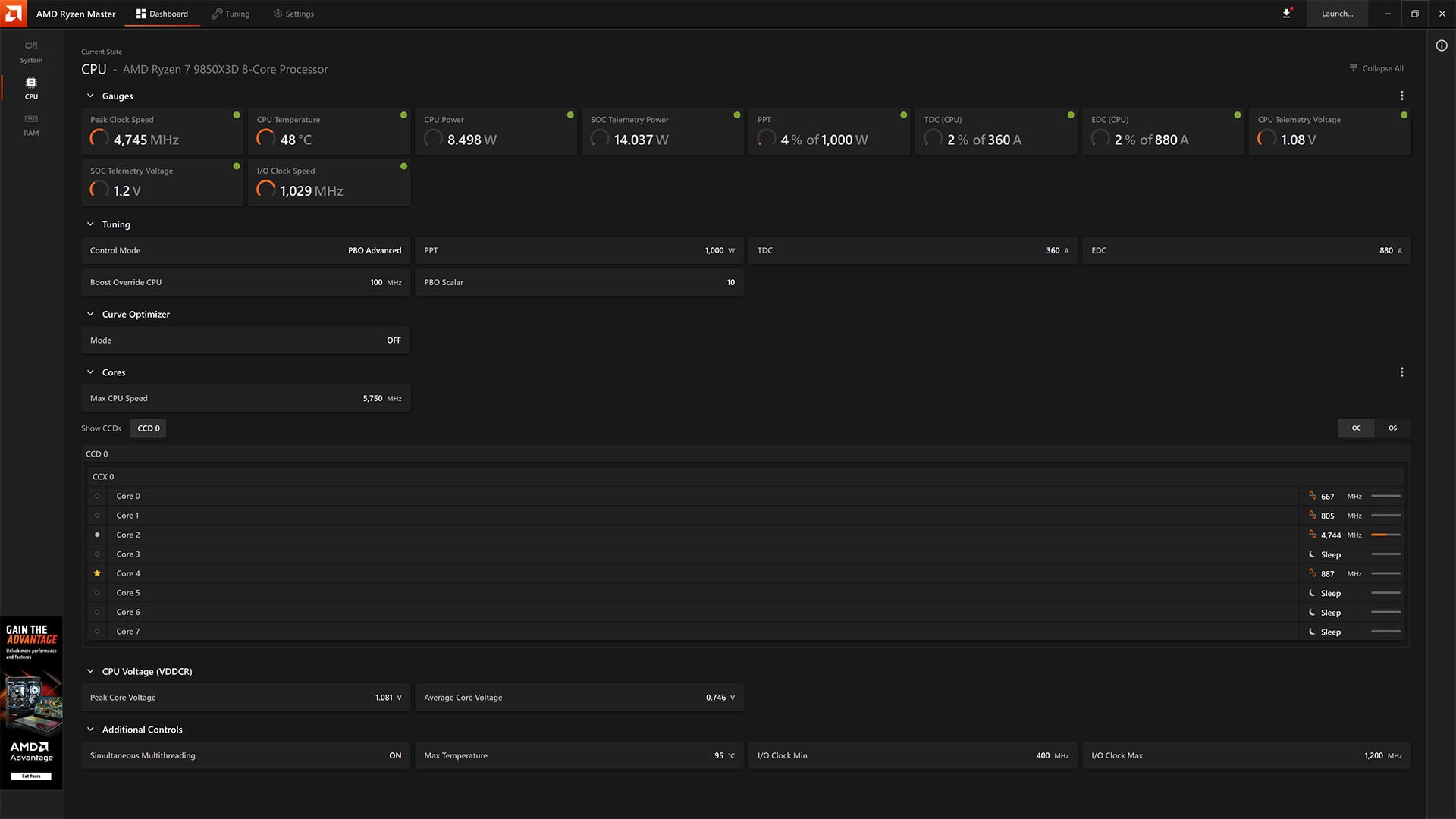
Just like its predecessor, but unlike the 7800X3D, the Ryzen 7 9850X3D is overclockable out of the box. However, as is the case with other X3D chips already running at high clock speeds, it’s difficult to manifest any meaningful gains via the process.
Opening Ryzen Master and engaging the processor’s stock ‘PBO Advanced’ profile unlocks power limits and lifts theoretical maximum boost clocks to 5,750MHz (+150MHz). Unfortunately, these changes do nothing to improve my Cinebench 2024 ST score, while MT results actually regress slightly.
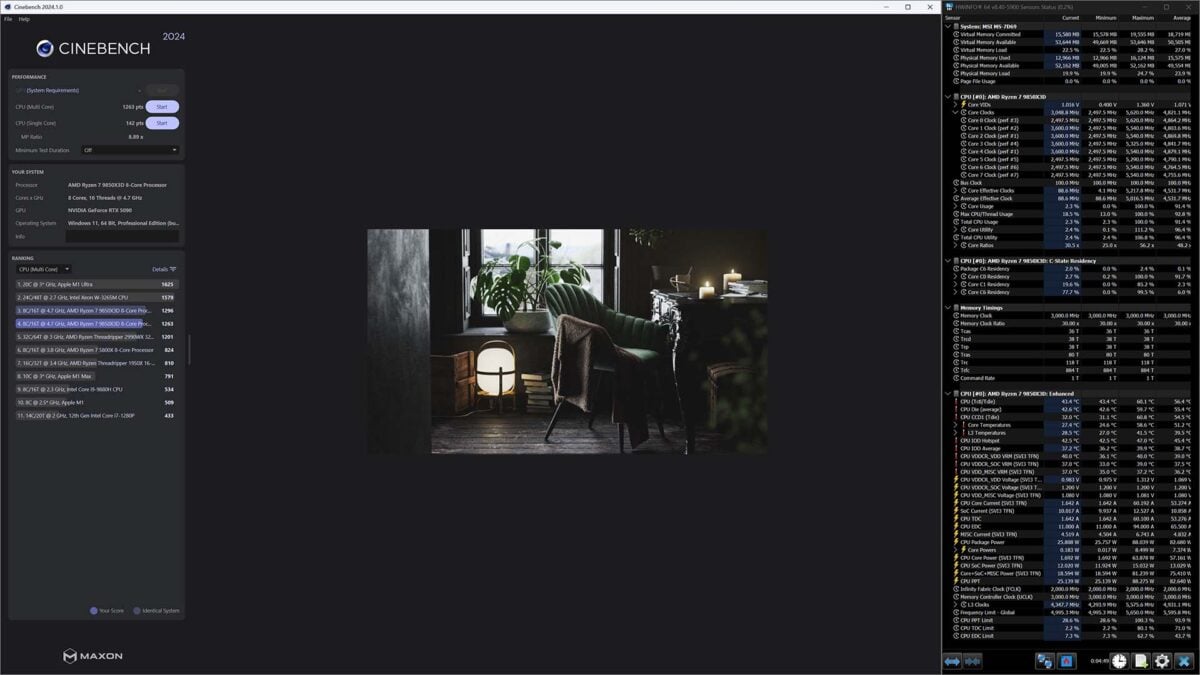
Not wanting to walk away entirely disappointed, I tried out the Ryzen 7 9850X3D’s ‘Eco Mode’ at 65W. To my surprise, the processor doesn’t lose a massive amount of its performance in this mode. Single-core performance remains resolute at 142pts, while multi-core only drops by 7% despite the 46% reduction in available power.
I’m far keener to explore how AMD’s new gaming champion holds up at 65W than bash my head against the wall of diminishing returns that is overclocking. Perhaps this could help keep down temperatures in the absolutely ripping mini PC build I assembled at the end of last year.
Conclusion
There’s no denying that the Ryzen 7 9850X3D is an excellent processor, particularly when it comes to gaming. This is the best chip on the market, bar none, for those in search of the highest frame rates. While the CPU doesn’t deliver a massive performance uplift over what came before, its premium tracks almost linearly making it a relatively fair deal in terms of MSRP.
However, current pricing for the Ryzen 7 9800X3D at the time of writing complicates this seemingly cut-and-dry value proposition. In the United States, you can find the older processor for $469, shifting the price differential from $20 to $30. In the United Kingdom, the same chip is £399, making for a £40 difference in cost. That’s not forgetting lower historical pricing too.
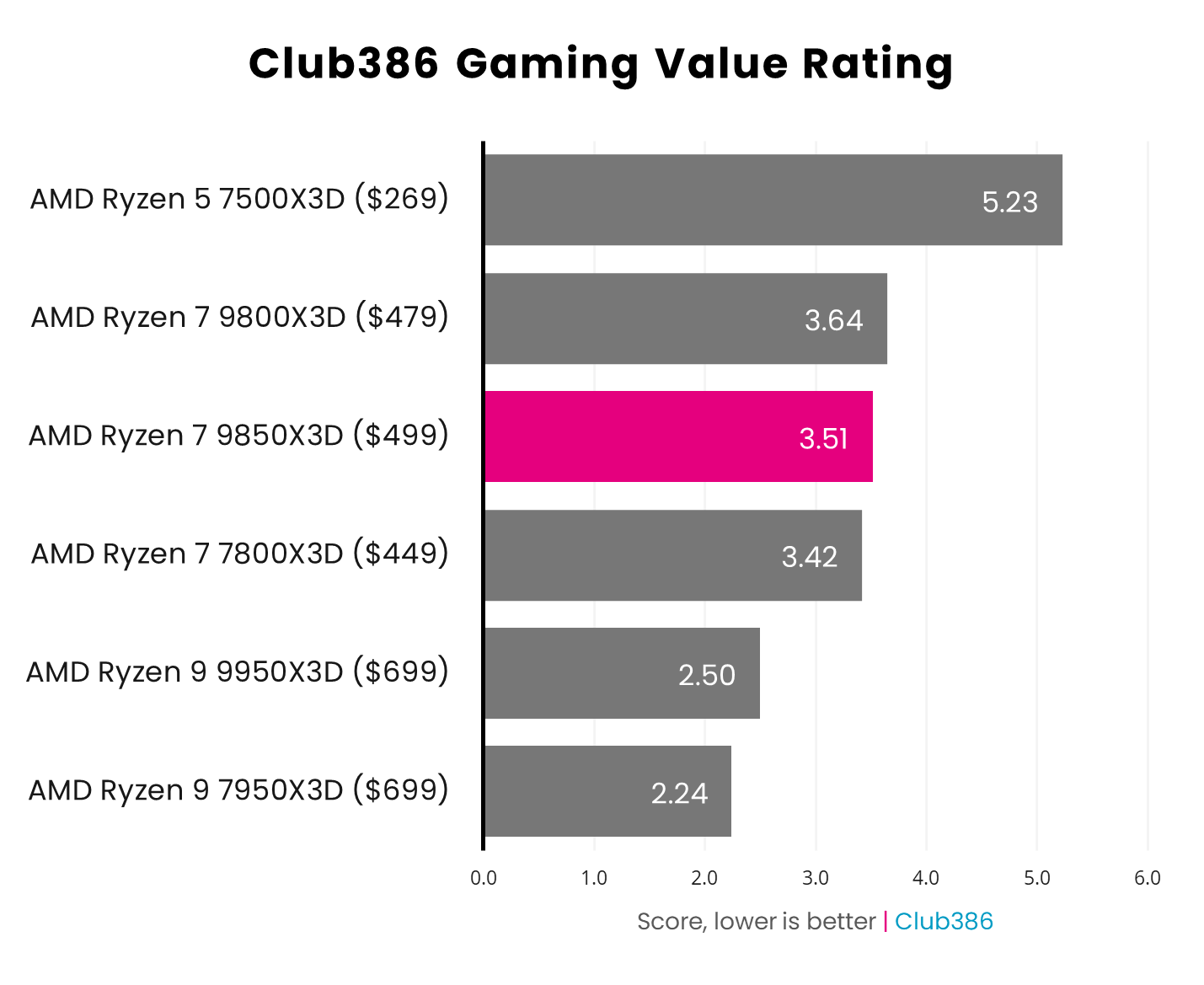
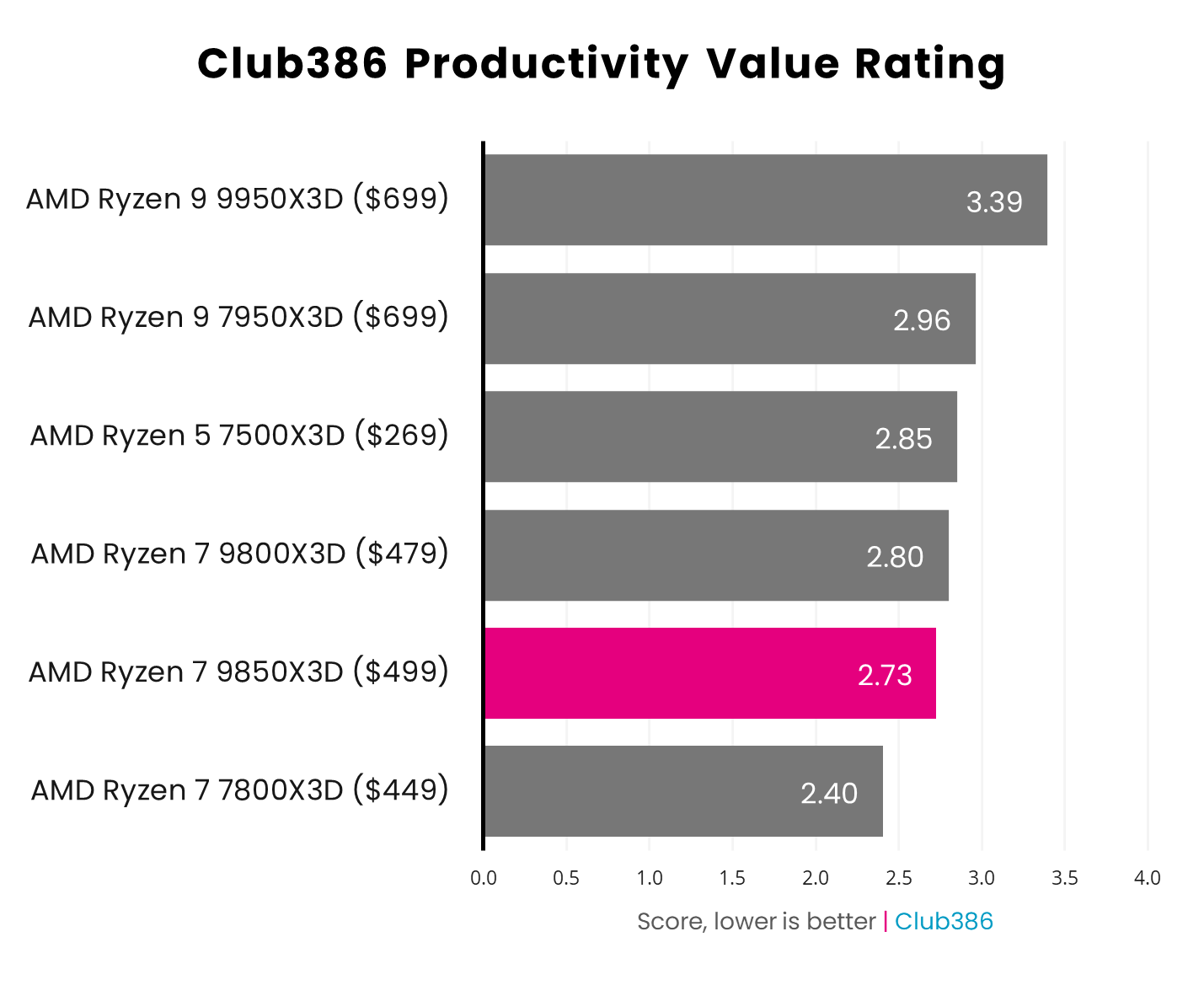
As we saw from the frame rate charts above, these two CPUs are continuously neck and neck, to the point that just eight frames secured the prime podium position for the Ryzen 7 9850X3D. If you’re after absolute performance then paying a £10/$20 premium seems reasonable, but those wanting the most bang for their buck would do well to seek out a discounted 9800X3D.
The Ryzen 7 9850X3D is the new prime cut of gaming silicon for enthusiasts, but its well-established and almost-as-excellent sibling remains a formidable force that makes AMD’s new processor feel a touch less than the sum of its parts. To borrow words from The Bard, this new chip feels like paint on a lily.