

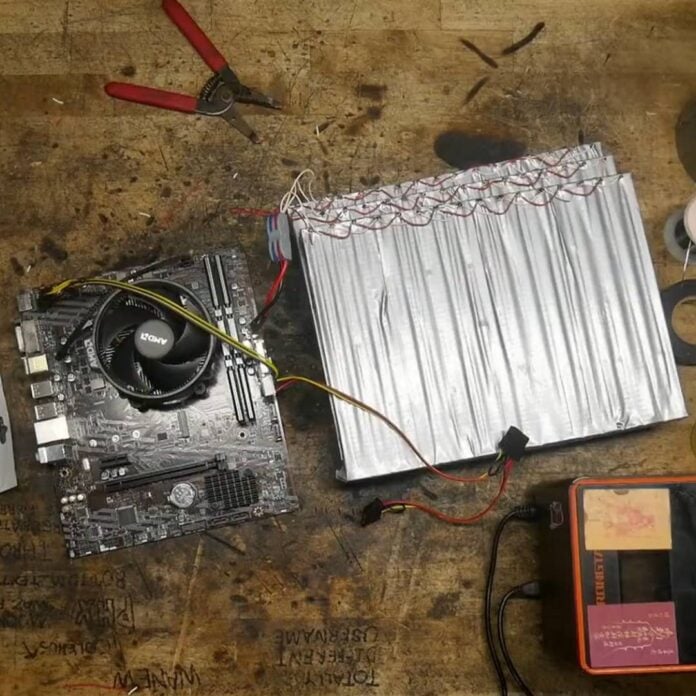
A PC modder has managed to get a desktop AMD Ryzen rig running on a massive pack of 192 AA batteries, and it even plays games. YouTuber Uwos Lab assembled the battery pack live on stream, powering an AM4 system for 30 minutes, with enough capacity left for at least another hour.
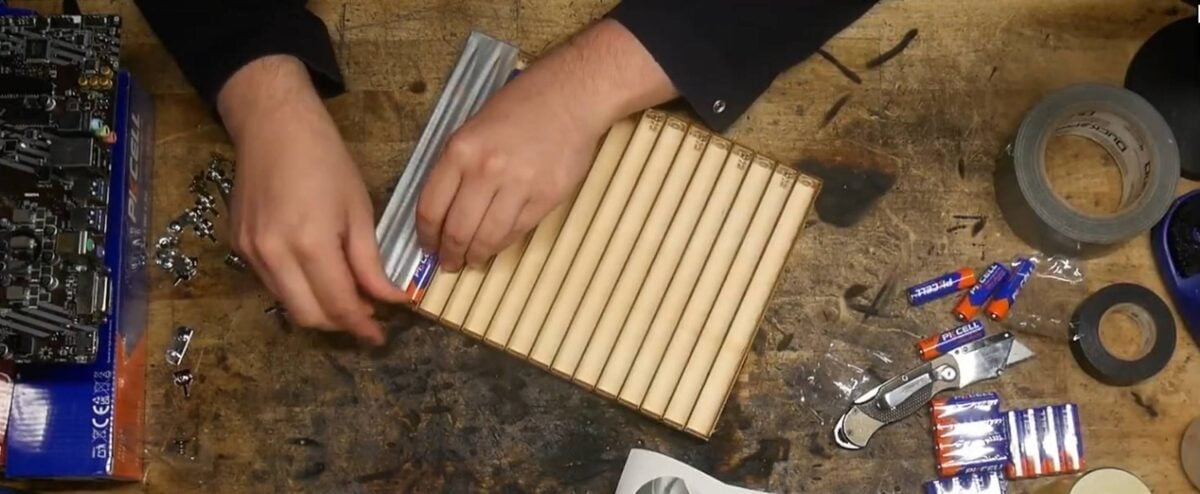
Following an unsuccessful previous attempt using 9V batteries, Uwos Lab decided to switch to off-the-shelf cells for his second attempt. To build his pack, he installed 64 AA batteries on laser-cut wood frames, linking every eight cells in parallel to obtain a 12V output. In total, Uwos Lab built three battery packs, which he linked using soldered wires to create a single 192-cell battery.
To avoid wasting energy by converting DC (direct current) to AC (alternating current) just to power a standard desktop PSU, Uwos Lab cut out the middleman and powered the motherboard directly using a 12V DC-to-ATX adapter. The latter takes any 12V input and provides the 24-pin plus 8-pin connectors required by desktop motherboards.
After ensuring that the system boots correctly and stays on, Uwos Lab installed a Hannah Montana Linux distro from a USB stick, as per the demands of a viewer. The system remained stable all the way through a bunch of tests, including playing FreeDoom, a free, open-source project of the classic game, Doom.
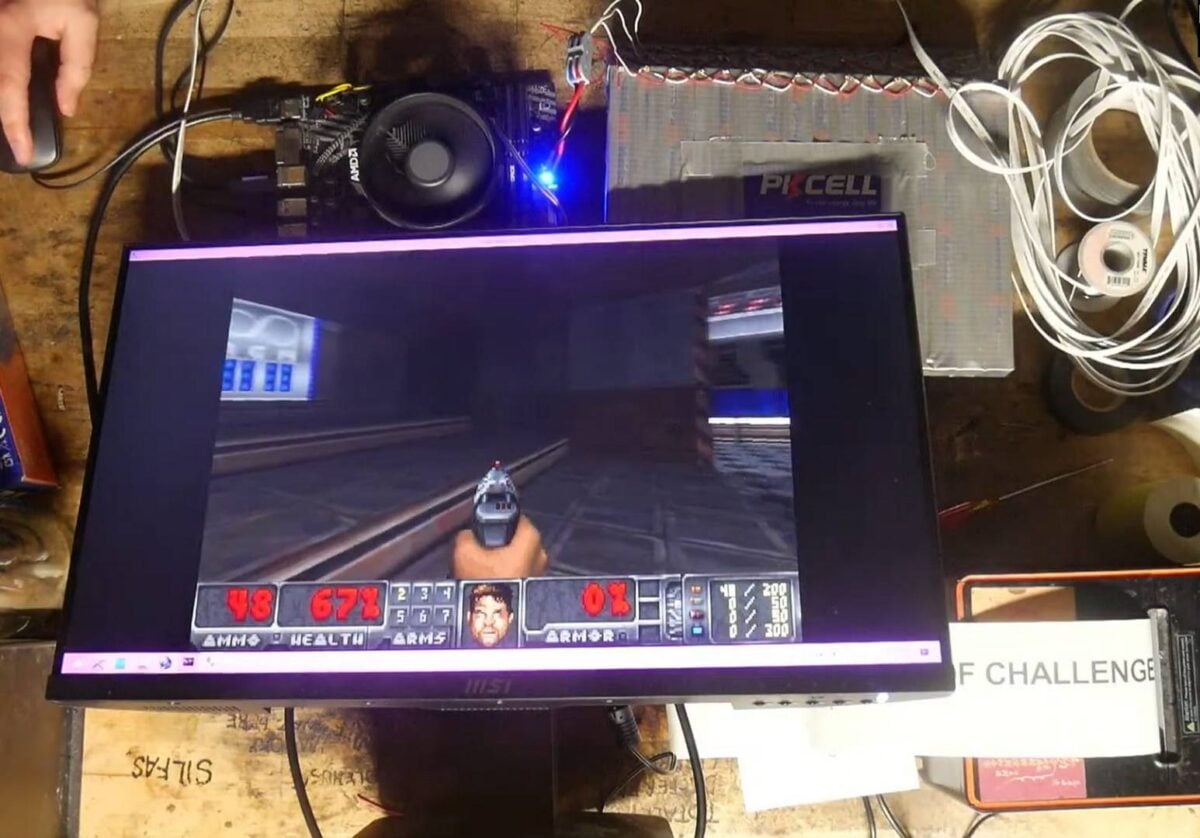
The battery pack managed to keep the system powered on for 30 minutes, with room to spare. Based on the voltage reading at the end of the tests, Uwos Lab believes that this pack could still power the PC for another hour or two. To be specific, the voltage dropped to 11.95V during testing, compared to 13V initially.
To be fair, the system had no dedicated GPU, which can be the most power-consuming part of a desktop gaming system. That said, the Ryzen G-series CPU and motherboard combo were probably consuming around 100W, which isn’t negligible. This is near the power draw of entry-tier gaming laptops, featuring dedicated RTX 3050-class GPUs.
There is just a small caveat; these are non-rechargeable batteries, so they’ll get thrown away once they’re drained. Considering that a pack of 100 cells costs around $30, that could quickly get expensive. That said, these made sense from such a one-time fun project. And most importantly, the experiment was a success. Next time, I’d like to see Uwos Lab team up with Chris Doel to make a power pack from discarded vape batteries.