

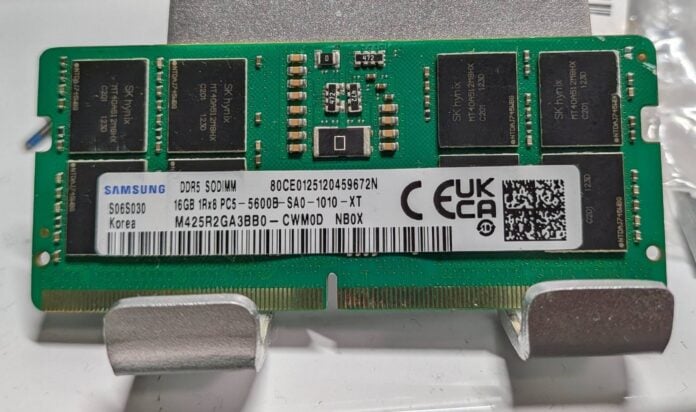
Buyer be aware, reports from Japanese PC builders indicate a growing presence of fake DDR5 memory modules on the second-hand market, and they look like real ones to the untrained eye. This new scam uses plastic parts, but they look like real silicon chips at first glance.
Reported by @taki_pc_1115 on X, whose friend bought a fake DDR5 SODIMM, these counterfeit modules look pretty convincing. While some aspects of them may ring alarm bells for those who are familiar with SODIMM memory, the overall build shows a lot of attention to detail. That includes engraved SK Hynix chips, power management circuitry, and even a serial number label. Regardless, it’s not as if you can usually take a detailed look at each memory chip to see if it’s fake or real when you’re shopping.
In this instance, after closer inspection, these modules turned out to be fully made of plastic and fibreglass. The serial number label indicates that this is a 16GB DDR5-5600 Samsung module, while the memory chips are from SK Hynix, which is also a red flag. Samsung is one of the big three DRAM makers, so it would be unlikely to use a third-party company’s chips on its modules. Removing and opening one of these fake chips shows that they’re not even made of defective silicon or relabelled modules, as we’ve seen with previous scams, but instead what looks like a fibreglass core.
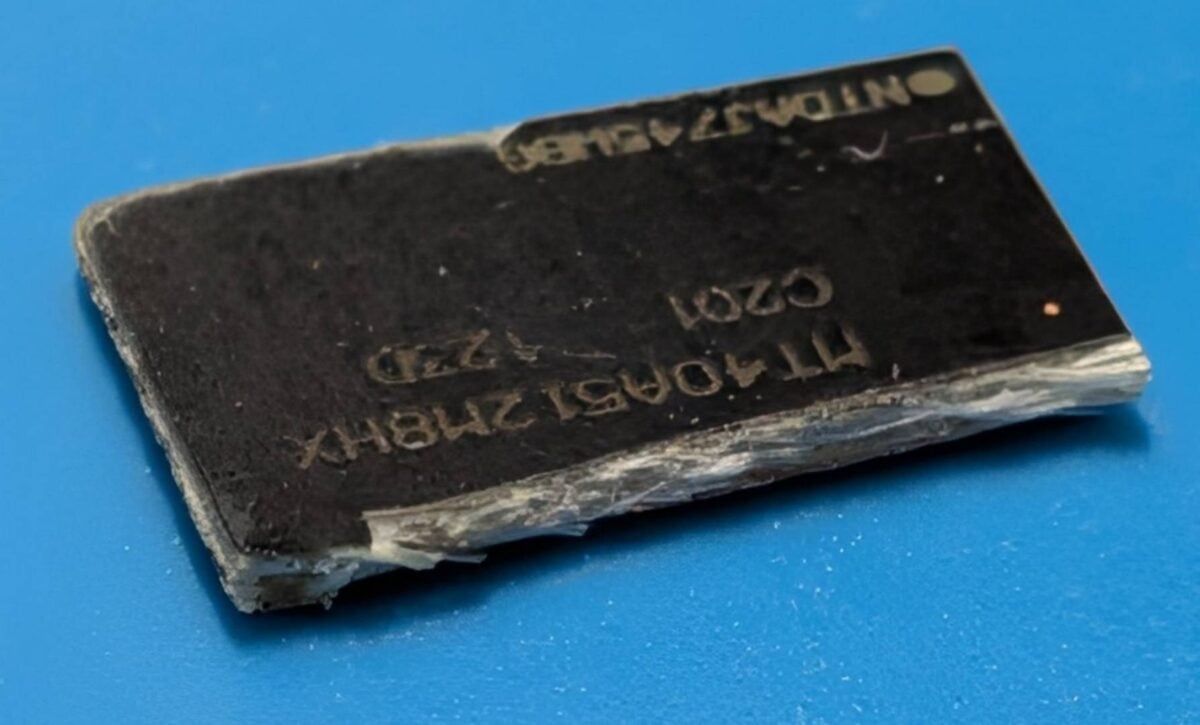
X user @taki_pc_1115 added that SK Hynix stickers – the large white labels containing the model number and details for the module, which cover the chips – are already circulating on auction sites. This could make it even harder to spot counterfeit modules.
Even worse, while you can check the chip markings and labels on these SODIMM modules, fake desktop UDIMM DDR5 sticks would be practically undetectable, as they tend to come covered by metal heatsinks. Meanwhile, another poster on X, haru_frisk, has spotted similar-looking modules listed on Japanese consumer-to-consumer ecommerce site, Mercari.
All of this wouldn’t be a thing, or at least not to the same degree, if memory prices weren’t going through the roof due to demand from AI datacentres. Higher prices force users to look for better deals, opening a window of opportunity for scammers to trick unsuspecting prey. The old adage stands correct: if it sounds too good to be true, it probably is. If you are buying RAM, make sure you purchase it from reputable stores and vendors with consumer protection policies.
To counter scammers, Corsair has started changing the packaging for some of its Vengeance DDR5 kits to reduce tampering and return fraud, where authentic products get swapped for fake ones before being sent out for RMA. Unfortunately, such scams aren’t going away anytime soon, so keep your eyes open whenever you’re buying memory.