
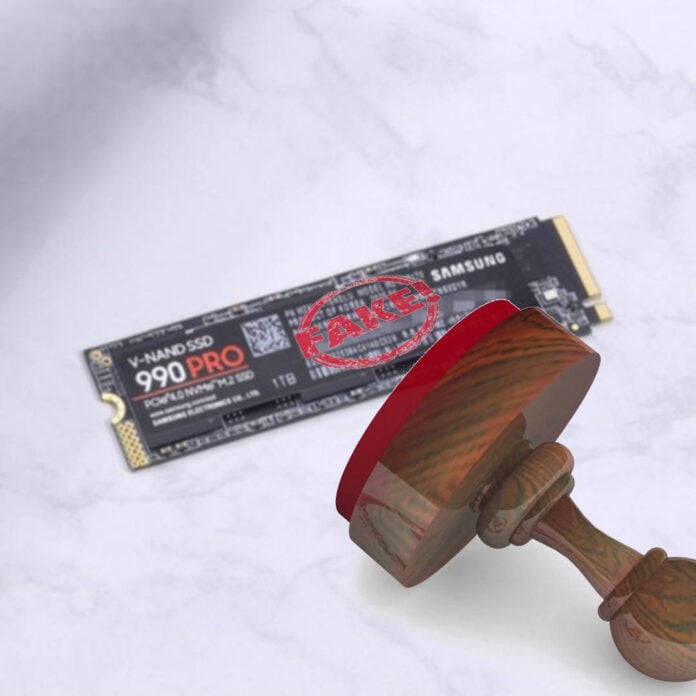
Drive health-monitoring tool CrystalDiskInfo 9.9.0 has been released. It features a small yet important change that should help protect new SSD buyers. This latest version can now detect fake Samsung SSDs, which have seen an uptick in counterfeits.
Due to the growing demand from AI datacentres for anything related to memory and NAND products, SSD prices saw an unusual price increase, jumping by 400% or more on some models. These higher margins attracted more and more counterfeiters who take advantage of users looking for a great deal in these difficult times.
While early counterfeits were easy to spot for a trained eye, new ones are pretty much indistinguishable from the genuine product. Some go as far as to emulate the controller to trick Windows into showing a genuine model name, making them undetectable outside of official software validation or benchmarking.
The latter can reveal early fake SSDs that use cheap and slow components, but the trouble is that new counterfeits can be nearly as fast as the genuine product. Thus, short of manually removing the drive’s sticker to check for fake NAND chips and controller, software detection remains the best and most user-friendly approach. For this reason, CrystalDiskInfo, a must-have software in your toolbox, is adding fake SSD detection. When detecting a counterfeit drive, the software clearly labels it as “FAKE”, so the owner can take action quickly.
While the developer hasn’t shared much detail on how the detection system works, we can assume it combines multiple identifying inputs, such as the firmware, SMART data, and controller model, to find any inconsistencies. Note however that while CrystalDiskInfo aims to simplify users’ lives with this tool, it’s not a replacement for official software like Samsung’s Magician, which can tell you with certainty if your drive is genuine or not.
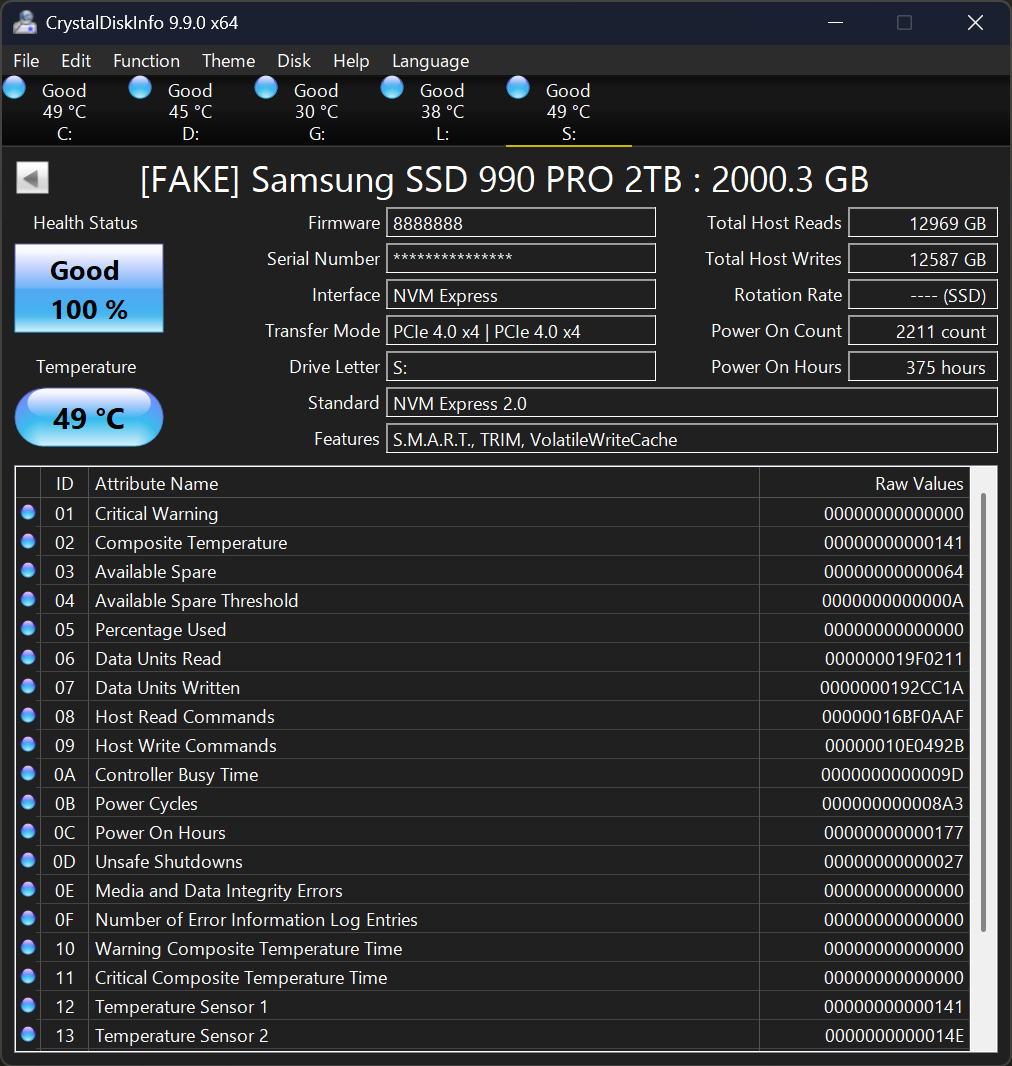
Fake SSD detection aside, version 9.9.0 also brings other small improvements, including support for the JMicron JMS59x USB-to-NVMe bridge controller and other bug fixes, though keep in mind that support for JMicron JMS59x is disabled by default. This update also improves DLL loading process security, which should block attackers from tricking the software into loading a harmful library.
Overall, a helpful change to a popular piece of software, and even if it only helps a couple of users to seek refunds in time on counterfeit drives, it’s a win. My only fear is that counterfeiters will be forced to find new, harder-to-detect ways to camouflage dodgy SSDs.