
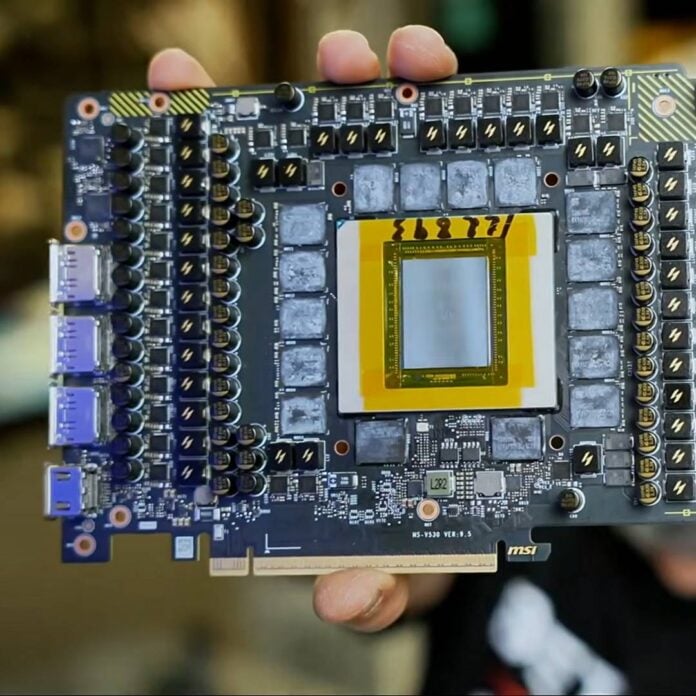
A novice modder has seemingly been too confident in their soldering skills, greatly damaging a £4,999 limited edition MSI RTX 5090 Lightning Z graphics card while attempting a resistor mod. This 1 of 1,300 available units was sent to renowned NorthridgeFix repair shop, which was baffled by the risks undertaken by the owner.
According to NorthridgeFix, the owner sent the card with a message stating, “I wanted to learn how to solder tiny 0402 resistors and was practicing on my GPU. I ended up ripping one of the pads and now the GPU will not post. If possible I’d like to repair the pad/trace and re-align the resistors.” Needless to say, the repair technician was baffled by this message, as no one would dare train their soldering skills on such an expensive and unique piece of equipment, right?
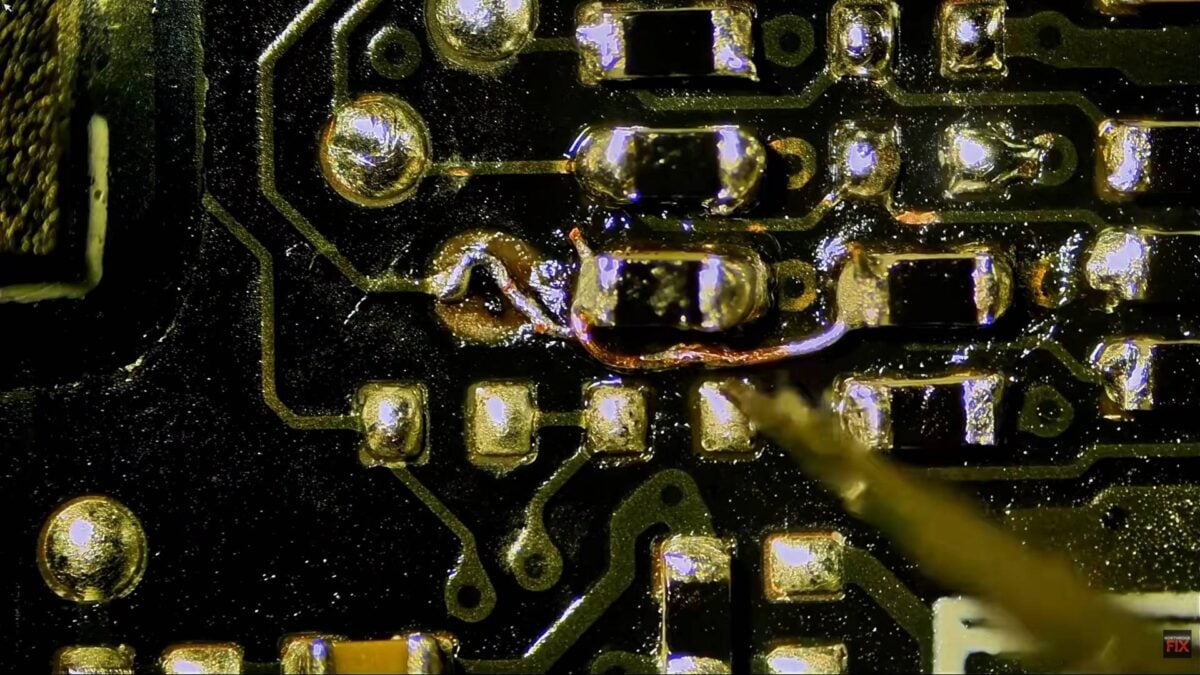
After putting the card under the microscope, NorthridgeFix found that multiple 100kΩ and 15kΩ resistors were missing, as well as some substantial damage to the PCB. For instance, a soldering pad was ripped, and a power trace was damaged. The latter was fixed using wires and a lot of soldering dexterity. As for the missing resistors, some were sent by the owner, while others were harvested from donor cards.
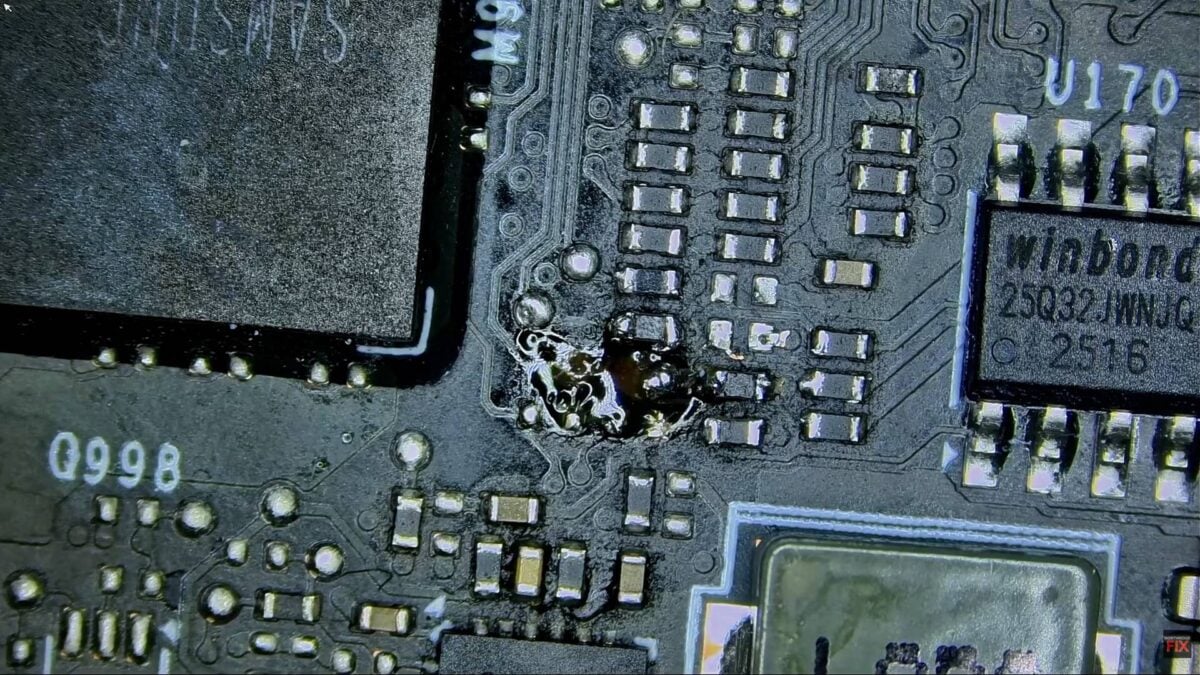
All things considered, the situation could have been much worse, as the botched operation was conducted pretty close to the GPU. A slip of a finger could send the hot iron towards the GPU or GDDR7 chips; good luck finding a replacement for those. Furthermore, damaging traces or imprecise soldering could have created a short circuit that would travel directly to the GPU core, frying it from the inside. Generally, modders tend to limit their upgrades to the area near the 12V-2×6 connectors, where the PCB is less congested.
Thankfully, the technician was able to fix all the visible damage, though without booting the card, yet. Due to its dual 12V-2×6 power cable requirement, the technician wasn’t able to test it further, though he said that he is confident in his fix. There is still a small chance that the GPU was damaged, since the owner indicated having powered the card on after the accident, but let’s hope for the best.
As for why someone would do this, it likely has to do with MSI’s XOC BIOS. As a reminder, the Lightning Z can be flashed with a special BIOS that allows the card to draw up to 2,500W. However, this BIOS was limited to the professional overclocking scene, sensibly so. This BIOS was leaked at some point, but MSI has reportedly requested its removal from host sites such as TechPowerUp. So, perhaps our overconfident owner was trying a new method to boost the maximum power limit of the card.
While MSI has the right to limit access to the XOC BIOS, I can’t help but think this situation would have been avoided given official availability of said firmware. But then, perhaps the owner would have cooked it in another way, likely fried with a crusty layer of molten plastic. Jokes aside, this shows that knowing your limits is as important as confidence – a lesson learned the hard way by this modder.