
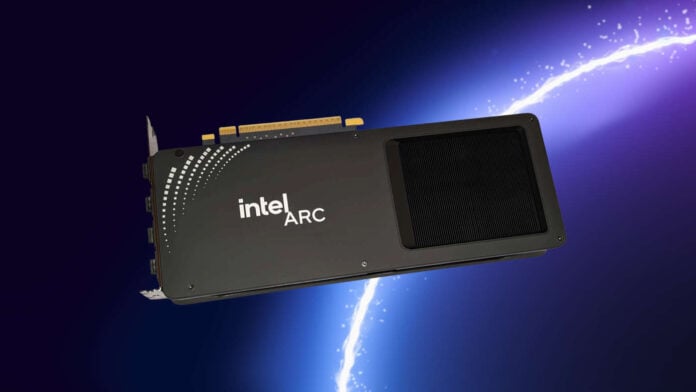
Intel is seemingly targeting a 300W power range for its upcoming Battlemage graphics cards, which aligns with the rumoured BMG-G31 GPU sporting the Arc B770. This supports recent reports and findings confirming that the Battlemage architecture hasn’t had its final word yet.
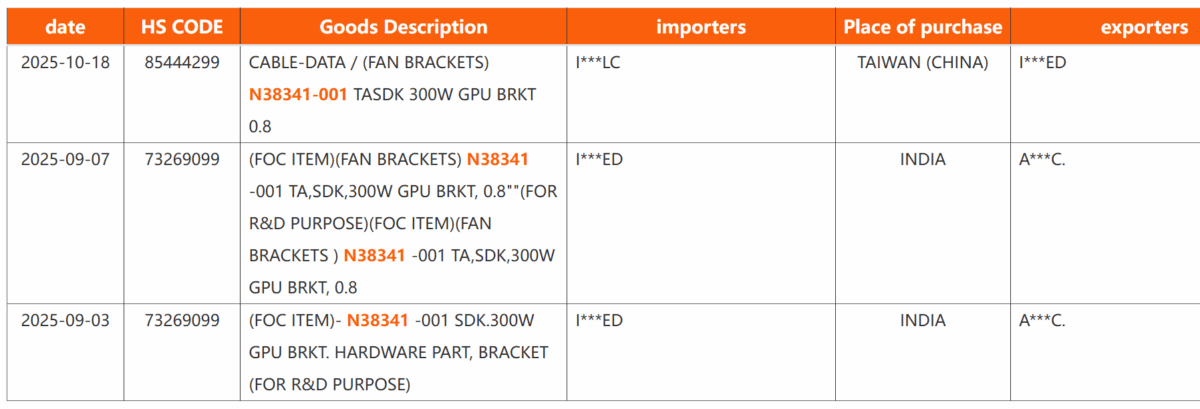
According to new customs listings, Intel has shipped R&D parts from India and Taiwan, described as “N38341-001 TASDK 300W GPU BRKT 0.8,” which matches the code of earlier hardware entries such as the “M19826-306” used by the Arc B580 Limited Edition PCB. Considering the higher 300W rating, these parts are believed to be related to the BMG-G31 GPU, reinforcing the existence of an Arc B770 gaming card.
While a 300W board power is a significant increase compared to existing models, such as the Arc B580’s 190W, it shows nearly perfect scaling. As a reminder, until now, Intel’s discrete graphics topped at 225W on the Arc A770, making this design the brand’s highest-ever rating in the consumer segment.
This 300W budget represents a 57.8% increase over the B580, which practically matches the rumoured 60% increase in Xe2 cores expected on the BMG-G31. The latter is said to pack 32 Xe2 cores alongside 16GB of GDDR6 memory on a 256-bit bus. This power rating also suggests that the card will be larger than its predecessor to house a strong-enough cooling assembly capable of dissipating all this heat.
A 300W budget would put this hypothetical Arc B770, or the professional models resulting from it, alongside the RX 9070 XT and RTX 5070 Ti in terms of power consumption. Unfortunately, performance is unlikely to scale this far up, at least if the rumoured specs are correct. At best, the B770 would beat the RTX 5060 Ti 16GB and the RX 9060 XT 16GB cards. An aggressive factory overclocking may push it further, but even so, the RX 9070 XT and RTX 5070 Ti would remain too powerful for the Intel hardware to be a real contender to their thrones.
Now, regarding power delivery, such a card would need at least two 8-pin connectors or a single 12V-2×6. The latter is better left aside due to its unsatisfactory safety margins, not to forget the rare presence on the old midrange PCs that may be tempted by an Arc B770.
If such a card is ever to be released, Intel will probably unveil it during the upcoming CES 2026. Though it remains to be seen how rising memory prices will impact its price.