
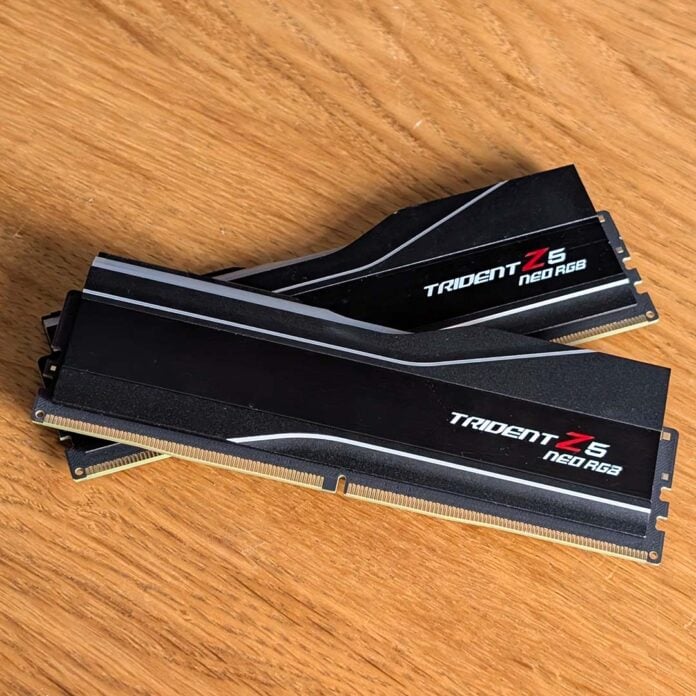
Lenovo has declared RAM and SSD prices will “probably never” return to the wallet-friendly levels seen in 2025. While the company half-jokingly made this claim, it doesn’t believe additional capacity from memory manufacturers will see us return to the good old days of relatively affordable memory.
During its International Supercomputing Conference 2026 presentation, as reported by ComputerBase, Lenovo said we should expect a “new normal” for RAM prices to emerge from 2030 onwards. While higher production capacity from manufacturers will help to reduce costs, the firm foresees demand continuing to remain relatively high across data centre and consumer markets.
Conditions are so dire on the enterprise side that Lenovo has created a ‘5-step RAMageddon Survival Guide’ for prospective server purchasers. The company argues that the importance of system memory capacity has grown significantly in the wake of rising DRAM prices, as acquiring DIMMs regardless of price has become far more difficult over the past year.
Lenovo’s comments echo those made by other major players in the PC space. For instance, ADATA states tight RAM supply is the new normal, while enjoying a 2,800% jump in profit. Meanwhile, NAND remains in similarly short supply, with Kioxia declaring that the age of cheap SSDs is over.
It’s not all doom and gloom, though, as AMD takes a more optimistic view of the crisis, claiming the RAM market may need two years to return to normal. Motherboard manufacturers are also looking for means to relieve pricing pressures on the consumer market, with MSI debuting HUDIMM support on some boards.
If there’s one thing all these statements have in common, it’s the sense that the RAM shortage isn’t going away anytime soon. While the Steam Machine and Steam Deck are high-profile casualties of these conditions, we can expect to see prebuilds and individual components sporting higher-than-usual prices for a while yet.