
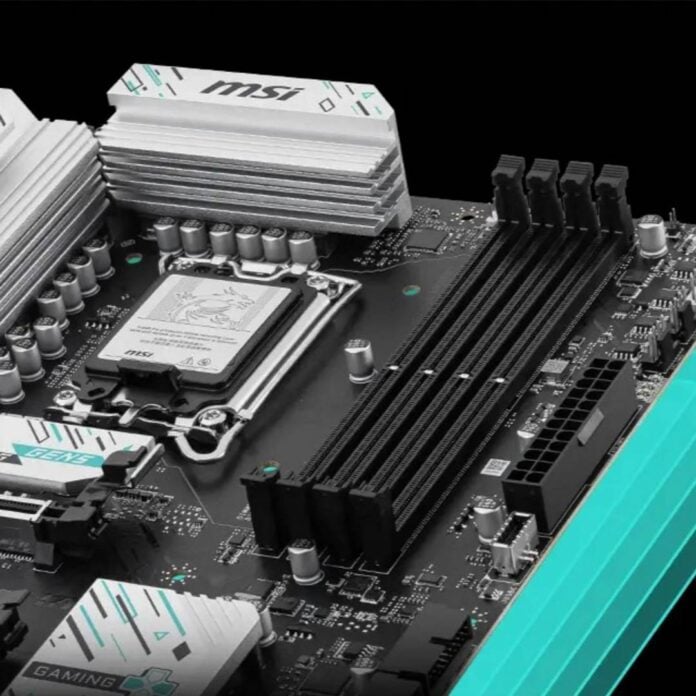
MSI has started deploying memory support on its Intel-based motherboards, which it says makes them ready for the “next wave of affordable memory.” HUDIMMs use fewer chips on each DDR5 module, and use a single 32-bit channel, which reduces the cost of production.
Introduced in 2026, the HUDIMM (half unbuffered dual in-line memory module) format provides more flexibility for users planning to build a new PC. It targets budget builds and office machines, where extravagance isn’t the priority, particularly in these times when supply constraints are being caused by the AI industry’s thirst for memory.
To do so, HUDIMM cuts the link between a DDR5 module and your CPU’s memory controller from dual 32-bit sub-channels (64 bits total) into a single 32-bit channel (32 bits total). This allows each module to pack half as many memory chips as traditional UDIMM DDR5 modules, reducing production costs, and hopefully the sale price too.
MSI says that by optimising the DRAM chip count per module, HUDIMM enables memory manufacturers to reduce production costs significantly, which should help entry-level builders who were previously constrained by high component pricing. That said, HUDIMMs aren’t immune to future DRAM chip price rises; it’s just that the final cost is likely to be lower than that of traditional DDR5 modules.
Unsurprisingly, cutting out half the bus will have an impact on performance, specifically bandwidth. According to earlier reports from HKEPC, your total bandwidth will drop by roughly 45–50% when using HUDIMMs compared to equivalent DIMMs. To be exact, performance decreased by 44.9% in reads, 48.4% in writes, and 48.9% in copy tasks. Users also have the option of going for a dual-channel HUDIMM kit, which should provide a similar performance to a single traditional DDR5 module. Though it remains to be seen which will be cheaper between two HUDIMM modules and one UDIMM module.
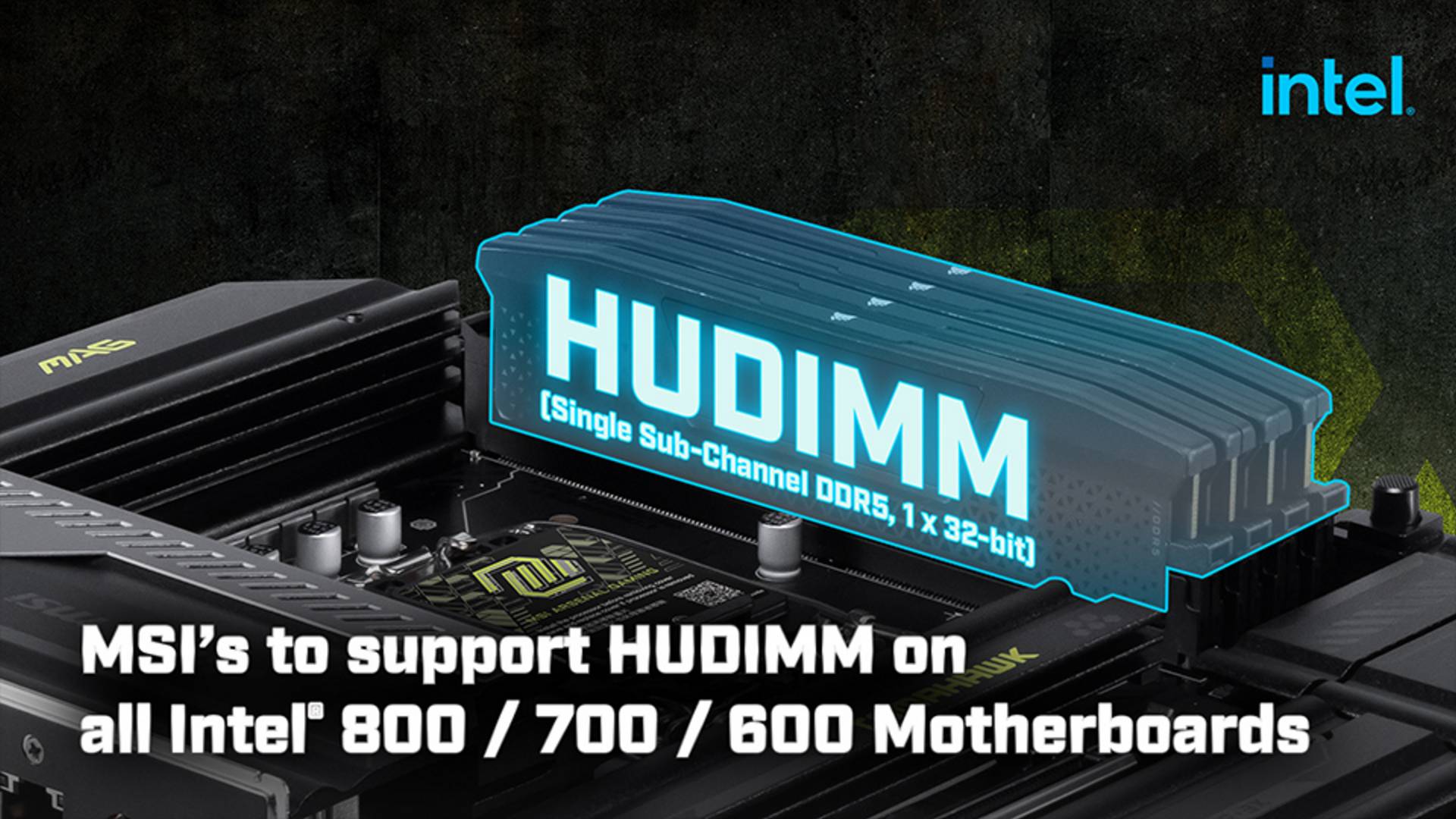
MSI says that HUDIMM memory will be a drop-in installation for users of supported boards on all its motherboards based on Intel 600, 700, and 800-series chipsets, so don’t forget to update your BIOS if you are interested in these modules. This would also be a useful option for AMD’s X3D CPUs, which care less about memory performance, but for now, this technology is exclusive to Intel platforms.
Overall, HUDIMM memory should provide a more affordable alternative to regular UDIMM DDR5 memory modules, but at the cost of some performance. Users running light or less memory-intensive tasks should see little performance impact, but hopefully save a decent amount of money in the process.