
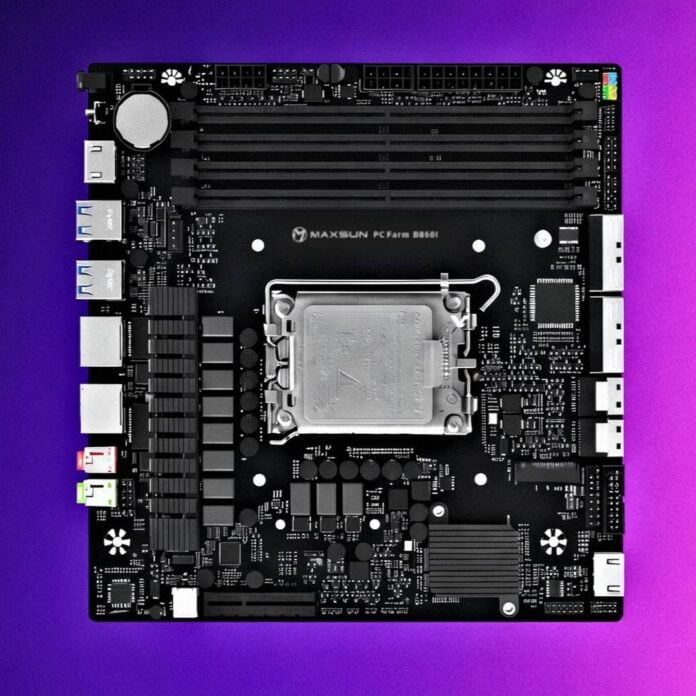
Chinese motherboard maker MaxSun has unveiled two new small form factor boards with a unique take on PCIe connections. Instead of offering a PCIe x16 slot, these boards opt for two MCIO connectors, which allow them to transfer PCIe lanes via cables.
MaxSun presented two boards with the MCIO connector, the MS-Challenger MCIO ITX and MS-PC Farm B860I. Both are based on Intel’s 800-series chipsets, with plans for Q870, Z890, H810, and B860 models. The most interesting ones are likely to be models based on Intel’s Q870 and Z890 chipsets, as they support PCIe lane bifurcation in x8 + x8 or x8 + x4 + x4 modes.
This feature is important, since the main x16 slot has been removed in favour of two MCIO connectors, which can technically transmit eight lanes each. The MS-PC Farm B860I also appears to have relocated the MCIO connectors to its side to keep what looks like an x4 or x1 PCIe slot.
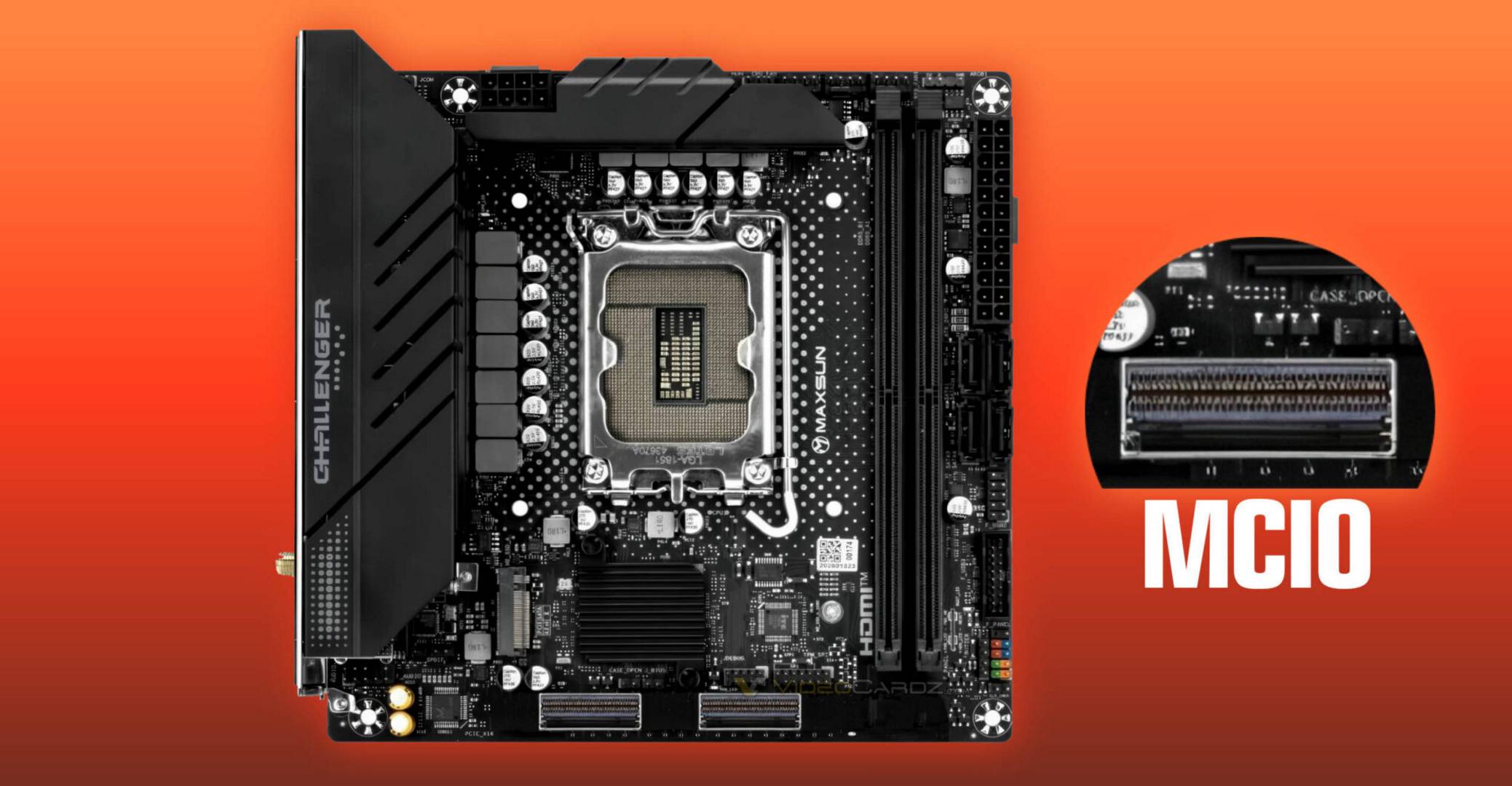
What is this connector, you may ask? Well, MCIO (Mini Cool Edge I/O) is a compact, high-performance internal connector system designed to route high-speed signals such as PCIe, SAS, and CXL through cables. It’s somewhat similar to the OCuLink cable and connector used on external GPU enclosures, which also carries native PCIe signals via cables. MCIO is a more modern and capable implementation, supporting up to x16 lane transmission, as well as the latest PCIe speed standards. It’s even PCIe 6.0-ready, which makes it highly valuable for professional use cases where every bit matters.
It was originally developed for servers and high-speed storage systems, where traditional PCIe slots would waste valuable space. A PCIe x16 slot is physically large, measuring about 89mm long, while also requiring a sizable clearance area around it. So, to avoid these limitations, MCIO can carry these PCIe lanes towards a PCIe riser, storage cage, or an external enclosure. PCIe 5.0 MCIO cables can technically reach up to 1m, but generally they’re found in 75cm or 80cm lengths, or shorter on PCIe 6.0 cables.
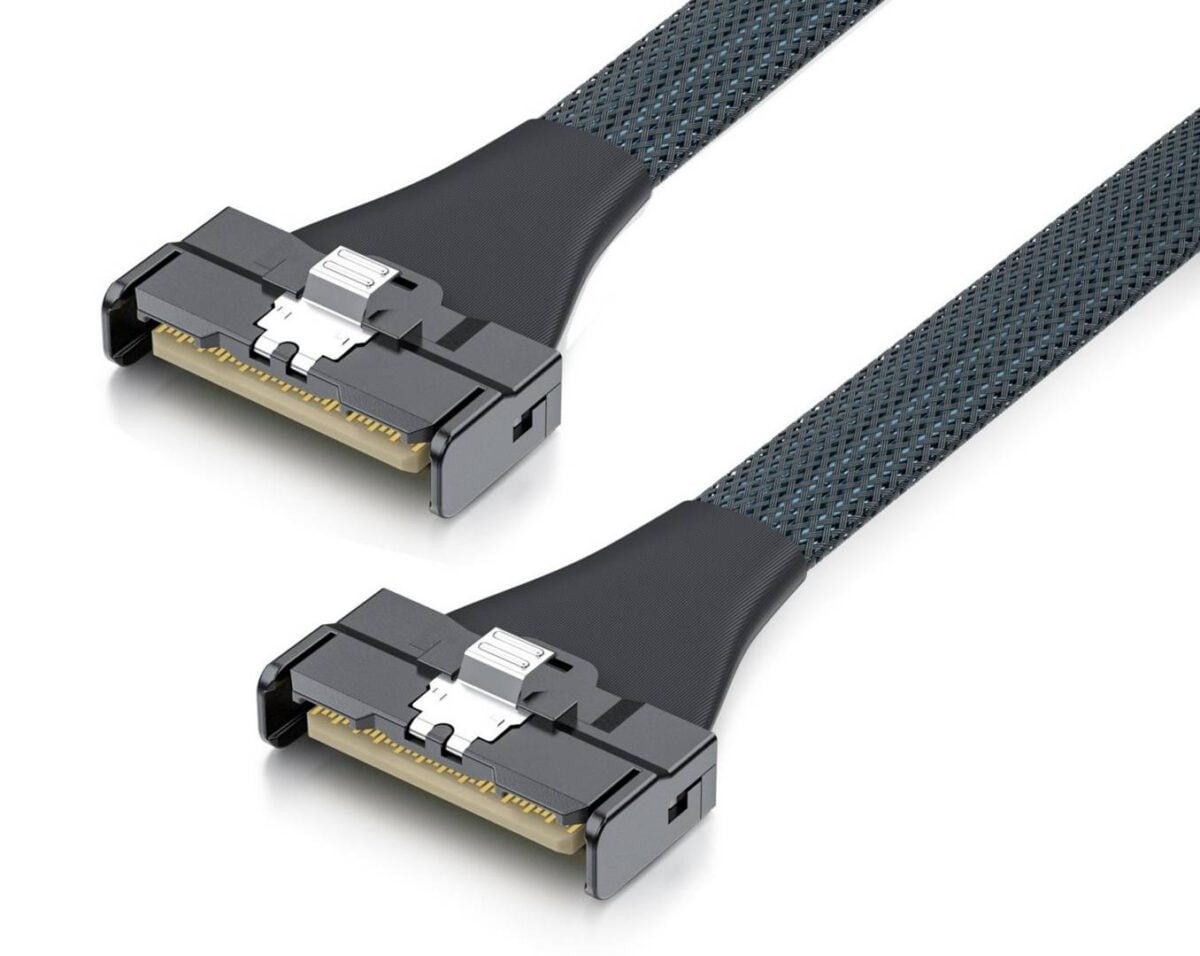
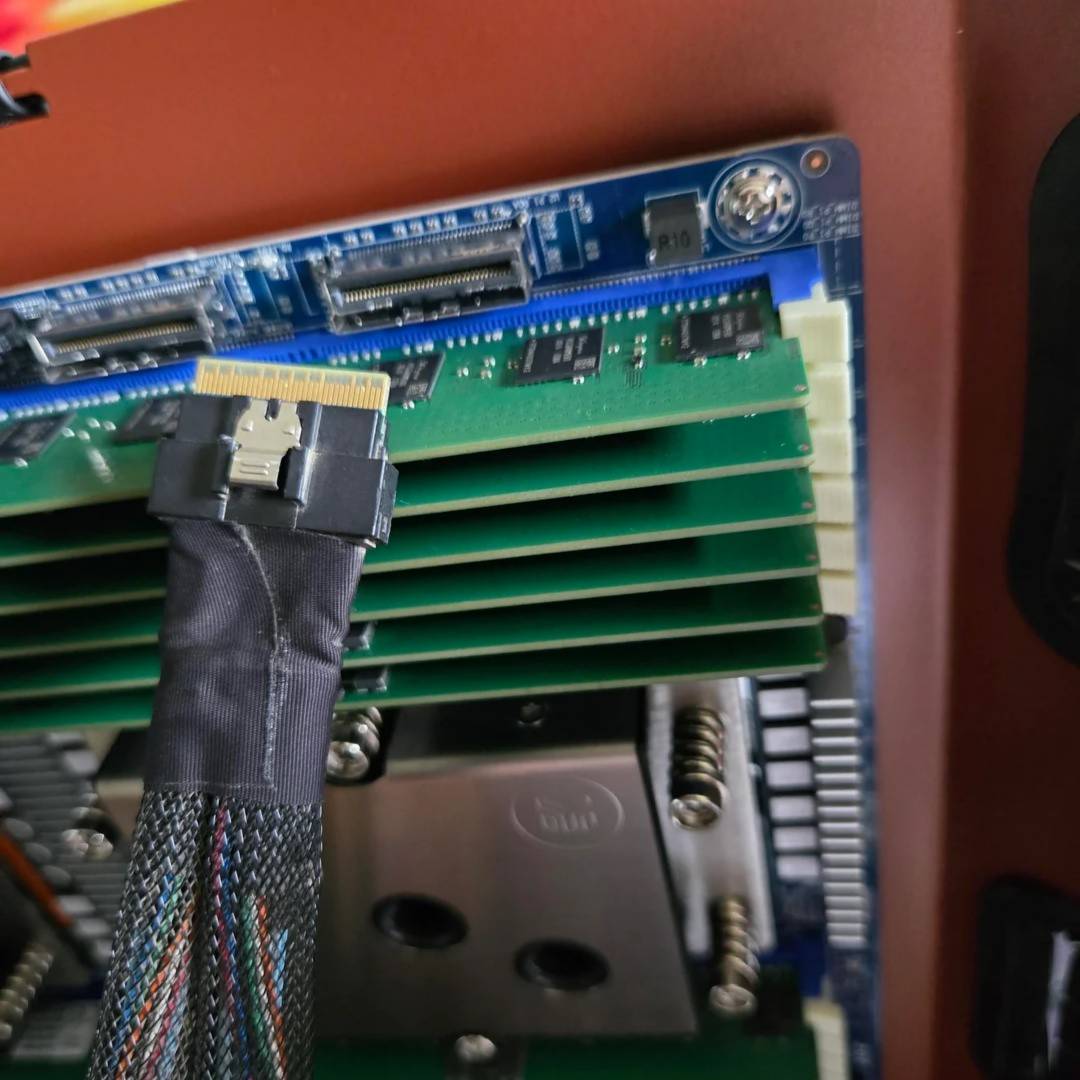
By using cables instead of slots, system builders can be more flexible about how they connect GPUs, high-speed NVMe storage, and networking modules. Unsurprisingly, there isn’t much call for MCIO on desktop PCs, as traditional riser cables are usually more than sufficient for any custom GPU orientation.