

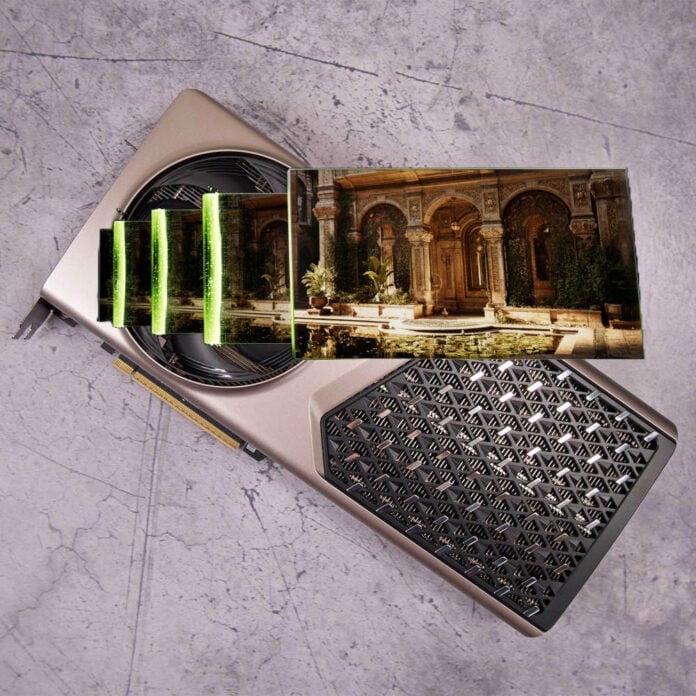
Nvidia has reaffirmed spring as a release timeframe for its Dynamic Multi-Frame Generation and 6x Multi-Frame Generation (MFG) features, for those owning RTX 50 Series GPUs. These work hand in hand to ensure high-refresh-rate display owners get the smoothest experience with minimal impact on image quality and latency.
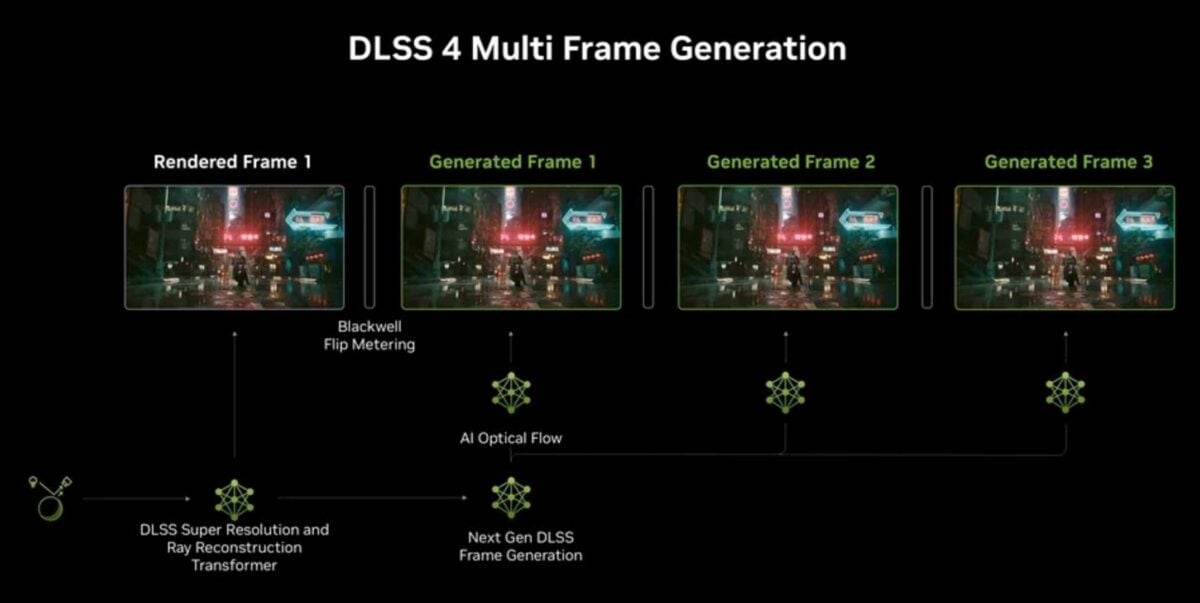
Exclusive to RTX 50 Series GPUs – at least in the beginning – this DLSS MFG update will push the generated frame limit from three previously to five. These entirely AI/machine-learning made frames will be added on top of the originally rendered frame, totalling six, hence 6x MFG. This means that a game natively running at 100fps would end up delivering somewhere around 600fps, minus any generation overhead costs. As usual, a higher base fps is recommended to reduce artefacts and improve latency.
That said, since the 6x FMG remains based around the same generation process as single or 4x frame generation, which holds two rendered frames to generate what fits in between, the latency impact is still a concern. The good news is that the smoothness should feel closer to what you would get playing the game at that speed, but your actions may feel a bit delayed if you are sensitive to latency. Seeing the speed at which monitor technology advances, MFG will be required to take advantage of the upcoming 1,000Hz+ displays.
However, on setups using 240Hz or 360Hz monitors, MFG could easily exceed the monitor’s max refresh rate. To avoid that, Nvidia is also introducing Dynamic MFG, which determines the correct MFG multiplier to apply to remain within the monitor’s range. For example, a game running natively at 60fps on a 180Hz monitor would need just a 3x MFG mode.
Most importantly, this rate won’t be fixed, as it will automatically vary depending on the game scene load, generating more or fewer frames as needed to fill the gap. This will also reduce the number of generated frames and subsequently the likelihood of noticeable artefacts. As Nvidia puts it, Dynamic MFG aims to strike the perfect balance between frame rate, image quality, and responsiveness.
Assuming Nvidia sticks to its plans, we should see Dynamic MFG and 6x MFG anytime between March and May, further widening the technology gap between it and AMD. As a reminder, AMD has yet to launch an alternative to Nvidia’s regular 4x MFG, let alone the newer 6x or the dynamic mode. Yet, as usual, modders have found their own workaround for Radeon owners. As for Intel, the company has just recently released its solution, but it’s limited to 4x MFG with no dynamic option.