
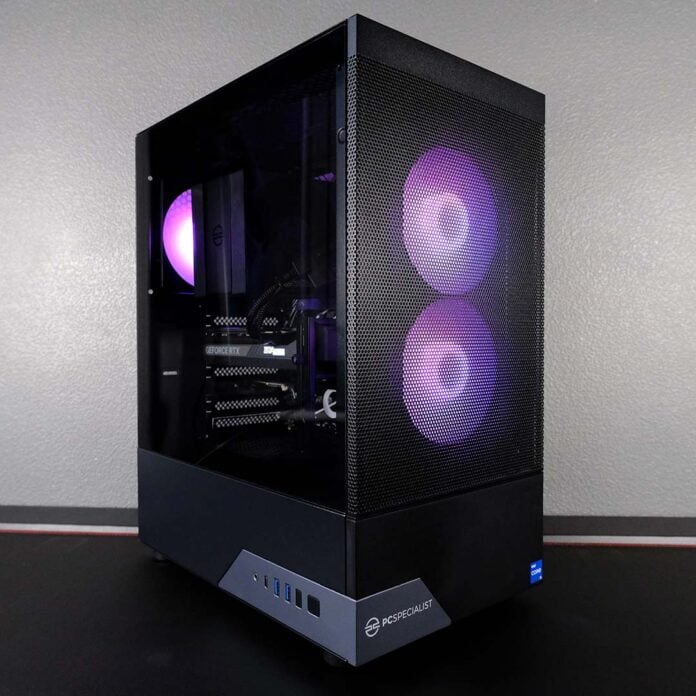
Current component availability and pricing make putting together a mid-range gaming PC more of a headache than it should be, but pre-builds such as the PCSpecialist Storm Elite II offer welcome respite in these dark times. Offering plenty of performance at a reasonable price, in addition to a high-quality finish, there’s little more you can ask from a PC in these times.

PCSpecialist Storm Elite II
£1,649
Pros
- Solid FHD/QHD gaming pace
- Good thermal management
- Quiet under load
- Fair price
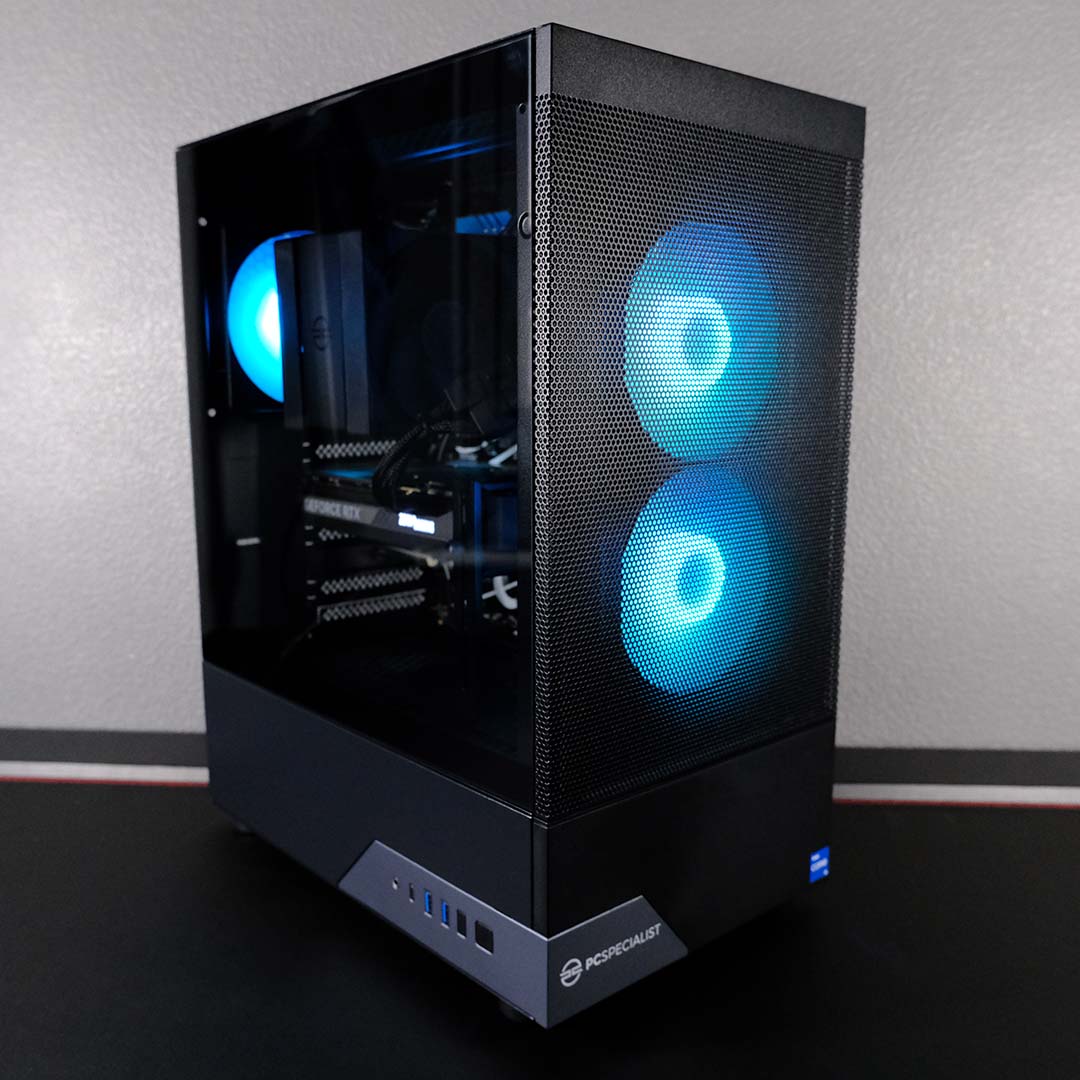
- Attractive finish
Cons
- Middling CPU performance
- Messy GPU power adaptor
Club386 may earn an affiliate commission when you purchase products through links on our site.
How we test and review products.
Retailing for £1,649, the Storm Elite II commands a reasonable cost for its components and surrounding support from PCSpecialist. The company has been smart with its priorities, focusing on gaming value above all, to excellent effect.
Specifications
Processing duties in the Storm Elite II fall to an Intel Core i5-14400F CPU, with the ‘F’ suffix denoting a lack of integrated graphics. This CPU boasts a healthy core of 10 cores, made up of six P-cores and four E-cores, while Hyper-Threading on the former gives it a total of 16 threads.
However, the chip’s 4.7GHz maximum boost clock does slightly pale in comparison to modern AMD and Intel alternatives of the same class. Note there’s no overclocking support on this chip either, so you can’t push frequencies any higher, unlike on a ‘K’ model.
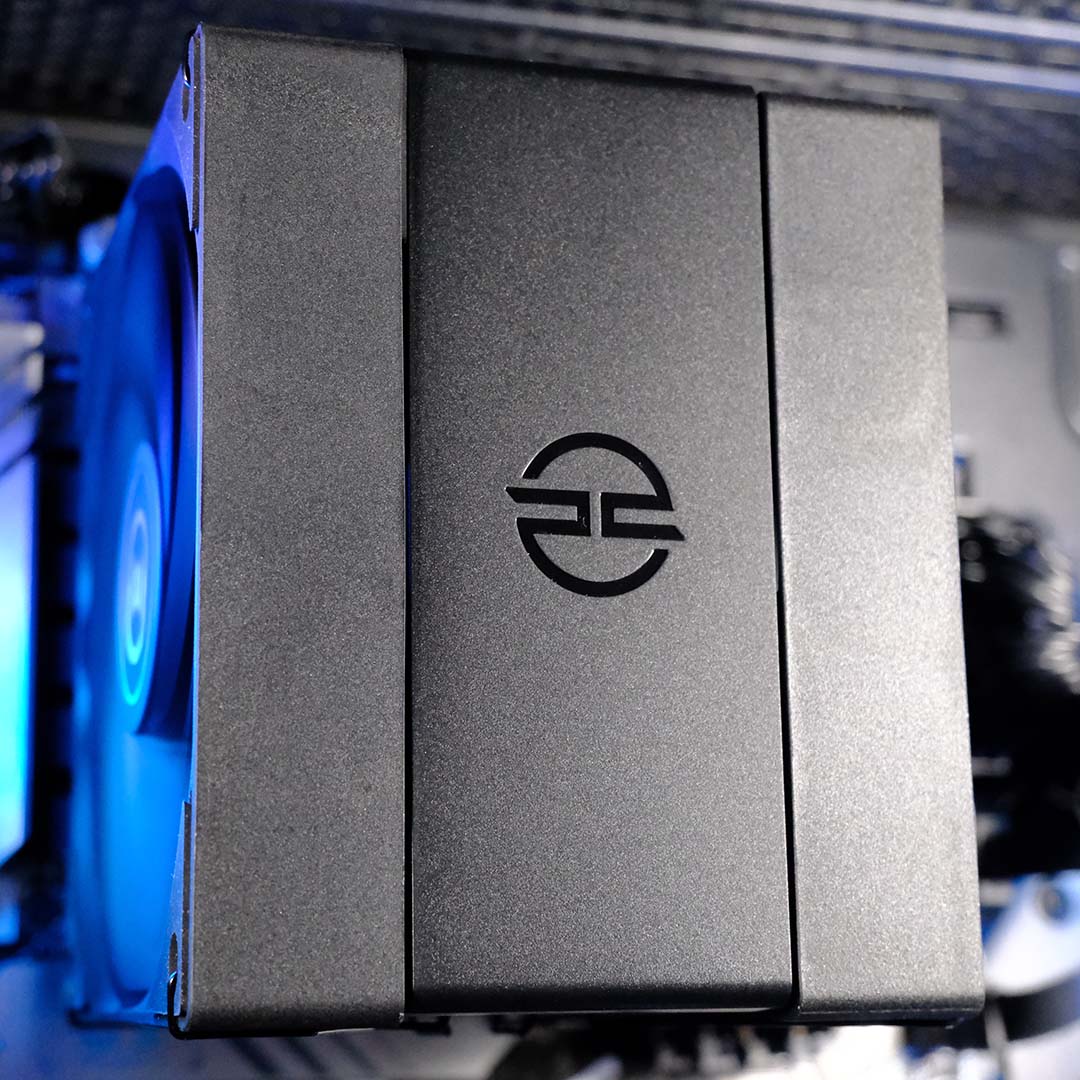
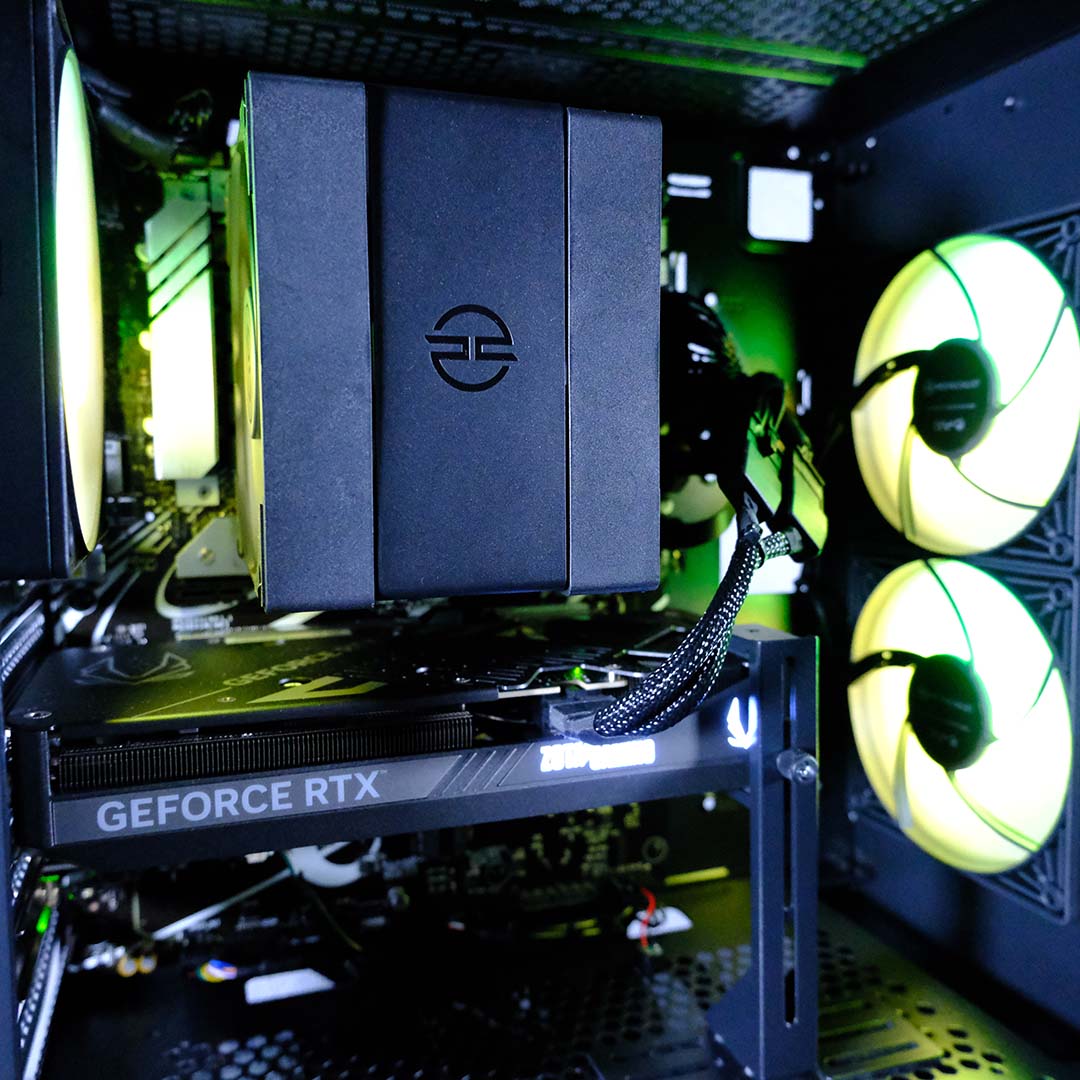
A PCSpecialist AS-150 air cooler keeps the Core i5-14400F’s temperatures in check. Two 120mm fans sandwich the heatsink, and their plastic frames have a matte, textured effect that matches the PCS-branded cover for the heatsink. While there are no RGB frills on this big, black, block, the setup is more than up to the task of cooling the 65W CPU.
| PCSpecialist Storm Elite II | |
|---|---|
| CPU | Intel Core i5-14400F |
| CPU cooler | PCSpecialist AS-150 |
| Motherboard | Asus Prime B760-Plus |
| GPU | Nvidia GeForce RTX 5070 |
| RAM | 32GB (2x16GB) PCS Pro DDR5-5600 CL46 |
| SSD | 1TB PCS PCIe NVMe SSD |
| PSU | 750W Corsair CX-750 |
| Other features | Bluetooth 5.0 2.5Gb Realtek Ethernet Wi-Fi 6E |
| Case | PCS Prism III ARGB |
| Operating system | Windows 11 Home |
| Warranty | Three years labour, one year parts, six months collect and return |
| Price | £1,649 |
It’s a pleasant surprise to see 32GB of RAM in a prebuild of this price, given the current state of the memory market. Better still, PCSpecialist has outfitted the Storm Elite II with two sticks of DDR5, netting the system the performance benefits of dual-channel operation.
While memory capacity is plentiful in this rig, it’s clear that both speed and timings have taken a hit to keep costs down, clocking in at 5,600MT/s and CL46, respectively. These are reasonable compromises to keep 32GB affordable, but I should also note there’s no XMP profile on these DIMMs to push beyond these limits without manual overclocks. In an ideal world you’d have faster RAM here, but this is a sensible compromise under current market conditions.
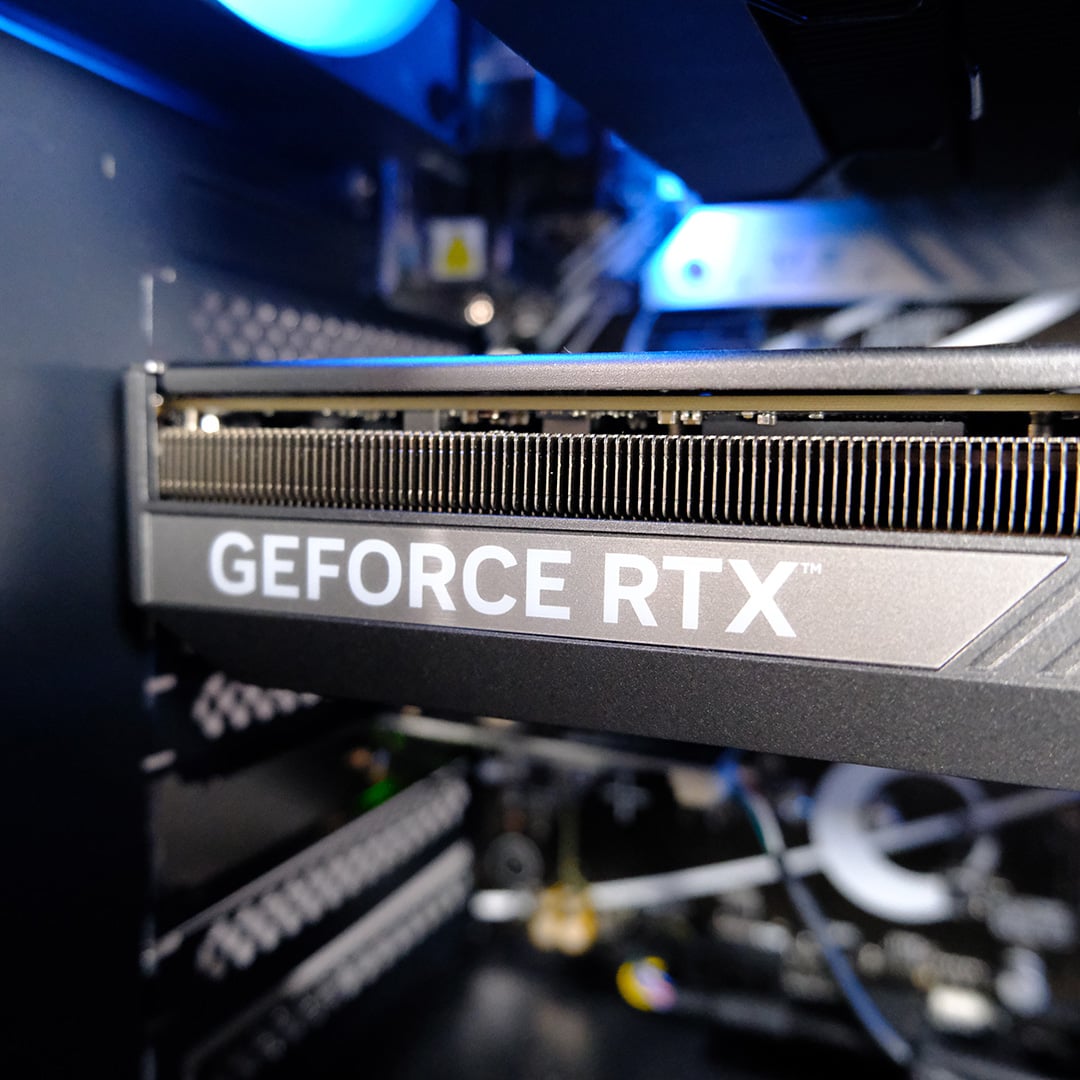
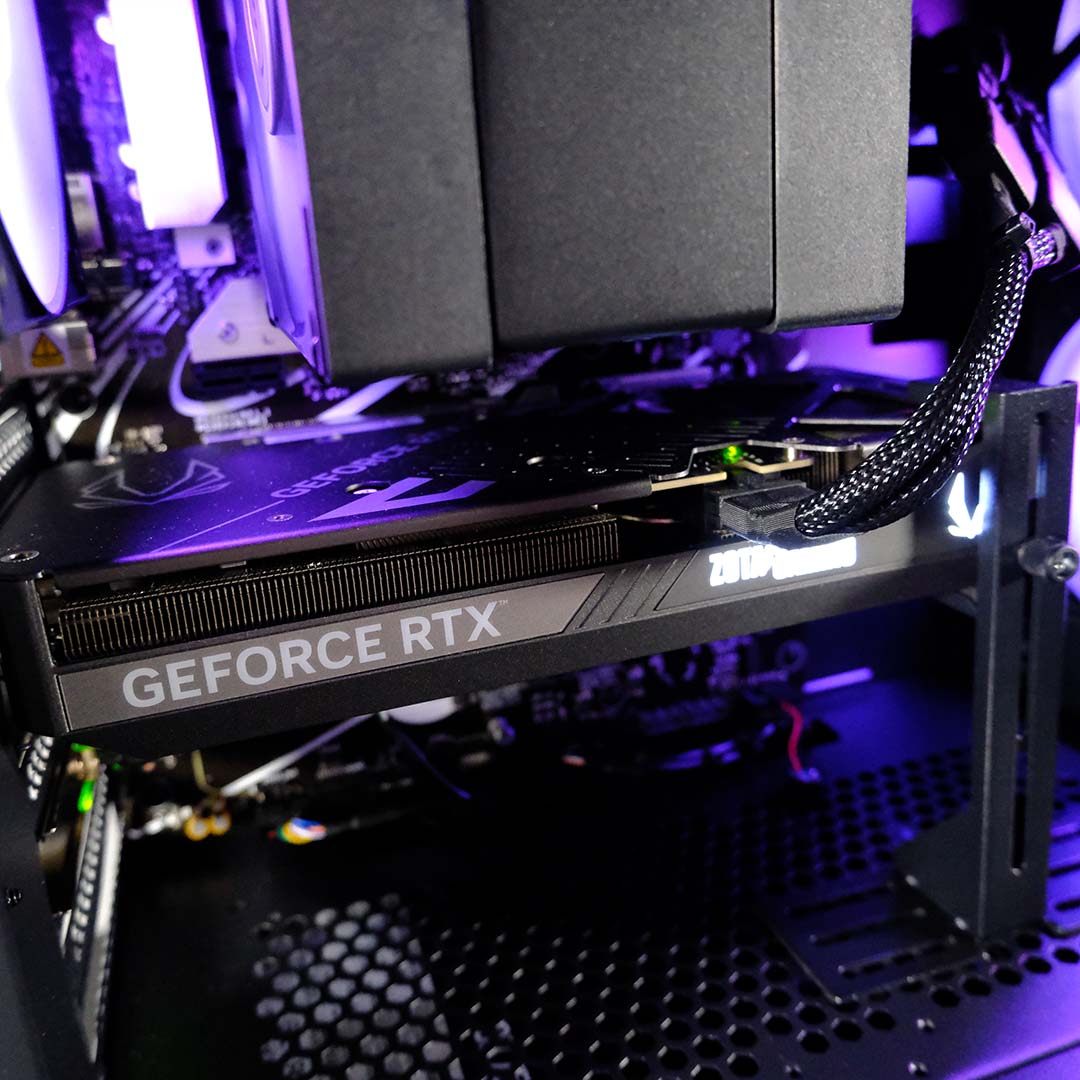
An Nvidia GeForce RTX 5070 serves as the Storm Elite II’s graphics card, netting the system a solid amount of pixel-pushing power for FHD and QHD gaming. Its 12GB VRAM buffer does require a small degree of micromanagement in the face of some memory-hungry settings, particularly at the latter resolution, but this is more the exception than the rule.
The GB205 GPU at the heart of the RTX 5070 performs well in its own right, for both raster and ray tracing, but the die can stretch its legs much further with the assistance of DLSS 4.5. I’ll discuss the wider benefits of this tech suite later in this review. For now, just know that the likes of DLSS Super Resolution, frame generation, and more help make Blackwell graphics cards such as this one gain an advantage over their competitors.
Our sample rocks a Zotac Twin Edge cooler, but the PC you’ll be able to order will come with an MSI Ventus 2X OC. Frame rates will be broadly similar across the two models, but there may be some variation in noise levels and thermals relative to results described further in the review.
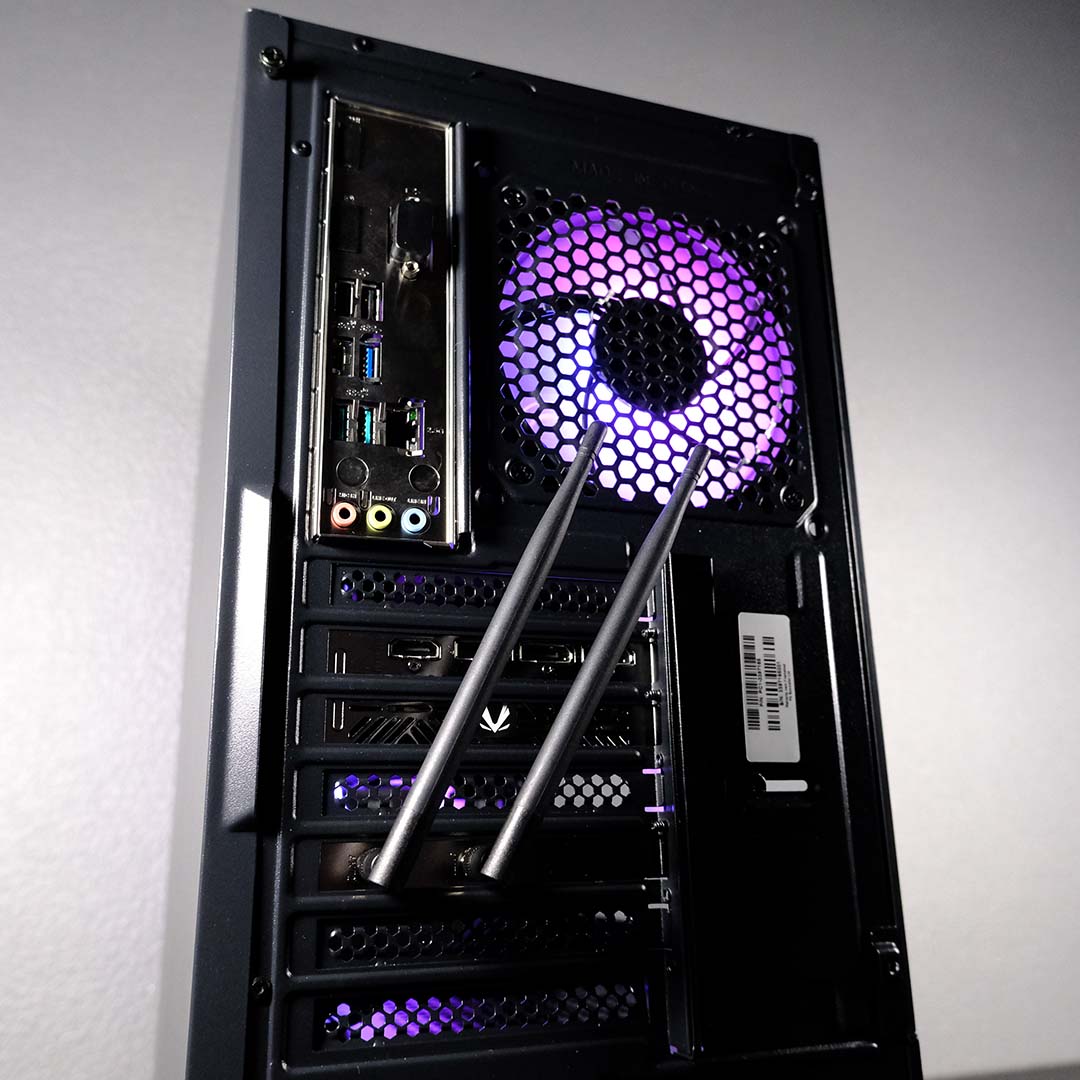
All of these components call an Asus Prime B760-Plus motherboard home. This board’s budget-friendly B-series chipset lacks support for CPU overclocking, limiting potential upgrade paths, but there’s no immediate loss here, as the Core i5-14400F isn’t multiplier-overclockable anyway.
The primary PCIe expansion slot runs at Gen 5 x16 speeds, extracting every drop of performance from the RTX 5070, while also giving you an upgrade path for future GPU purchases. PCSpecialist combats the motherboard’s lack of a built-in wireless connection by using its PCIe 4.0 x16 slot to run an add-in card, giving this system stable and reliable Wi-Fi 6E and Bluetooth 5.0 connections.
There are several PCIe Gen 4 M.2 ports across the PCB, with the topmost one benefiting from a passive heatsink. Despite the available headroom, the Storm Elite II offers up a Gen 3 x4 SSD. Given current storage prices, this is a reasonable compromise to keep the affordability of the system in check.
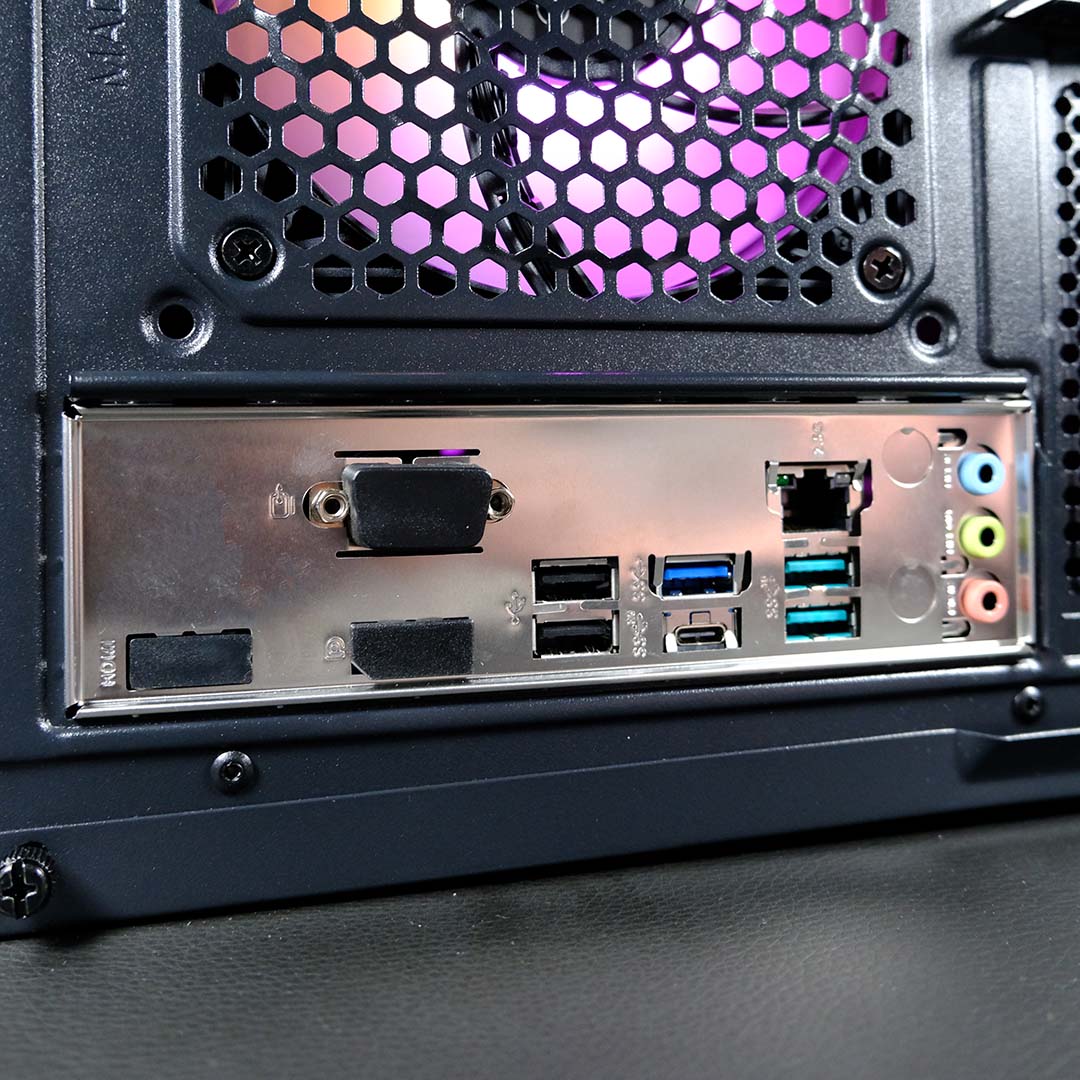
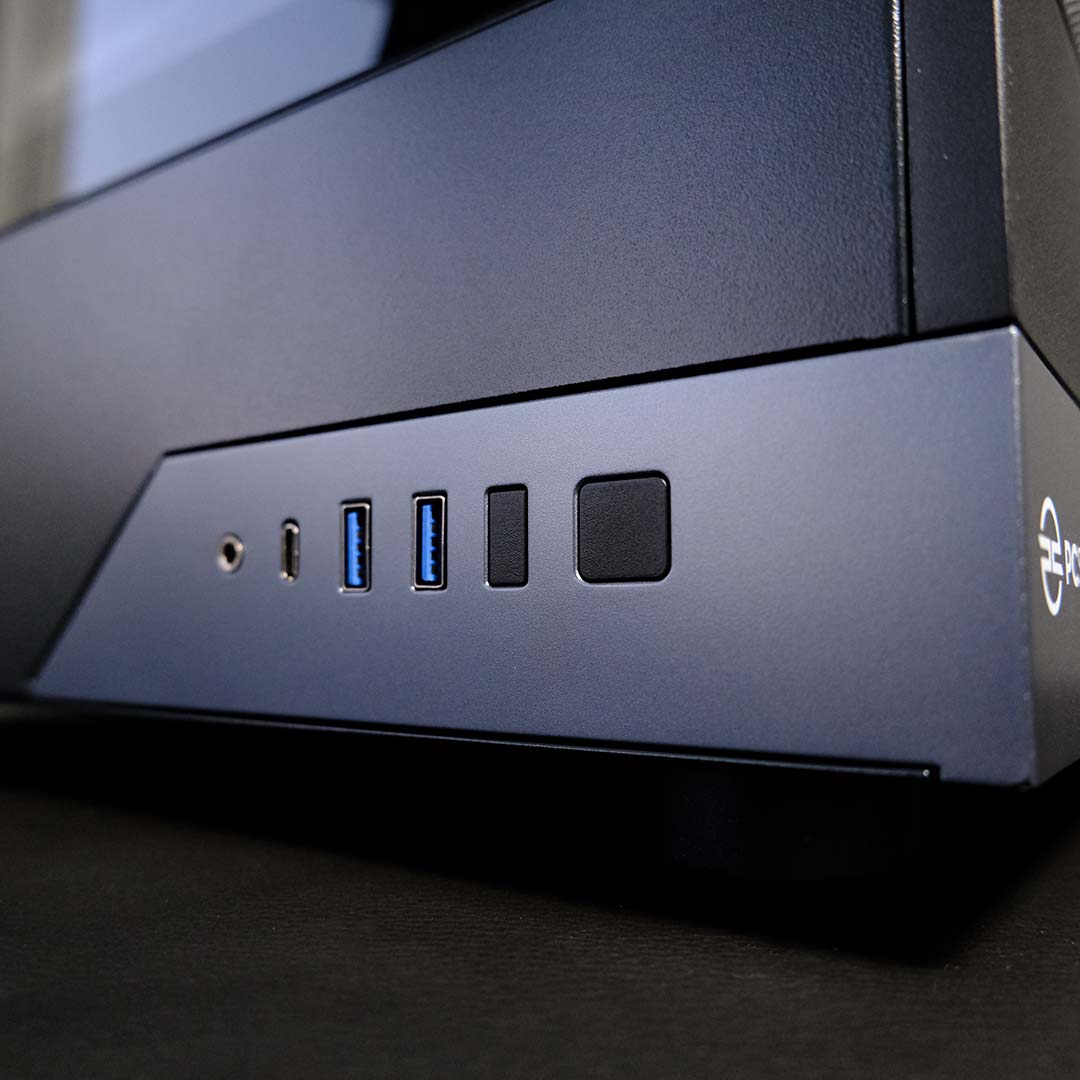
In terms of USB connections, the Asus Prime B760-Plus affords the Storm Elite II a small, if soundly speedy, selection. A single 10Gb USB-C port and two 10Gb USB-A sockets lead the charge, complemented by a 5Gb Type-A connector, and two 480Mb USB 2 ports.
This USB selection is certainly enough to service a mouse, keyboard, and headset, along with several other peripherals. That’s not forgetting the two 5Gb USB-A ports and 10Gb USB-C on the case itself.
I’ve cut the cord when it comes to networking on my PCs, but the 2.5GbE port here offers more than enough bandwidth for most home networks. Running from my 1Gb router, I had zero issues with speed or connection quality.
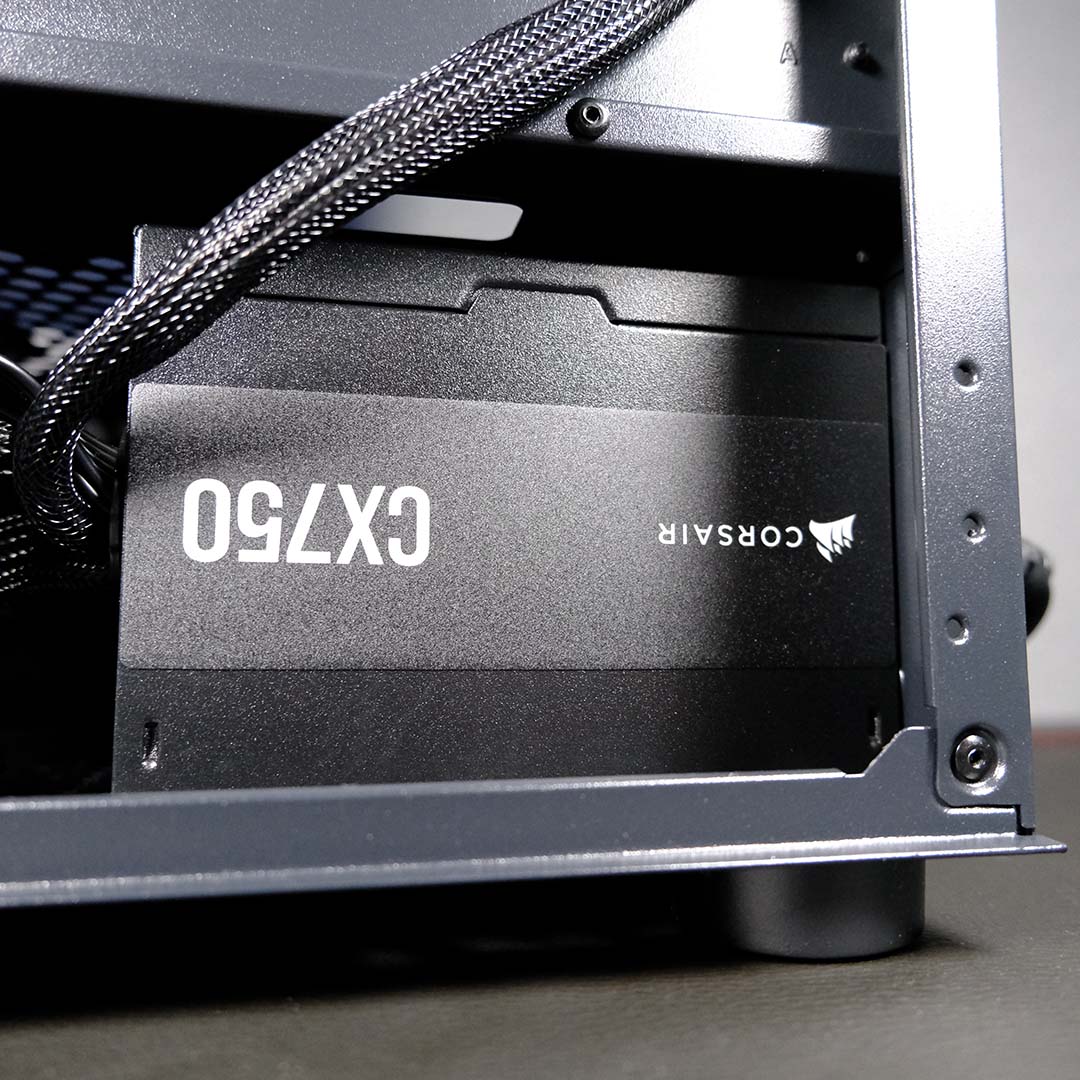
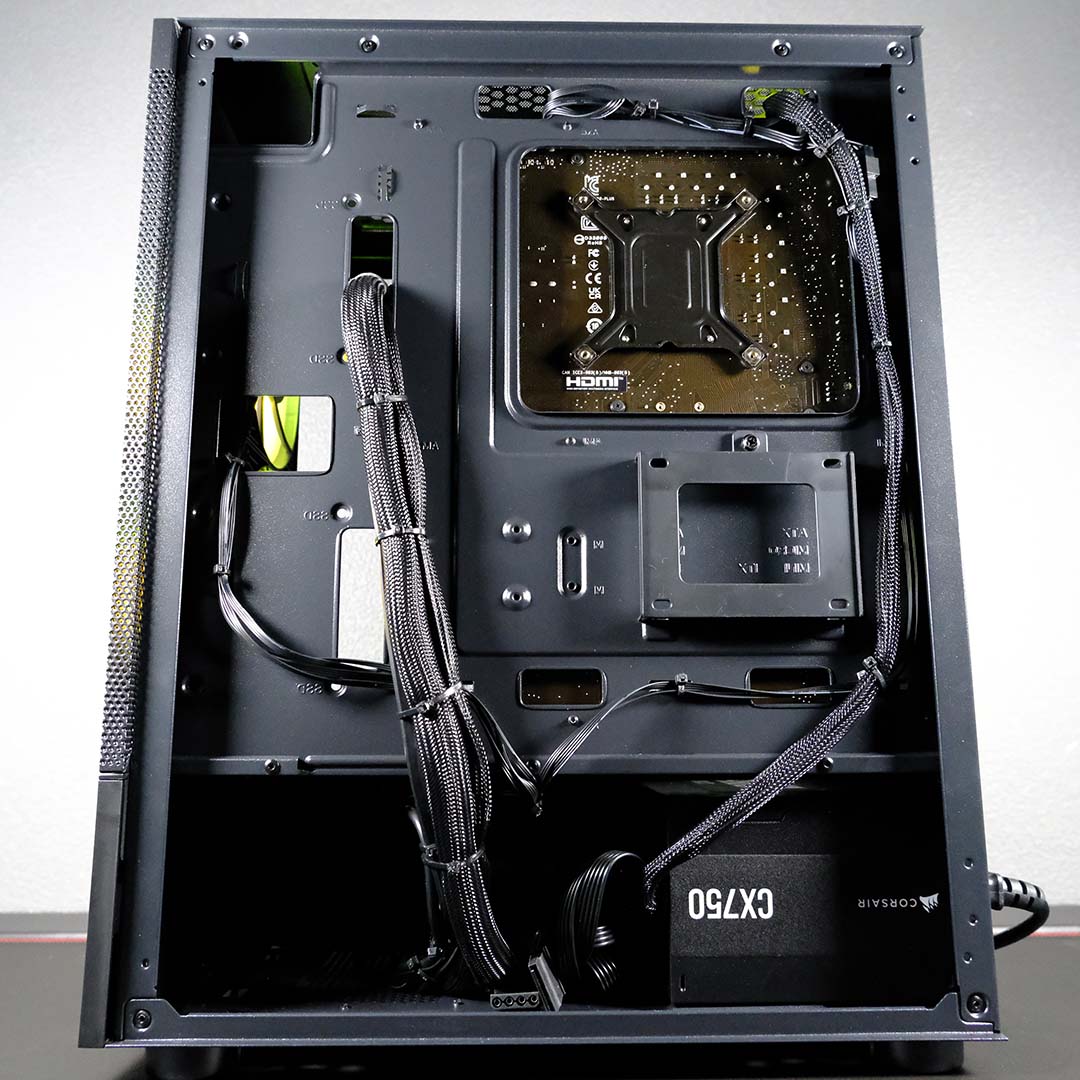
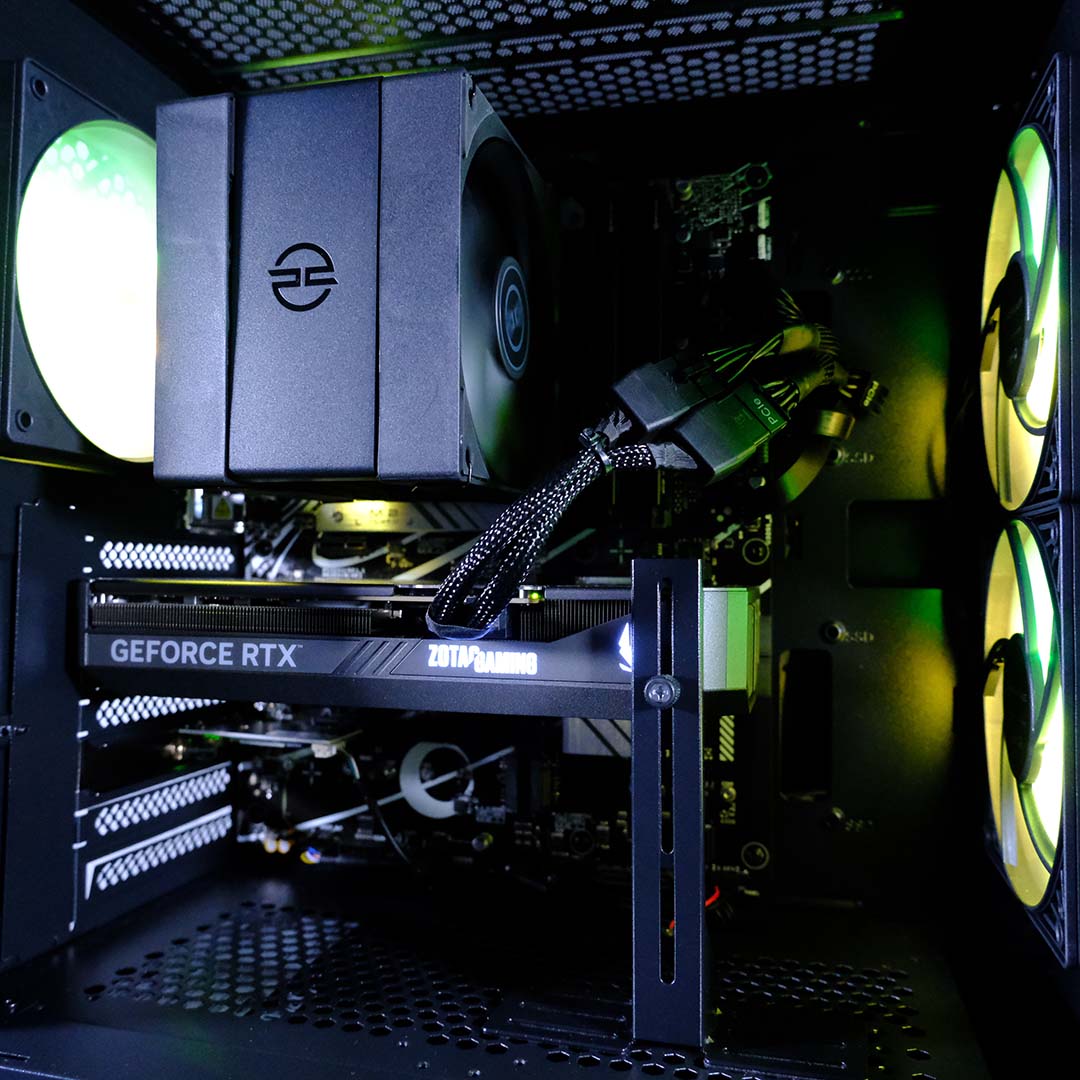
Opening up the rear chamber, PCSpecialist has done an expectedly excellent job at keeping most of the system’s cables neat and tidy. However, any adjustments will quickly undo this handiwork as the cable ties are single-use ones.
There are a lot of cables to route as well, as the Storm Elite II features a Corsair CX750 power supply with captive wires. The PSU’s 750W capacity is actually slightly above the 600W recommendation for the RTX 5070, creating welcome headroom for upgrade potential.
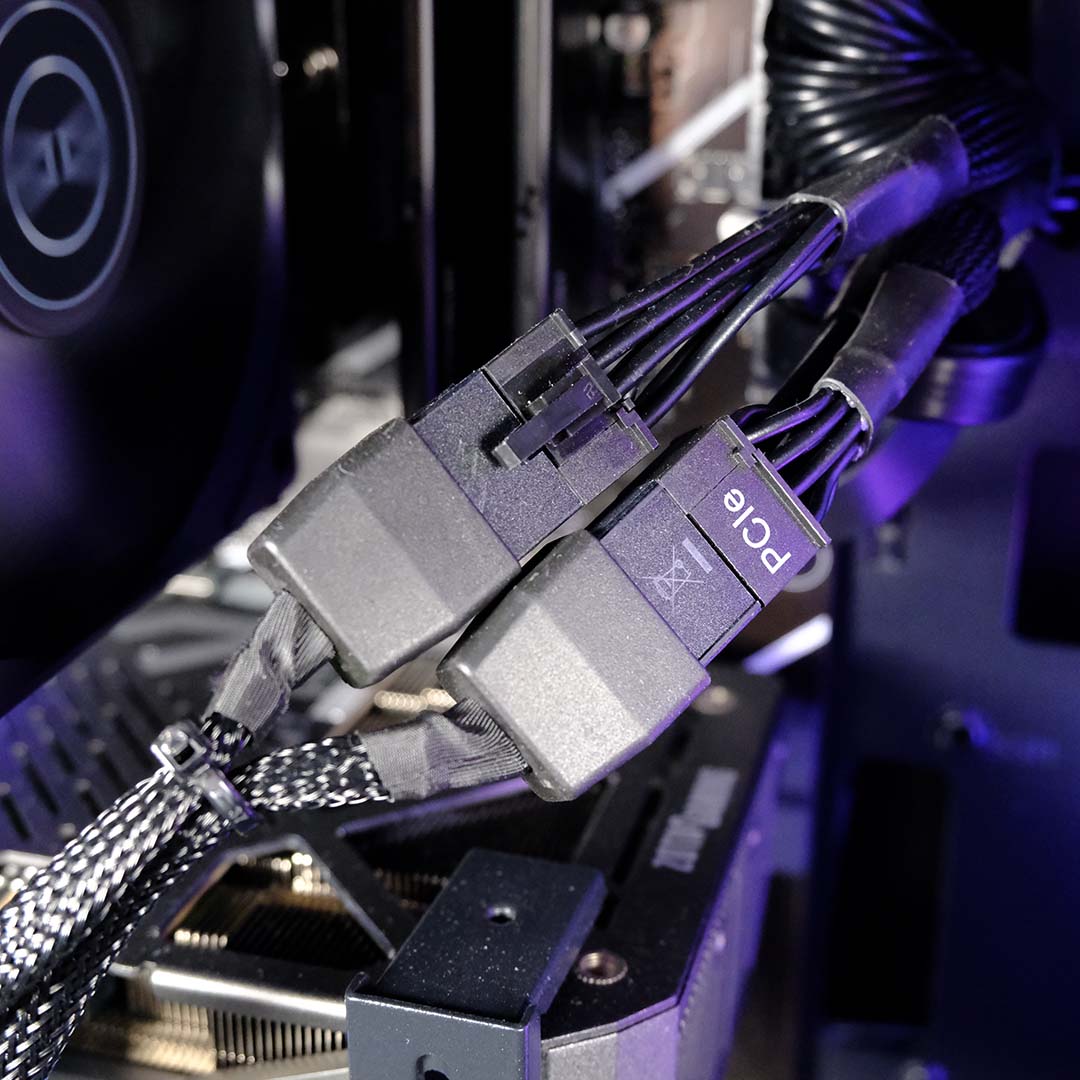
All that said, the CX750 does lack a native 16-pin power cable, necessitating the use of an adapter that makes for an unsightly bundle of wires in the interior.
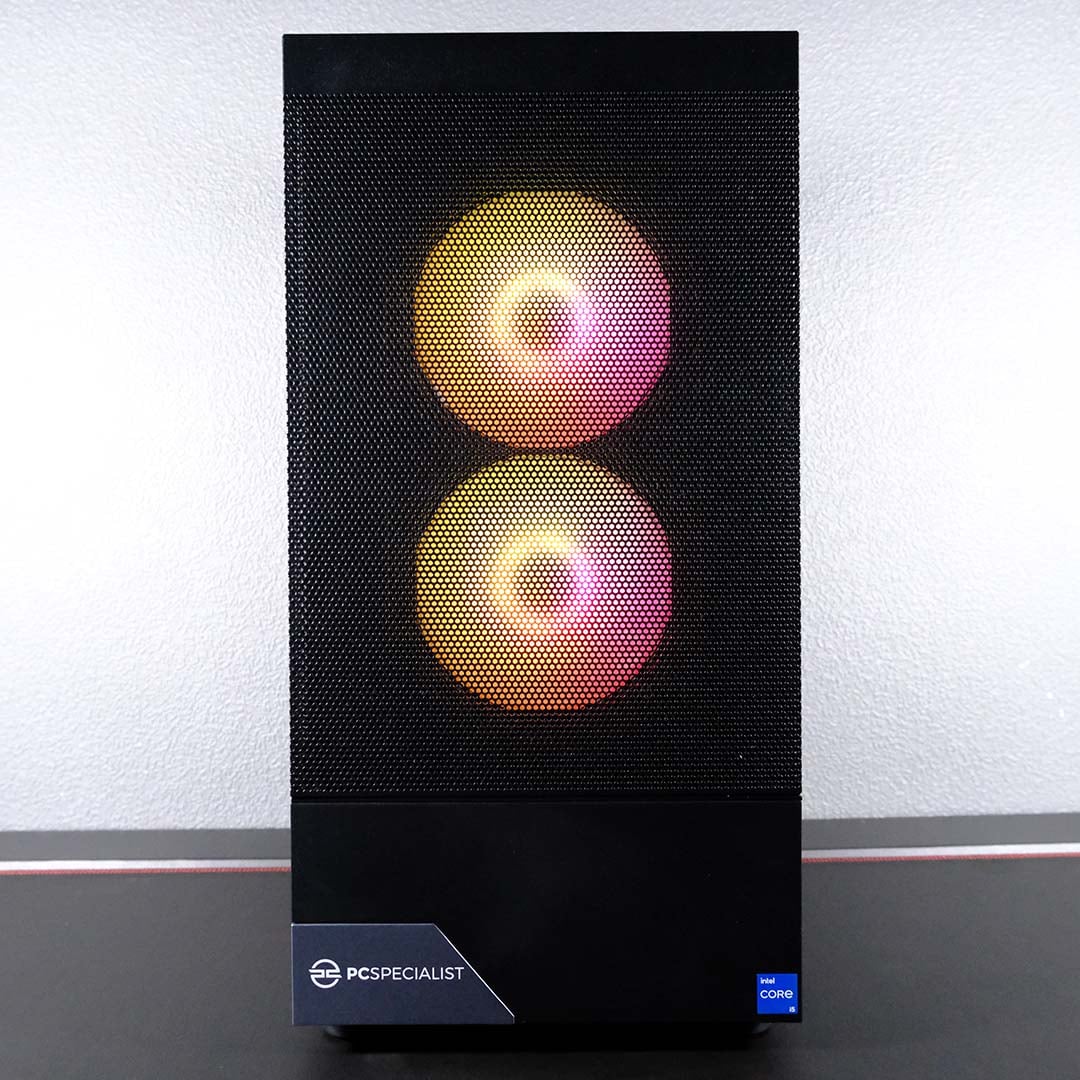
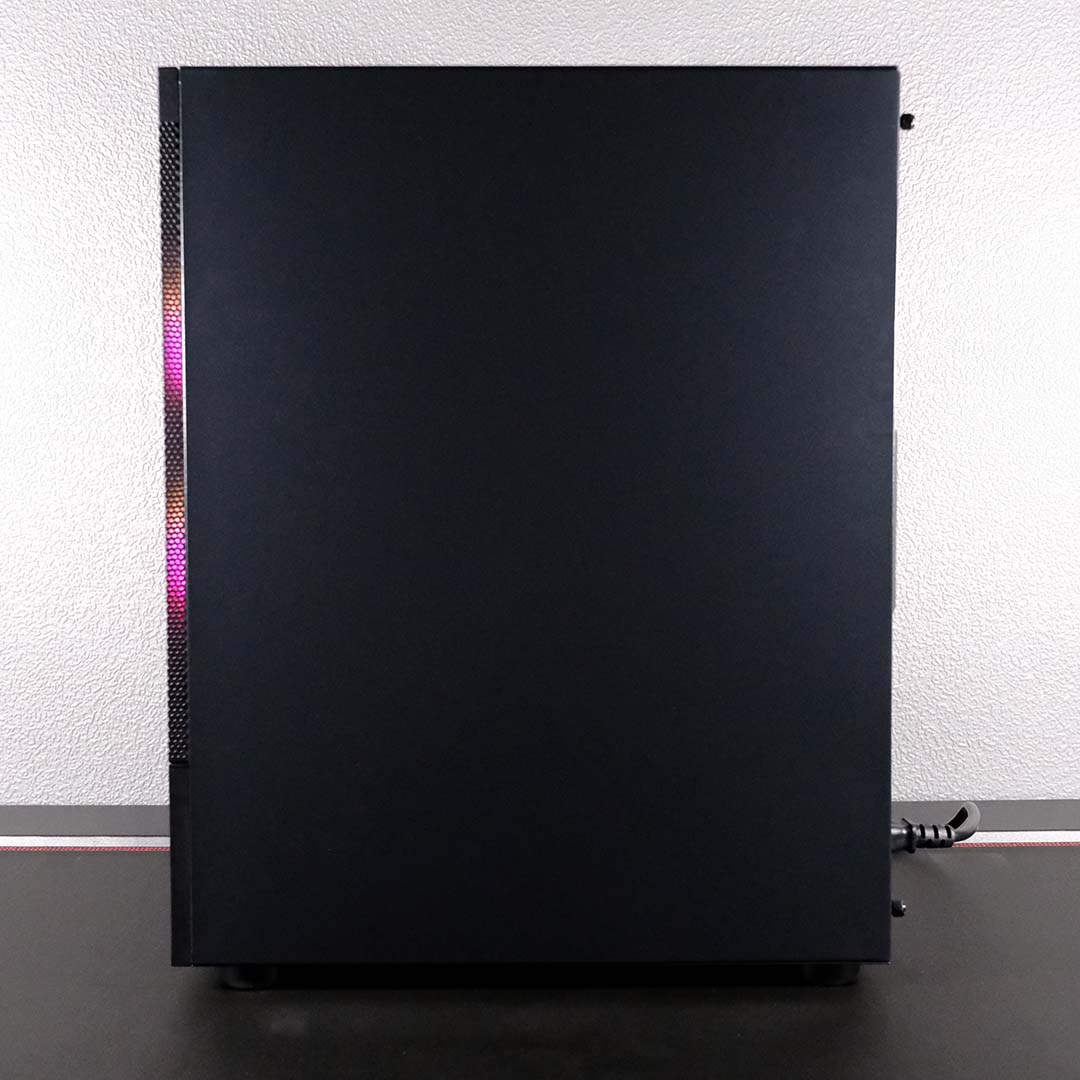
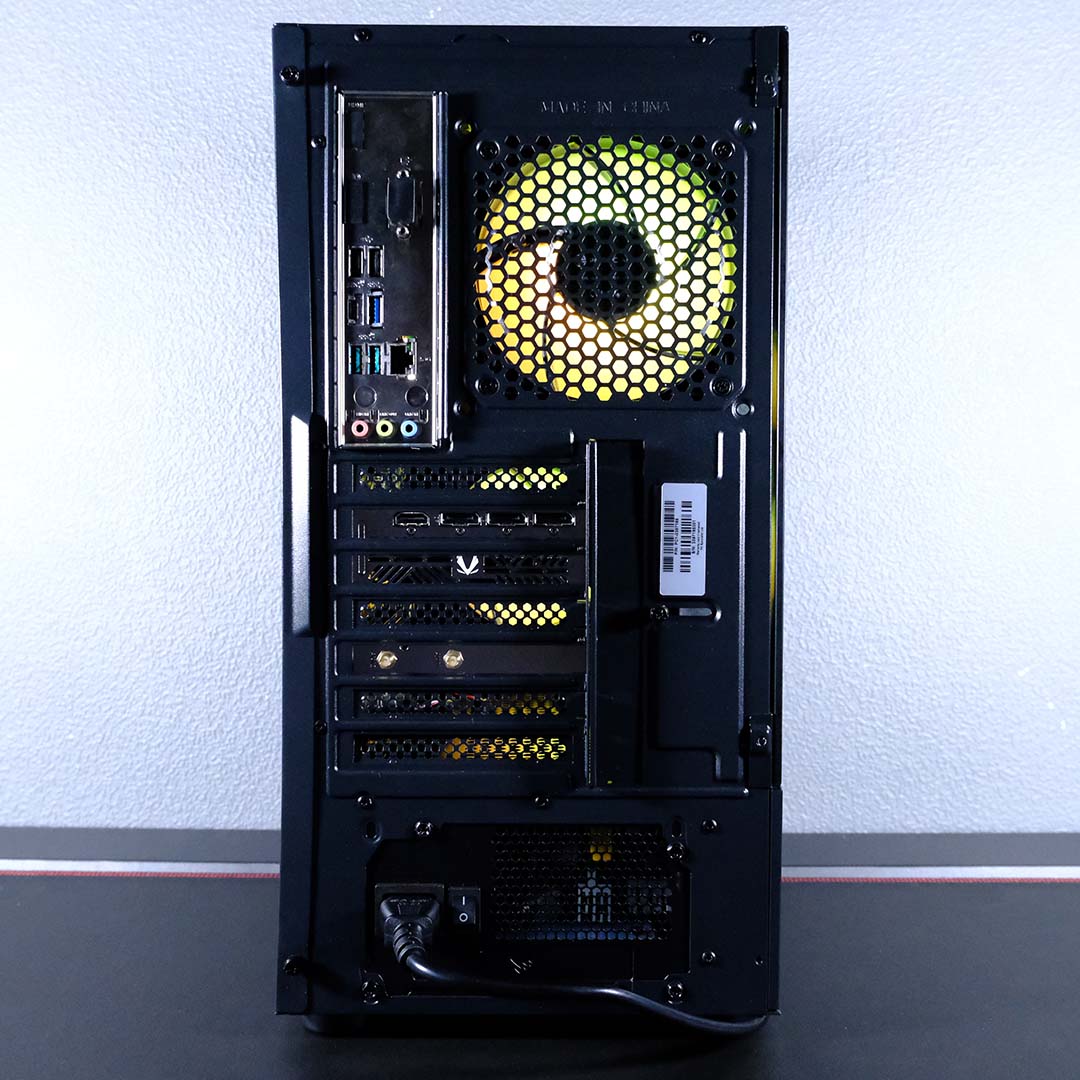
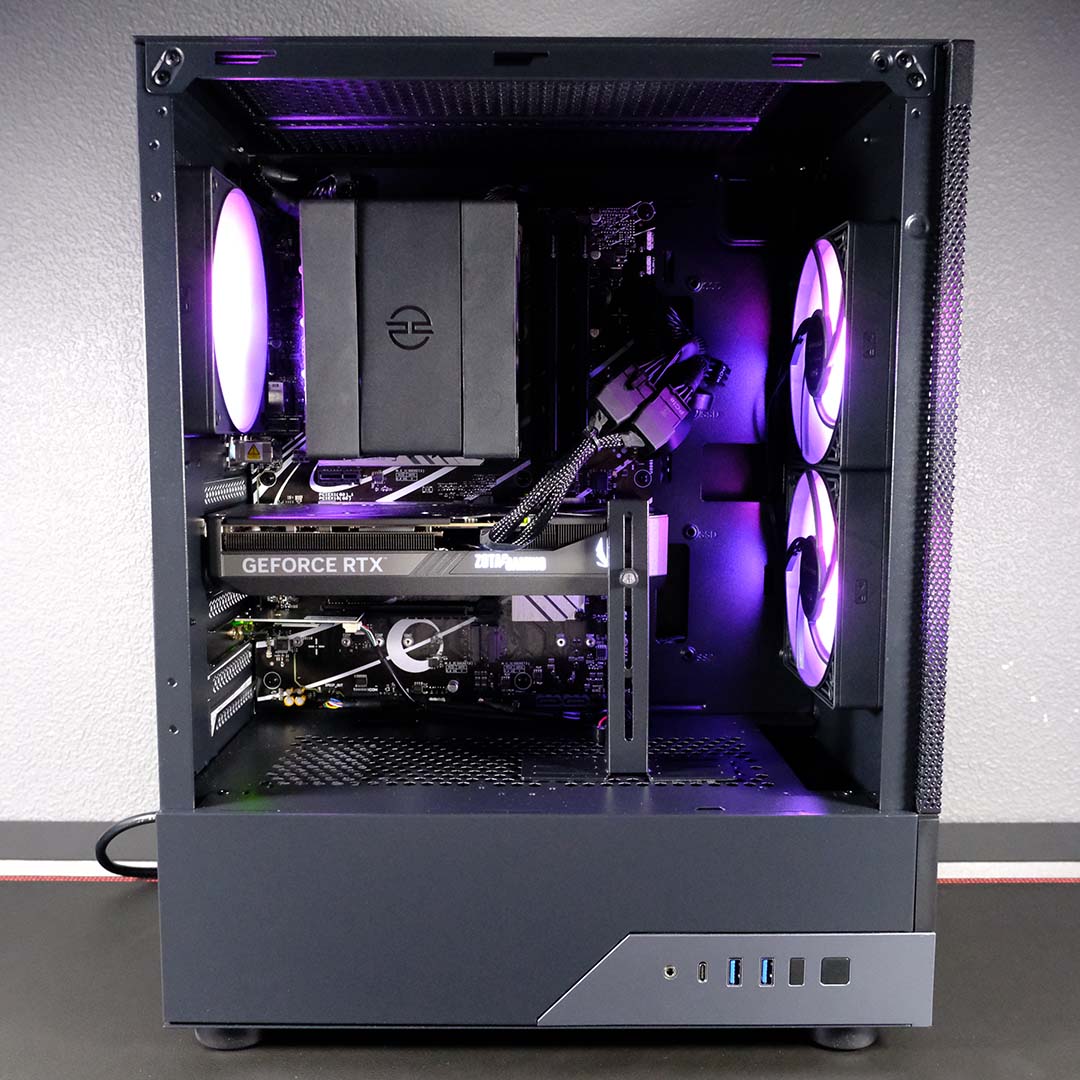
Rounding off the rest of the Storm Elite II’s internals, the system comes with three 120mm ARGB fans. Two sit up front, as intakes, while the other serves as an exhaust. This array works well, keeping the system looking and running cool without being noticeably loud.
Conducting a quick DIY version of the Storm Elite II via PCPartPicker, this build comes together at £1,584. In turn, PCSpecialist’s £1,649 price works out at a very reasonable £64 premium.
That extra money pays for the convenience of having someone build and test the system for you, while also giving you a solid warranty package. In addition to one year of parts coverage, the firm also offers six months of collect-and-return service, as well as three years of labour.
Performance
Gaming will be the primary focus of my testing, with benchmarks at 1080p (FHD) and 1440p (QHD). Additionally, I’ll explore the capabilities of the Storm Elite II’s CPU, RAM, and SSD in isolation.
Here are the specifications of other prebuilds to which I’ll be comparing this system:
- Wired2Fire Haven Ember Pro 9060 (£1,499)
- AMD Ryzen 7 9600X
- AMD Radeon RX 9060 XT
- Asus Prime B850M-A WiFi
- 32GB DDR5-6000 CL36
- 2TB Adata Legend 860
- PCSpecialist Nebula Phantom (£2,349 – no longer available)
- Intel Core Ultra 7 270K Plus
- Nvidia GeForce RTX 5070 Ti
- Asus Prime Z890-P WiFi
- 32GB DDR5-6400 CL36
- 2TB Crucial T710
- AWD-IT Kalona (£839 when tested – now £849)
- AMD Ryzen 5 5500
- AMD Radeon RX 9060
- Asus Prime A520M-K
- 16GB DDR4-3200 CL16
- 1TB Crucial E100
- PCSpecialist Cruiser iCue Stealth (£3,099 when tested – now £3,299)
- AMD Ryzen 7 9850X3D
- Nvidia GeForce RTX 5080
- Asus TUF Gaming X870-Plus WiFi
- 32GB DDR5-6000 CL30
- 4TB Corsair MP600 Pro
CPU
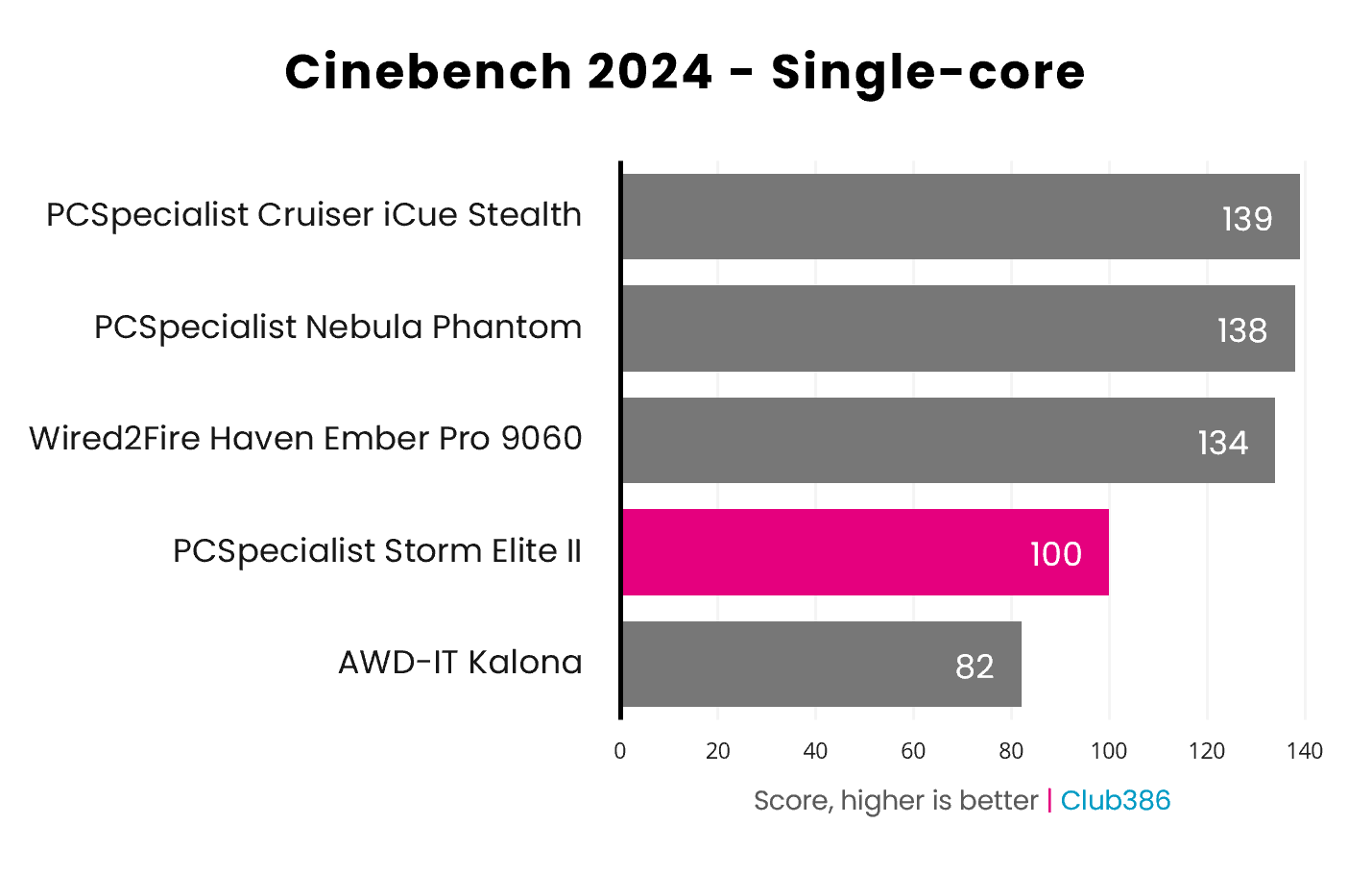
Kicking off performance analysis with Cinebench 2024, the Core i5-14400F musters 100 point in the single-core benchmark. The CPU’s maximum clock speed of 4.7GHz is behind the curve relative to newer and unlocked processors found in the systems scoring higher results. However, there’s a clear win against similarly budget-friendly processors, such as the 4.2GHz Ryzen 5 5500 in the AWD-IT Kalona.
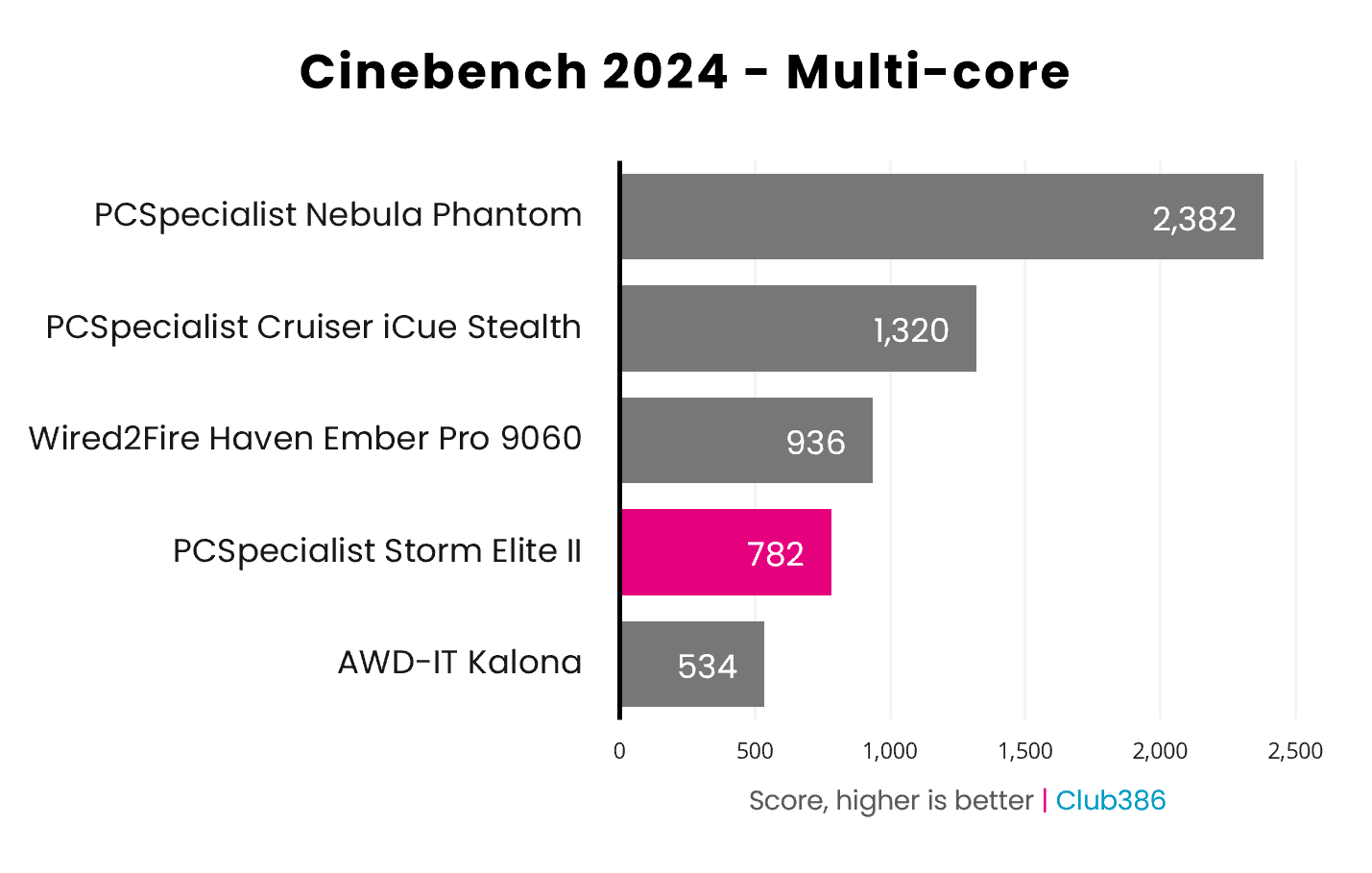
Firing up all six P-cores and four E-cores, the Core i5-14400F puts in a decent showing in the Cinebench 2024 multi-core showdown. However, the Ryzen 5 9600X inside the Wired2Fire Haven Ember Pro 9060 demonstrates the advantages of adopting newer chips, with a 20% advantage, despite having just six cores. That rival system also has speedier RAM playing its part in creating that performance delta.
RAM
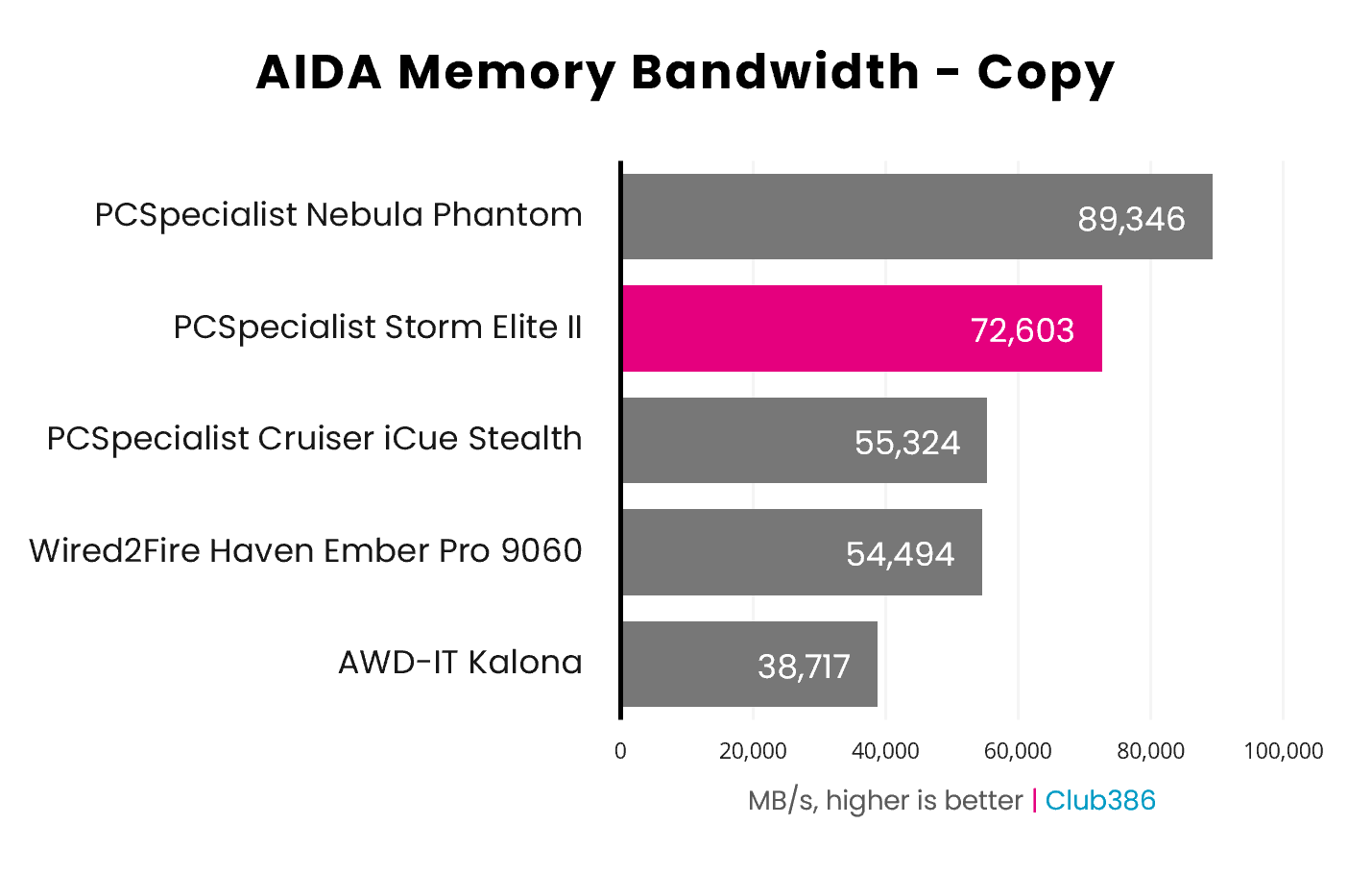
Despite the relatively slow speed of its DDR-5600 modules, the Storm Elite II still packs plenty of bandwidth.
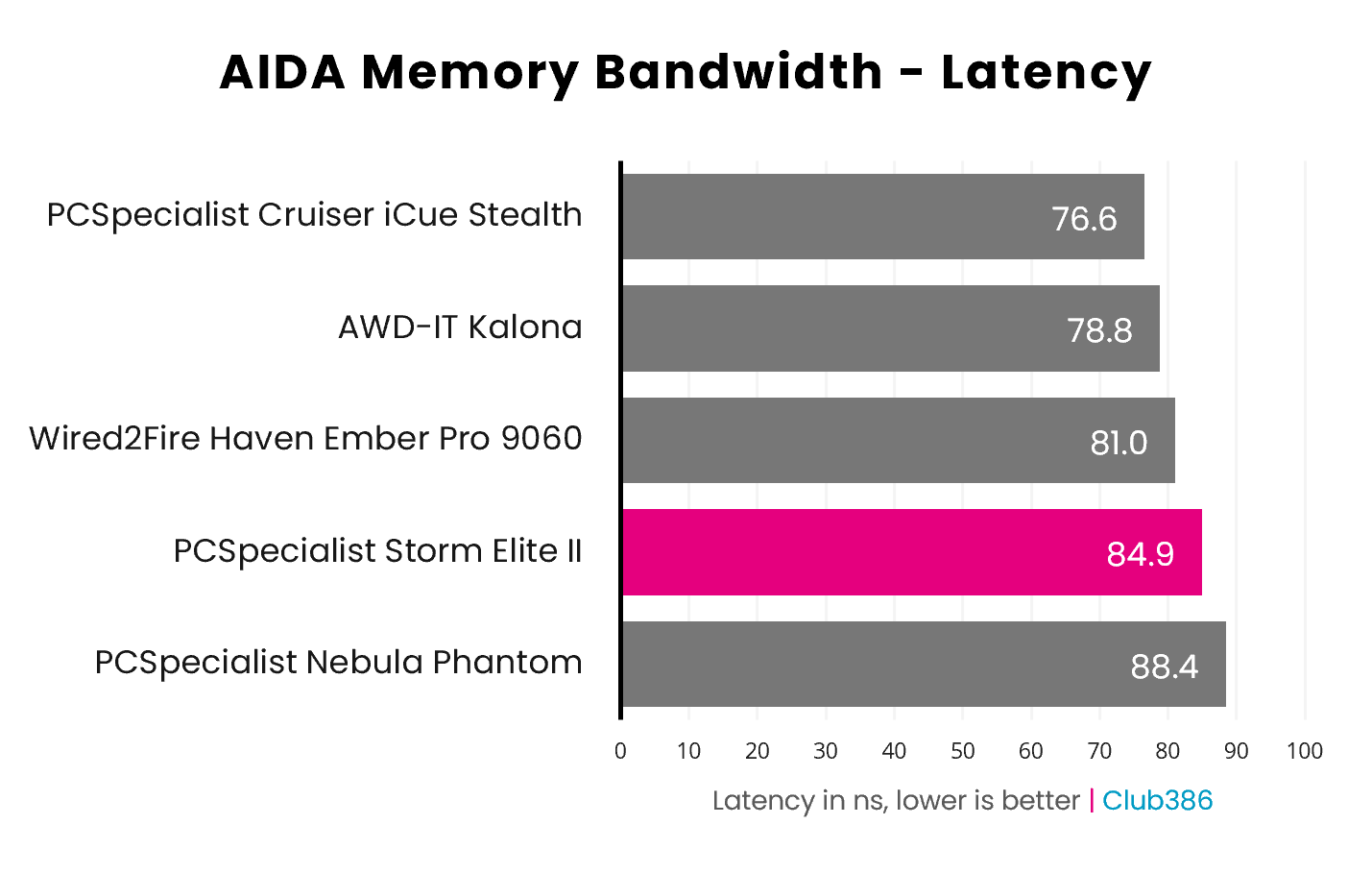
Given the CL46 timings of the Storm Elite II’s RAM, it’s no surprise that memory latency is on the higher side.
Storage
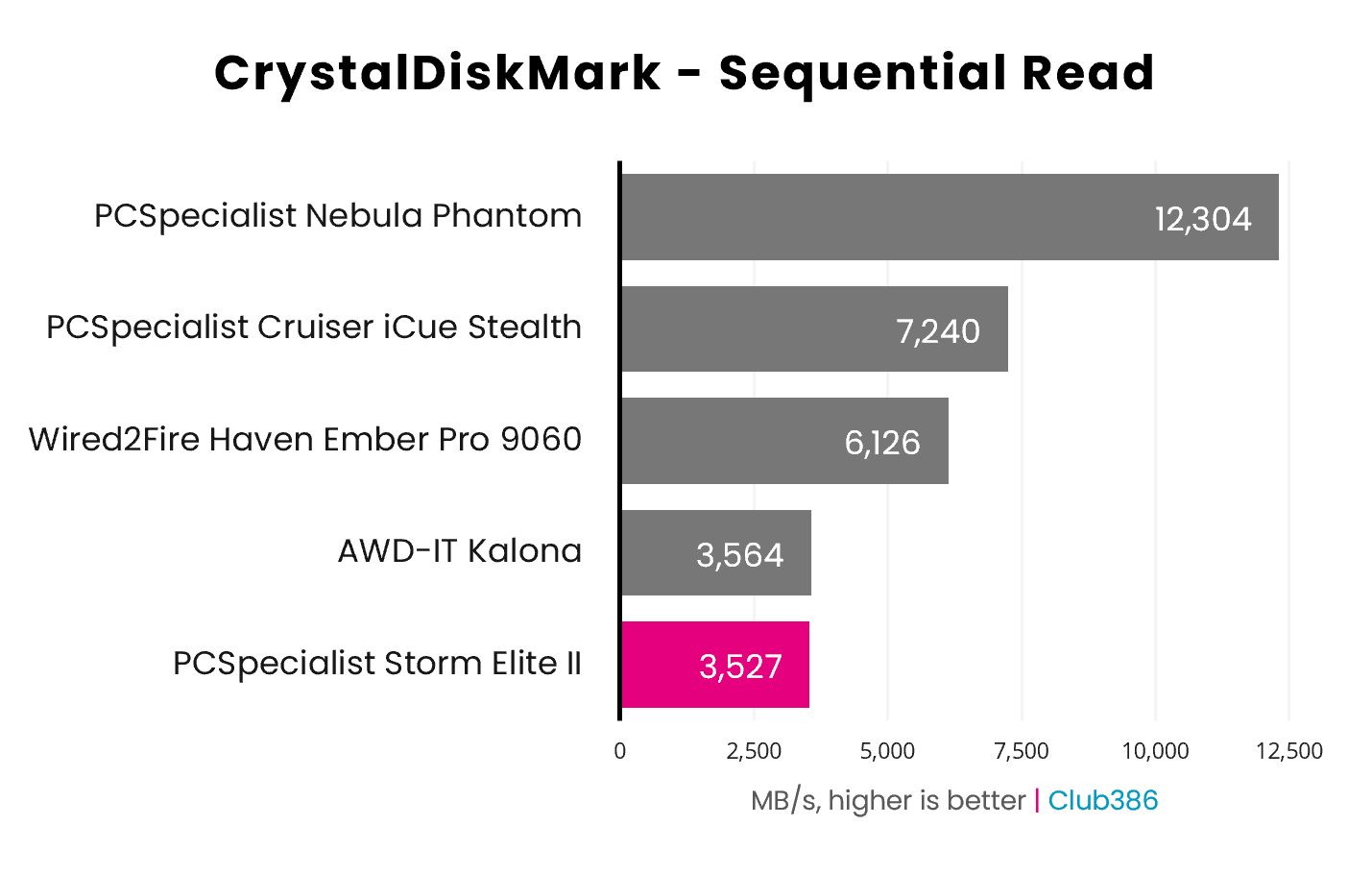
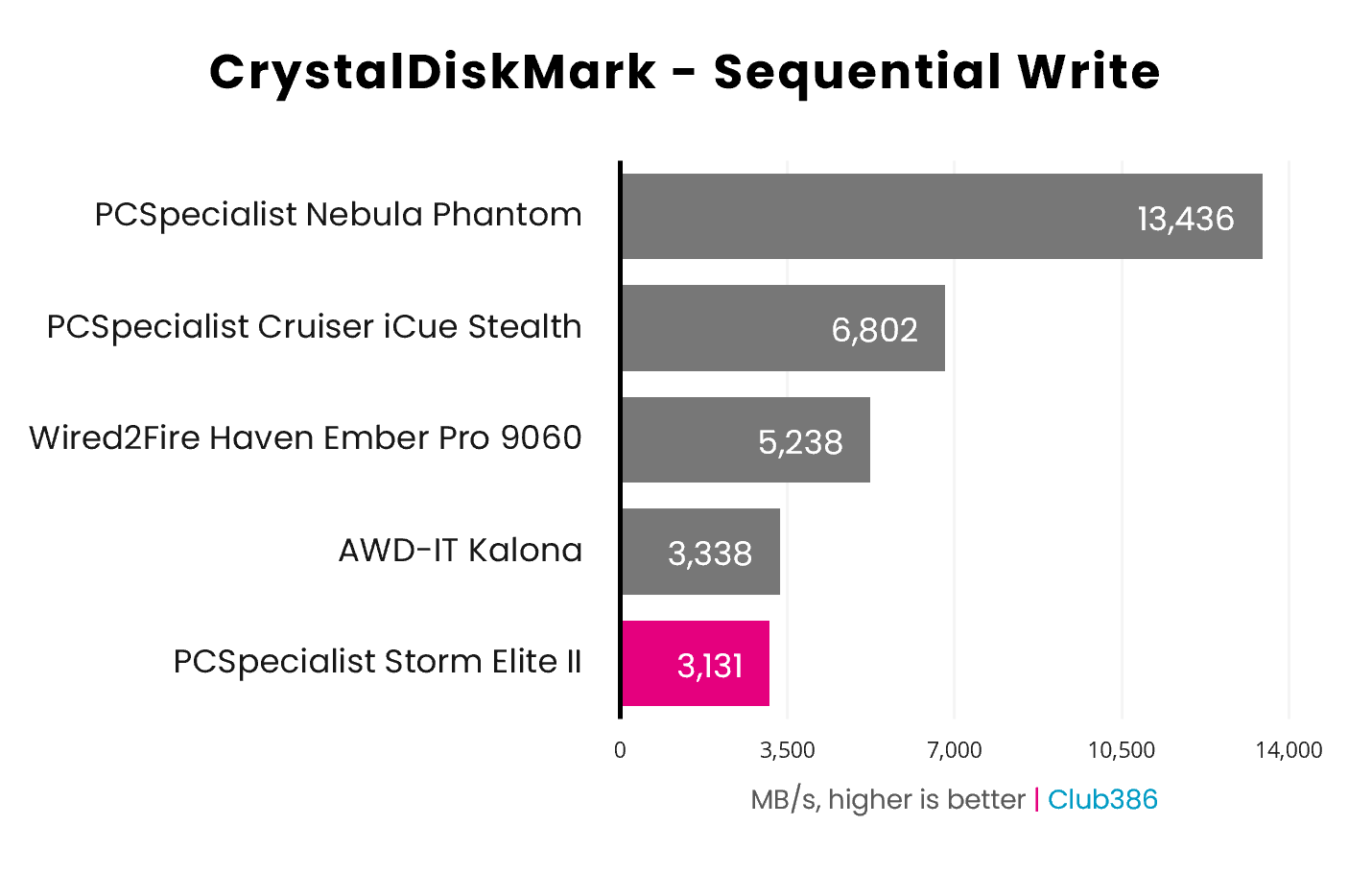
Sequential read speeds top out at the 3,527MB/s on the Storm Elite II, with sequential writes peaking at 3,131MB/s. These values reflect the limit of the bandwidth available from this SSD’s PCI Gen 3 x4 interface. While these figures are slow relative to Gen 4 drives on paper, real-world use doesn’t feel appreciably slower during game load times.
Gaming
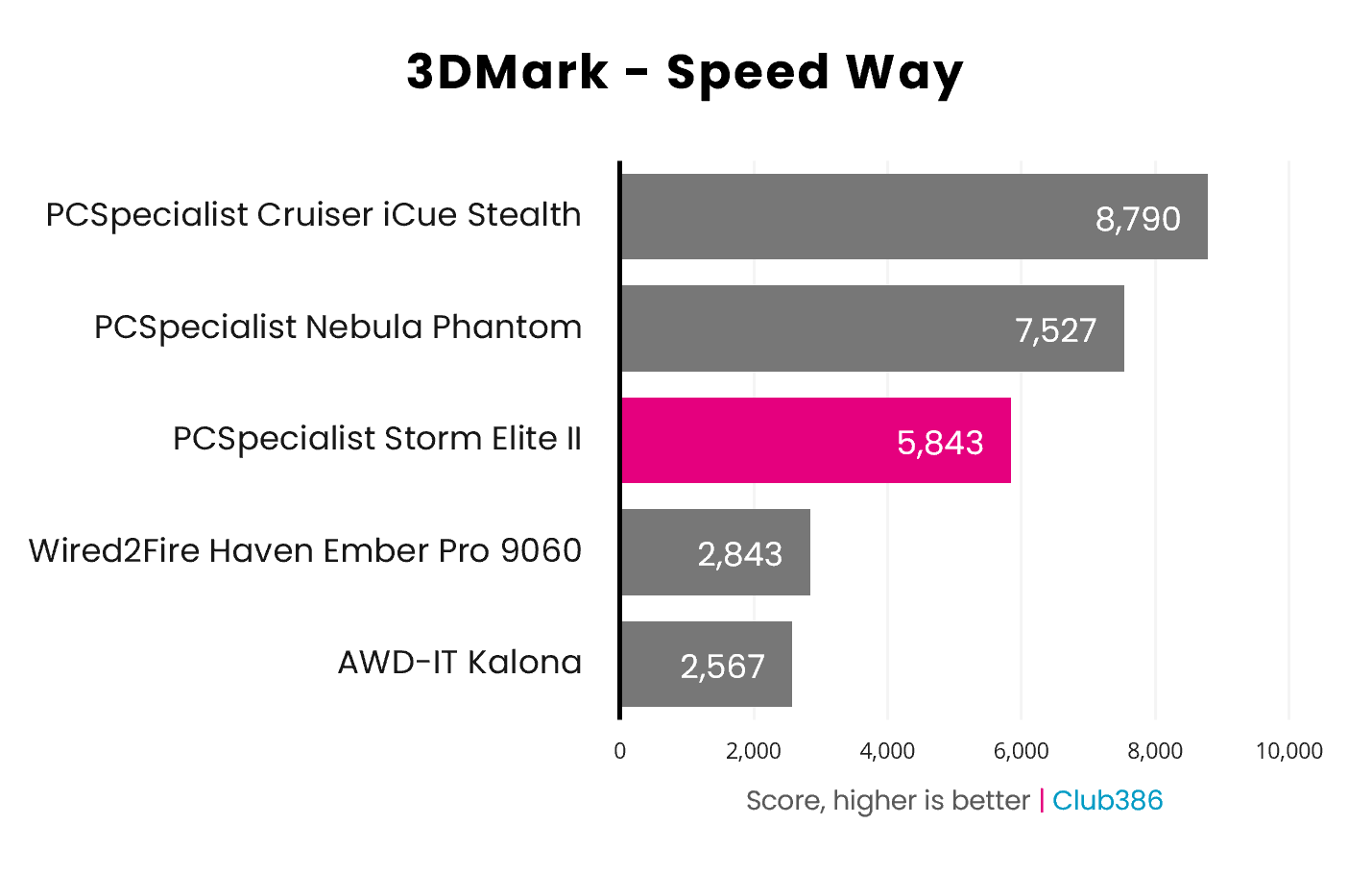
3DMark Speed Way serves as the first test for the system’s GeForce RTX 5070, with a ray-traced workload at 1440p. These circumstances are well within the grasp of this pixel pusher.
Scoring 5,843 points (58.43fps), the Storm Elite II’s graphics card is performing within expectations, being actually a few points ahead of our initial review results using our 7950X3D test bench. As such, the Core i5-14400F in the Storm Elite II isn’t costing us any frames in this GPU-heavy test.
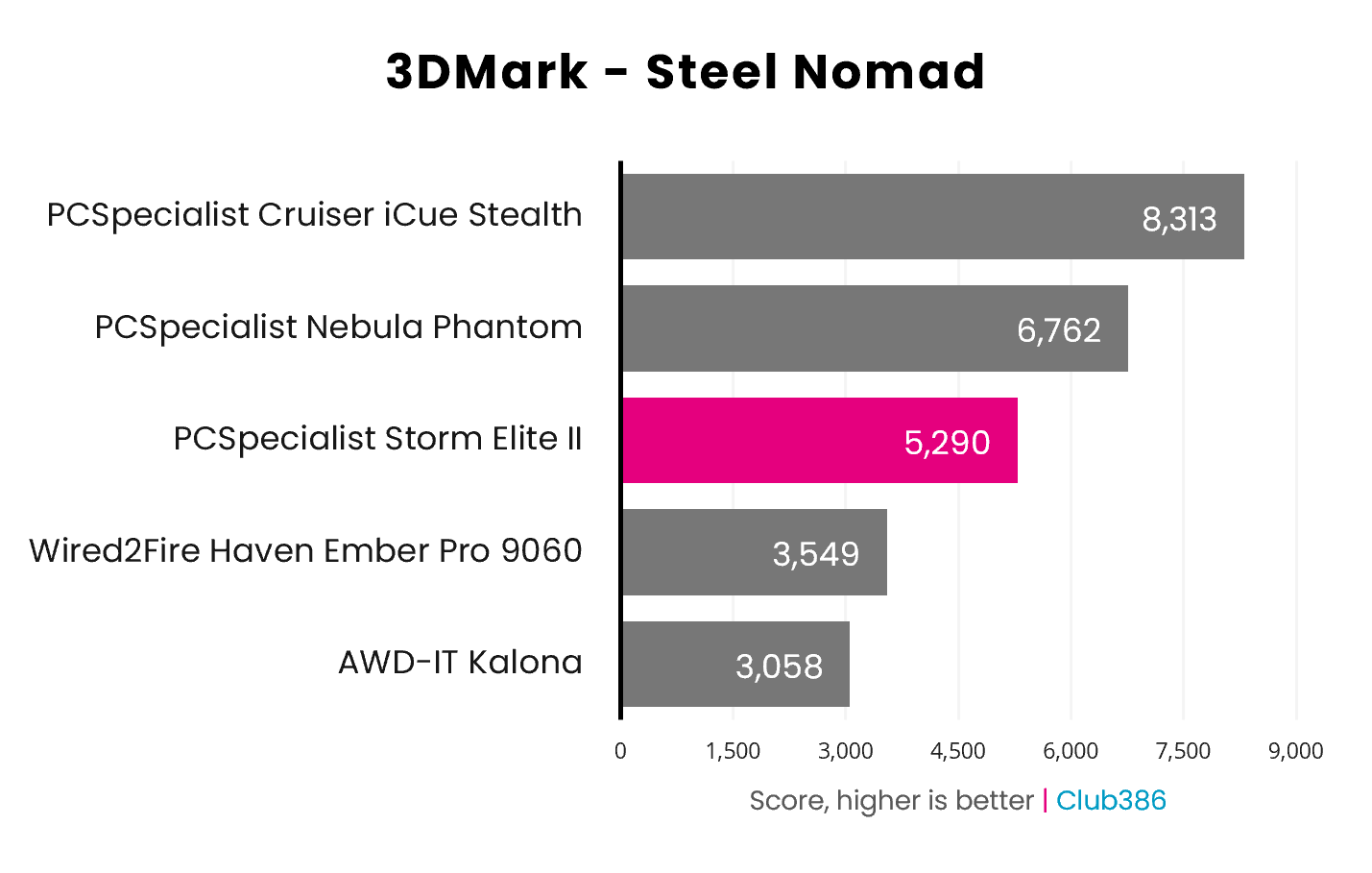
Switching over to 3DMark Steel Nomad, the RTX 5070 now faces the task of a rasterised scene at 4K. Like our Speed Way results, a 5,290-point total (52.9fps) is right on target for the graphics card. This resolution is typically beyond the capabilities of the RTX 5070, but VRAM requirements for this test are relatively low at 6GB, half the 12GB capacity available here.
| 1080p (Min / Avg) | 1440p (Min / Avg) | |
|---|---|---|
| Assassin’s Creed Shadows (RT) | 46 / 53fps | 35 / 41fps |
| Assassin’s Creed Shadows (RT + DLSS Q) | 53 / 63fps | 45 / 52fps |
| Final Fantasy XIV: Dawntrail | 67 / 165fps | 67 / 139fps |
| Forza Horizon 6 (RT) | 70 / 80fps | 49 / 55fps |
| Forza Horizon 6 (RT + DLSS Q) | 88 / 103fps | 69 / 79fps |
| Rainbow Six Siege | 195 / 236fps | 131 / 173fps |
| Total War: Warhammer III | 53 / 78fps | 53 / 73fps |
Moving into our wider suite of games, the only title that gives the Storm Elite II any bother at 1080p is Assassin’s Creed Shadows with all its ray tracing effects cranked up. That 53fps average frame rate falls just shy of our ideal 60fps threshold, but turning on DLSS Quality sees performance increase beyond that target to 63fps.
The story is much the same at 1440p too, but DLSS Quality doesn’t quite provide enough of an uplift for Assassin’s Creed Shadows this time around. With a higher resolution in play, though, we can more readily embrace the upscaler’s Balanced mode, which does push the system’s average frame rate above 60fps.
Forza Horizon 6 provides another ray tracing test, and the Storm Elite II happily rises to the challenge at 1080p and 1440p, albeit with a dash of upscaling on the latter resolution. Comparing these frame rates to those in our Radeon RX 9070 GRE review, there’s no trace of a CPU bottleneck here.
The remainder of our suite swaps ray tracing for rasterised rendering, with the Storm Elite II continuing to offer great frame rates across both resolutions. However, it’s worth noting that the Core i5-14400F is holding back the RTX 5070 to varying degrees in these titles, even at QHD.
Total War: Warhammer III demonstrates this best, as moving from 1440p to 1080p only nets an additional 5fps. We know, with sufficient processing horsepower at its side, the RTX 5070 is capable of pushing this real-time strategy game up to 87fps and 116fps at each respective resolution.
Final Fantasy XIV: Dawntrail similarly doesn’t have much additional road on which to run at 1080p, with frame rates increasing by 28fps. Again, with a powerful enough processor and a dash of 3D V-Cache, the RTX 5070 can push this game all the way up to 220fps at FHD.
Despite these processor bottlenecks, it’s difficult to feel displeased with the performance the Storm Elite II offers out of the box. After all, that’s 236fps in Rainbow Six Siege at 1080p, with 173fps at QHD to boot. There’s also room to raise this ceiling further down the road, through a Core i7-14700 or Core i9-14900, not forgetting potential additional Raptor Lake Next CPUs arriving in the next year.
| Cyberpunk 2077 (RT Ultra) | 1080p (Min. / Avg.) | 1440p (Min. / Avg.) |
|---|---|---|
| Native | 61 / 69fps | 39 / 43fps |
| DLSS Quality | 74 / 90fps | 63 / 71fps |
| DLSS Quality + FG x2 | 148 / 173fps | 112 / 122fps |
| DLSS Quality + FG x3 | 216 / 243fps | 156 / 172fps |
| DLSS Quality + FG x4 | 280 / 313fps | 198 / 215fps |
With an RTX 5070 at its disposal, the Storm Elite II comes with the full Nvidia DLSS 4.5 suite at its disposal. This means you get support for the latest AI models for Super Resolution upscaling with no major performance penalty, the superior visuals of Ray Reconstruction, as well as adaptive and 6x multi frame generation. While Intel Arc and AMD Radeon graphics offer similar competing suites, DLSS remains the most comprehensive of the bunch, with the widest range of features and huge game support.
Using the beautiful but demanding RT Ultra preset in Cyberpunk 2077, the benefits of DLSS 4.5 are readily apparent. While the RTX 5070 can deliver average frame rates north of 60fps in this scenario at 1080p without any assistance, 1440p proves too challenging. However, DLSS Quality brings the graphics card up to speed, boosting performance by a welcome and whopping 65%.
With DLSS Super Resolution securing 60fps+ base frame rates across each resolution, latency is suitably low enough to engage frame generation without massive penalties. However, it’s important to note that this frame interpolation tech won’t deliver the same feeling as a native frame rate, but the feature will offer appreciably better motion clarity if you have a monitor with a high refresh rate.
Vitals
As with all quality gaming PCs, the Storm Elite II sits tranquil while idle. In fact, the system is so quiet that noise output fell below the 30dBA floor of my noise measuring equipment.
Multi-core CPU workloads impressively don’t move the needle in terms of noise, as the PCSpecialist AS-150 cooler carries out its work without kicking up a notably audible fuss. Gaming does see the system noise increase in volume, but only to a very palatable 38dBA.
| Idle | Load (Max) | |
|---|---|---|
| CPU temperature | 28°C | 65°C |
| GPU temperature | 54°C | 72°C |
| Noise level | ≤30dBA | 38dBA |
| Power consumption | 62W | 192-379W |
In my 26°C office, the Core i5-14400F in the Storm Elite II rests at a chill 28°C when idle. The RTX 5070 is much hotter inside the system, at 54°C, as the graphics card’s fans don’t kick in until temperatures or usage rise beyond a reasonable threshold.
Stressing the CPU via Cinebench 2024 sees operating temperatures rise to 65°C, allowing the Core i5-14400F to run without risk of thermal throttling. Meanwhile, Cyberpunk 2077 sees the RTX 5070 peak at a reasonable 72°C under load.
As you might expect, idle power consumption from the Storm Elite II is quite low at 62W. The processor on its lonesome can push power draw up to 192W for brief periods, before settling to ~133W in Cinebench 2024. Naturally, pushing both the CPU and GPU draws the largest wattage from the wall, with our Cyberpunk 2077 benchmark seeing this value rise to 379W.
Conclusion
In the here and now, the Storm Elite II offers solid gaming performance and decent value. The system copes with FHD and QHD gaming with relative ease, without kicking up a hot and noisy fuss, and PCSpecialist is charging a fair price for the whole kaboodle.
About the only critique I can levy at the Storm Elite II stems from the relatively weak compute performance that its choice of processor provides. However, the Core i5-14400F proves itself more than capable of delivering on the core focus of this system: a great gaming experience.
At £1,649, the Storm Elite II delivers a potent one-two punch of performance and value. It’s even available as part of PCSpecialist’s Next Day Computers program, meaning you can nab one all the quicker. Just don’t wait around too long, as I can easily see stock of this system disappearing quickly.