
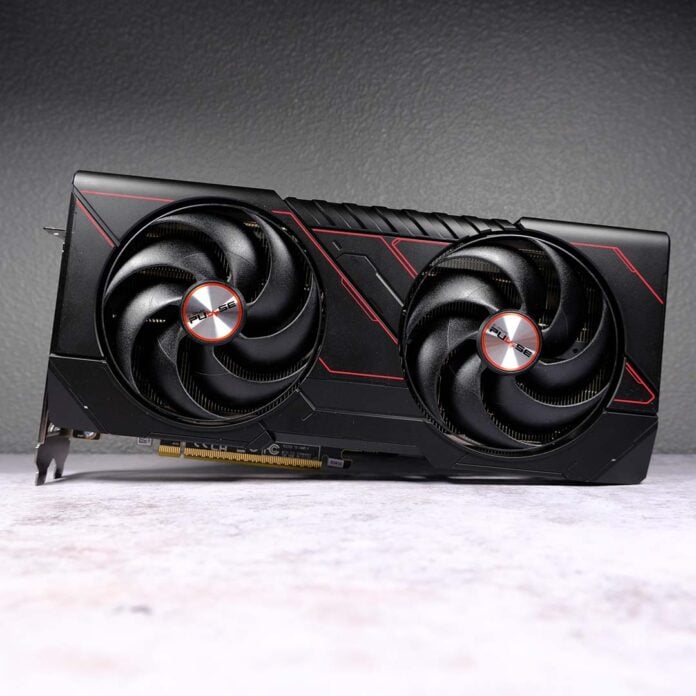
A little over a year from its initial launch, the once-China-exclusive Radeon RX 9070 GRE is now making its way to store shelves across the world. This wider release is AMD’s effort to provide relief to gamers struggling to stomach current graphics card prices, which remain high as the price of memory continues to climb. While this GPU finds some success in this regard, comparisons to competing options complicate the card’s value.

Sapphire Pulse Radeon RX 9070 GRE
£499 / $549
Pros
- Good FHD/QHD performance
- FSR 4 FP8 compatible
- Cool under load
- Comparatively low cost
Cons
- 12GB VRAM buffer
- Value pales relative to current RX 9070 stock
Club386 may earn an affiliate commission when you purchase products through links on our site.
How we test and review products.
Retailing for £499 / $549, the RX 9070 GRE picks up the price position that the Radeon RX 9070 held prior to the memory crisis, with the latter graphics card’s street price now starting at £519 / $599. That’s not an enormous amount of breathing room for the former Chinese exclusive to differentiate itself, but this pricing does place AMD’s latest as the absolute cheapest midrange option on the market.
For further context, the GeForce RTX 5070 is more expensive at the time of writing, with models available from £500 / $629. Even the GeForce RTX 5060 Ti 16GB costs more, starting at £459 / $569. Meanwhile, the Radeon RX 9060 XT 16GB begins at a more palatable £380 / $449. It’s important to keep these prices in mind as we discuss the RX 9070 GRE as it’s largely pointless to make any comparisons to launch MSRPs given current market circumstances.
To be fair to AMD, it’s also incredibly hard to price a new GPU in the current climate, knowing that it’s competing against older stock of products made when memory was cheaper. You can currently buy an RX 9070 for just a little bit more money now, but those cards will undoubtedly cost considerably more once existing stock is sold out and refreshed with new cards. As it stands for people wanting to buy a new graphics card right now, though, the 9070 GRE is in a difficult position.
Specifications
As its name suggests, the RX 9070 GRE shares most in common with the RX 9070 and Radeon RX 9070 XT. All three graphics cards feature a Navi 48 GPU, but the GRE has the most cutdown version, with 75% of the die’s total available compute units, stream processors, as well as AI and RT accelerators.
A 2,220MHz game clock and 2,790MHz boost clock place the RX 9070 GRE in the middle of its family. These frequencies allow the GRE to nip at the heels of the RX 9070 in term of FP32 and FP16 TFLOPS, with just 2-3 TFLOPS separating the two. As such, AI performance between each graphics card is often close.
| RX 9070 GRE | RX 9070 | RX 9070 XT | |
|---|---|---|---|
| Released | May 2025* | March 2025 | March 2025 |
| Codename | RDNA 4 | RDNA 4 | RDNA 4 |
| GPU | Navi 48 | Navi 48 | Navi 48 |
| Process | TSMC N4P (4nm) | TSMC N4P (4nm) | TSMC N4P (4nm) |
| Transistors | 53.9bn | 53.9bn | 53.9bn |
| Die size | 357mm2 | 357mm2 | 357mm2 |
| Stream processors | 3,072 | 3,584 | 4,096 |
| Game clock | 2,220MHz | 2,070MHz | 2,400MHz |
| Boost clock | 2,790MHz | 2,520MHz | 2,970MHz |
| Compute units | 48 of 64 | 56 of 64 | 64 of 64 |
| RT accelerators | 48 (3rd Gen) | 56 (3rd Gen) | 64 (3rd Gen) |
| AI accelerators | 96 (2nd Gen) | 112 (2nd Gen) | 128 (2nd Gen) |
| Peak FP32 TFLOPS | 34 | 36 | 49 |
| Peak FP16 TFLOPS | 69 | 72 | 97 |
| ROPS | 96 | 128 | 128 |
| Memory | 12GB | 16GB | 16GB |
| Mem. type | GDDR6 | GDDR6 | GDDR6 |
| Mem. clock | 18Gb/s | 20Gb/s | 20Gb/s |
| Mem. interface | 192-bit (PCIe 5.0 x16) | 256-bit (PCIe 5.0 x16) | 256-bit (PCIe 5.0 x16) |
| Mem. bandwidth | 432GB/s | 640GB/s | 640GB/s |
| Board power | 220W | 220W | 304W |
| Launch MSRP | $549 | $549 | $599 |
The RX 9070 GRE’s memory configuration is coincidentally also 75% that of the Radeon RX 9070 XT in terms of capacity and bus width. A 12GB buffer and 192-bit interface isn’t unheard of in this corner of the market, with the RTX 5070 sporting the same setup, but it’s certainly unflattering given surrounding 16GB options up and down the pricing scale. Although, it’s understandably much cheaper to produce, particularly given current memory pricing.
It’s worth noting that overall bandwidth is lower still, at 432GB/s, on account of AMD’s decision to use of 18Gb/s GDDR6 modules instead of 20Gb/s. This is well below the 672GB/s the RTX 5070 enjoys, via its GDDR7 modules, which can create comparative performance difficulties for the RX 9070 GRE in workloads that push the limits of is memory configuration.
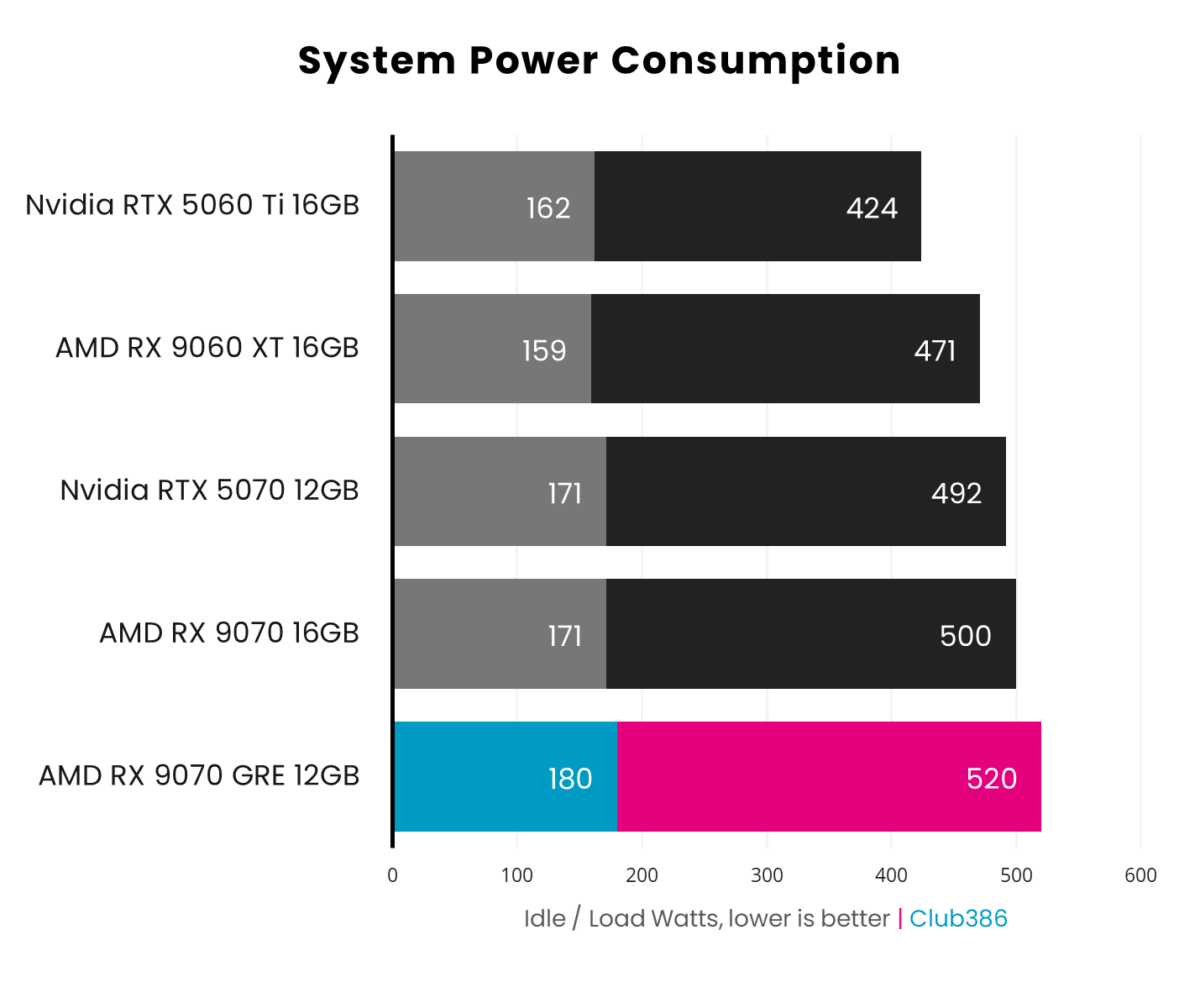
Finally, AMD hasn’t gimped the RX 9070 GRE when it comes to board power, mirroring the RX 9070 at 220W. That’s a reasonable budget for a midrange graphics card, and puts the Radeon 30W lower than its closest GeForce rival. However, Sapphire boosts TDP to 240W on this GRE, causing real-world usage to spike by an additional 20W relative to the RX 9070.
Design
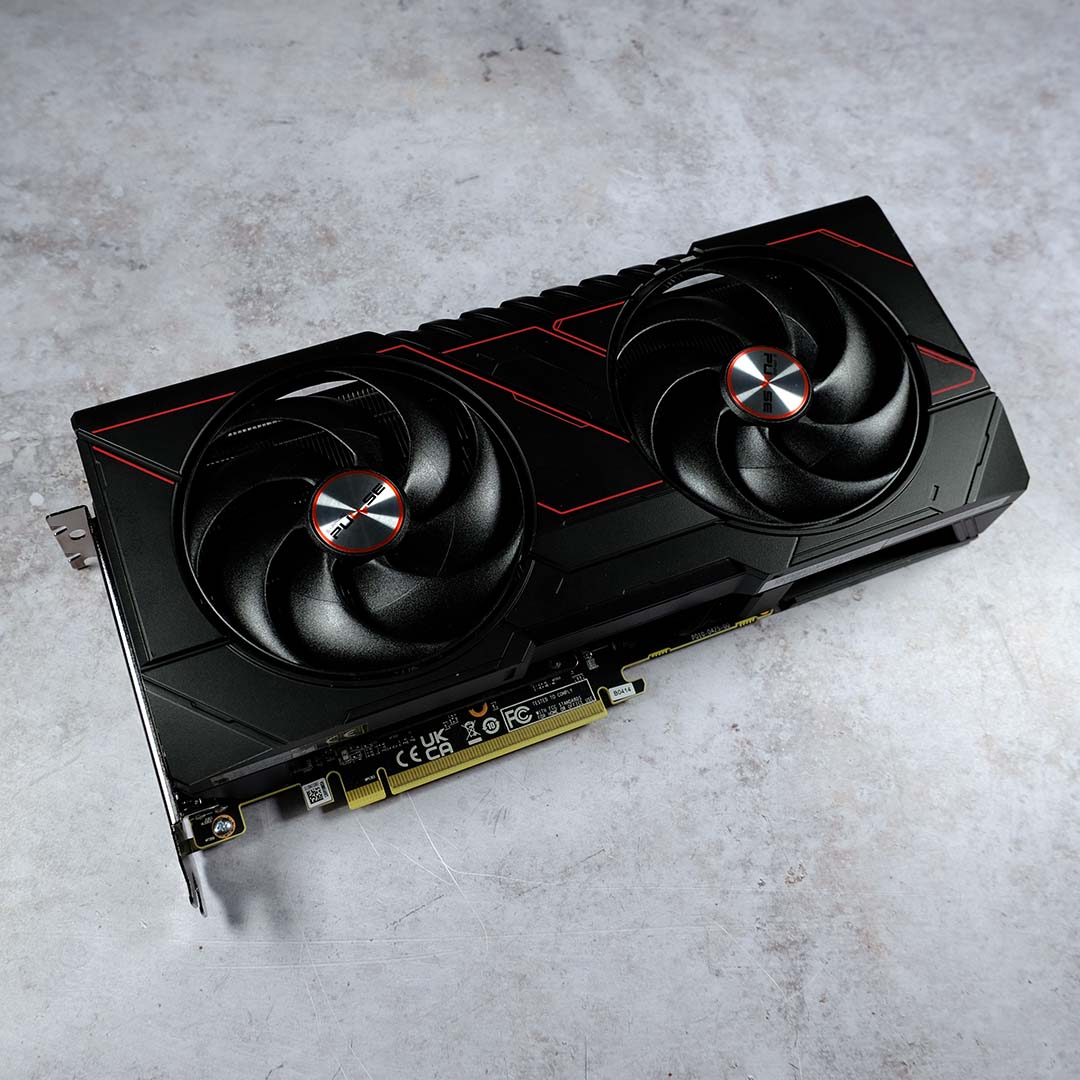
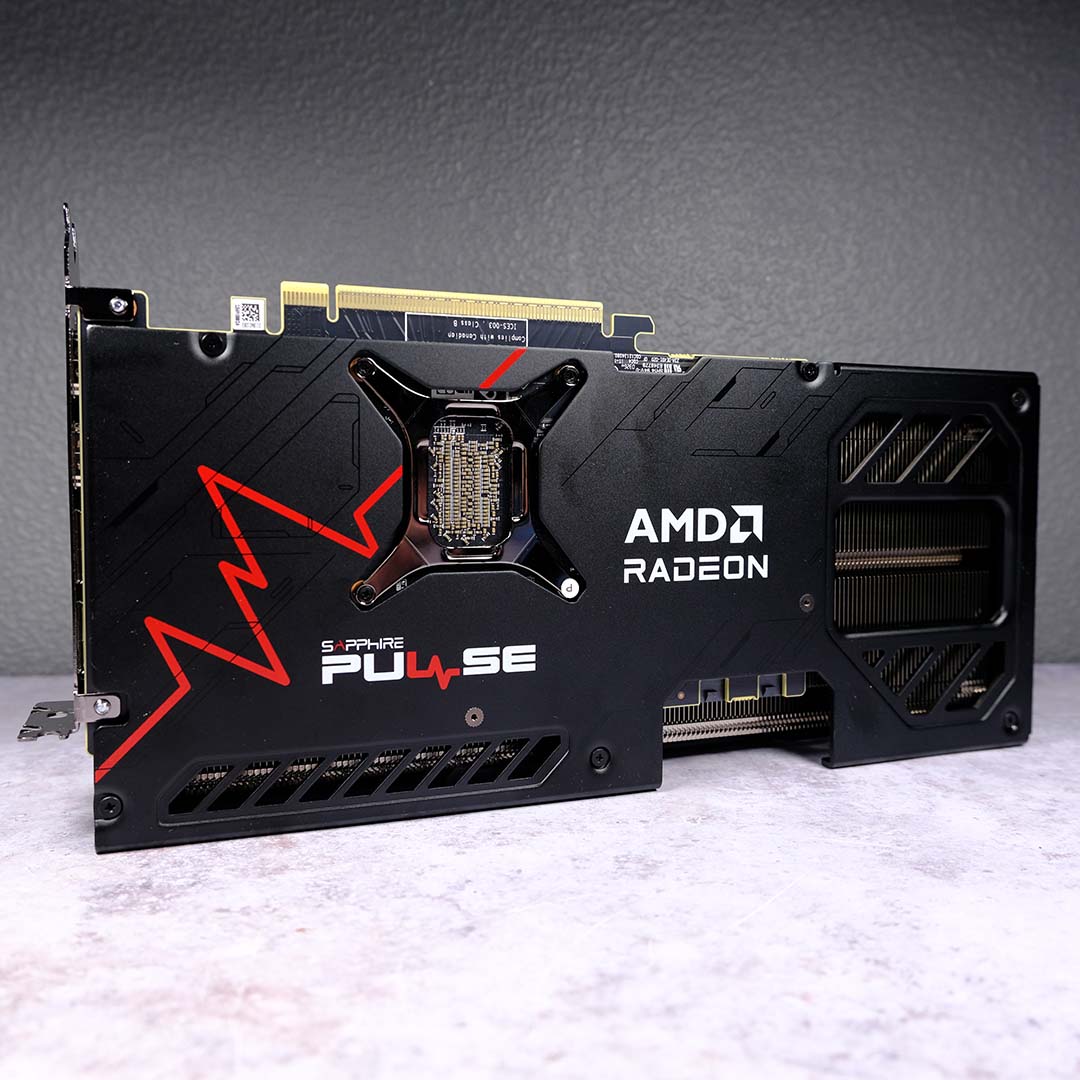
Like the rest of the Radeon RX 9000 series, there’s no MBA (Made by AMD) ‘reference’ graphics card for the RX 9070 GRE. Instead, it’s wholly up to partners to provide stock through custom designs. For our review, we’re taking a look at Sapphire’s ‘Pulse’ model.
As you’d expect from Sapphire, even the company’s baseline value-driven ‘Pulse Core’ cooler design balances function and form in a pleasing manner. The stylish shroud measures a reasonable 280mm (L) x 120.25mm (W) x 51.5mm (H), and weighs just over 1kg, providing welcome heft without feeling unwieldy. As such, fitting the dual-slot card into most chassis isn’t difficult.
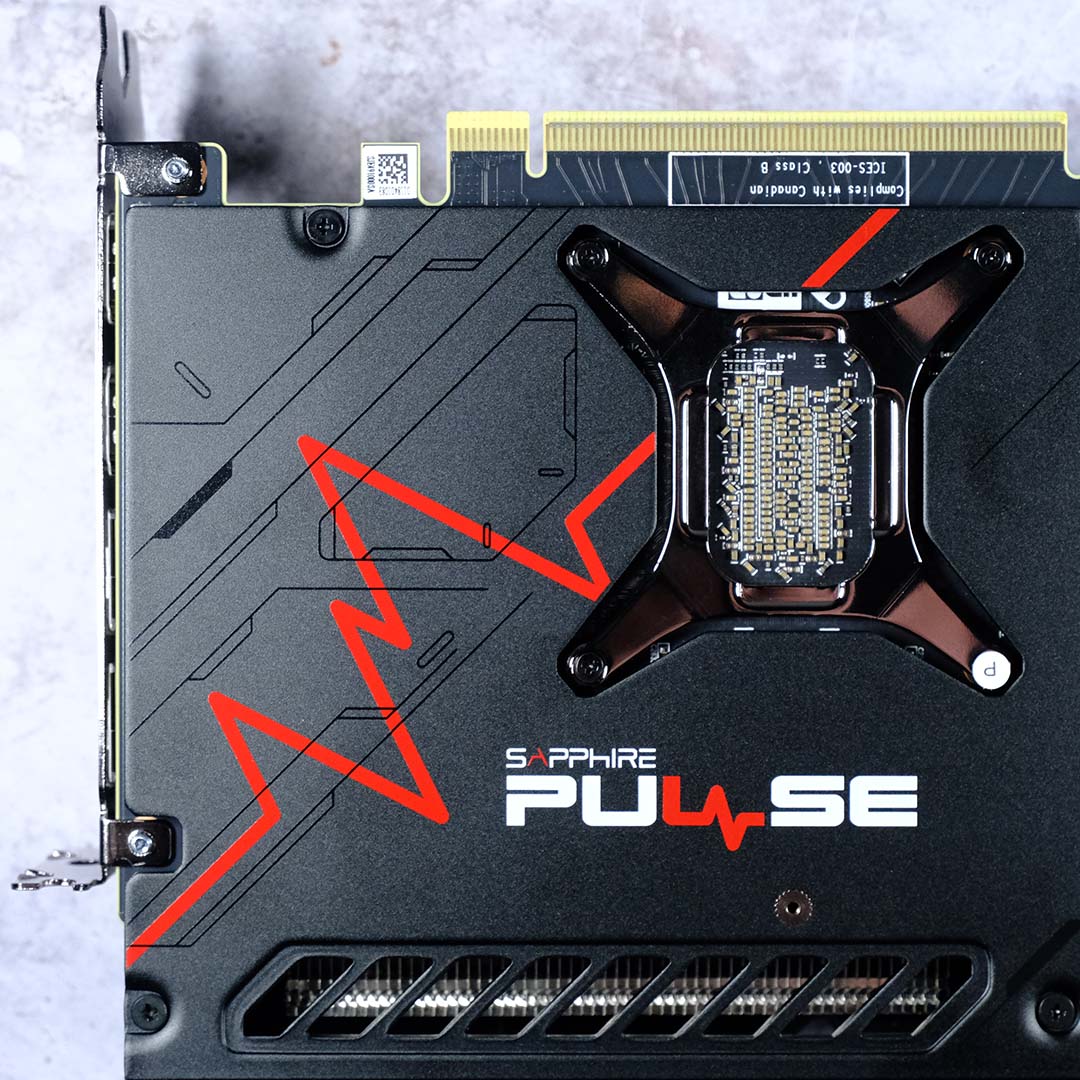
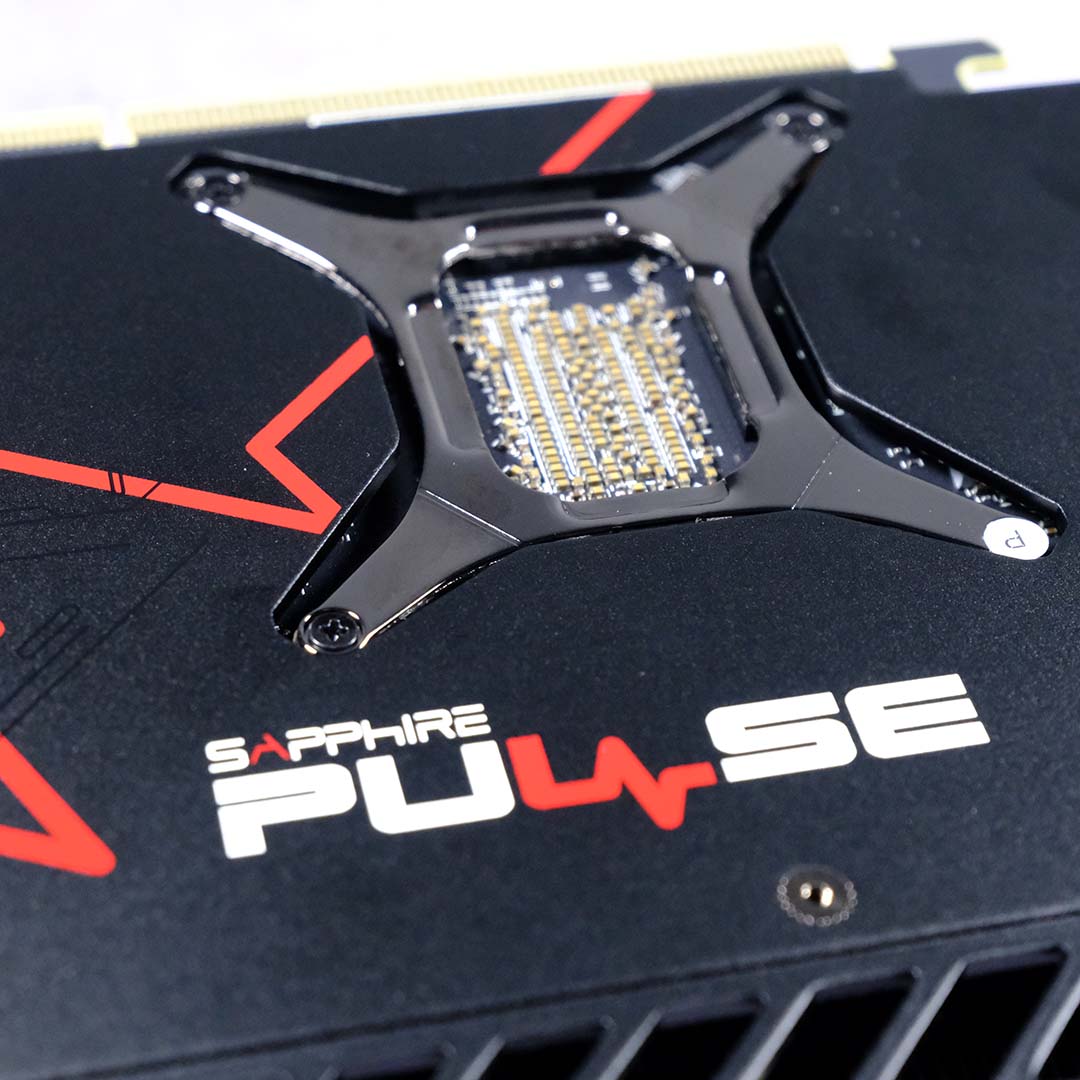
Underneath the matte black shell, Sapphire’s crafted a considered and thoroughly competent cooling system. For starters, composite heatpipes run across the length of the shroud, evenly disturbing heat cross the card for more efficient and reliable dissipation.
Transferring heat from the GPU die to the heat pipes is Honeywell PTM 7950 SP thermal interface material. This pad promises greater longevity and reliability than typical thermal paste alternatives, capable of surviving 150°C conditions for 1,000 hours without breaking a sweat. Suffice to say, a graphics card is lightwork for this stuff.
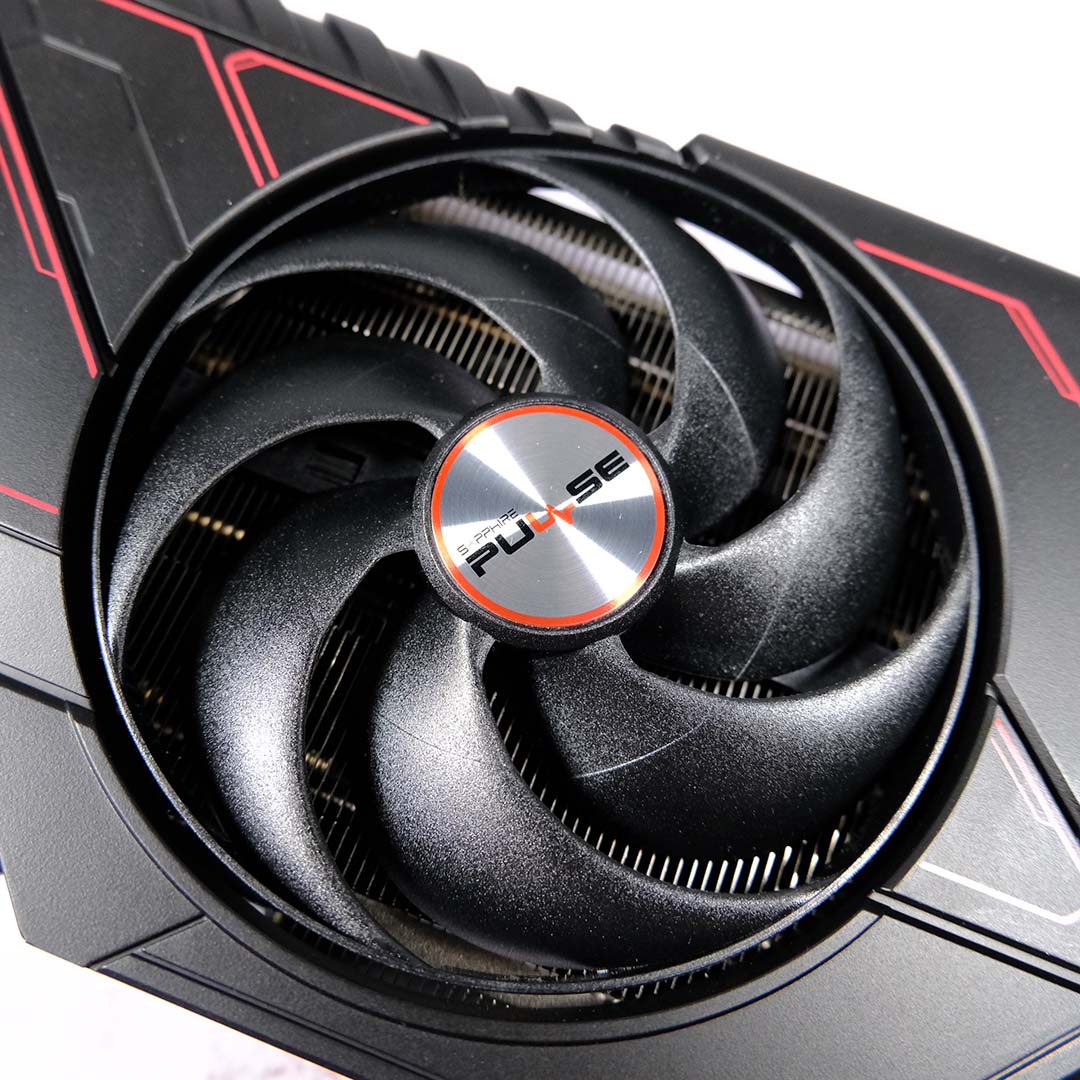
Easier to appreciate and equally important piece of the cooling apparatus is the dual-fan array. These blowers boast dual-ball bearings at their core, so you can expect them to enjoy a long lifespan, even in the face of trying workloads.
These fans also boast Sapphire’s ‘AeroCurve’ blade design, which the firm proudly boasts as having optimised static pressure and high airflow efficiency without incurring bothersome noise levels. From my testing, this certainly seems the case, with the card’s sound output proving quieter than my already quiet system.
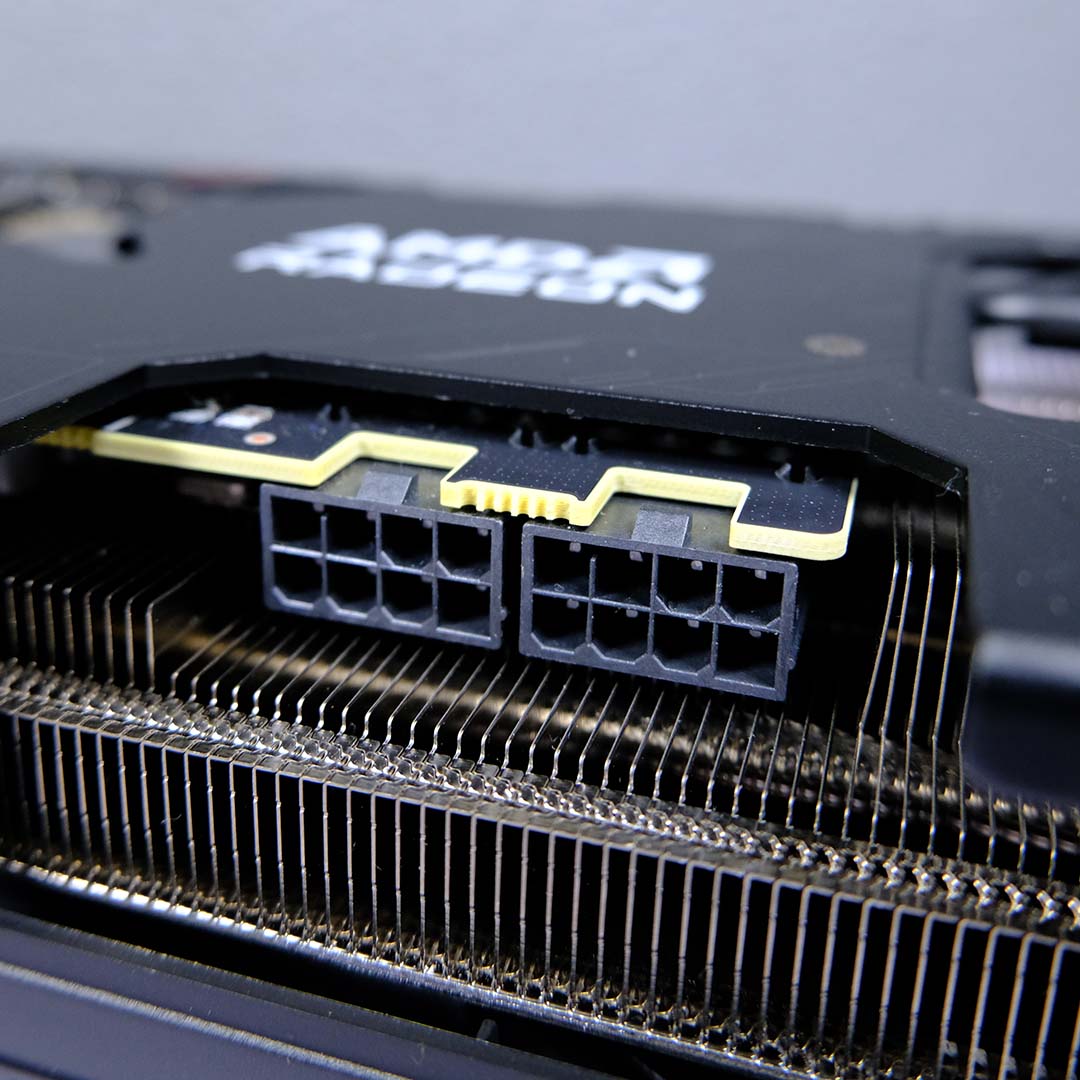
You don’t need to reach for a 16-pin connector on any RX 9070 GRE. Even with its slightly higher 240W TDP, this Pulse model demands two PCIe eight-pins for power.
In terms of connections, this RX 9070 GRE features two DisplayPort 2.1a alongside two HDMI 2.1b outputs. As such, the card’s ready for any monitor on the market today.
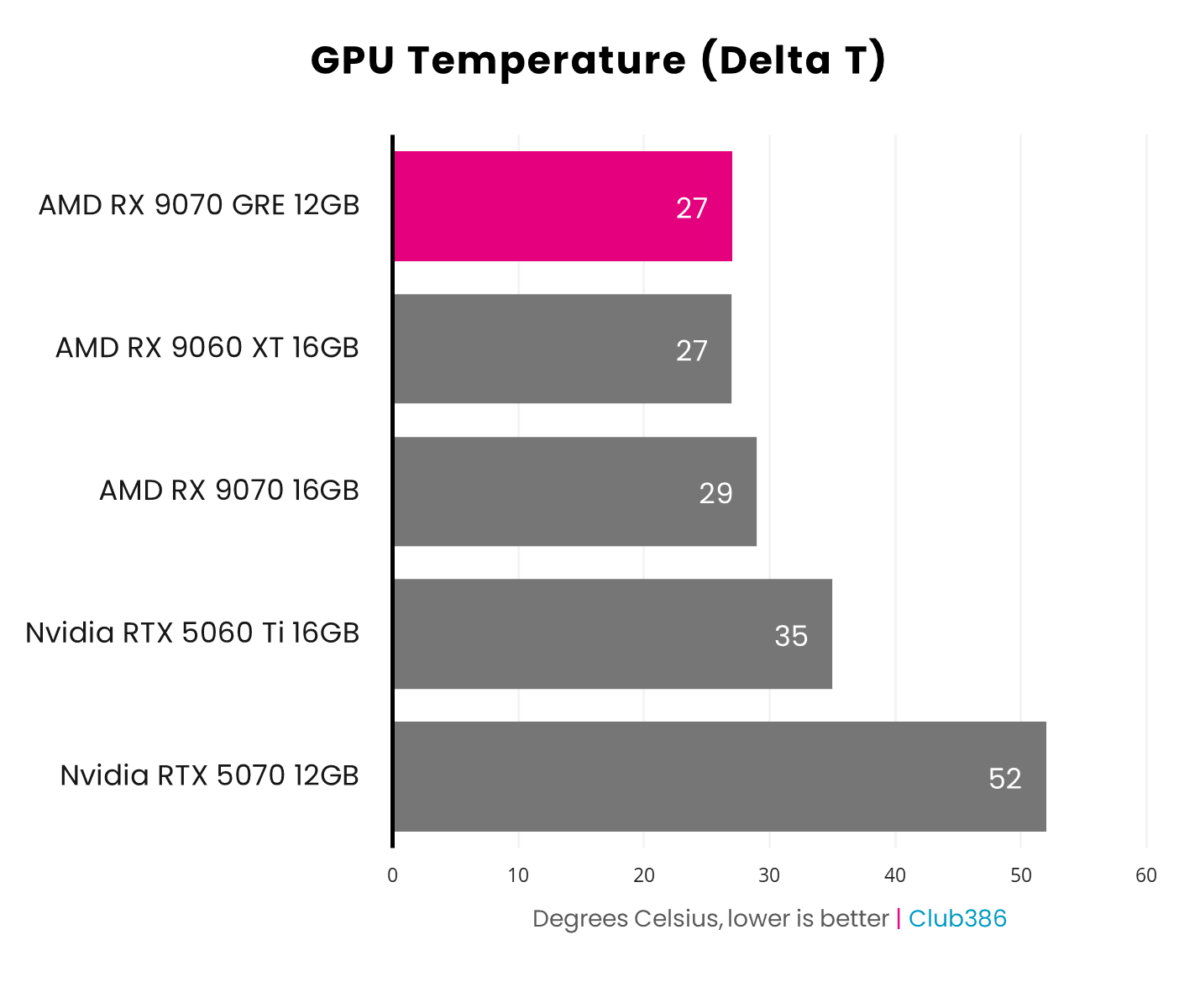
Putting this Pulse RX 9070 GRE through its paces, the card emerges the coolest of its closest rivals and siblings. Running Cyberpunk 2077’s RT Ultra preset at QHD, in addition to FSR 4 and frame generation, the GPU peaked at a surprisingly modest 27°C (Delta T). That’s right in line with the RX 9070 using the same cooler, and markedly better than the RTX 5070 Founders Edition.
In case you’re thinking the temperatures in the above graph are surprisingly cool, that’s because we quote the Delta T in our reviews, where we subtract the ambient room temperature from the actual GPU temp, so we can test without needing a thermally-controlled lab. For context, when testing the 9070 GRE, the actual GPU temperature was 54°C, so Sapphire has done a solid job with its cooler.
I’d usually report noise levels alongside these temperature readings, but the card was simply so quiet under load that my system continued to fall beneath the noise floor of my testing equipment (<30dBA). Summarily, this is a pleasing quiet and cool choice of RX 9070 GRE.
Performance
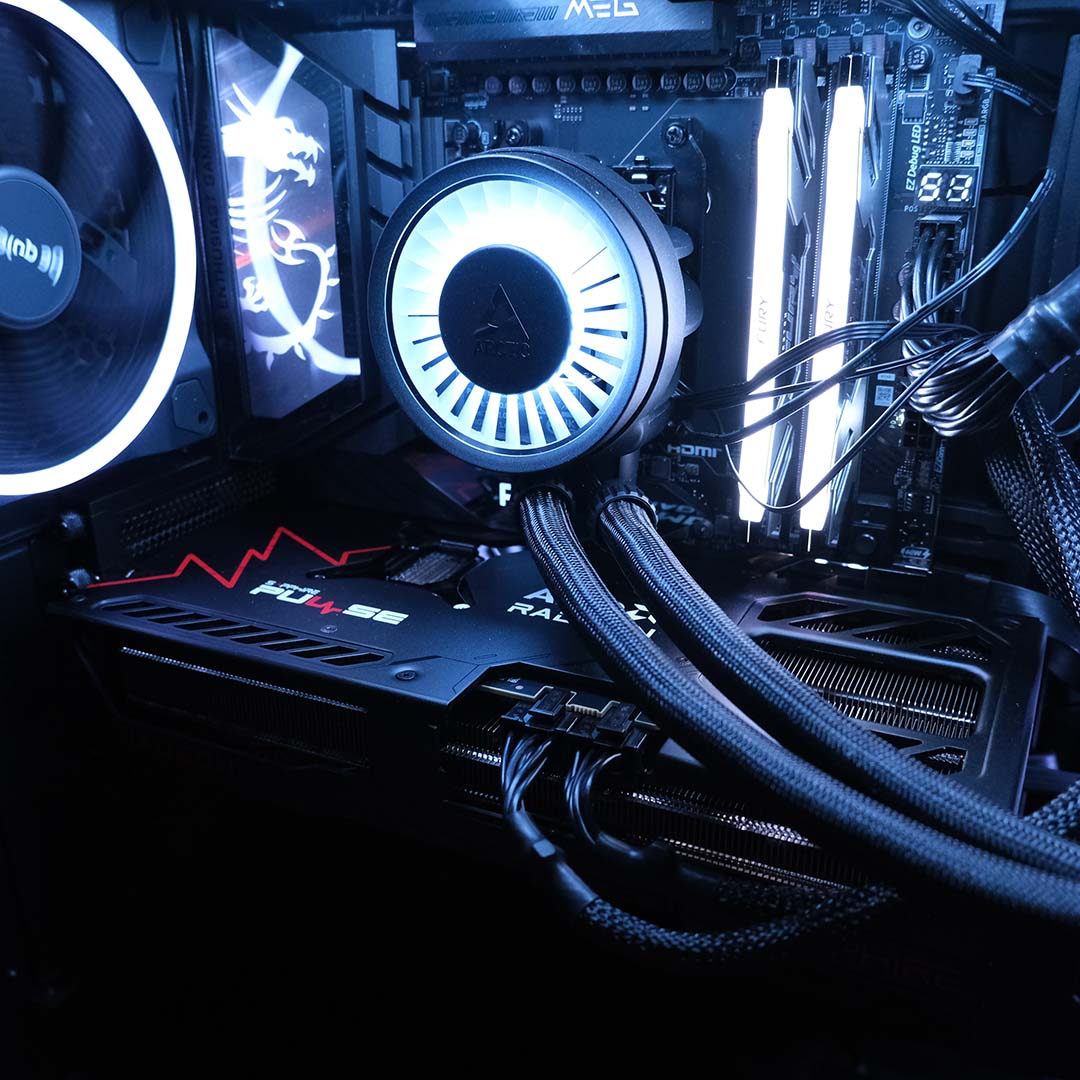
The RX 9070 GRE has the honour of being the first graphics card review on our new 9950X3D test benches. While pairing such high-end hardware with this pixel pusher isn’t necessarily representative of a real-world setup, we’re more interested in providing it with ample room to run free of any potential bottlenecks.
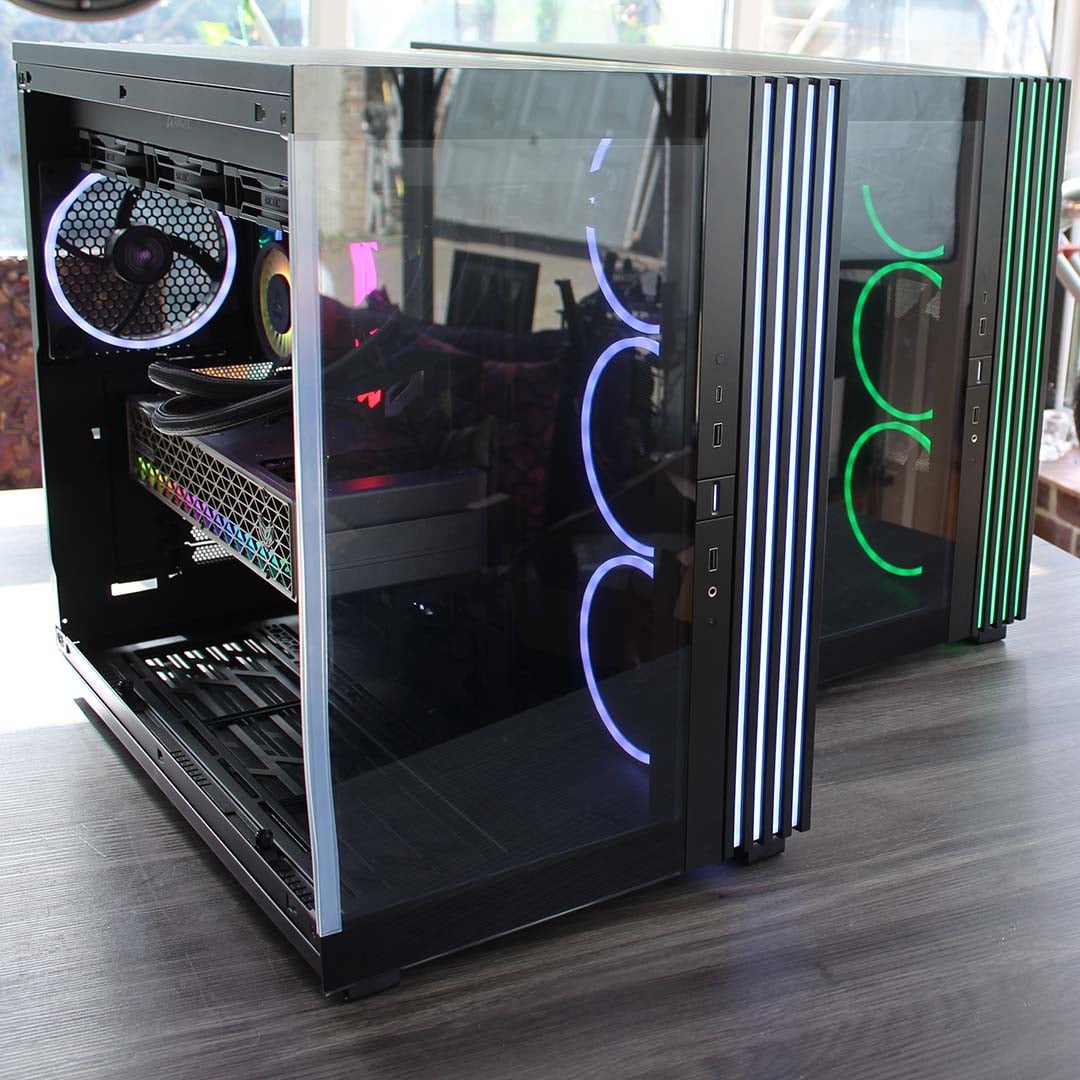
Our 9950X3D Test PCs
Club386 carefully chooses each component in a test bench to best suit the review at hand. When you view our benchmarks, you’re not just getting an opinion, but the results of rigorous testing carried out using hardware we trust.
Shop Club386 test platform components:
CPU: AMD Ryzen 9 9950X3D
Motherboard: MSI MEG X870E Ace Max
Cooler: Arctic Liquid Freezer III 420 Pro ARGB
GPU: Sapphire Nitro+ Radeon RX 9070 XT
Memory: 64GB Kingston Fury Renegade DDR5
Storage: 4TB Sandisk Optimus GX Pro 8100
PSU: be quiet! Dark Power 14 1,200W
Chassis: be quiet! Light Base 900 FX
In addition to testing the RX 9070 GRE on this system, I’ve captured fresh performance data for comparison graphics cards too. Our test suite includes a series of synthetic benchmarks, as well as several in-game benchmarks. I’ve limited our testing on the latter front to FHD (1920×1080) and QHD (2560×1440) resolutions, as they’re the most applicable and suitable for the GRE and other cards given GPU horsepower and memory configuration.
Apps
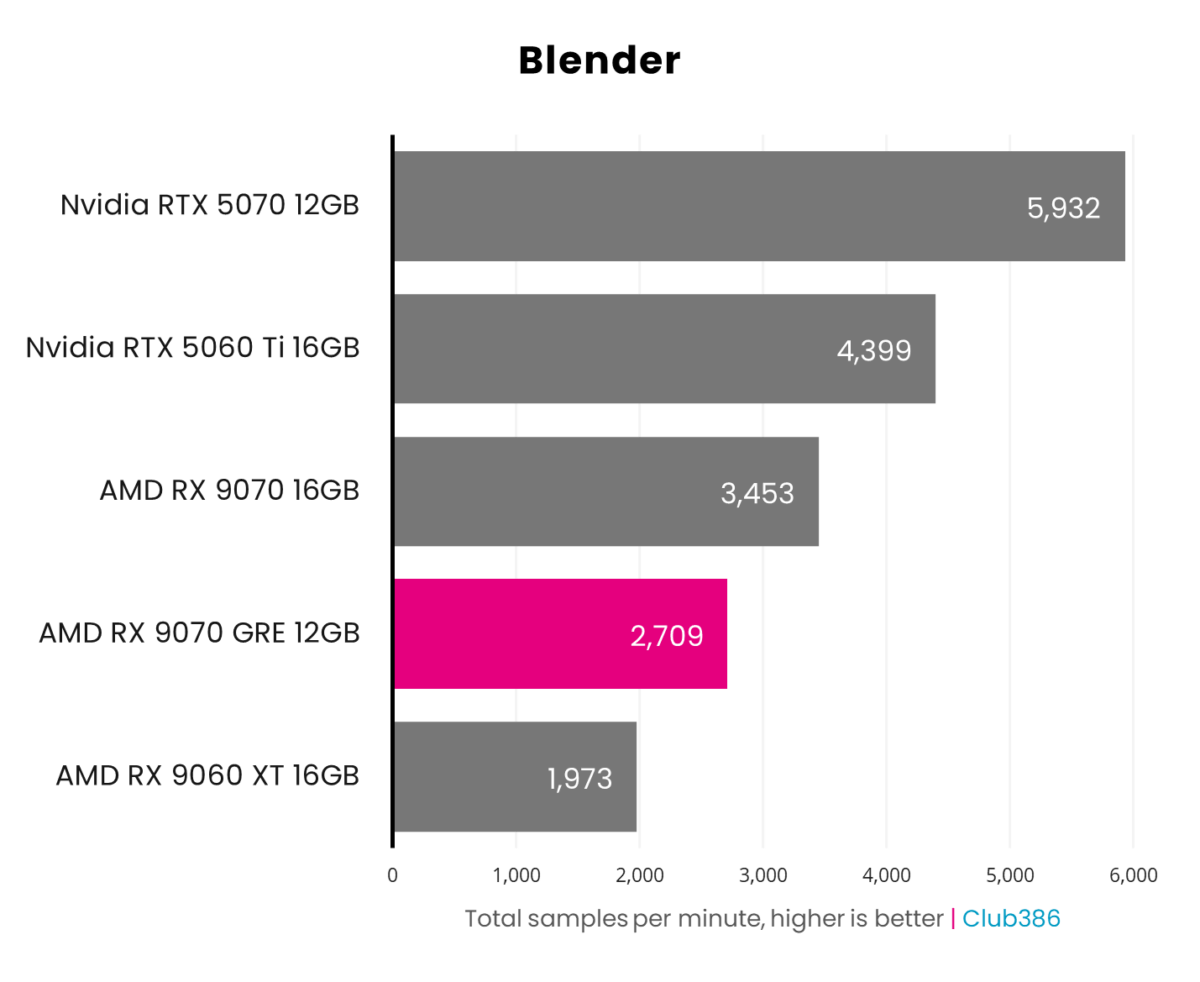
Kickstarting our general compute benchmarks with Blender, the RX 9070 GRE’s sample count comes out 37% ahead of the RX 9060 XT 16GB and 22% behind the RX 9070. As a reminder, the latter card is only 9% more expensive at the time of writing, so this isn’t exactly a fantastic result for the GRE. All that said, GeForce GPUs are the clear favourites for Blender, handily outpacing the fastest Radeon by 27-72% thanks to support for OptiX and CUDA APIs.
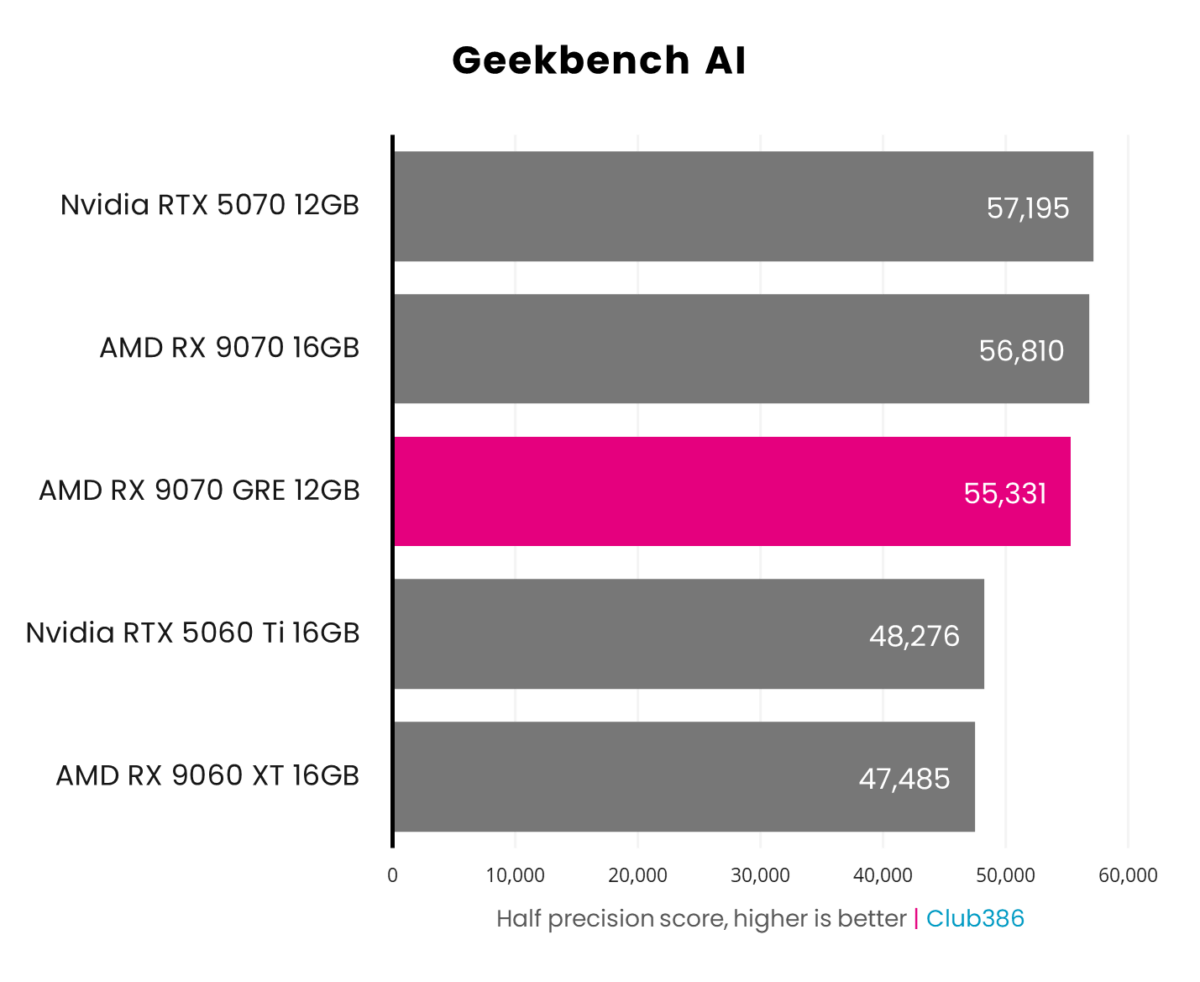
Running an ONNX runtime via DirectML sees the Radeon RX 9070 GRE emerge as the best value hardware accelerator of our graphics card cohort. With an FP16 score of 55,331pts, it’s a mere 3% behind both the RX 9070 and RTX 5070, despite costing less than either.
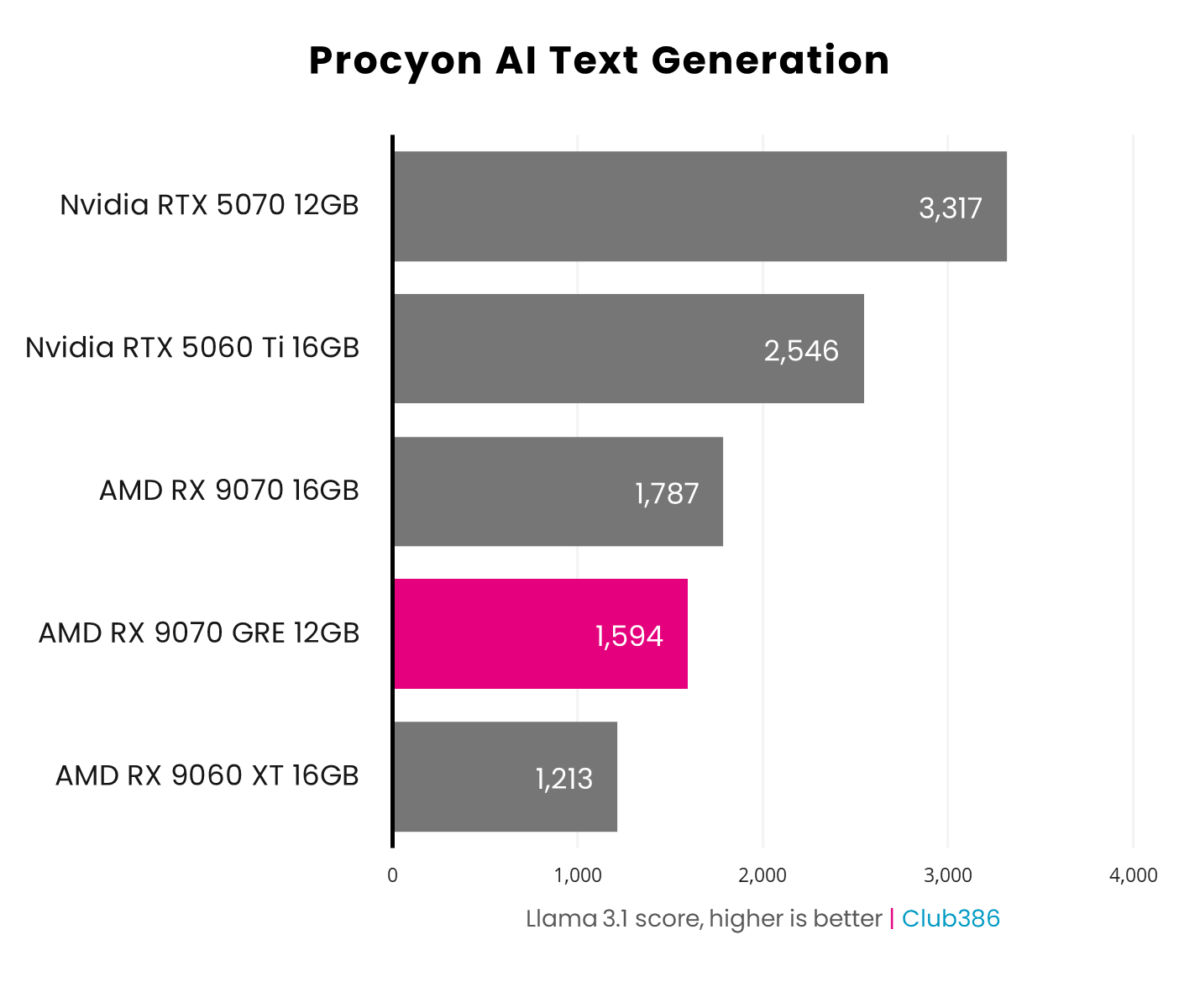
Unfortunately for the RX 9070 GRE, the ONNX win from Geekbench 6 doesn’t come to roost in our Procyon Llama 3.1 benchmark. The card once again slots between the RX 9060 XT 16GB and RX 9070, but both RTX 5060 Ti 16GB and RTX 5070 offer markedly greater tokens per second than all three Radeons.
Gaming
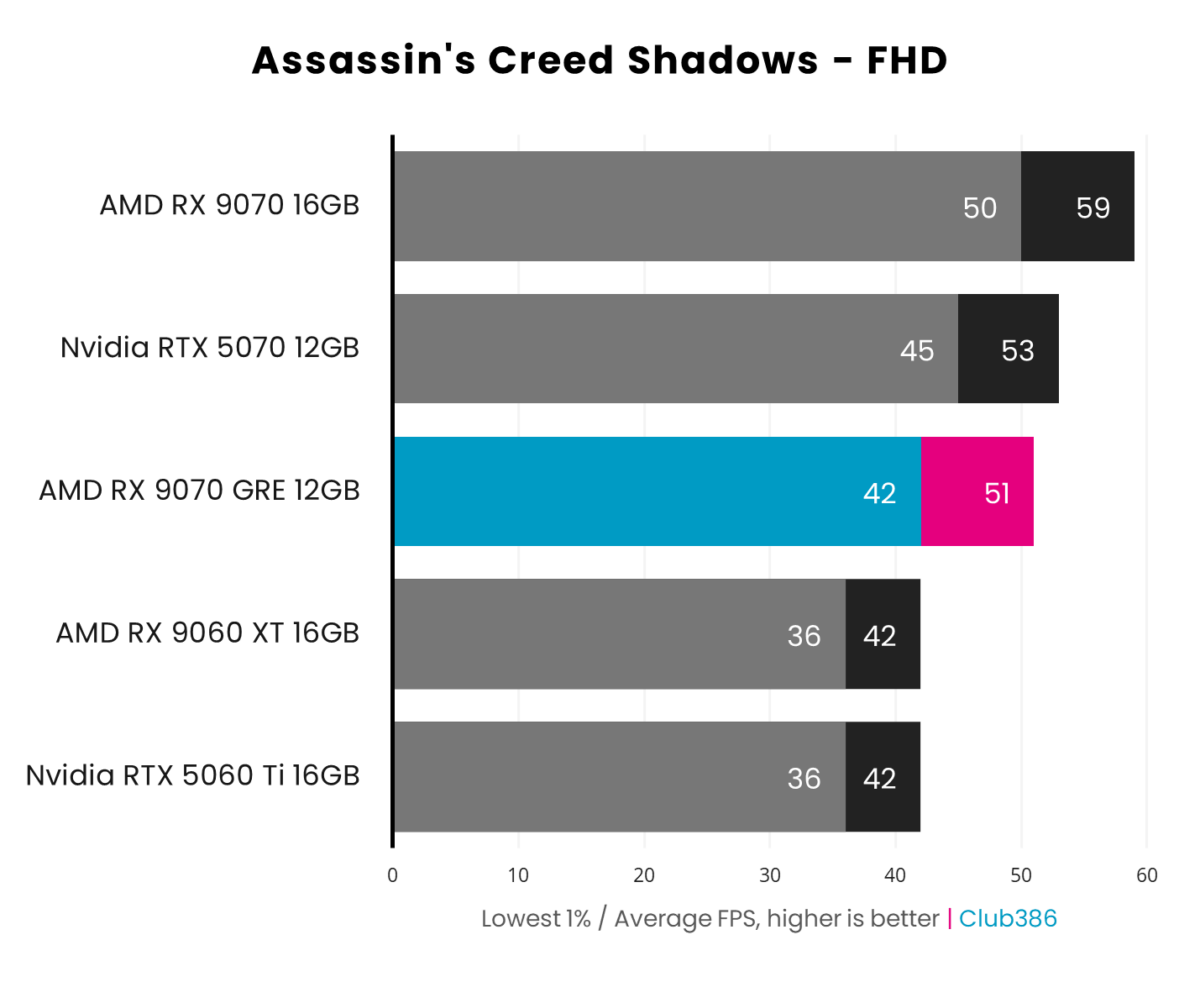
Assassin’s Creed Shadows’ ray-traced recreation of feudal Japan proves a taxing battleground for all the graphics cards in the chart above, with none able to achieve a 60fps average at maximum settings at native 1080p. That said, a dash of upscaling would help see the majority past that threshold, including the RX 9070 GRE.
Achieving a 51fps average, the RX 9070 GRE is right on the RTX 5070’s tail, with 2-3 frames separating the two across minimum and average performance. However, the RX 9070 proves the most competent card of the bunch, besting the GRE by 16%.
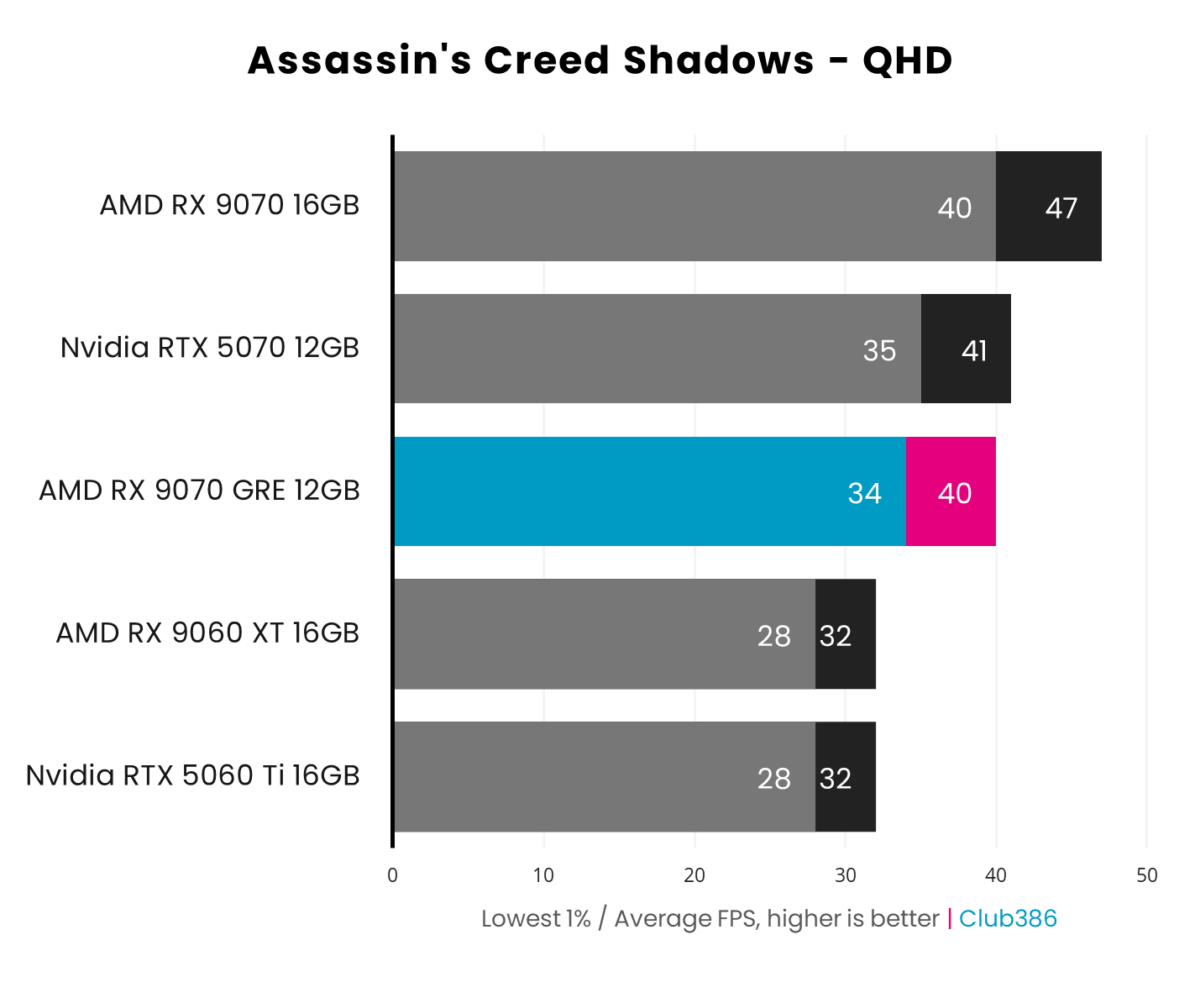
Increasing GPU load with a bump in resolution to QHD, the raw frame rate gaps between graphics cards shrinks. Now, the RX 9070 GRE is just one frame behind the RTX 5070, in both minimum and average frame rates. Despite the higher rendering pressures, the RX 9070 actually increases its lead over the GRE’s average performance to 18%.
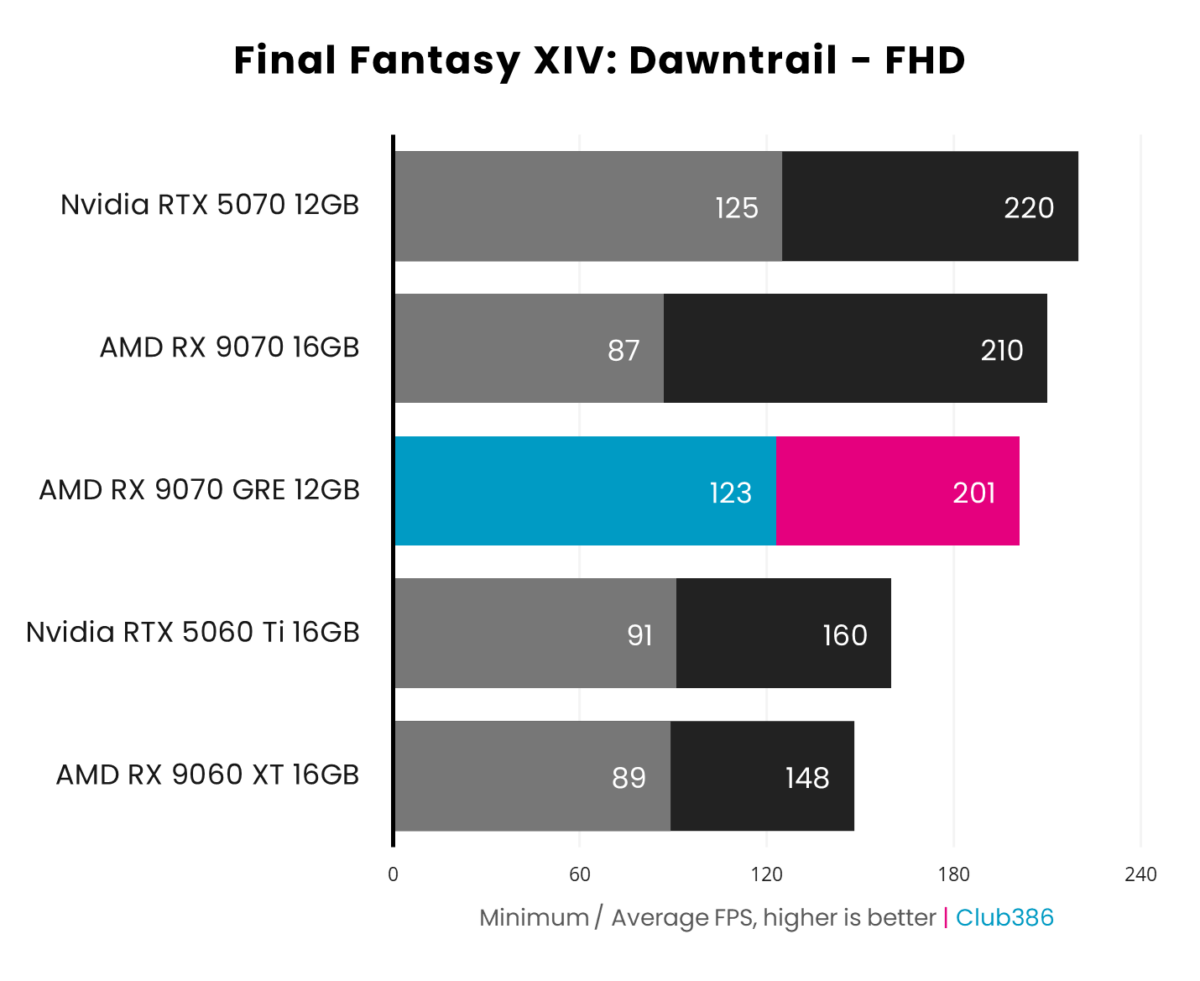
Loading up Final Fantasy XIV: Dawntrail, the RX 9070 GRE once against finds itself in third place on the chart, behind the RX 9070 and RTX 5070, respectively. This is a position it’ll repeatedly occupy as we progress throughout our test suite, which is no bad thing providing it can offer greater performance per dollar relative to the more-expensive cards.
In the case of this MMORPG, the RX 9070 GRE provides solid value at FHD. Achieving a 201fps average, the card’s just 4% behind the RX 9070 GRE and trails the RTX 5070 by 9%. That’s a pleasing resulting considering the GRE is respectively 8% and 13% more affordable.
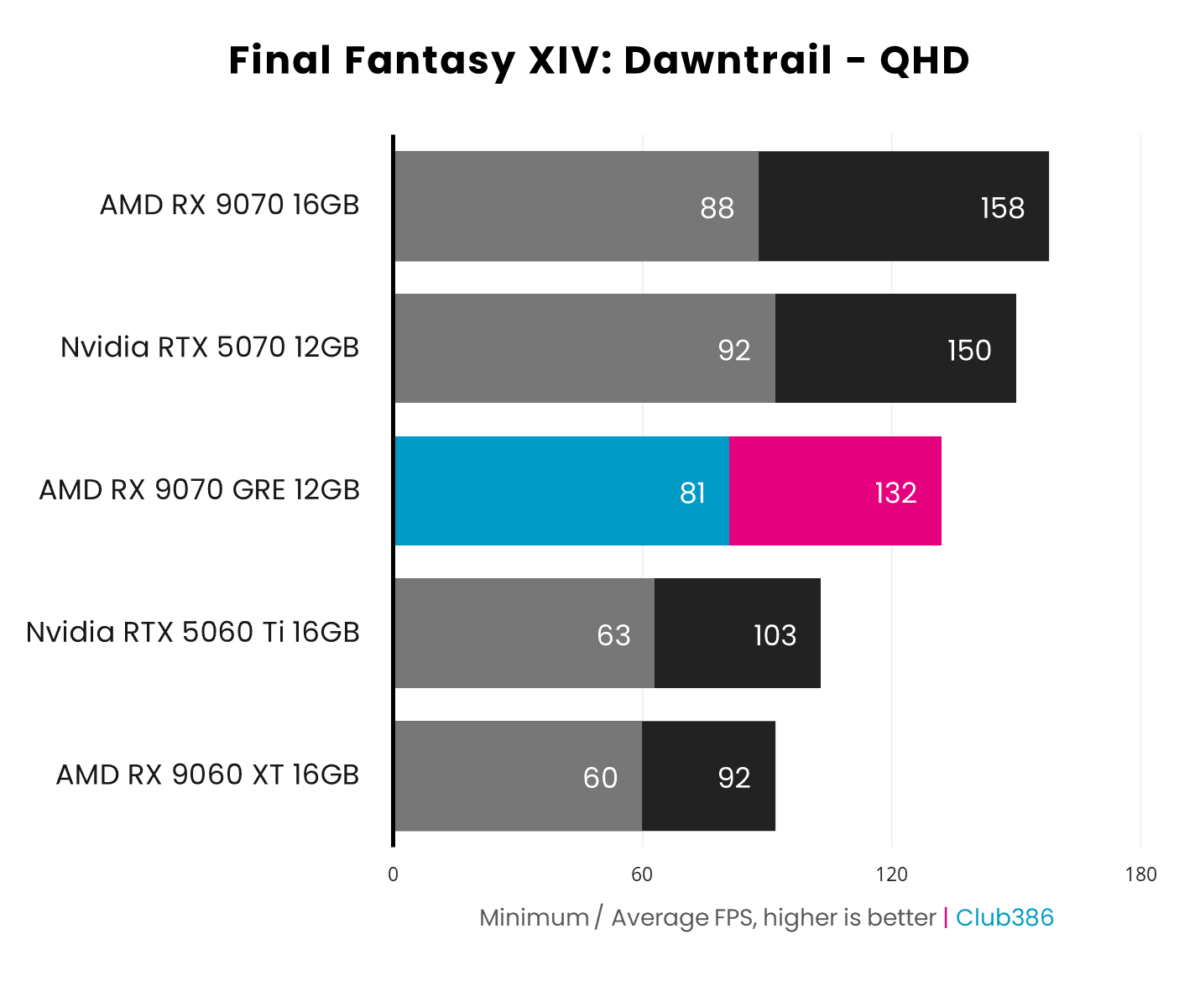
Running Final Fantasy XIV at QHD, the value proposition of the RX 9070 GRE sadly weakens. At the higher resolution, the RTX 5070’s performance advantage of 14% almost identically mirrors its 15% higher price tag. That’s the least of the GRE’s worries, though, as the RX 9070 enjoys a whopping 20% performance advantage while only costing 9% more.
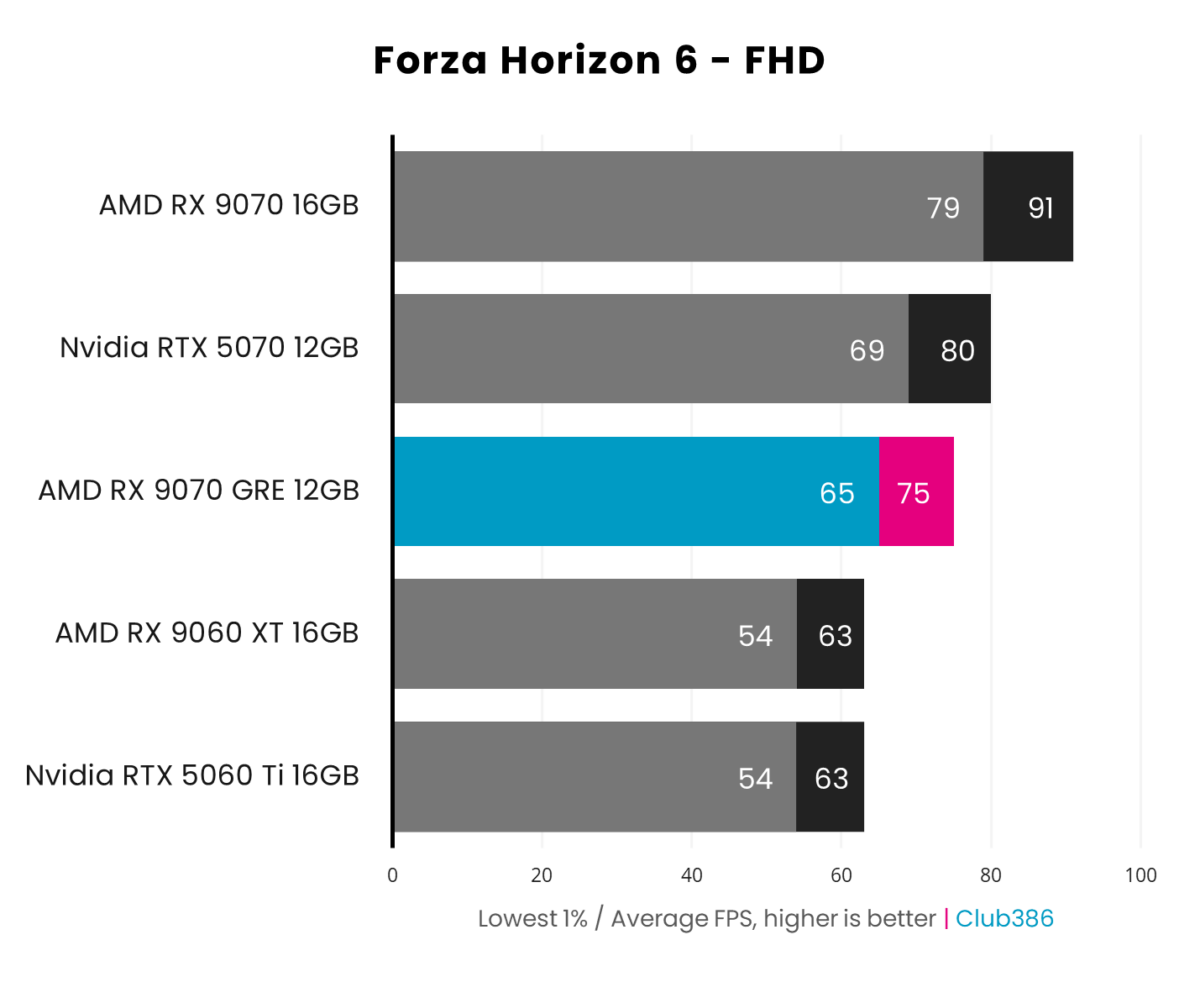
Even at its highest settings, complete with ray tracing, Forza Horizon 6 proves surprisingly kind to graphics cards. The RX 9070 GRE drives along without a hitch at FHD, outputting 60fps+ in terms of minimum and average frame rates.
The RTX 5070 once again emerges the faster card, but only by 7%. Like clockwork, though, the RX 9070 takes both the performance and value crown, zooming ahead of the GRE by a startling 21%.
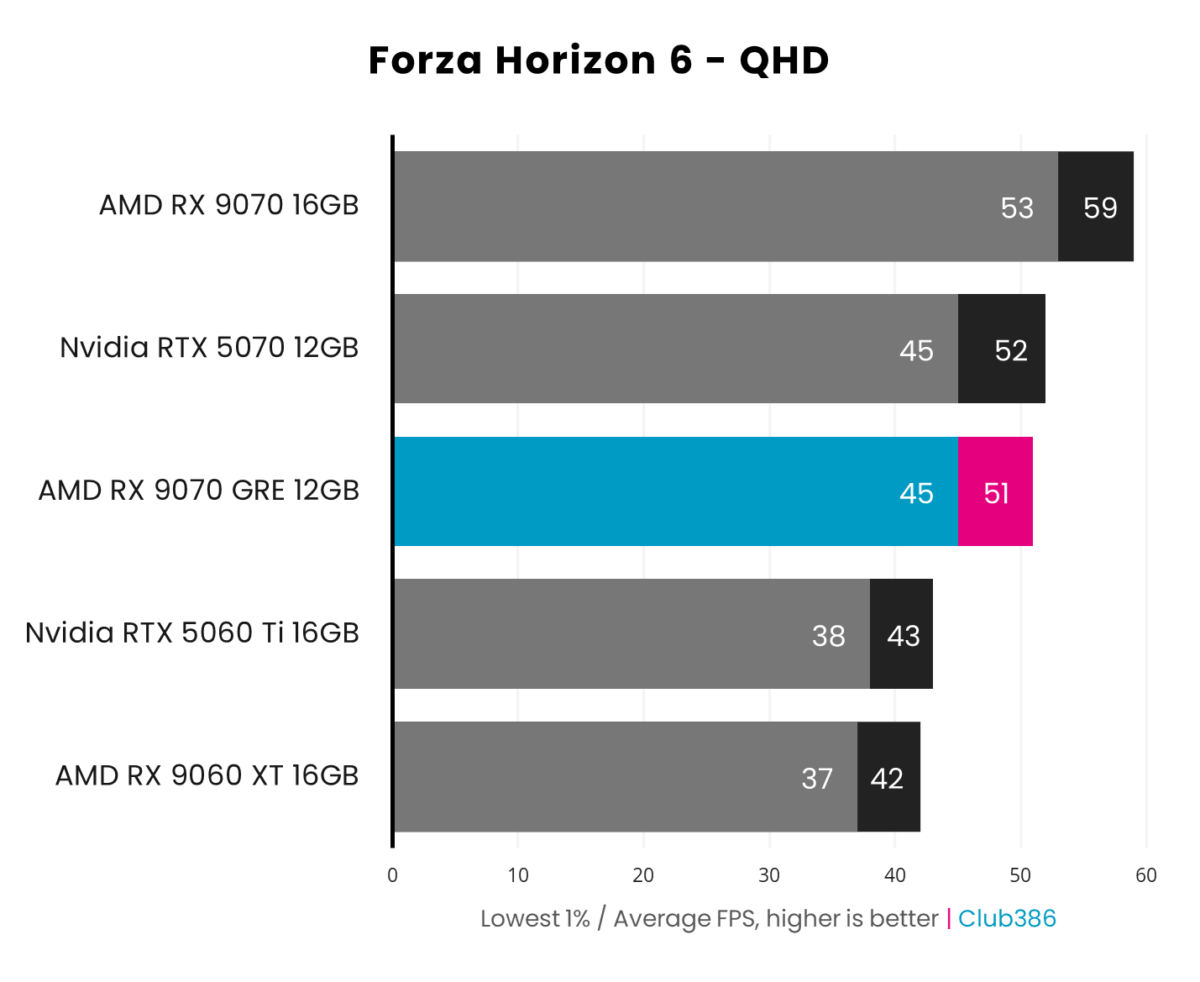
Upping the ante to QHD, the RX 9070 GRE and RTX 5070 are practically neck and neck with Nvidia’s offering clawing victory by a single frame. While the race for second place is close, the RX 9070 is undeniably the fastest card on the board, zooming past the GRE by 16%.
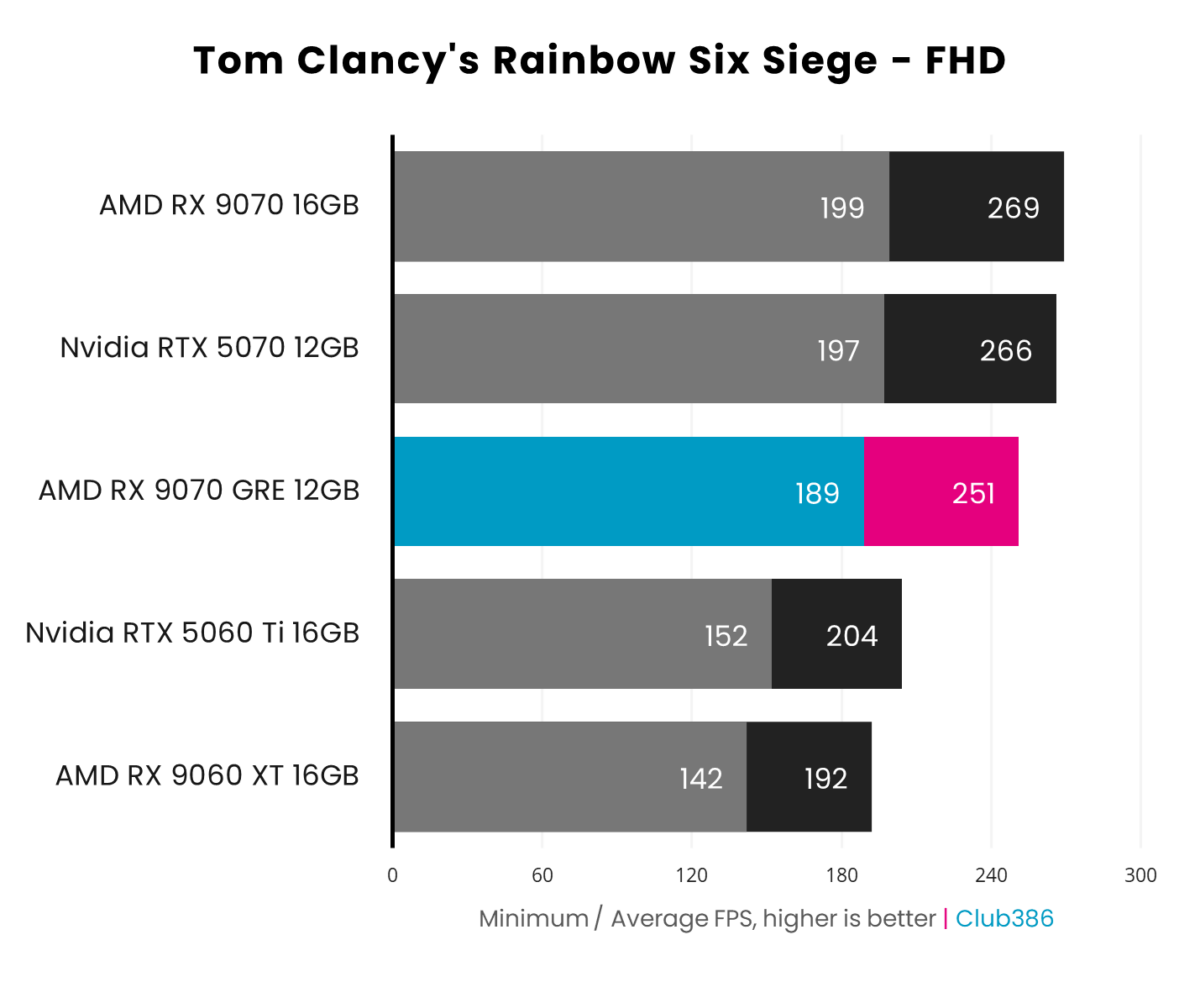
With the RX 9060 XT 16GB setting the performance floor at 192fps, Rainbow Six Siege is proof that it’s possible to enjoy esports games at high frame rates with pretty much any modern graphics card. Paying more for the likes of the RX 9070 GRE will allow you to make better use of 240Hz+ monitors, though, at least at FHD. Outputting a 251fps average, the GRE earns itself a rare value win, relative to the RTX 5070 and RX 9070.
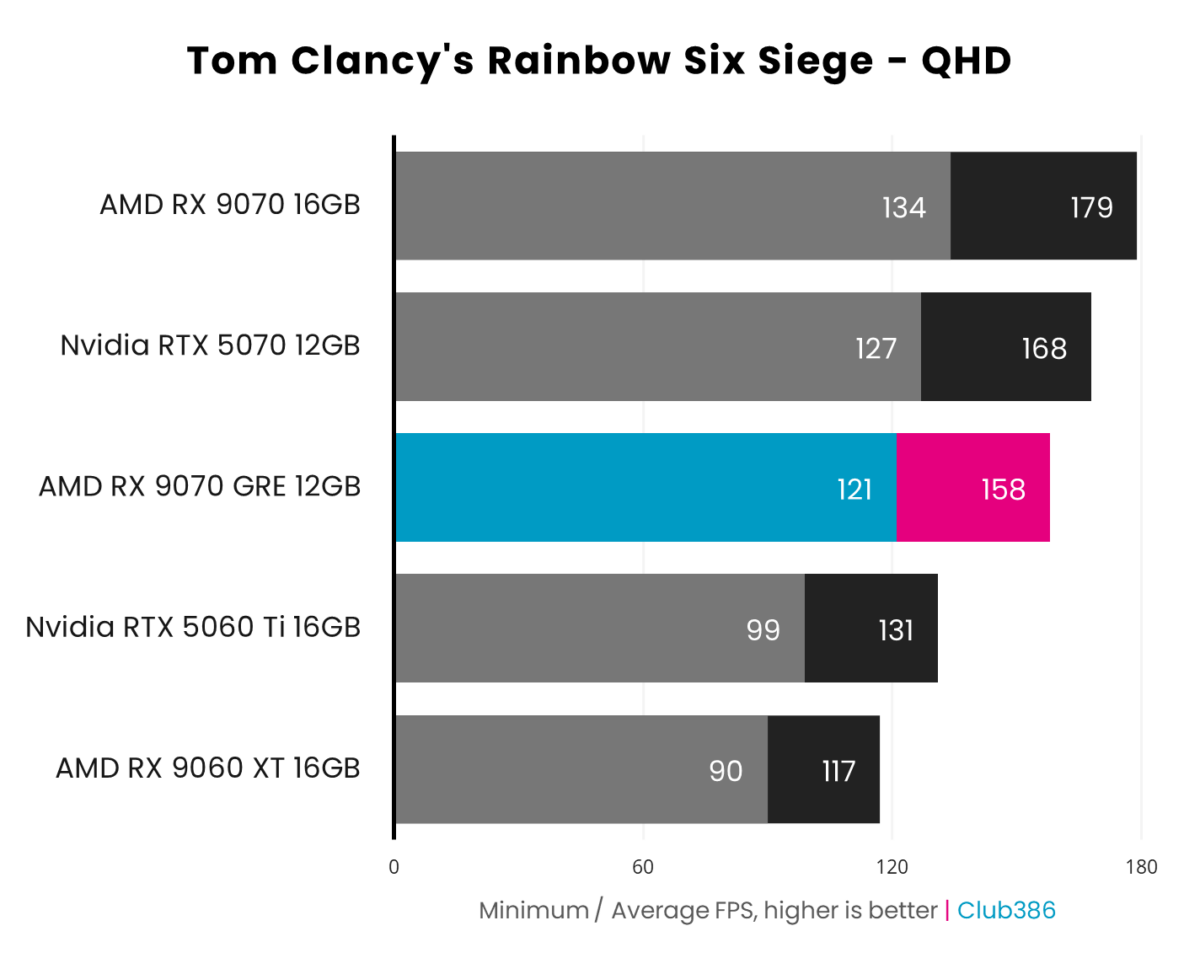
A higher pixel count has no dramatic effect on Rainbow Six Siege graphics card hierarchy, with the same 6% gap that separated the RX 9070 GRE and RTX 5070 at FHD manifesting once again at QHD. That said, the RX 9070 extends its lead over the GRE at this resolution, rising from 7% to 13%.
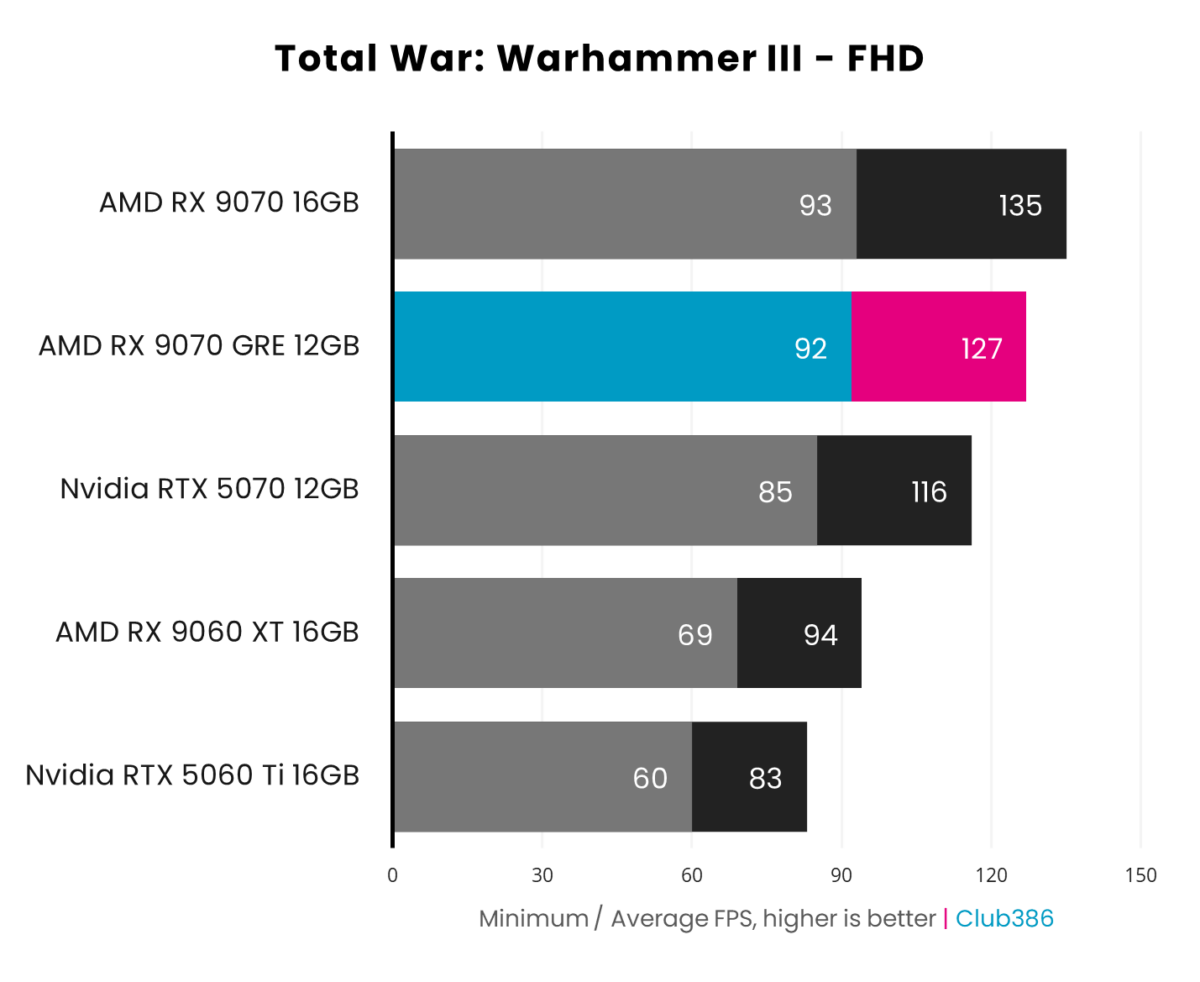
In a rare twist of fate for the RX 9070 GRE, courtesy of Total War: Warhammer III the graphics card finds itself clearly ahead of the RTX 5070. The Radeon more than earns its proverbial silver medal, pulling ahead of its GeForce rival by a cool 9%. Relative value to the RX 9070 is strong true, falling behind by a respectable 6%.
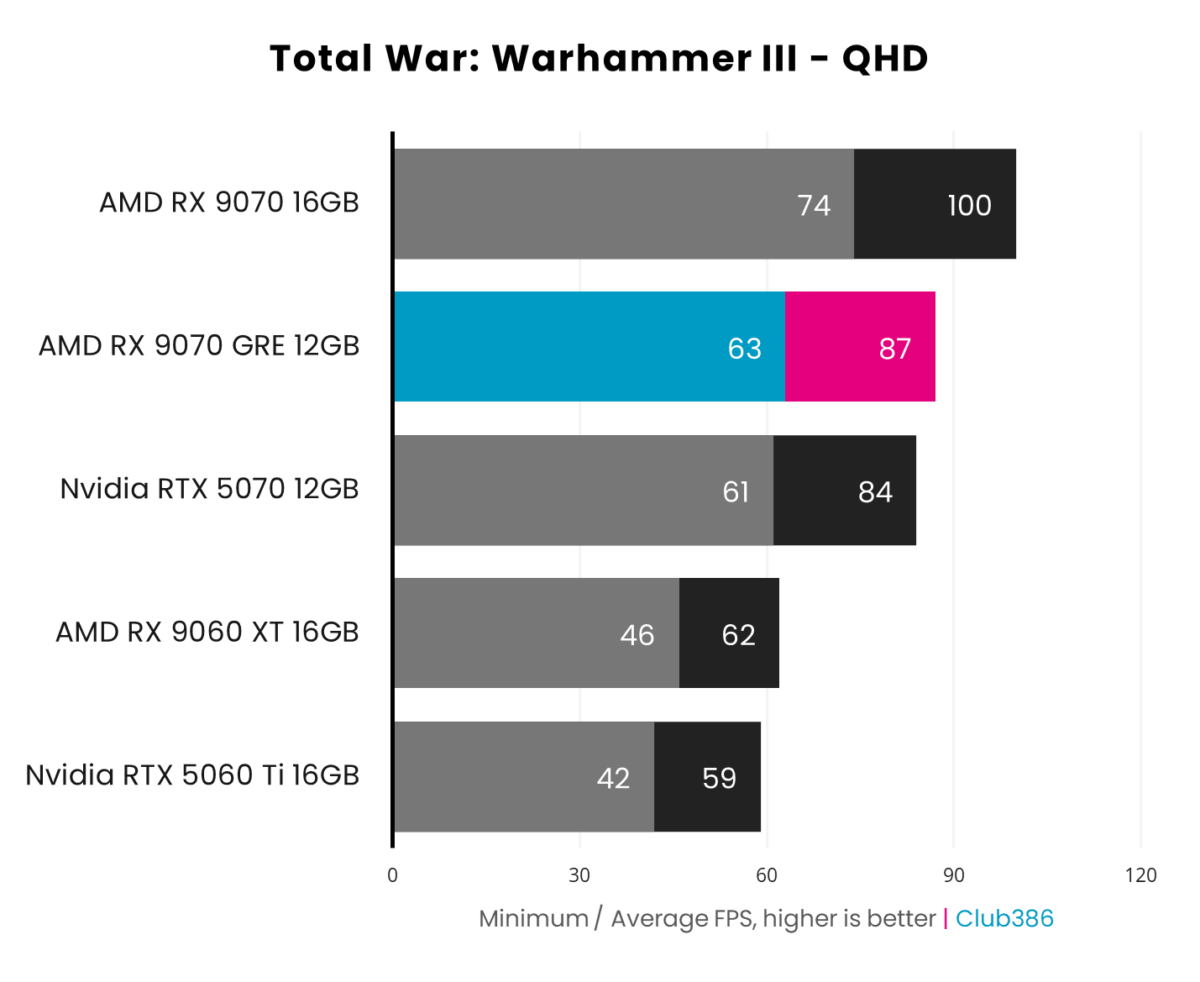
Sharpening up the real-time strategy game at QHD, the RX 9070 GRE maintains a small 3% lead over the RTX 5070. Meanwhile, the gap widens versus the RX 9070 to 13%.
FSR 4
For the moment, FSR 4 remains exclusive to RDNA 4 GPUs such as the Navi 48 die at the heart of the RX 9070 GRE. However, even when wider support does roll out, the graphics card will maintain the advantage of using the native FP8 version of the upscaler and frame generation algorithm. This should provide the highest quality image output relative to the eventual INT8 alternative, but we’ll need to wait and see how much of a difference there is between the two models.
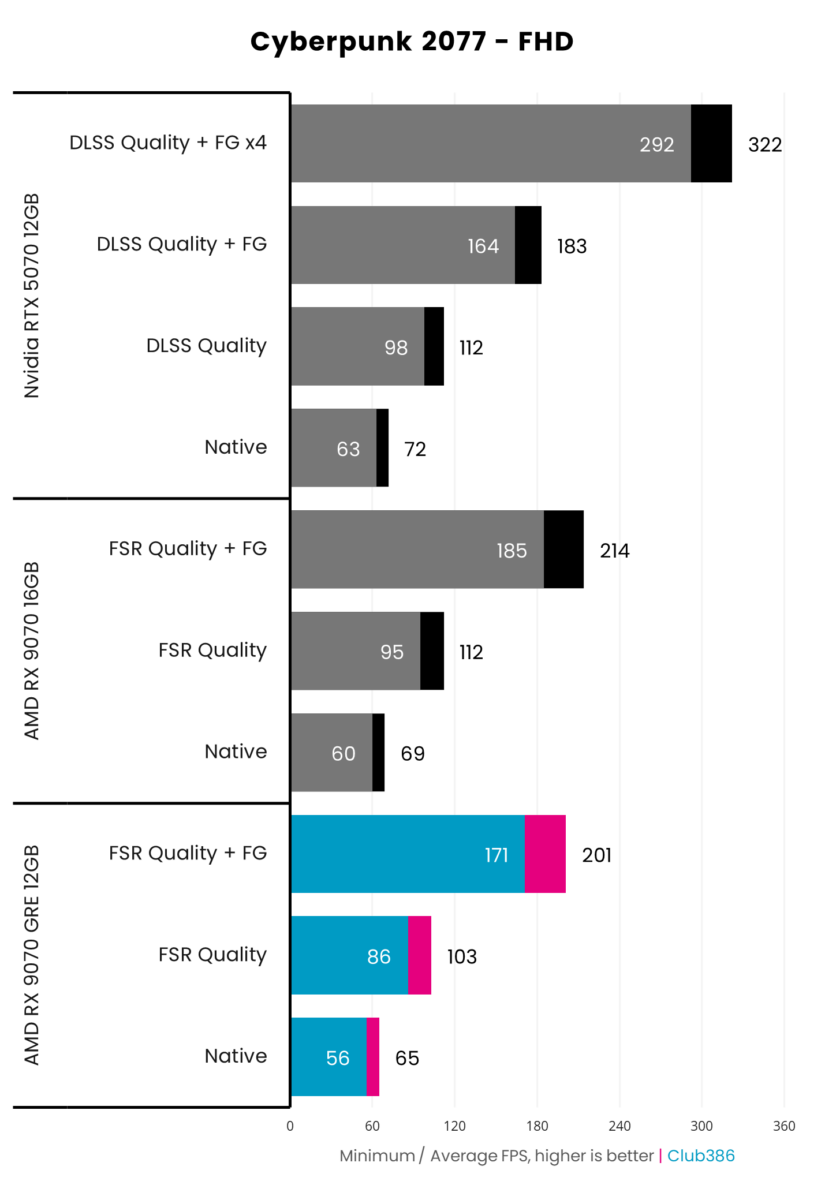
Running Cyberpunk 2077’s RT Ultra preset is no small feat, even at 1080p, but the RX 9070 GRE has enough graphical horsepower in the tank to deliver a 65fps in the face of such taxing settings. The card’s only 6% behind the RX 9070, but it’s the RTX 5070 that creates the largest performance gap at 10%.
Engaging FSR 4 in ‘Quality’ mode on the Radeons nets a welcome 58-62% increase in average frame rate, beating out the 56% that DLSS 4 offers the GeForce. The latter upscaler does provide slightly higher image quality to my eyes, but the differences are often so subtle that I wouldn’t think twice about playing the game with either tech.
The story’s much the same once frame generation enters the… frame. The AMD cards enjoy an performance uplift of 91-95%, while the RTX 5070 nets a more modest 63% increase. However, the GeForce card can go further than either Radeon via Multi-frame generation, achieving a 322fps average in 4x mode.
Of course, it’s important to note that higher frame generation modes incur larger latency penalties. While motion clarity is much higher on the RTX 5070 in 4x mode, I’d sooner stick with the single frame experiences offered by the three cards.
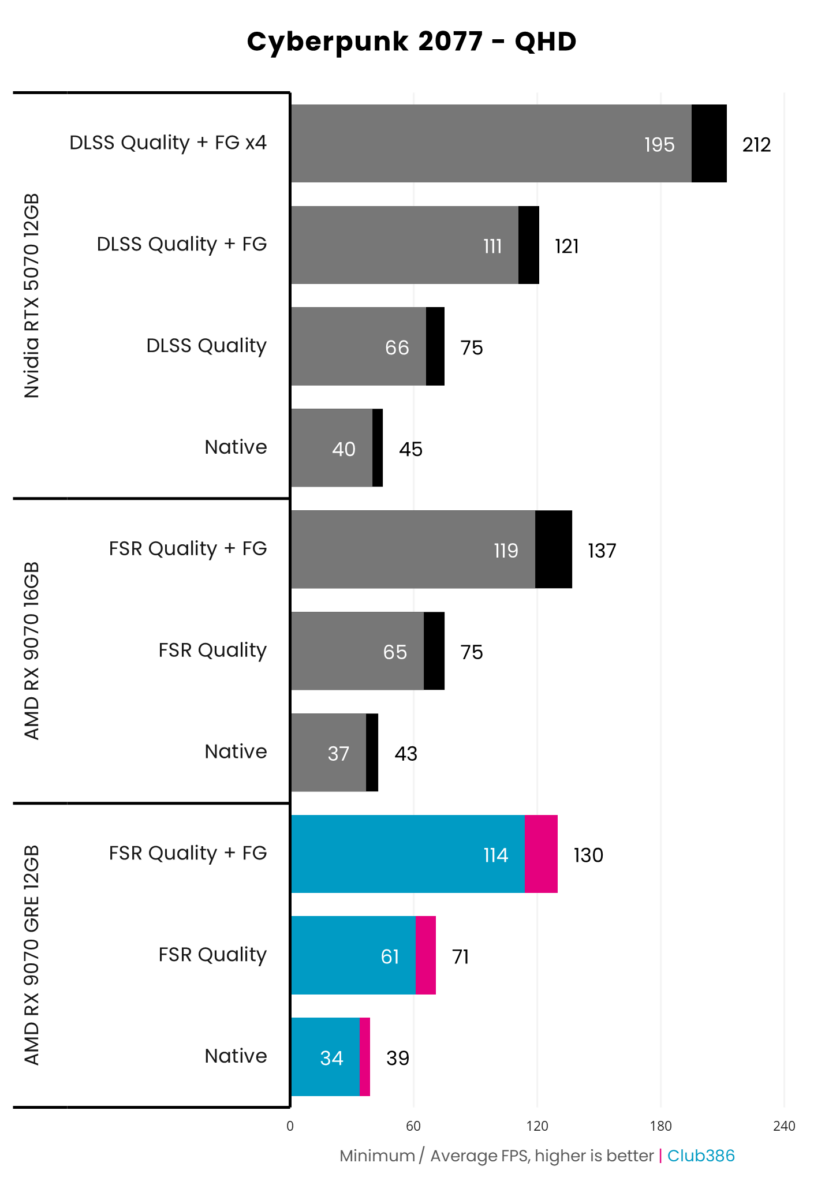
Even at QHD, the RX 9070 GRE keeps its head above water with a playable 30fps+ average and minimum frame rate sans any assistance from upscaling. Neither the RX 9070 or RTX 5070 hit the ideal 60fps target and while they do offer 10-15% more performance than the GRE, this translates into a small 4-6fps advantage.
Firing up FSR 4, the RX 9070 GRE’s frame rates rise by a welcome 82%, a larger increase than the RX 9070 (+74%) or RTX 5070 (+67%) benefit from. Raw performance remains close, with just 4fps on average separating the GRE from its competition.
Turning on frame generation provides another welcome 83% bump for the RX 9070 GRE, as well as the RX 9070, while the RTX 5070 rises by a more conservative 61%. At the end of the single frame gen. run, the GRE is nine frames ahead of its Nvidia opponent and only 7fps behind its sibling.
Naturally, multi frame generation tips the scales firmly in favour of the RTX 5070, which pumps out a whopping 212fps in 4x mode albeit with floaty feeling latency.
Conclusion
The RX 9070 GRE offers solid FHD and QHD performance, across rasterised and ray traced rendering, coming within 3-4% of RTX 5070 performance on average. Given current pricing, this makes AMD’s card the better value buy for gaming in the United States ($549 vs. $629), but it’s a less attractive alternative in Blighty (£499 vs. £500).
However, the bigger problem facing the RX 9070 GRE stems from the RX 9070. While the latter does cost an additional £20 / $50 at the time of writing, spending that extra cash nets an extra 11-16% performance, providing greater bang for your buck. That’s not forgetting the more-expensive card can more easily stretch to 4K gaming, thanks to its larger 16GB VRAM buffer and 256-bit bus.
If you can expand your budget that bit further to the RX 9070, there’s no reason not to, although seemingly ever-increasing memory prices are likely to see that card’s cost skyrocket in the near future. If you must abide by a strict £500 / $550 budget, though, the RX 9070 GRE, particularly this Pulse model from Sapphire, is worth considering if the RTX 5070 is far more expensive.