
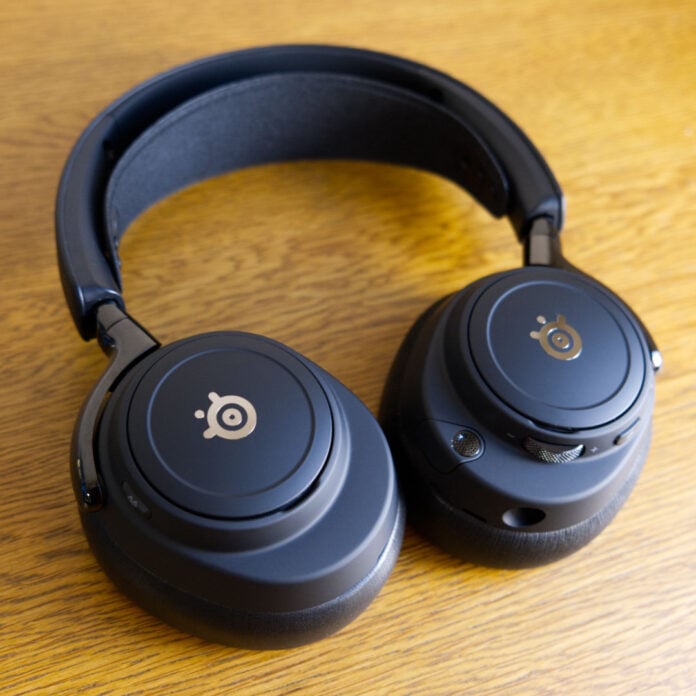
Tell any audio enthusiast about your gaming headset, and you’ll notice their eyes start to twitch. It’s true that good pairs of studio headphones routinely embarrass gaming headsets twice the price, given their focus on experience over features, but that approach in itself still comes with compromises. The SteelSeries Arctis Nova Elite closes the gap entirely, offering the first wireless gaming headset complete with a hi-res audio certification that’ll please audiophiles and gamers alike.
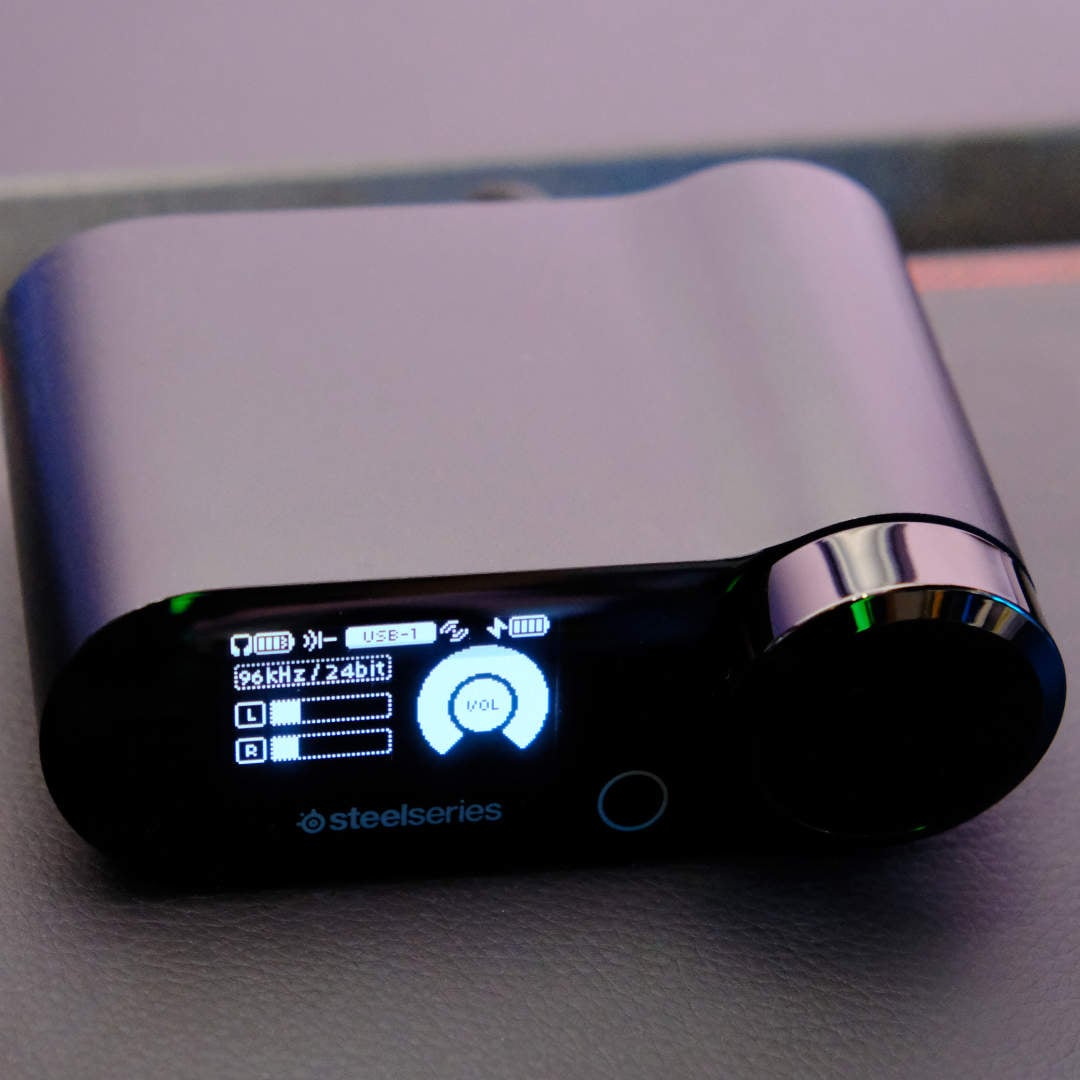
Building on the previous champion, SteelSeries’ Arctis Nova Pro Wireless, all the usual suspects return. There’s a retractable boom microphone, active noise cancelling and, my personal favourite, two hot-swappable batteries that ensure you never need to wait for your headset to charge. The real changes come in the form of premium materials that make this headset a luxury item, and tweaks under the hood that usher in 96kHz and 24-bit audio across a low-latency 2.4GHz wireless connection.
Naturally, all of this comes with a hefty price tag. At £599.99 / $599.99, the Elite costs nearly twice as much as the Nova Pro Wireless and more than a PlayStation 5. Whether you’re willing to chase that final measure of fidelity depends entirely on how you value having gaming features and audiophile sound in the same device.
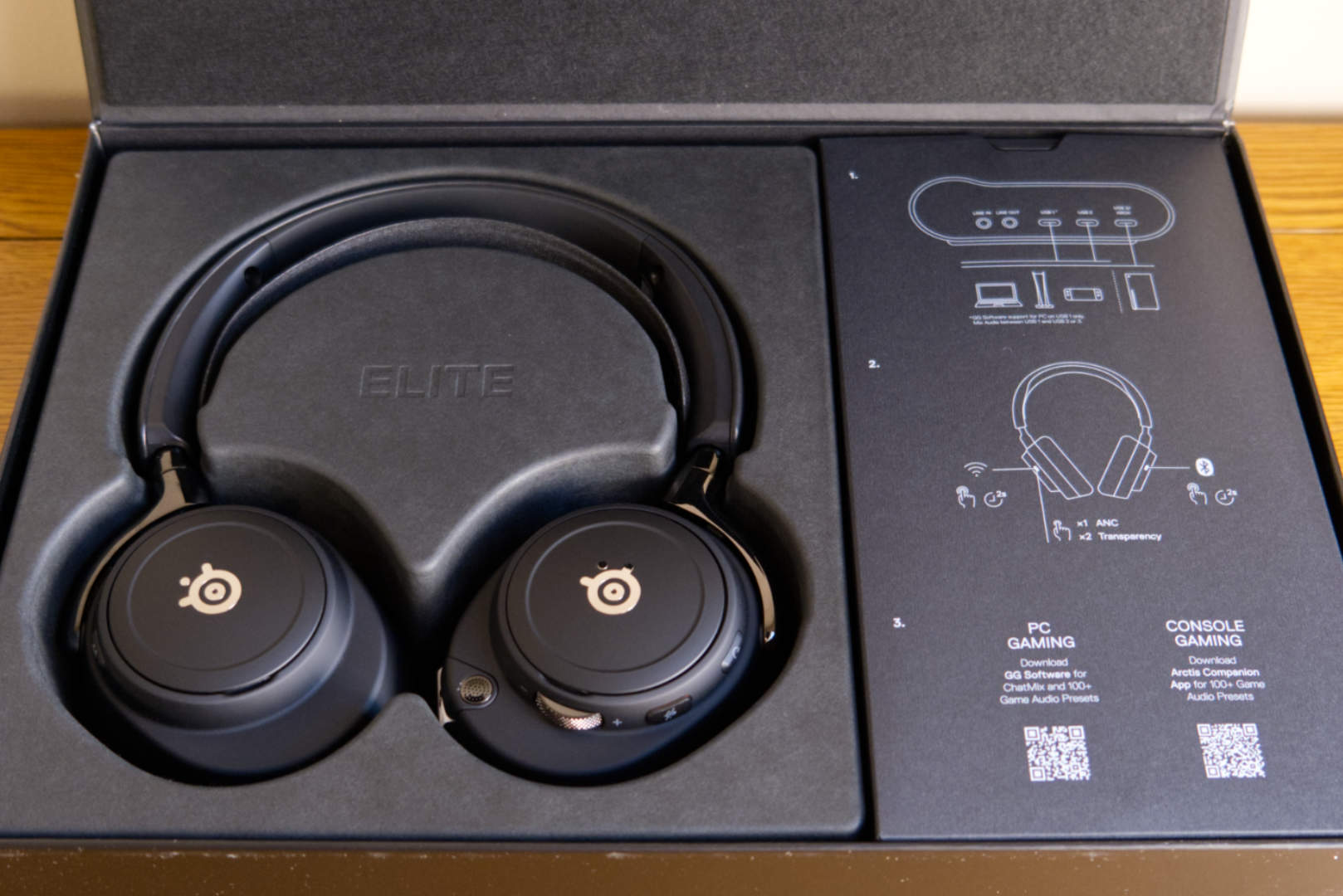

SteelSeries Arctis Nova Elite
£600 / $600
Pros
- Certified hi-res wireless audio on PC
- Exceptional audio quality
- Two hot-swappable batteries
- Four simultaneous audio sources
- Great wireless mic with AI noise rejection
Cons
- Very expensive
- Lacklustre ANC
Club386 may earn an affiliate commission when you purchase products through links on our site.
How we test and review products.
Design and comfort
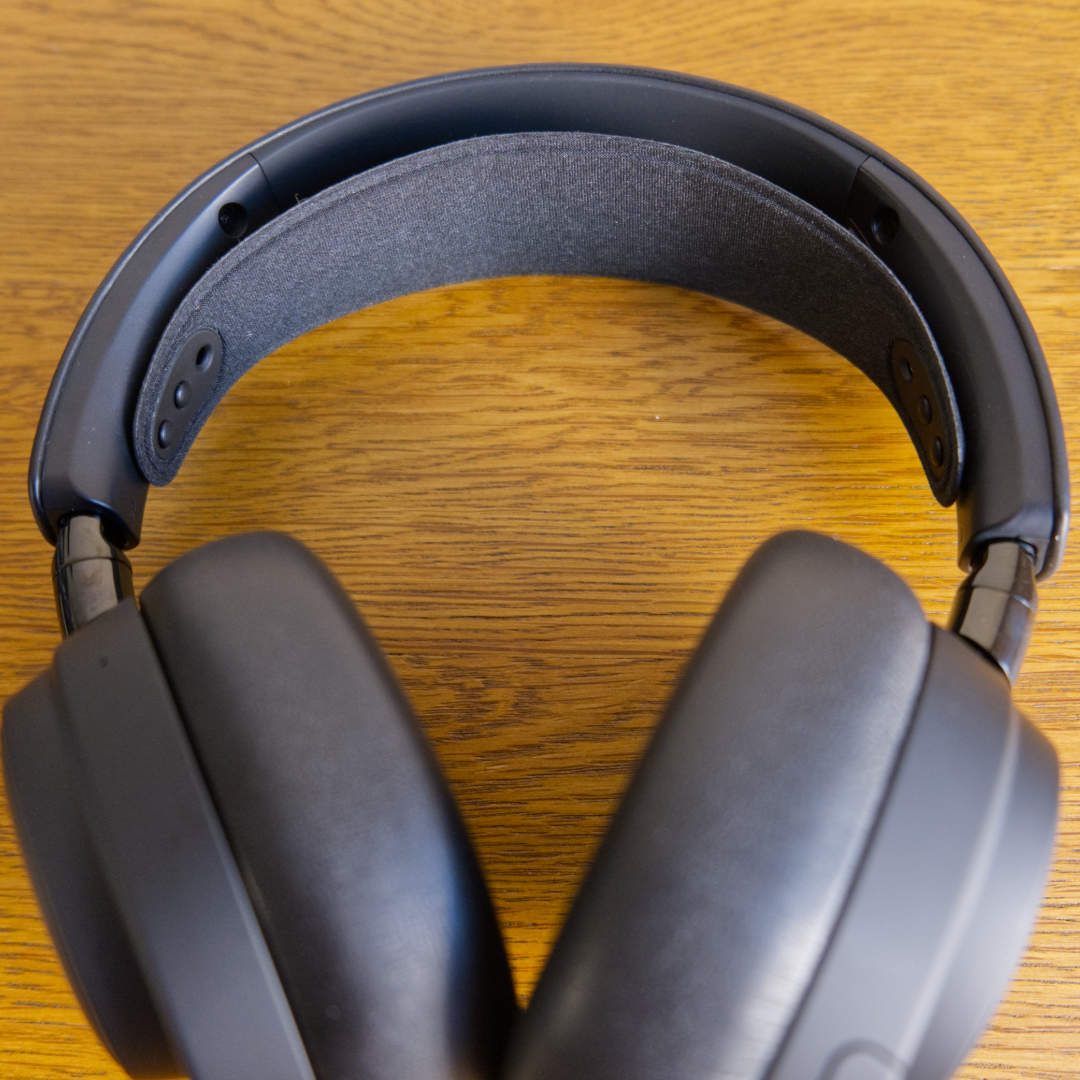
The Elite is unmistakably part of SteelSeries’ Arctis Nova range, sharing the same silhouette while elevating every material choice to luxury status. The quintessential tree-notch ski-goggle suspension headband remains, now draped in softer cloth, while the outer metal headband is now wrapped in faux leather. Immediately out of the box, the glints and glares of light bouncing off the steel hinges are enough to make you register that this is a step above anything the brand has made before.
Alongside the sleek Obsidian Black model I’m testing here, which stylishly slips into any setup with ease, you can get your hands on a second colourway. Sage & Gold blends beautiful pastel grey with the palette of precious metal, although there is a slight visual mismatch with its black GameHub dock, even with the golden dial attempting to unify them.
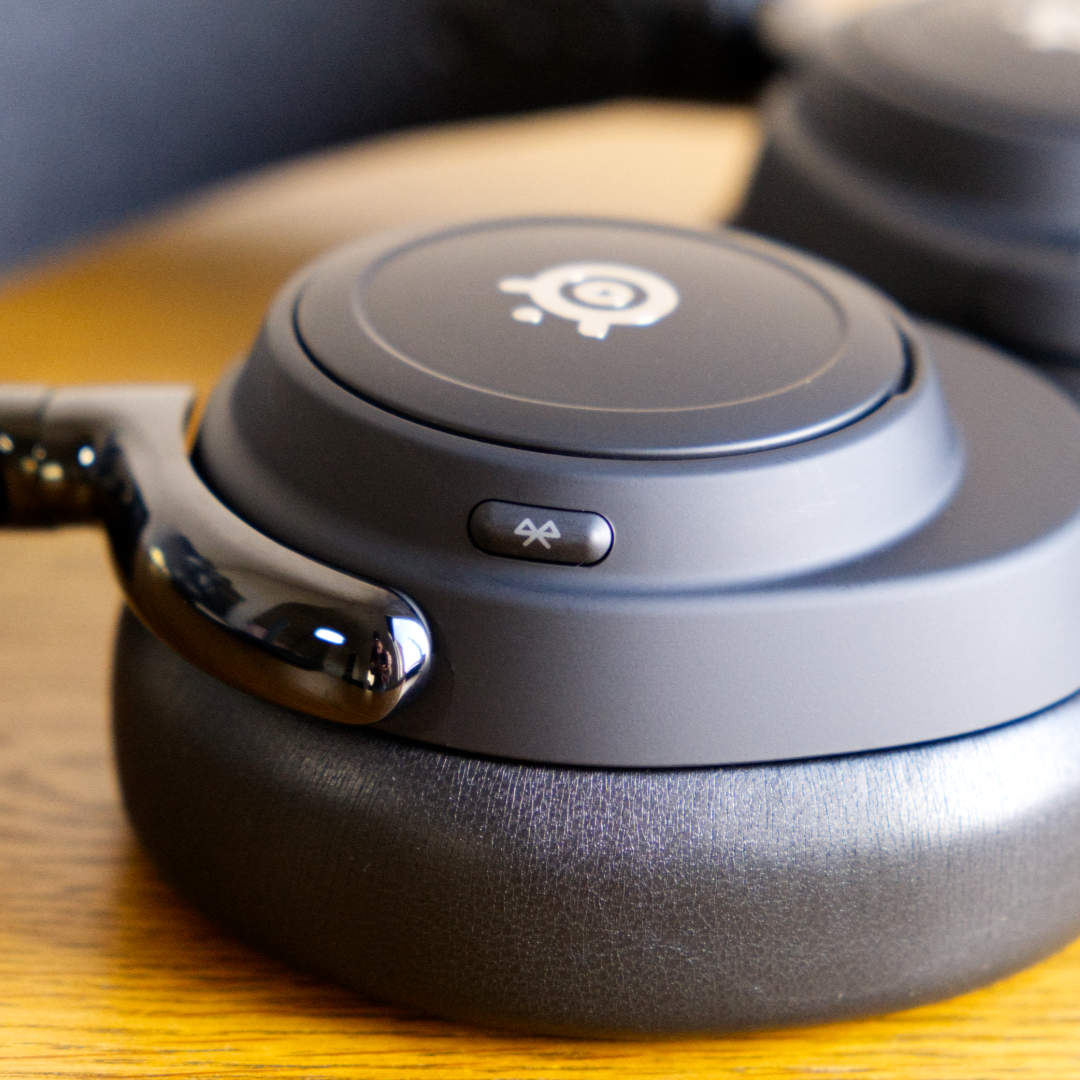
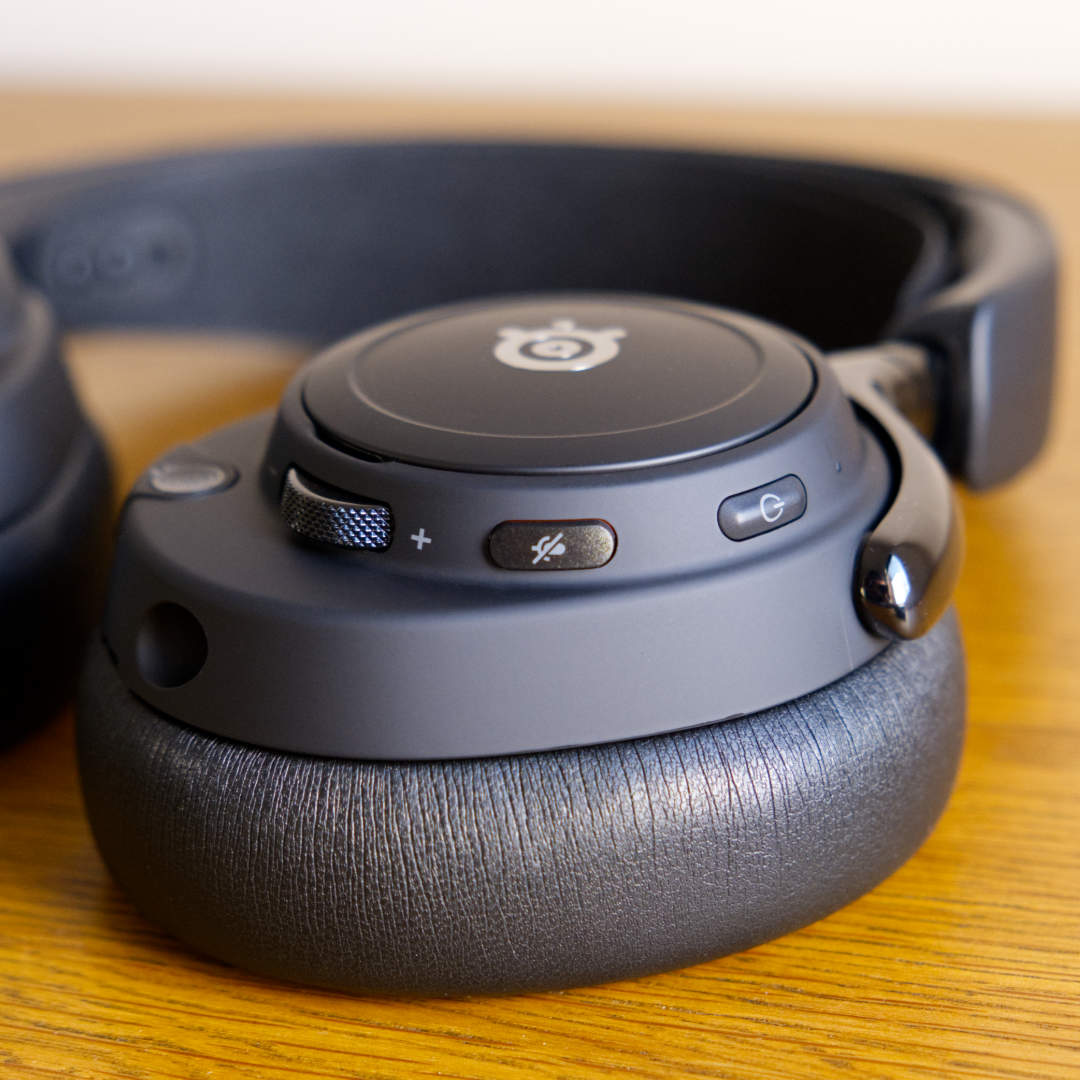
Since you’re not going to be looking at the headset much when it’s wrapped around your ears, however, it’s as much of a tactile experience as a feast for the eyes. The volume wheel clicks through each notch with satisfying precision, reminiscent of twisting the bezel on my Samsung Galaxy Watch 4. Just like the other controls, it’s thoughtfully placed on the left earcup alongside the power and active noise cancelling (ANC) cycle, while the right earcup has a Bluetooth pairing button.
Weighing in at 380g, these cans sit heavier than the 338g Fractal Design Scape but remain significantly lighter than the Audeze Maxwell 2’s substantial 560g. One area where SteelSeries has always excelled is achieving an even weight distribution using its suspension band, enabling comfortable eight-hour sessions without any headaches.
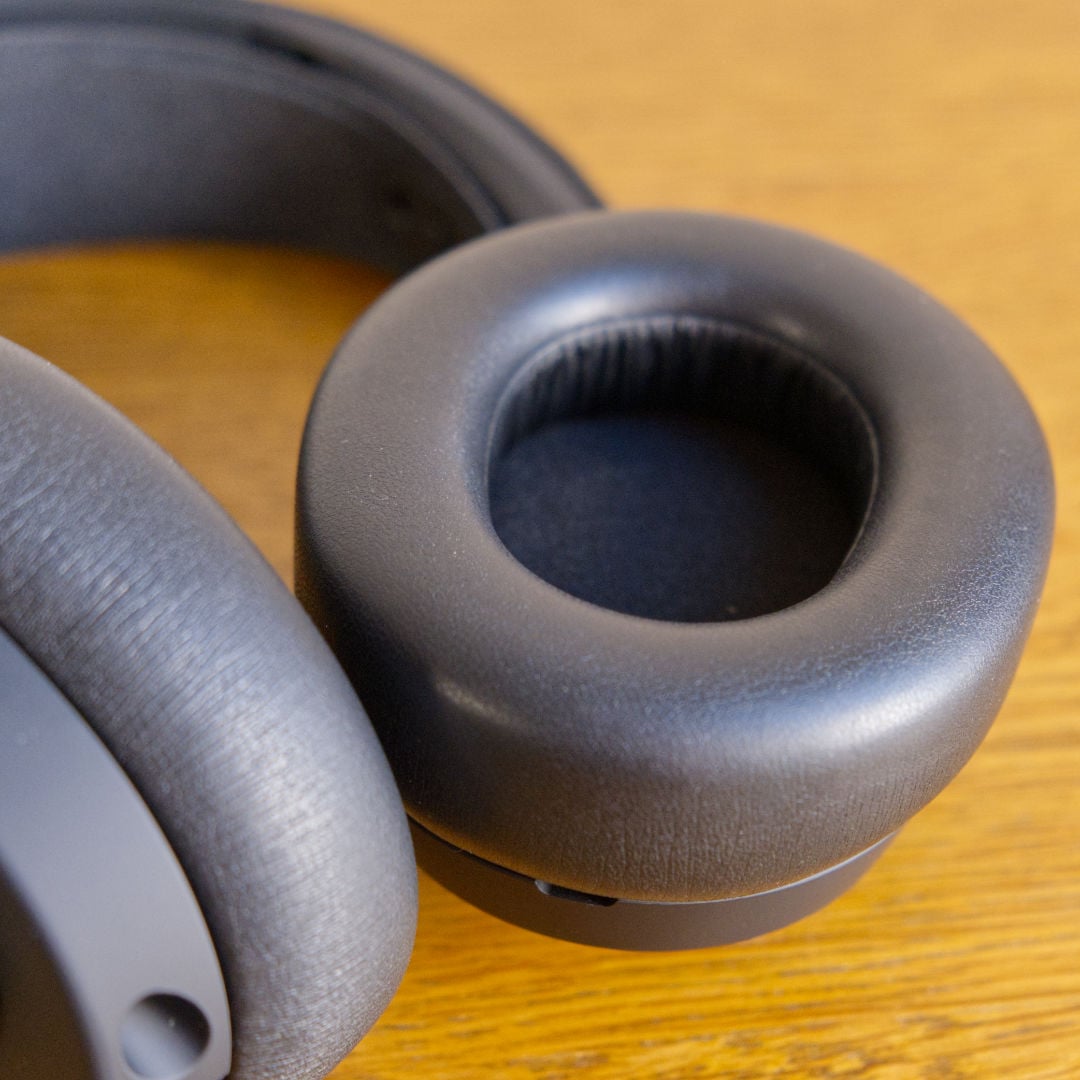
Despite being more of a fabric fan, I found the leatherette earpads a welcome upgrade. I quickly swapped out the default Nova Pro Wireless cups for WC FreeZe alternatives, finding the originals too shallow even for my small ears. By comparison, the Elite causes no such issues with its thicker pads, providing proper depth without compromising seal quality. I do wonder how they’ll hold up over the test of time, but they show no signs of wear and tear after a month of use.
Features
When it comes to noise isolation, the Elite already works well passively, which is fortunate, given that its active noise cancelling (ANC) system isn’t particularly strong. To be fair to the Elite, ANC has been pretty new to gaming headsets over the past few years and still remains a step behind industry leaders like Sony WH-1000XM6. I can’t think of a gaming headset that does better.
Still, I don’t notice much of a difference between using ANC and turning Noise Control off, being still able to pick out the lyrics of a song I’ve never heard before as it plays in the next room over. By comparison, the Transparency Mode that allows you to hear your own surroundings more clearly is fantastic and a feature I’ve ended up using daily.
Outside of buttons, each earcup is suitably packed to the brim with features. The left cup houses a retractable boom mic that glides far smoother than its predecessor, and beneath the magnetic plate hides a USB-C port. Thankfully, outside of testing and updating the firmware, I’ve not had to plug in the Elite once, since the battery system sits snugly underneath the right plate.
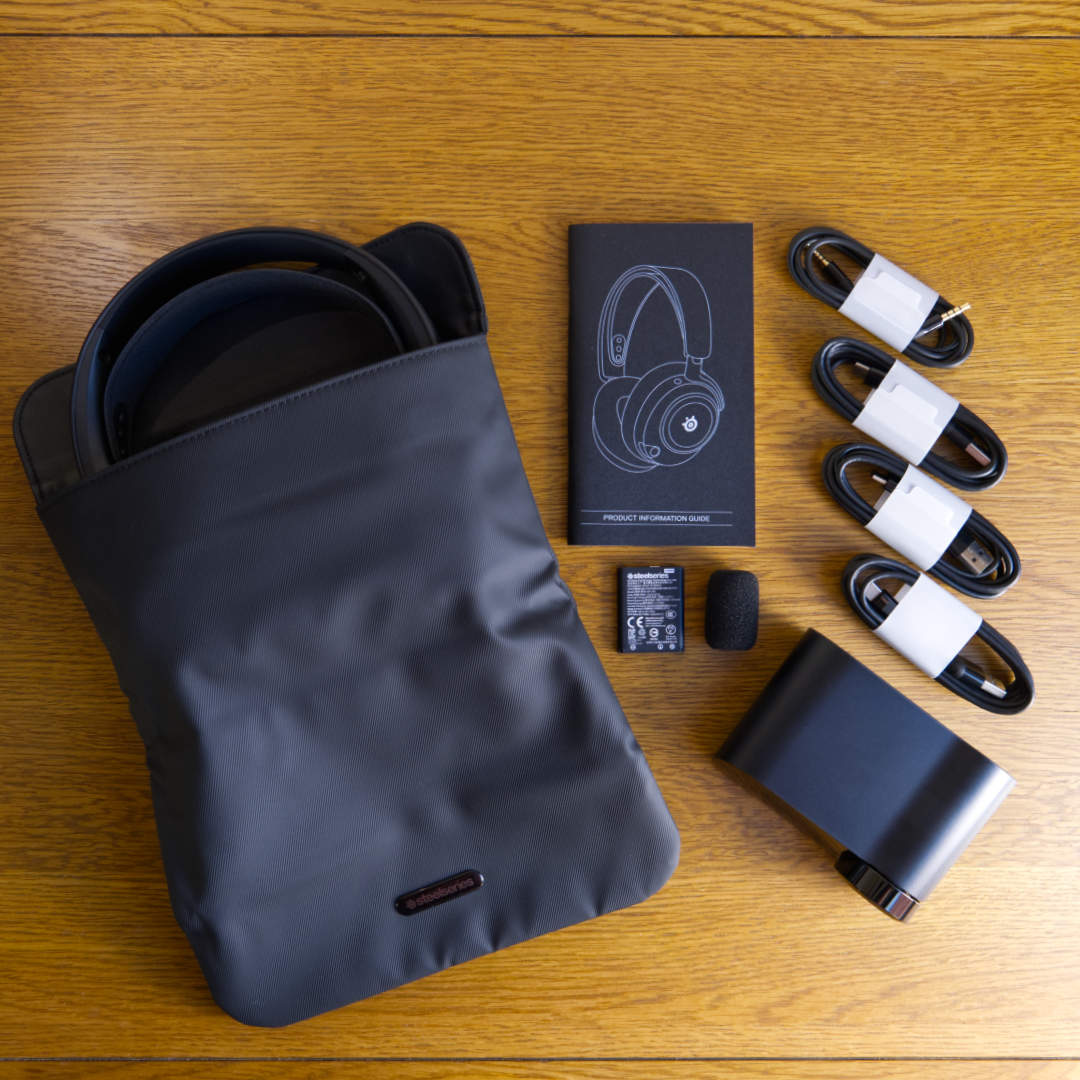
The Infinity Power battery system, as SteelSeries calls it, remains my favourite feature across the Arctis lineup. Two 700mAh cells, each offering roughly 30 hours of playback, are endlessly swappable. One lives in the headset, the other charges in the GameHub. When the active battery depletes, you’ve got eight seconds to swap cells and continue without dropping out. I’ve used this system for years with the Arctis Pro Wireless, then the Nova Pro Wireless, and it works just as well as ever here.
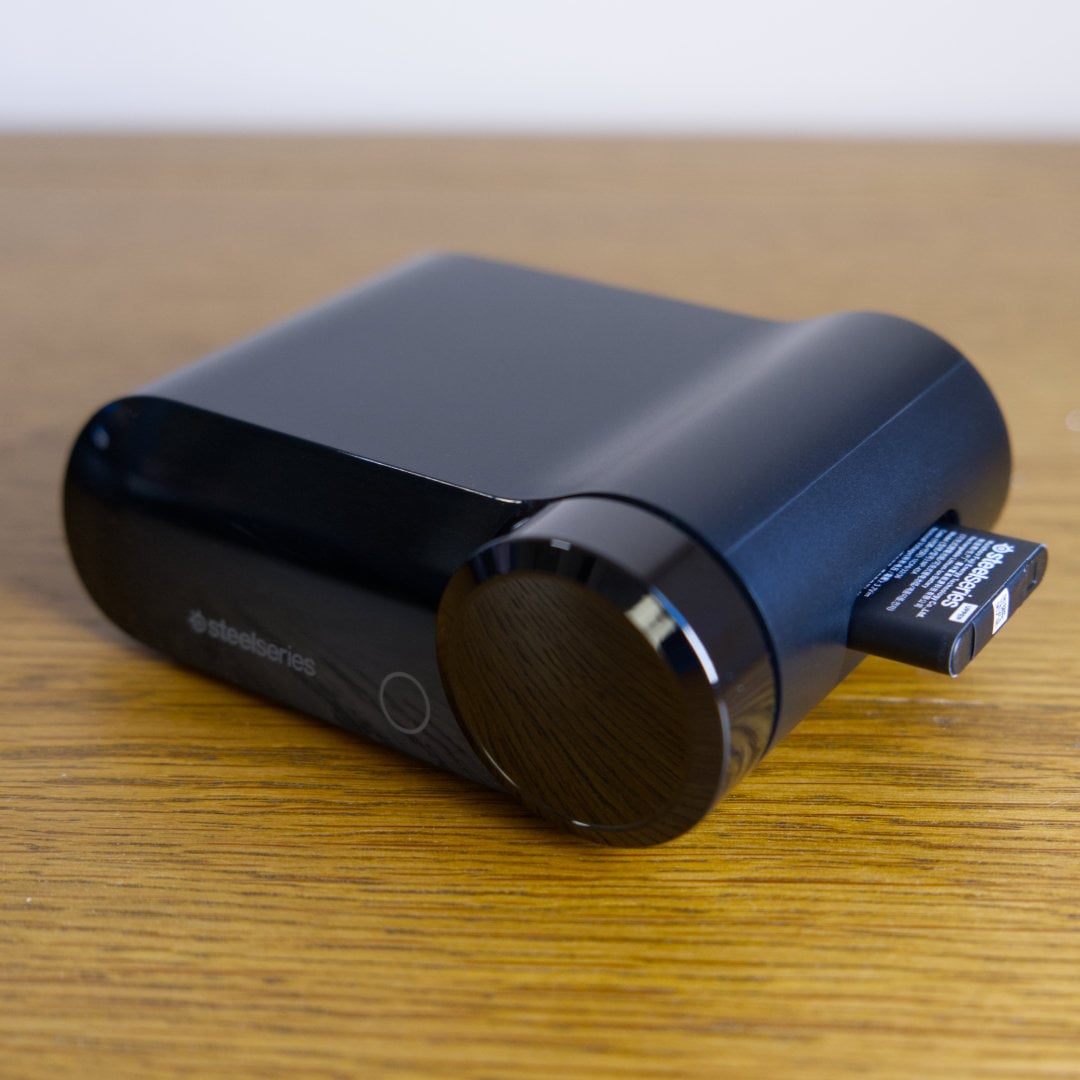
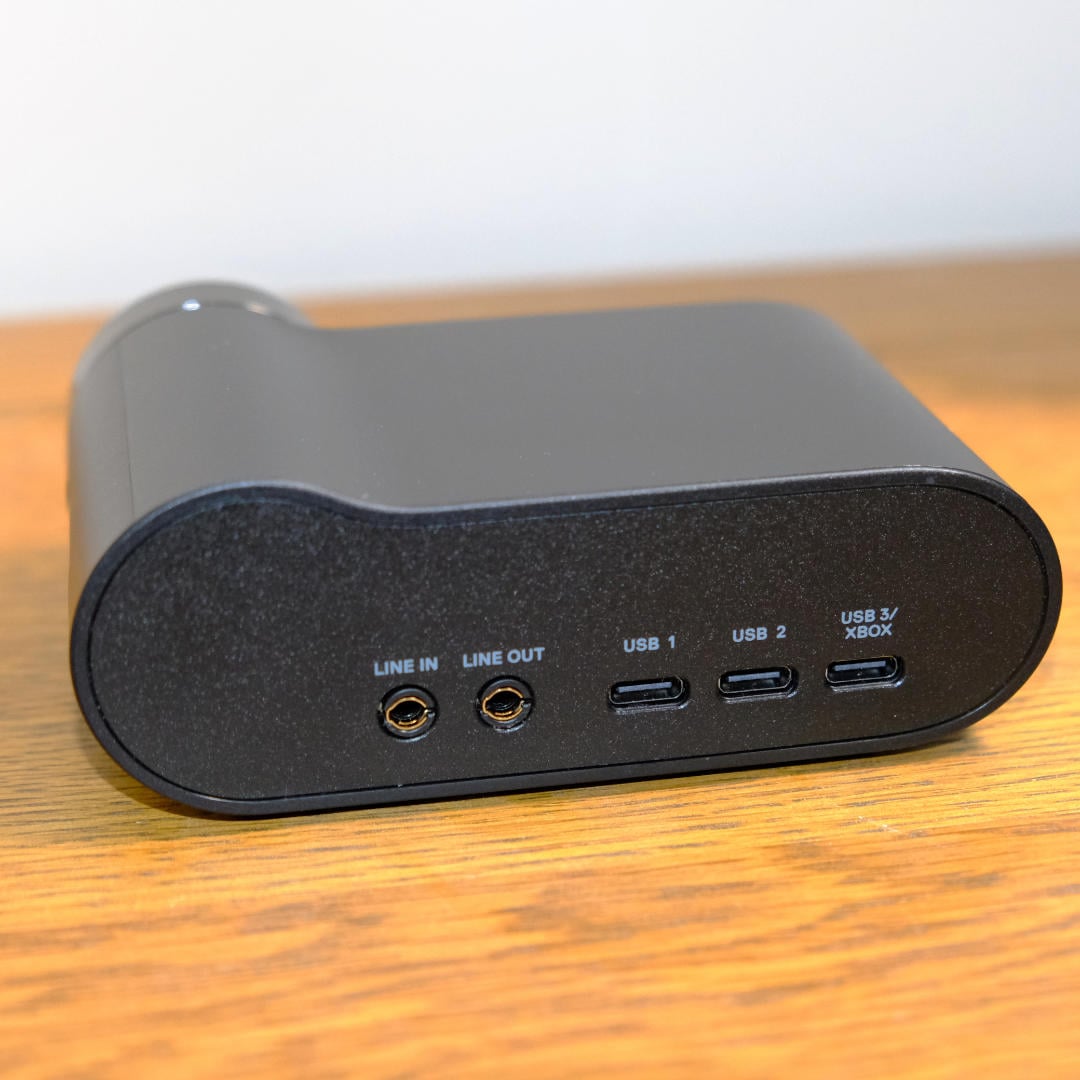
Returning with an upgrade, the GameHub base station now boasts a third USB-C port. This unlocks a simultaneous connection to a PC and two consoles via SteelSeries’ OmniPlay system. Add Bluetooth 5.3, and you’re mixing four audio sources in real time. This isn’t just switching between them, but genuinely blending them together using the dock’s dial. It’s admittedly a niche feature; after all, who needs to take a phone call while monitoring Discord on PC, passively cultivating vegetables in Valheim on Xbox, and actively tearing through the Nordic realms in God of War Ragnarök on PlayStation 5? Someone out there does. I’m not judging.
Meanwhile, the Bluetooth connection supports Low Complexity Communication Codec (LC3) and LC3+, alongside standard Low-complexity Subband Codec (SBC). LC3+ brings down latency to levels that work for casual handheld gaming. It’s still not the best system for competitive shooters, but it’s adequate for mobile titles and Steam Deck-like handhelds, although be aware that Valve’s hardware hasn’t yet enabled support for the codec. For devices that can handle LC3+, music and video playback sound noticeably cleaner than through SBC.
Audio quality
As you might expect, sound quality is where the Elite earns its stripes and goes a long way to justifying that hefty price tag. The 40mm carbon fibre drivers, mounted on brass surround rings, achieve a frequency response spanning 10Hz to 40,000Hz, certified for 96kHz/24-bit wireless transmission. This represents a genuine achievement, becoming the first wireless gaming headset to deliver hi-res audio over a low-latency wireless connection.
On PC with hi-res output enabled in Windows, improvements are immediately apparent. There’s an openness to the soundstage that wireless headsets haven’t managed before. It’s like someone removed a veil you didn’t know was there. When listening to hi-res music, instruments separate cleanly without sounding clinical. Bass maintains proper presence without bullying the midrange into submission. Treble stays crisp and articulate without edging into sibilance.
You don’t need to be listening to 24-bit/96kHz audio to enjoy this headset’s audio performance either, which is just as well, as games with 96kHz sound are extremely rare. Whether it’s the bouncing jazz of Monoco’s theme in Clair Obscur: Expedition 33, the unsettling distant growls of the Fell in Enshrouded, or the thumping footsteps of approaching enemies in Rainbow Six Siege, every acoustic detail has space to breathe.
The headset even makes me more confident in simpler titles such as Straftat, hearing the direction of my free-for-all competition slipping and sliding all over the place. Granted, that’s like throwing Stardew Valley at an Nvidia GeForce RTX 5090, but the point is that the Elite excels in everything I pitted it against.
Even as I write this review with the cinematic rock band Starset echoing through each ear cup, I keep taking several moments to appreciate how the strings remain distinct from the sci-fi synth, and when the distorted guitars come roaring in, they never sound muddy.
I have no doubt there are similarly priced dedicated audiophile headphones that will achieve even better quality, but the Elite is the cream of the crop in gaming headsets, with the bonuses of wireless freedom, a decent mic, multi-device connections, hot-swappable batteries, and ANC (for better or worse).
Mic quality
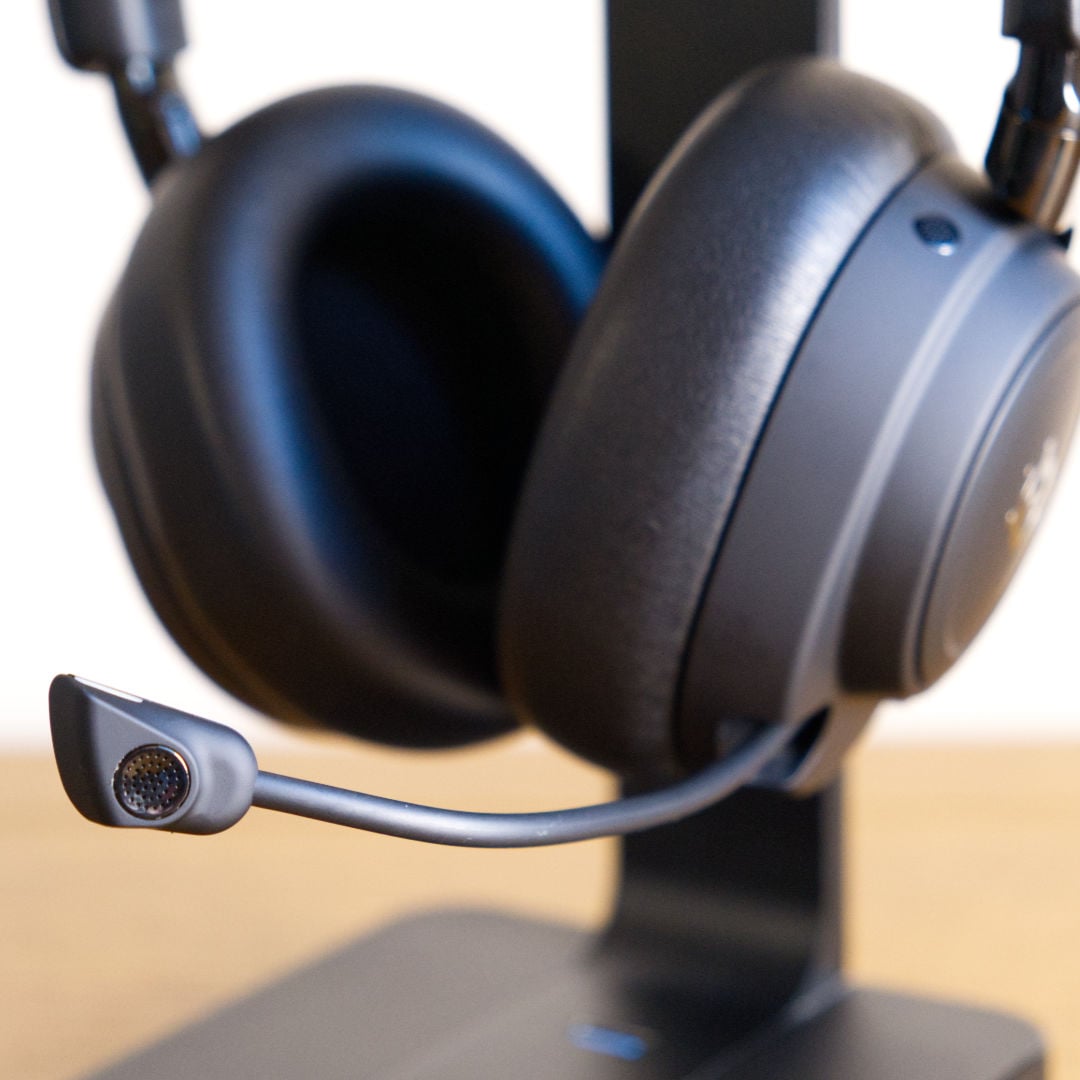
Gaming headset microphones aren’t known for being particularly high quality, as manufacturers prioritise making a convenient all-in-one package. Add wireless into the mix, and dulcet tones tend to get crushed with compression. That’s why I’m rather impressed with the retractable ClearCast Gen 2.X boom mic, which stands tall as one of the best I’ve ever used.
It’s not studio-grade, but with 32kHz/16-bit support and AI-powered noise rejection, it captures clean vocals and keeps comms clear against even the stressiest of stress testing. Thumping mechanical keystrokes from my Glorious GMMK 3 Pro HE, and the whirring of full-blast PC fans, were nowhere to be heard. The harder the voice isolation has to work, the more artifacting will occur, as with any microphone that’s batting away unwanted sounds, but SteelSeries deserves props for a spectacular showing.
If you’re not a Transparency ANC fan, you can get a better sense of your own voice with a built-in sidetone. I’m personally a fan of this feature for late-night gaming, as I don’t want to wake up the household celebrating victory in the rare moments I win a match or, more likely, shouting obscenities after an inevitable loss. You might need to turn it down in SteelSeries’ Sonar software, however, as it’s a little loud and distracting by default.
When you retract the boom, the Elite switches to a beamforming internal mic, giving you a more discreet look that won’t turn heads when you’re out and about. Naturally, the quality drops by comparison, but it remains perfectly fine for quick calls, even combating the sound of passing vehicles and screaming children.
Battery life
Each battery is rated at 30 hours each, for a total of up to 60 hours. As you might expect, these figures represent ideal conditions without using ANC or Transparency Mode, using Bluetooth over 2.4GHz, and keeping the volume low.
Real-world usage can sometimes drop below 20 hours per battery under heavy use, but had I not tested for this review, I would never have noticed. The headset beeps whenever the battery is low, and you then naturally switch immediately without counting the minutes.
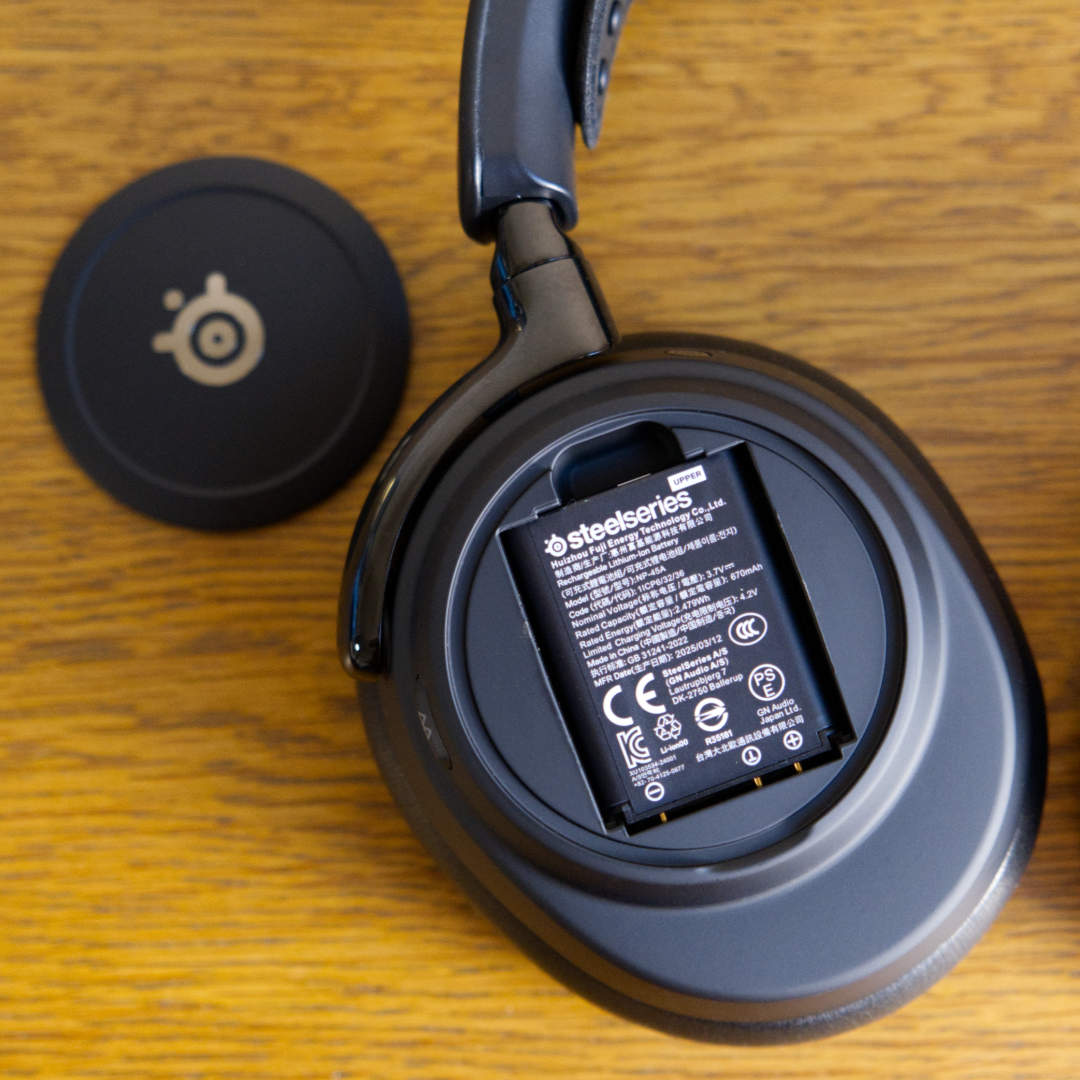
The only time I’d ever foresee battery anxiety is when using the Elite as travel headphones away from your GameHub. You could take the second battery with you, which is a risky move since it’s all too easy to lose, but you’ll more than likely be reliant on USB-C charging instead.
Wireless range testing shows a stable connection within 25-30 feet when using the 2.4GHz hub, with degradation beyond 35-40 feet. My testing showed consistent performance throughout my house, actually improving on areas where the Nova Pro Wireless experienced interference. When raiding the fridge in between matches, I no longer experience pops and disconnects, which is refreshing.
Software
Since its release in 2023, the SteelSeries GG PC app has become increasingly bloated, forcing you to use the overarching hub if you want access to headset-specific features. Should you need game recording through Moments, use a 3D aim trainer, or add third-party apps, then it’s not so bad, but it otherwise just creates extra clicks where there previously were none. It’s a familiar scene, no matter the brand these days, including Razer Synapse and Corsair iCUE.
SteelSeries Engine gives you a global custom EQ that applies to everything, but you’ll get more out of Sonar. When switched on, Sonar takes over all sound duties, giving you individual 2.4GHz equalisers for each channel you’re using. It’s more time-consuming to set up with this software, but it’s worth the hard work to get different sound profiles for gaming, music, and media.
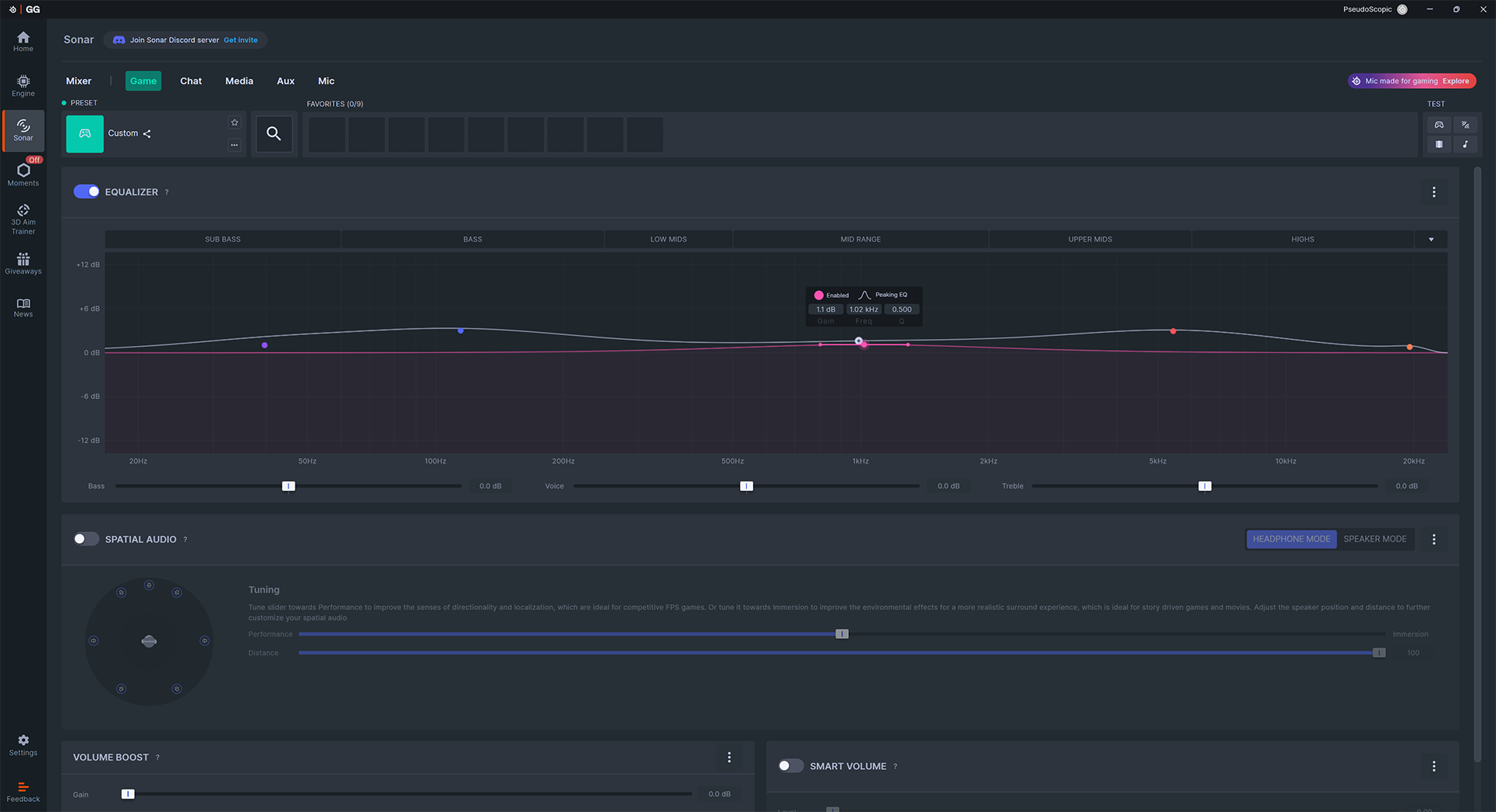
SteelSeries ships hundreds of game-specific EQ presets developed with sound engineers, developers, and pro gamers to speed up the process. The default ‘Balance’ profile handles most scenarios, though the 11-band parametric EQ offers proper granular control for deeper tweaking that you can tailor to your liking. You can do the same with the microphone, tinkering across 10 different bands and seven preset profiles.
Sonar also gives you a virtual mix panel to adjust the volume of up to five different sources and a master slider. It’s more intuitive to set up than a traditional mixer, and you can adjust each individual EQ to better suit its dedicated task.
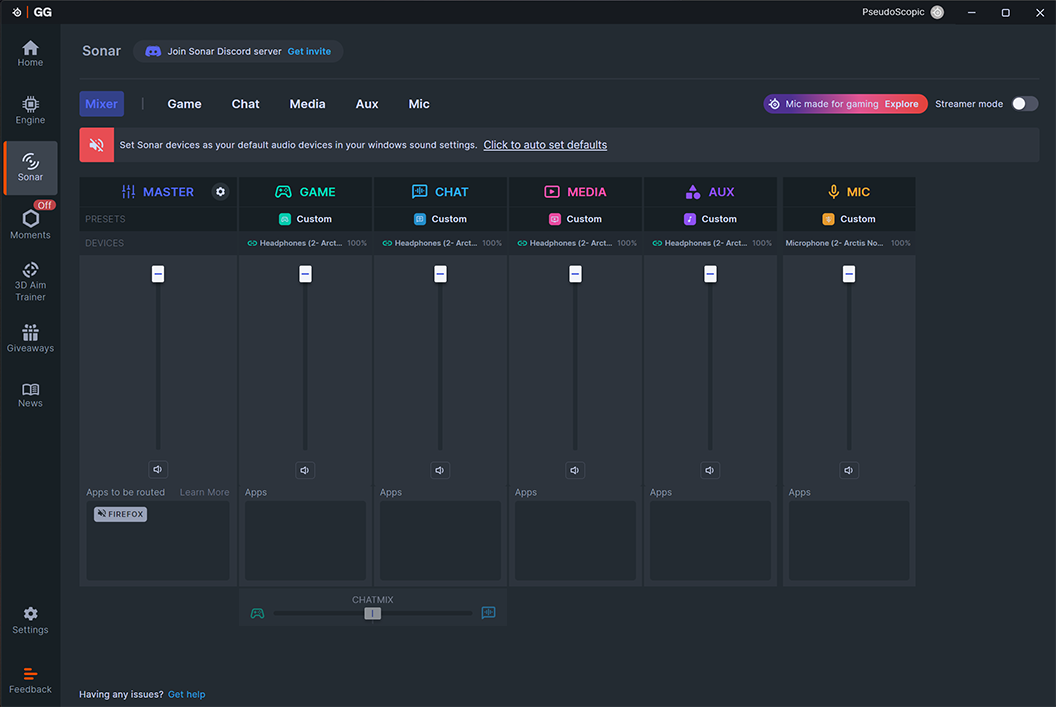
Piggybacking off this, there’s a clever hidden feature: connecting both USB 1 and USB 2 ports to your PC creates separate audio devices in Windows, functioning as a sixth virtual channel. It’s a common feature among hardware mixers, placing the Elite in such good company as Rode’s Rodecaster Duo. This comes in handy in games like Rainbow Six Siege, where you can choose your audio device in-game, assigning it to USB-2, and keeping everything else separate to USB-1.
Once everything is assigned, you can mix volume using the hardware dial. I wouldn’t necessarily say this is any more intuitive than opening the software, since the dock’s limited control set means there’s still a fair bit of menu hopping, but it does beat having to Alt+Tab all the time. Your other option is to use the mobile Arctis App to flick through profiles on the fly.
Conclusion
The SteelSeries Arctis Nova Elite is the best wireless gaming headset I’ve ever tested. At £600, it’s also the most expensive by a considerable margin.
If you’re a gamer who values audio quality above all else and enjoys cordless freedom, and you have a big budget, this decision becomes straightforward. The Elite does everything better than any other gaming headset and looks good doing it. The hi-res wireless audio is a genuine technical achievement you can hear immediately on PC.
It’s also a no-brainer for multi-platform gamers who want to connect three or four devices, so long as one of them is a PC. If you’re primarily gaming on a console where you can’t access the full hi-res experience, the value proposition becomes murkier, and SteelSeries’ Arctis Nova Pro Wireless handles two devices up to 48kHz wirelessly just fine at half the price.
That said, the Elite isn’t just another gaming headset. It’s not meant for the masses, and no other model stands as its equal. It’s the culmination of innovative features already present on past headsets, with the addition of cutting-edge wireless audio. Any other alternative comes with compromises. That might not make it worth the price for most people, but for those like myself who are willing to make an investment, the Elite sets a new standard that’s worth every penny.