
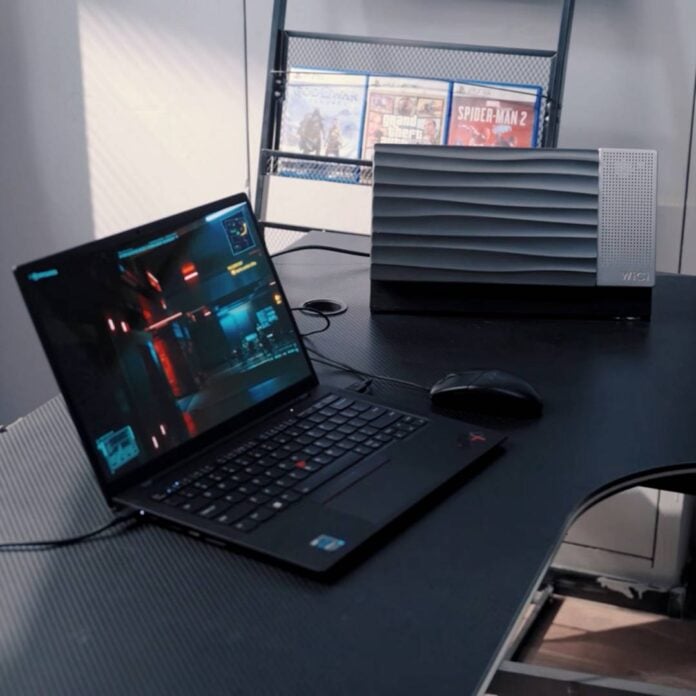
California tech firm WiCi has unveiled the world’s first commercial wireless external GPU (eGPU) powered by Wi-Fi 7. Like traditional wired eGPUs, the WiCi One aims to boost the graphics performance of laptops and other devices, but this time without having to deal with cables.
According to WiCi, this eGPU offers desktop-class graphics performance for your laptop, tablet, and even phone, allowing you to accelerate 3D rendering, video editing, and AI models. Two variants will be available. The first is powered by an Nvidia RTX 5060 Ti 16GB GPU and Intel Core 3 100U CPU, and comes equipped with 1TB of PCIe 4.0 NVMe storage. The second boasts the flagship Nvidia GeForce RTX 5090 32GB, plus an Intel Core Ultra 7 255H, and comes paired with 4TB of PCIe 5.0 NVMe storage. They’re basically mini computers that wirelessly connect to your machine.
The WiCi One communicates with your host machine via Wi-Fi 7, specifically using a 4×4 320MHz link; there is no Thunderbolt or OCuLink cable between the two. It appears to the host machine like any OcuLink or Thunderbolt eGPU, meaning any applications or games that run on the internal GPU should run with the WiCi One. To make the magic happen, WiCi uses a proprietary technology with a dedicated driver that makes its operation transparent to the system. In other words, it shows up like a standard graphics card.
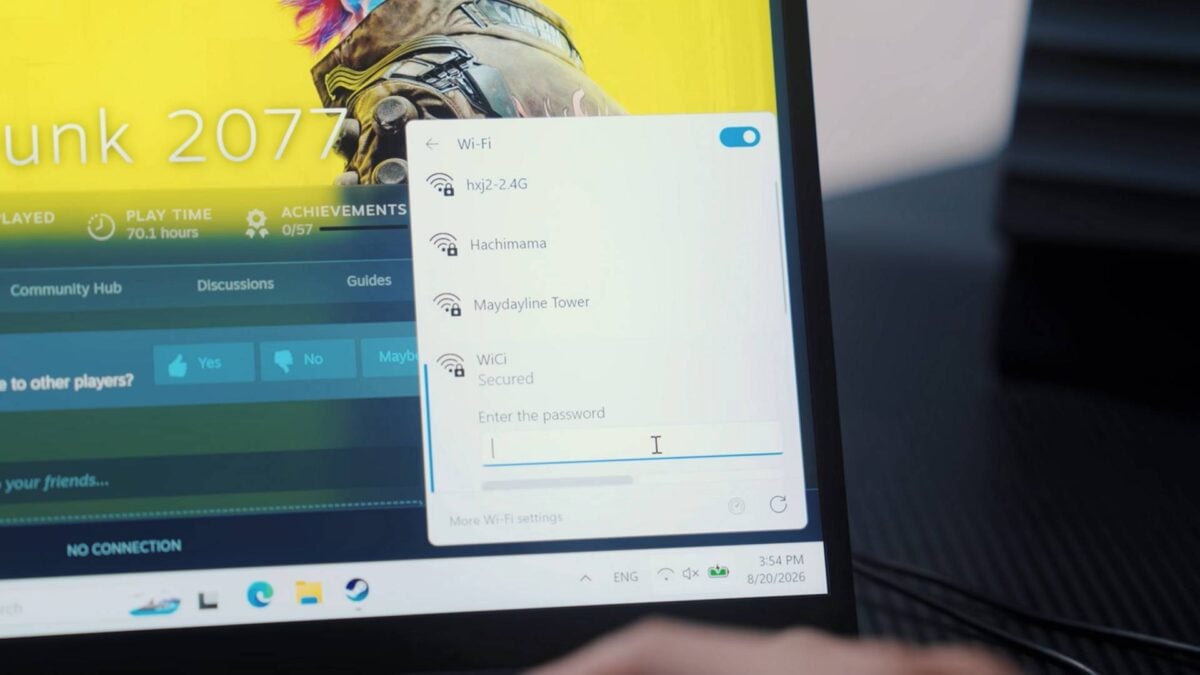
While it looks fantastic on paper, the question remains: will a Wi-Fi 7 connection suffice to feed the GPU and send data back to be displayed? WiCi seems to believe so, despite Wi-Fi 7’s 23Gbps theoretical maximum bandwidth (4×4 MIMO 320MHz) under ideal conditions. For comparison, Thunderbolt 5 is rated for 80Gbps (or up to 120Gbps asymmetric), while OcuLink can reach 63Gbps using a PCIe 4.0 x4 link. So, on top of having less theoretical bandwidth, the WiCi One also must deal with wireless connection quirks.
For my part, I’m more concerned about the latency impact of Wi-Fi 7. While this network standard’s latency is generally below 10ms, any sudden spike due to a lost packet or devices on the 6GHz band may result in game hitches. Needless to say, hands-on testing is needed to find out. That said, even if performance isn’t there right now, future Wi-Fi or Li-Fi advancements could make such GPUs a viable option.
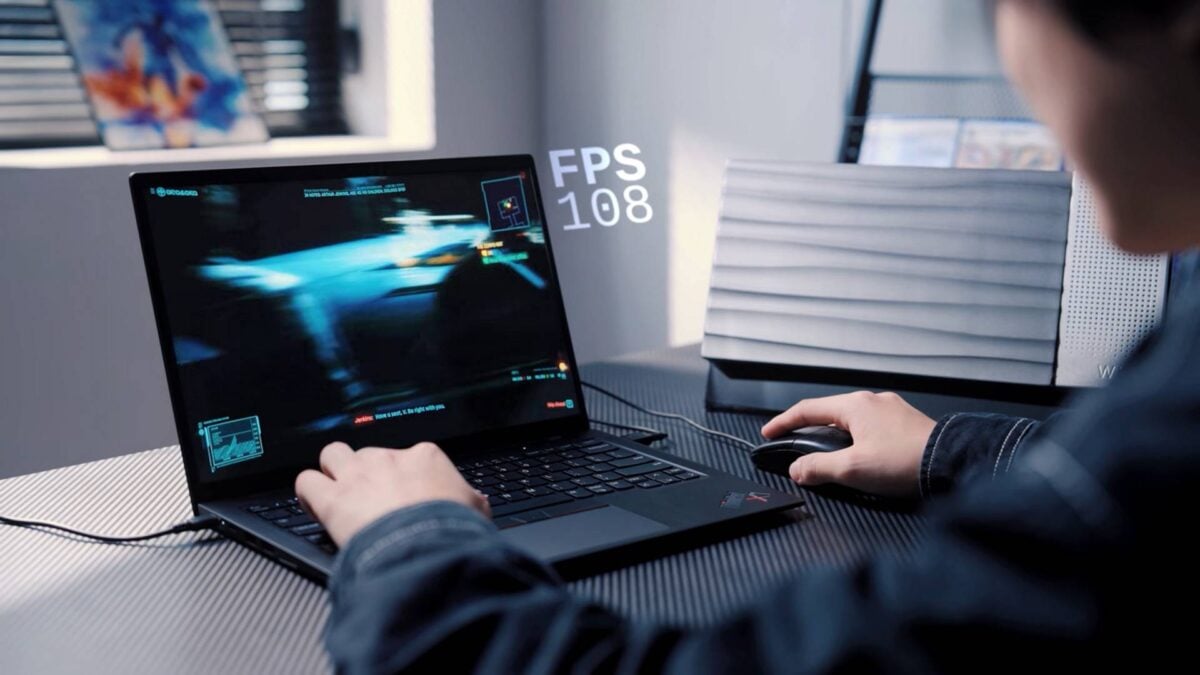
WiCi claims its eGPU can deliver 80fps in Cyberpunk 2077 and 60fps in Black Myth: Wukong, both at the 4K Ultra preset with DLSS 4. These figures climb to 110fps and 90fps, respectively, on the RTX 5090-powered model. That said, gaming isn’t the only suggested use case for these devices – their main purpose is to be used as local AI accelerators. Depending on the workload, Wi-Fi bandwidth may well be less of an issue here.
The WiCi One will be available for pre-order at $1,999, with a post-release price set to $2,599, targeting developers, researchers, and AI builders. Shipments are expected to debut in Q4.