
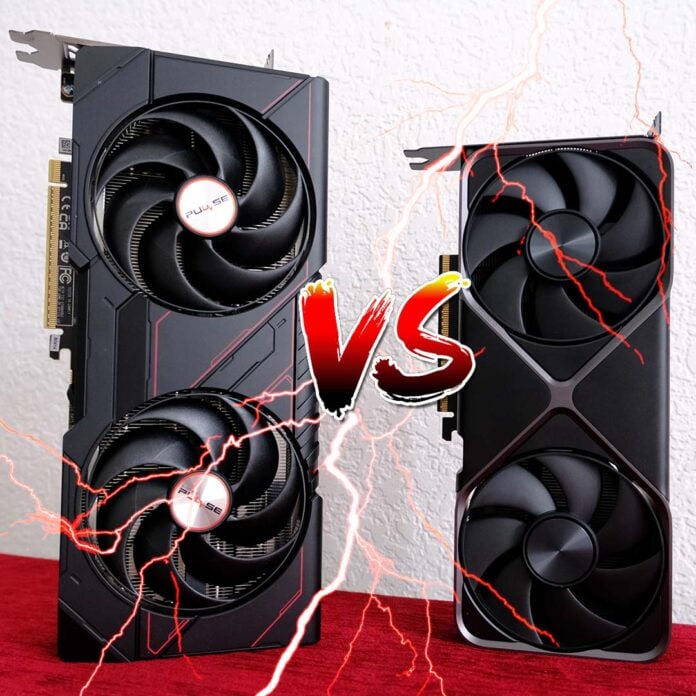
There’s a “new” mid-range graphics card on the market, as AMD’s Radeon RX 9070 GRE attempts to provide a more affordable alternative to the RTX 5070 at current prices. Launching for $549, AMD claims its formerly China-exclusive pixel pusher is the better-value pick; a claim we thoroughly intend to investigate.
If you’re torn between these two graphics cards, we’ve put together an in-depth comparison between the RX 9070 GRE and RTX 5070. Below, you’ll find our analysis of their relative specifications, as well as performance comparisons across gaming and general computing.
Specifications
There are a lot of similarities between the basic specs of these cards, but also some crucial differences. Bear in mind that it’s impossible to make like-for-like comparisons across all facets of these AMD and Nvidia GPU specifications, as there are so many underlying differences in not only their architectures, but also their manufacturing process (TSMC N4P vs. TSMC 4N). However, there are some categories that merit side-by-side evaluation.
| RX 9070 GRE | RTX 5070 | Ratio | |
|---|---|---|---|
| Released | May 2025* | Feb 2025 | – |
| Codename | RDNA 4 | Blackwell | – |
| GPU | Navi 48 | GB205 | – |
| Process | TSMC N4P | TSMC 4N | – |
| Transistors | 53.9bn | 31.1bn | 1.73 |
| Die size | 357mm² | 263mm² | 1.36 |
| Stream processors | 3,072 | 6,144 | 0.50 |
| Boost clock | 2,790MHz | 2,512MHz | 1.11 |
| FP32 TFLOPS | 34 | 31 | 1.10 |
| CUs / SMs | 48 of 64 | 48 of 50 | 1.00 |
| RT cores | 48 (3rd-gen) | 48 (4th-gen) | 1.00 |
| AI / Tensor cores | 96 (2nd-gen) | 192 (5th-gen) | 0.50 |
| ROPs | 96 | 80 | 1.20 |
| Memory | 12GB | 12GB | 1.00 |
| Mem. type | GDDR6 | GDDR7 | – |
| Mem. clock | 18Gb/s | 28Gb/s | 0.64 |
| Mem. interface | 192-bit | 192-bit | 1.00 |
| Mem. bandwidth | 432GB/s | 672GB/s | 0.64 |
| Board power | 220W | 250W | 0.88 |
| Launch MSRP | $549 | $549 | 1.00 |
For instance, on the face of it, the RX 9070 GRE only has half the number of stream processors as the RTX 5070. However, this doesn’t mean we should expect AMD’s GPU to perform at half the speed of the Nvidia one, as architectural differences play their part too.
AMD’s third-generation RT cores are a welcome improvement over the company’s prior efforts, massively closing the gap between Nvidia’s fourth-generation offerings, although the latter still holds the upper hand when it comes to advanced ray tracing techniques such as path tracing. While architectural differences will also affect ray tracing performance, we’re coincidentally dealing with 48 RT accelerators apiece on both the RX 9070 GRE and RTX 5070.
Hardware AI acceleration is similarly better on the RX 9070 GRE relative to its predecessors, thanks to AMD’s second-generation AI cores. That said, AMD’s designs are still relatively immature compared to Nvidia’s, with the RTX 5070 rocking the company’s fifth-generation Tensor cores. The RTX 5070 also has numbers on its side, boasting double the number of accelerators of its Radeon rival.
There’s just 30W separating the RX 9070 GRE (220W) and RTX 5070 (250W) when it comes to total board power, so you’ll need a similar level of PSU for either card.
In terms of VRAM capacity and bus-width, both the RX 9070 GRE and RTX 5070 each have 12GB of memory running on a 192-bit interface. However, Nvidia uses the latest GDDR7 modules capable of 28Gb/s operating speeds, while AMD sticks with older GDDR6 chips at 18Gb/s. These differences create a large 240GB/s bandwidth gap (432GB/s vs. 672GB/s) between the two graphics cards.
Both cards launched with an MSRP of $549, with the cheapest RX 9070 GRE models sticking to that price. However, the RTX 5070 has since grown to be more expensive, thanks to changing market conditions, to the tune of $599. That extra $50 constitutes a 9% increase, which provides AMD an overall win in terms of raw pricing.
Test methodology
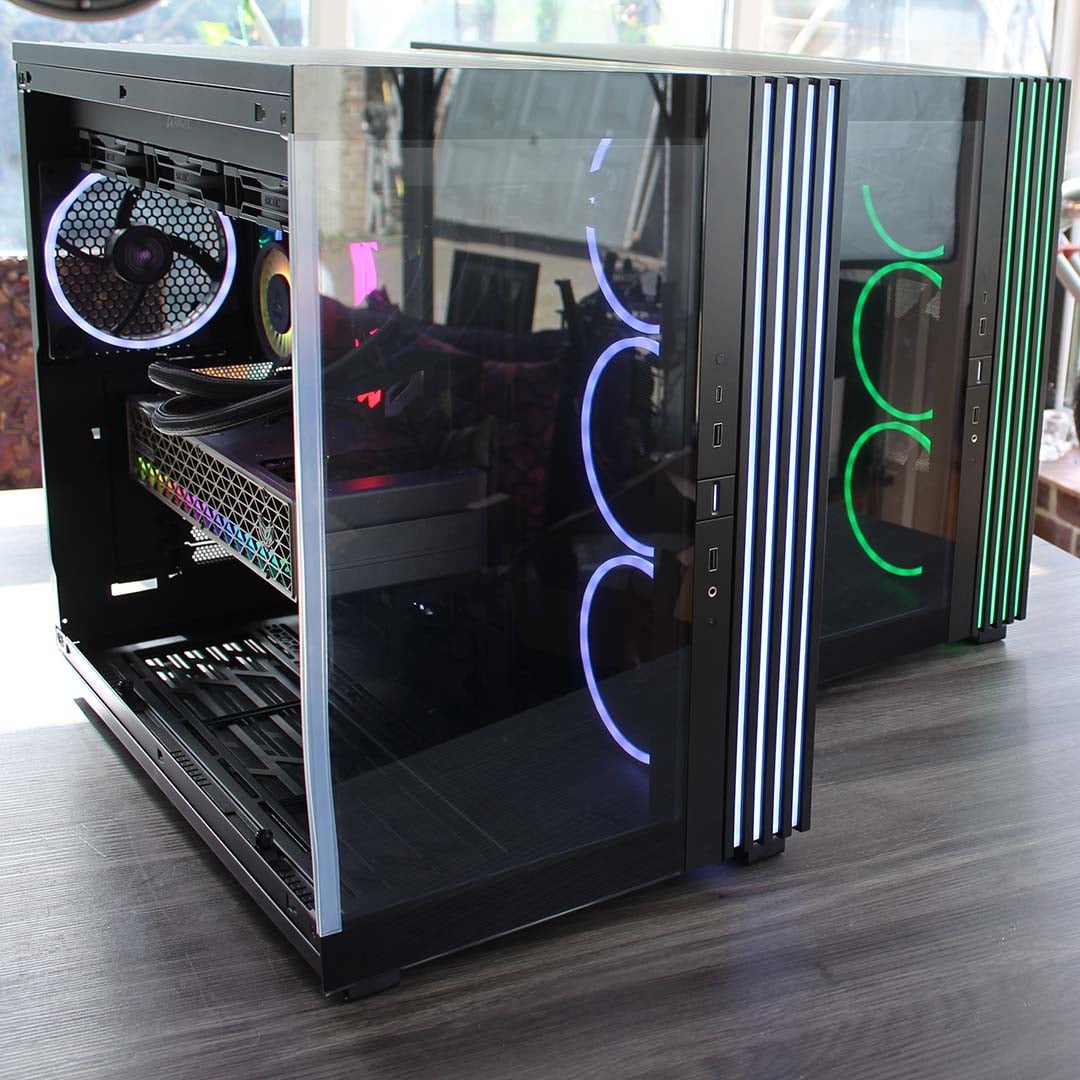
Our Ryzen 9 9950X3D test bench has served as the battleground for this heated rivalry. While such a high-end processor is unlikely to pair with these graphics cards in the wild, this CPU provides each graphics card ample headroom to push out as much performance as possible.
Our 9950X3D Test PCs
Club386 carefully chooses each component in a test bench to best suit the review at hand. When you view our benchmarks, you’re not just getting an opinion, but the results of rigorous testing carried out using hardware we trust.
Shop Club386 test platform components:
CPU: AMD Ryzen 9 9950X3D
Motherboard: MSI MEG X870E Ace Max
Cooler: Arctic Liquid Freezer III 420 Pro ARGB
GPU: Sapphire Nitro+ Radeon RX 9070 XT
Memory: 64GB Kingston Fury Renegade DDR5
Storage: 4TB Sandisk Optimus GX Pro 8100
PSU: be quiet! Dark Power 14 1,200W
Chassis: be quiet! Light Base 900 FX
Both the RX 9070 GRE and RTX 5070 target 2560×1440 (QHD) as their primary resolution, but you’ll also find 1080p (FHD) gaming results below. We’ve ruled out 4K, as 12GB typically isn’t a sufficient capacity to run many modern games at such a high resolution.
We have a Founders Edition model serving as our RTX 5070 reference point, but there’s no MBA (Made By AMD) equivalent available on the market for the RX 9070 GRE. As such, we’re turning to a Sapphire Pulse OC variant, which carries a slight 130MHz overclock. This higher frequency will provide performance slightly above stock, but nothing transformative relative to non-OC cards. This Sapphire Pulse OC card is also available for $549.99, with no premium charged for the overclock – there isn’t a non-OC version available.
Apps
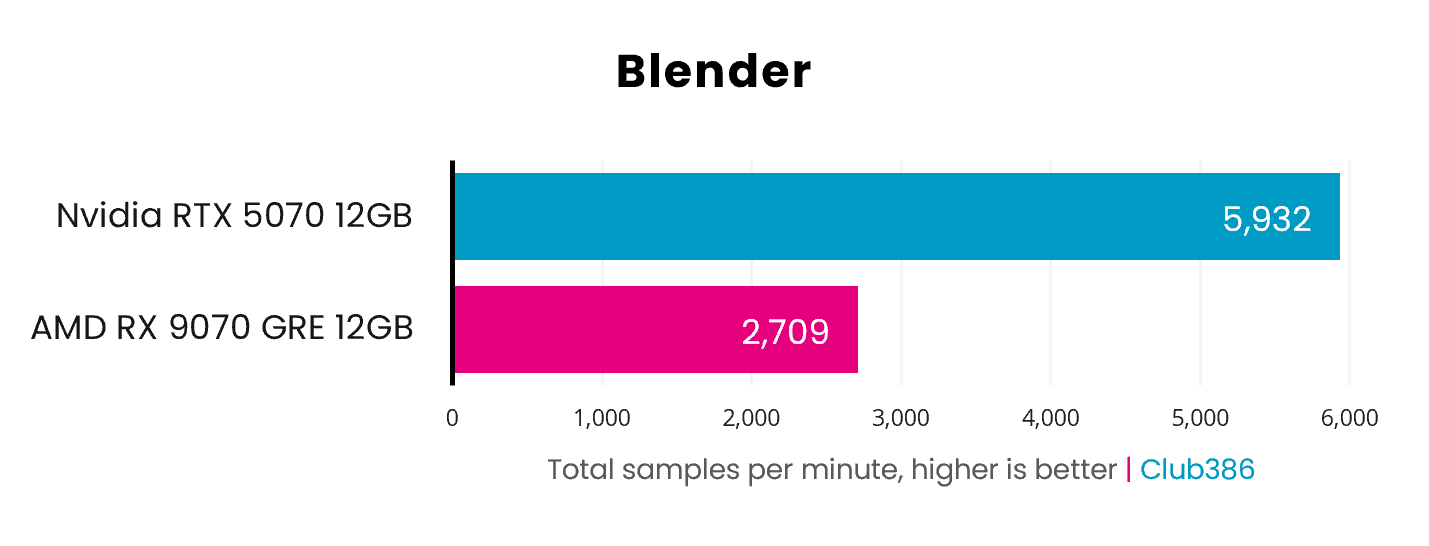
Time is money in the world of 3D rendering, and by that metric the RTX 5070 absolutely creams the RX 9070 GRE with more than double the total samples per minute in Blender. Such are the benefits of CUDA and OptiX API support.
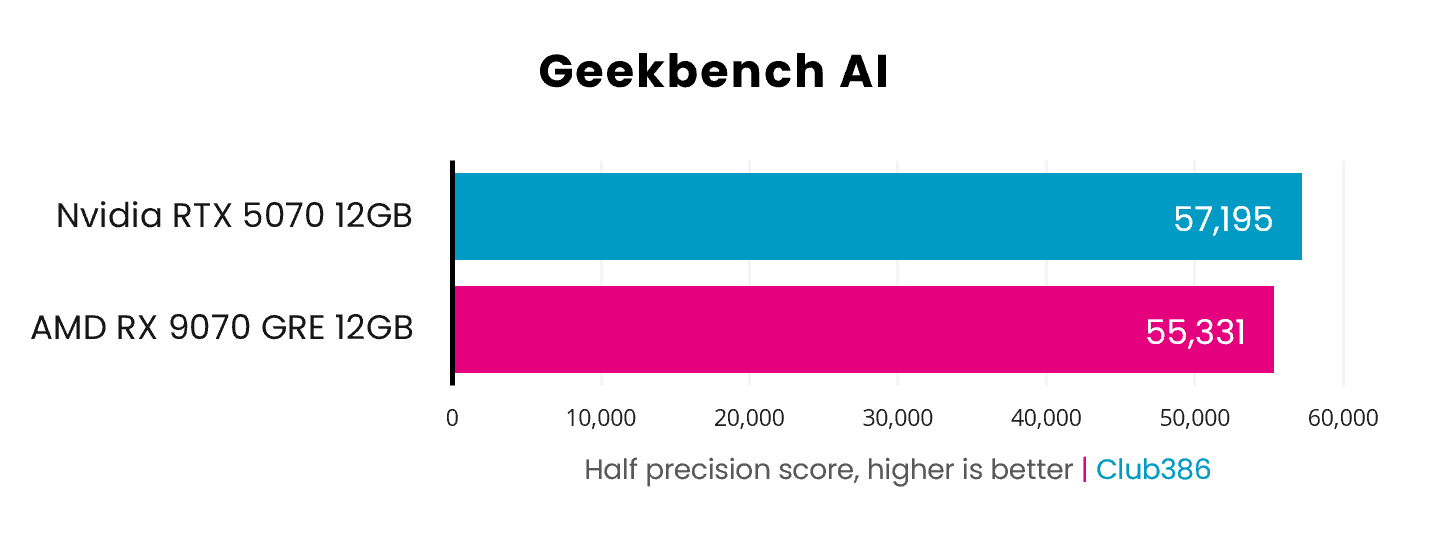
FP16 scores in Geekbench AI are near-identical on both graphics cards. The RTX 5070 enjoys a slim 3% lead here, but it’s difficult to distinguish performance relative to the RX 9070 GRE in this ONNX/DirectML workload.
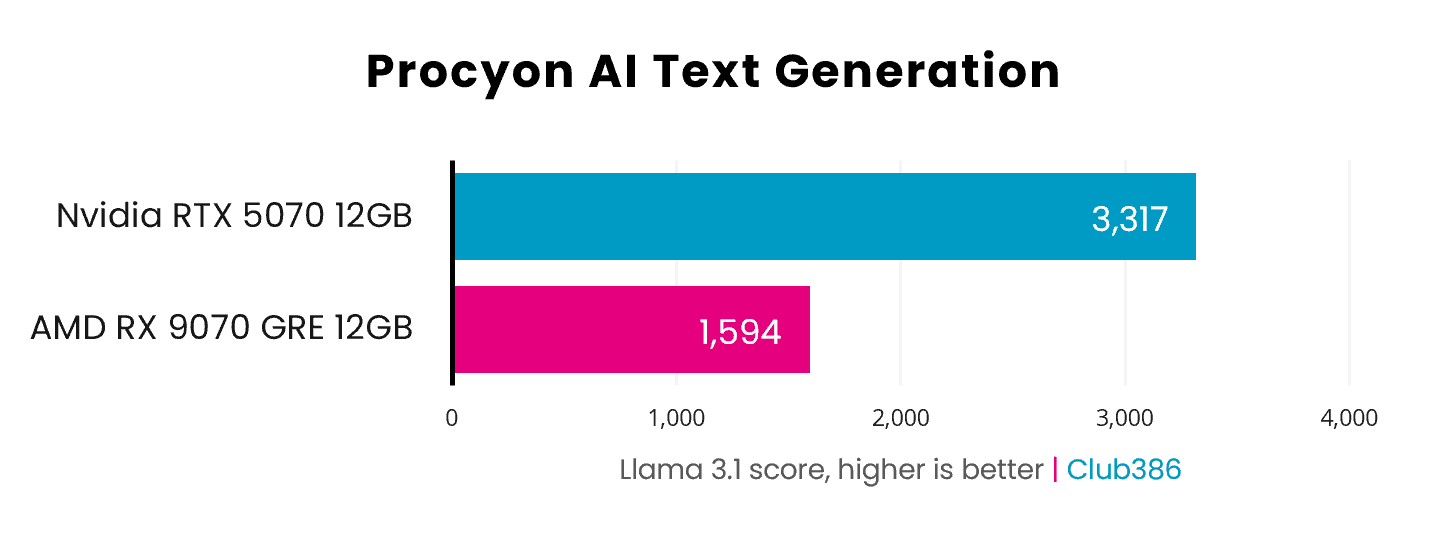
Both the RX 9070 GRE and RTX 5070 are capable of running a Llama 3.1 LLM locally, but the GeForce proves far more capable in this task. The largest factor that separates the two cards is token rate, with the Radeon paling in comparison.
Gaming
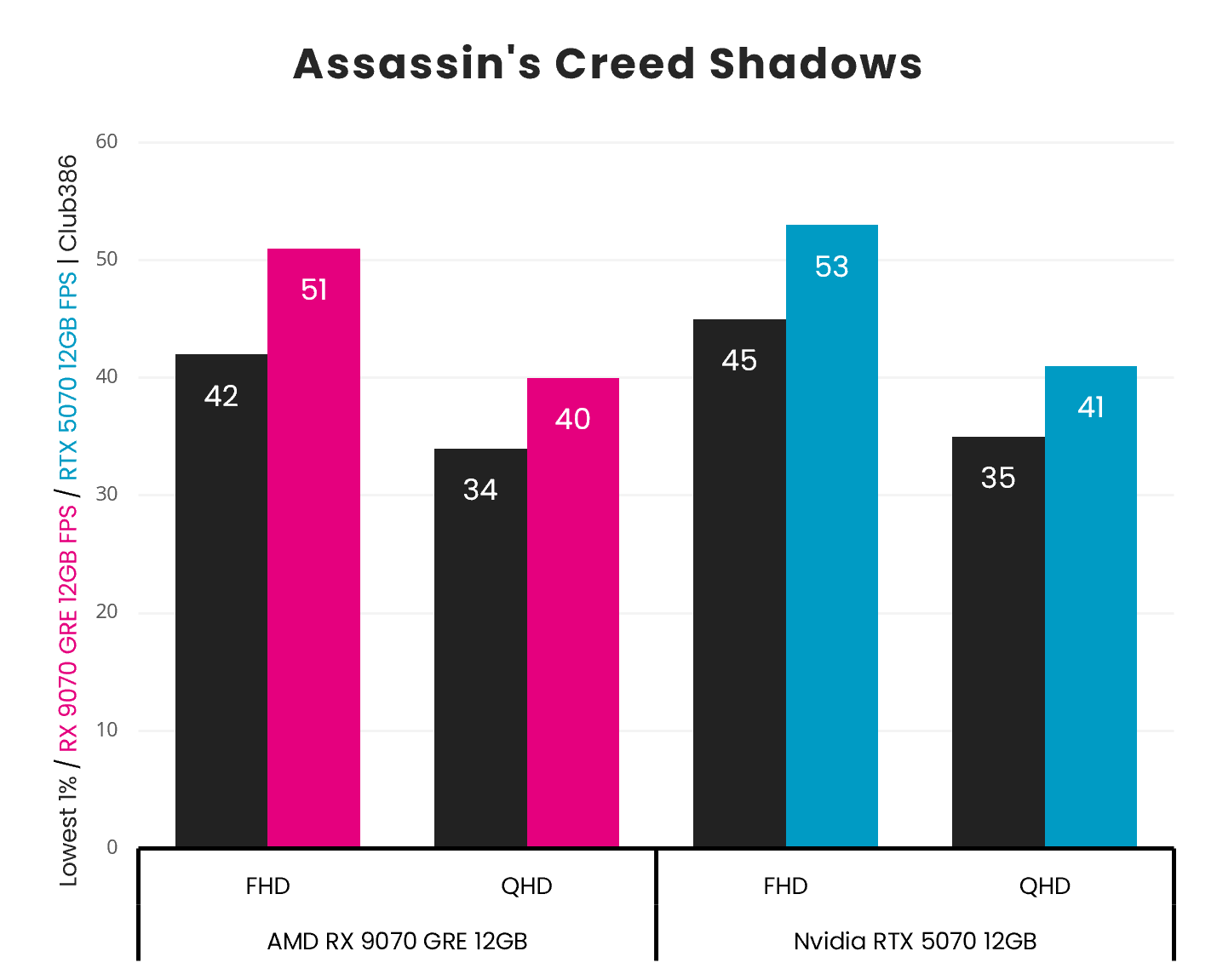
Assassin’s Creed Shadows at maximum settings, with all its ray tracing bells and whistles active, creates a dead heat between the RX 9070 GRE and RTX 5070, with a mere 3fps gap between the two cards at most. Still, by a narrow margin, Nvidia clinches this win in Ubisoft’s latest romp.

Shifting to rasterised rendering in Final Fantasy XIV: Dawntrail, both the RX 9070 GRE and RTX 5070 deliver 200fps+ at FHD and 120fps+ at QHD. However, the MMORPG runs best on the latter, to the tune of 9-14% in terms of average frame rate.
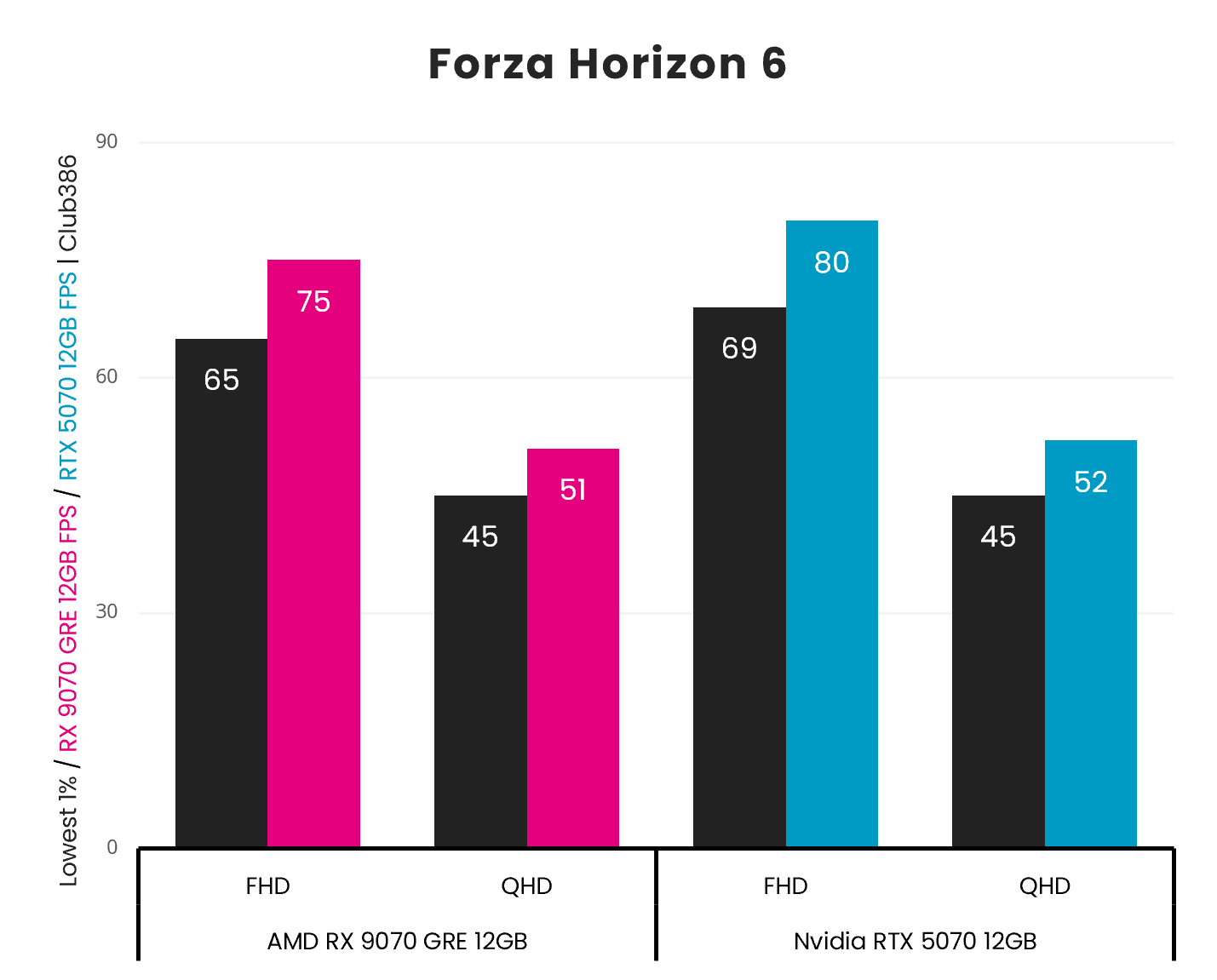
Forza Horizon 6 provides another close-fought ray tracing head-to-head, but the RTX 5070 crosses the finish line fastest. The RX 9070 GRE is a notable 7% slower at FHD, but increasing the resolution to QHD narrows this gap to a mere 2%.
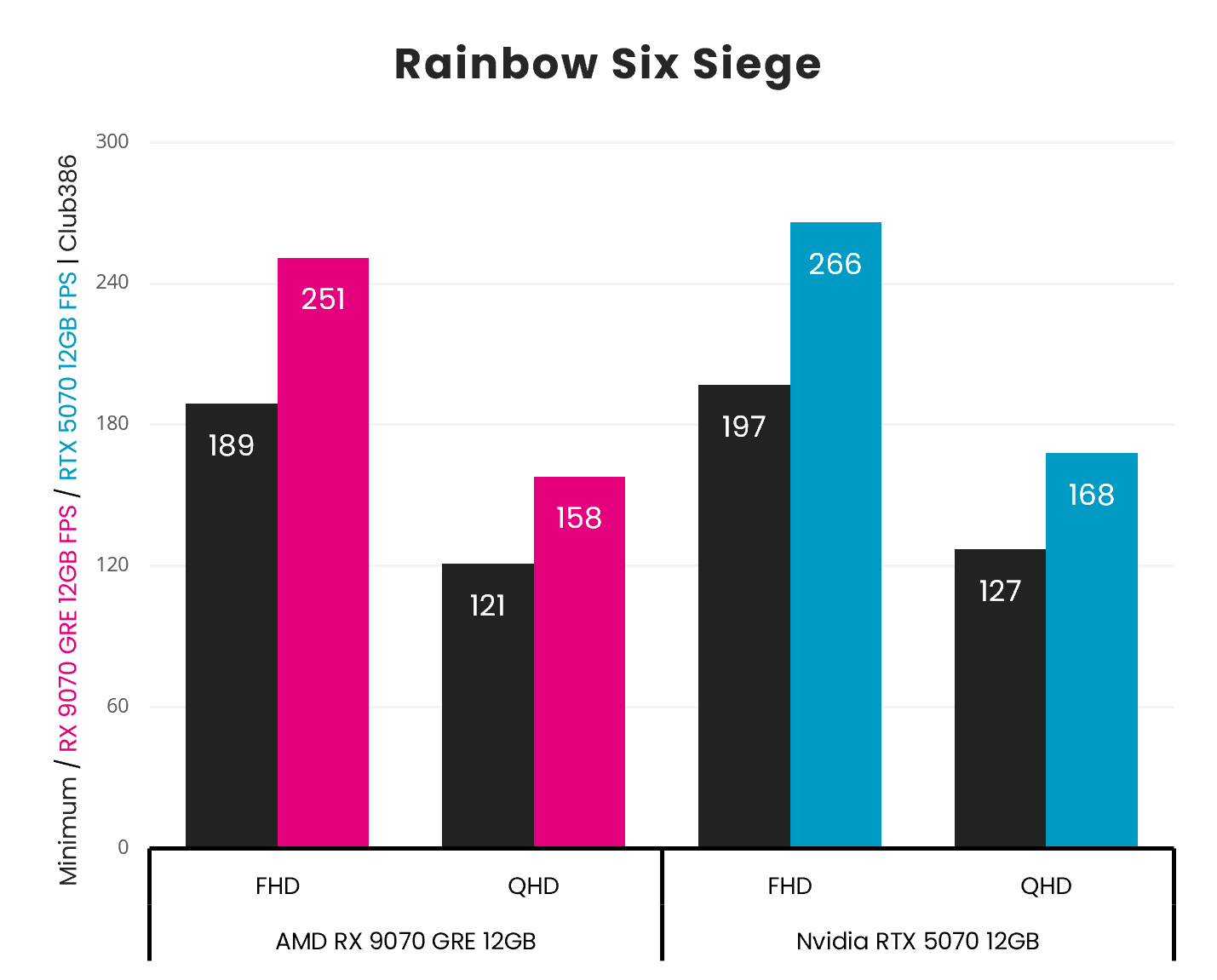
Both the RX 9070 GRE and RTX 5070 make short work of Rainbow Six Siege’s Ultra+ preset, with 240fps+ frame rates at FHD and 144fps+ at QHD. Nvidia’s offering proves the sharpest shooter of the two cards, though, with a 6% lead across both resolutions.
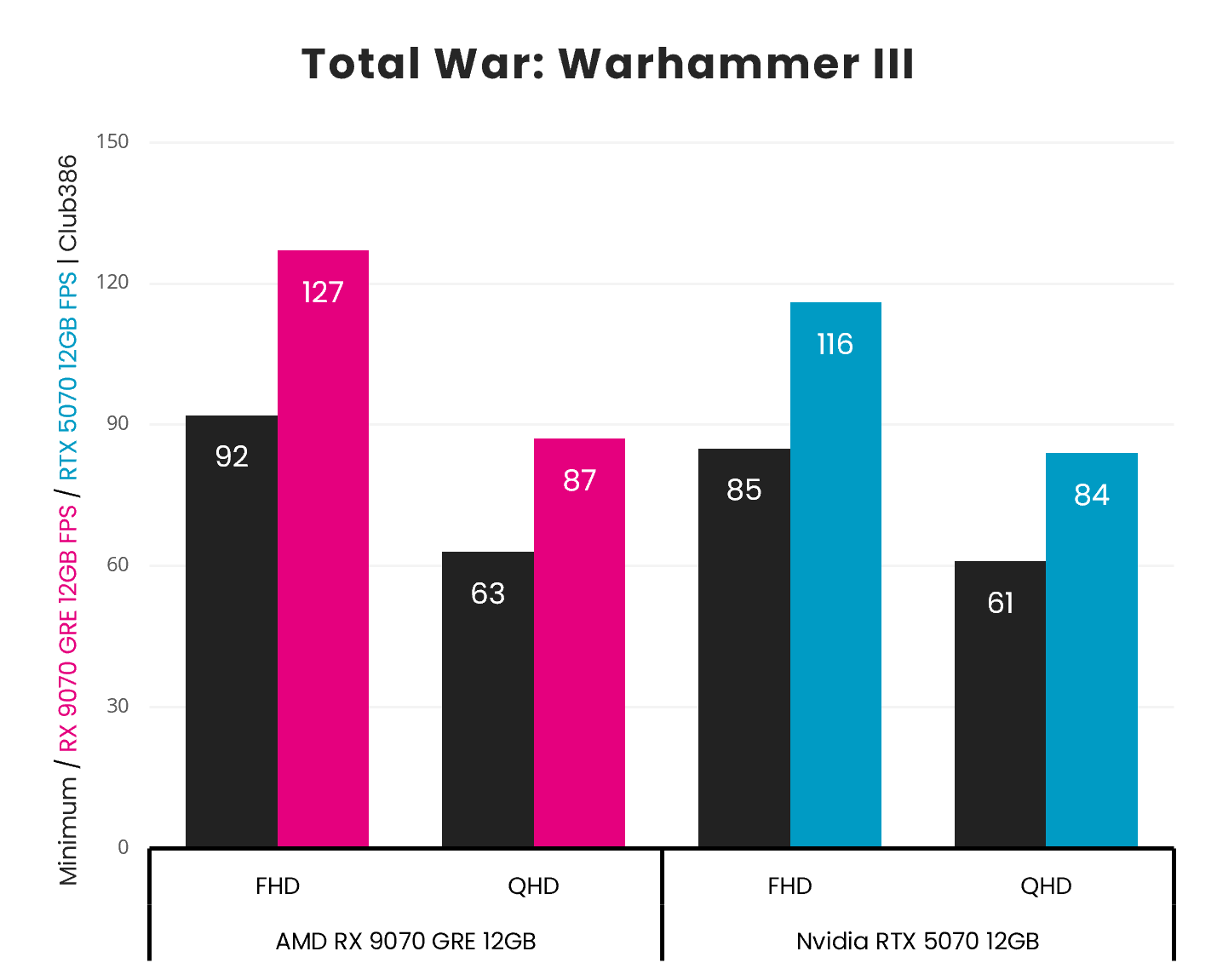
In a twist of fate, Total War: Warhammer III provides the RX 9070 GRE with its first outright win over the RTX 5070. Running this game’s Mirrors of Madness benchmark, the Radeon card pulls ahead by 4-9%.
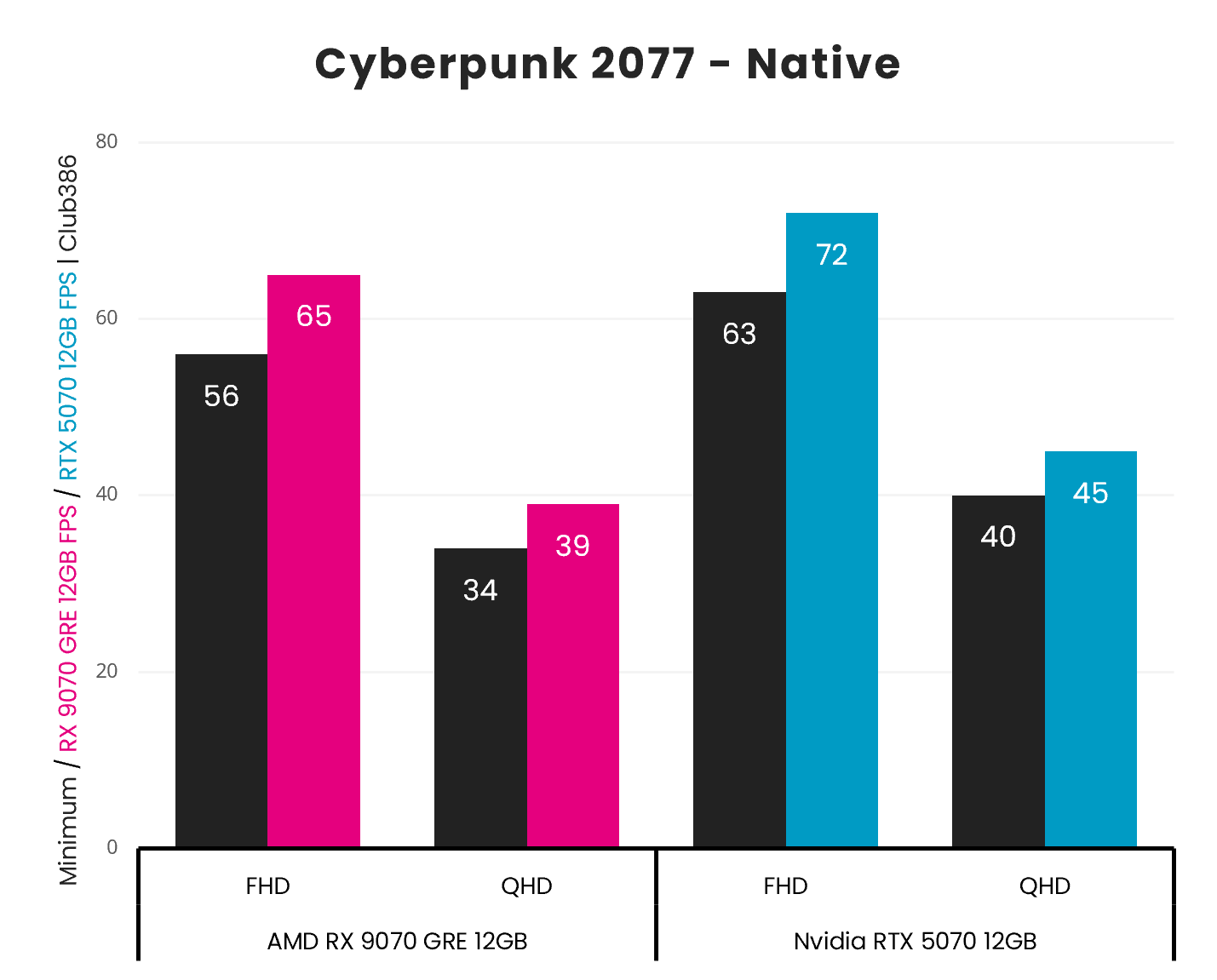
Finishing our gaming benchmarks with Cyberpunk 2077, using the game’s RT Ultra preset, the RTX 5070 enjoys a notable 11-15% advantage over the RX 9070 GRE. Realistically, however, I’d recommend running such settings with a dash of upscaling and perhaps even frame generation. So let’s take a look at results with such performance enhancers.
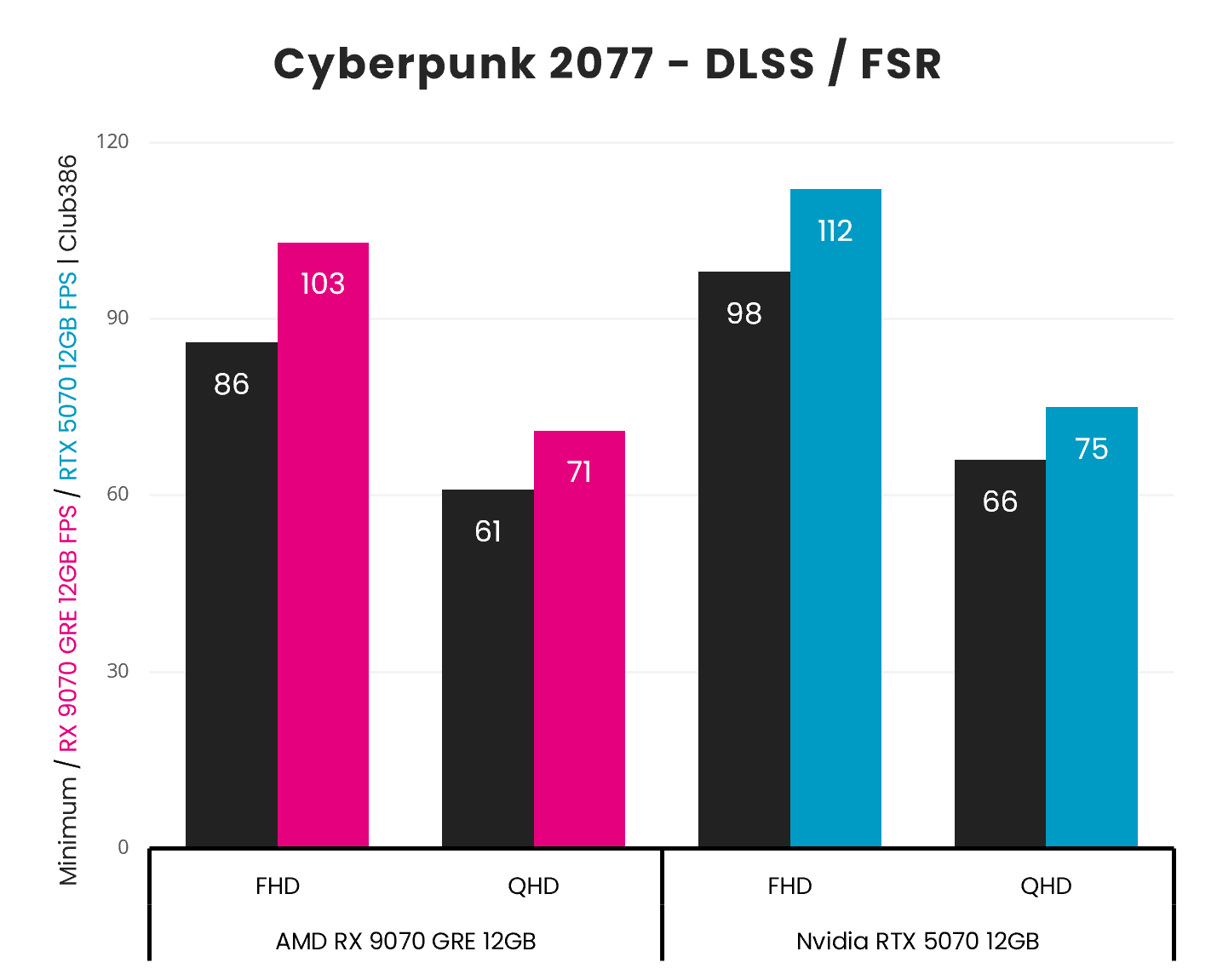
Engaging FSR 4 in its Quality mode provides the RX 9070 GRE with a 58% performance boost at FHD, and a whopping 82% at QHD. Meanwhile, the RTX 5070’s average frame rates respectively rise by 58% and 67% at the same resolutions with DLSS (transformer) on the equivalent Quality setting.
While these increases don’t change the graphics card pecking order, they do close the gap. Now, the RTX 5070 is just 6-9% ahead of the RX 9070 GRE, with each GPU providing comparable image quality.
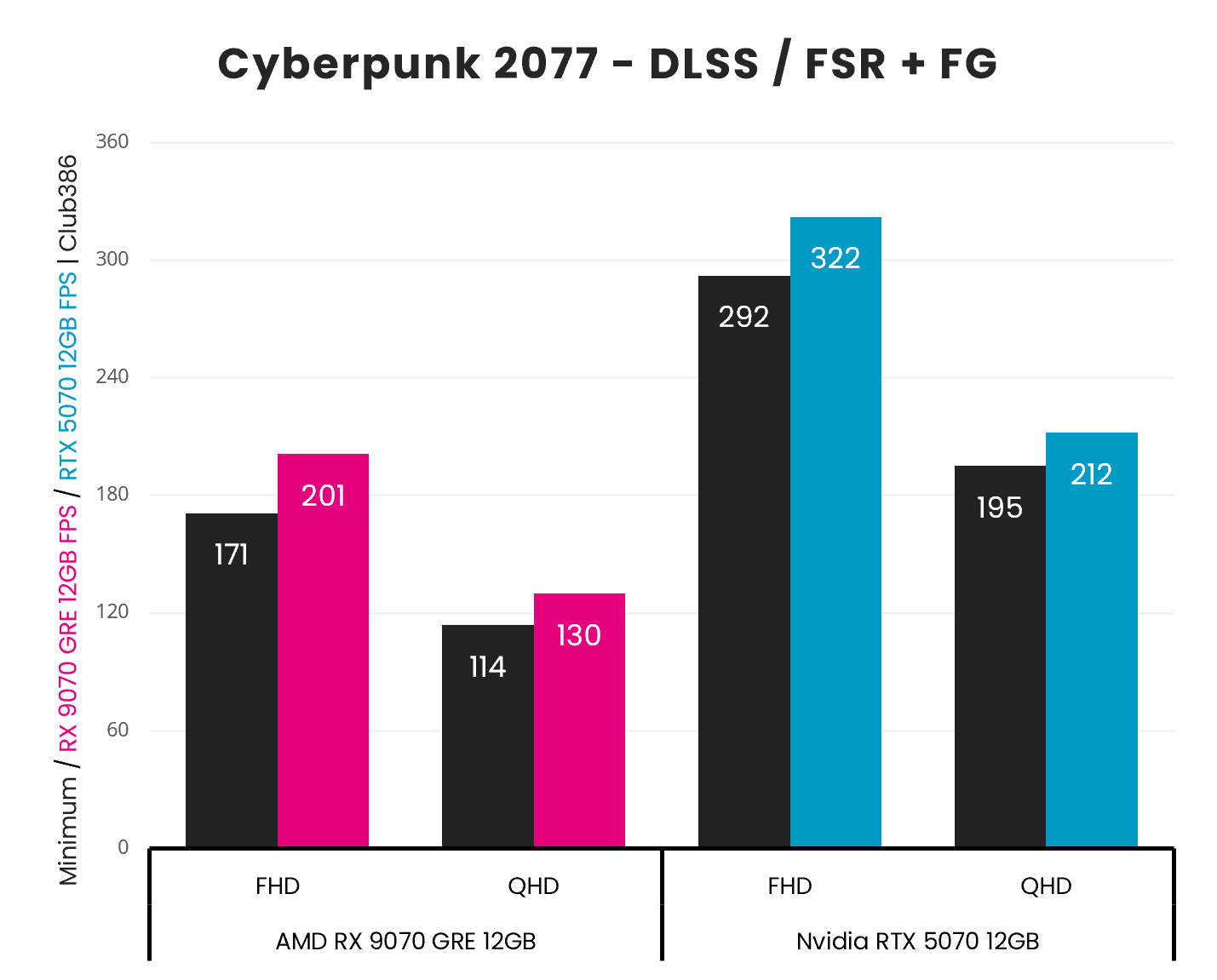
Given both the RX 9070 GRE and RTX 5070 each achieve a solid 60fps average at both resolutions, there’s no risk in enhancing motion clarity via frame generation, as the impact to latency is negligible. The RTX 5070 is capable of pushing frame rates much higher, thanks to 4x multi-frame generation, dwarfing the single-frame generation mode of the RX 9070 GRE.
However, as noted in our original RTX 5070 review and other Blackwell coverage, shifting from single-frame generation to multi-frame generation does increase latency by as much as 12ms. The degree to which you’ll feel this in gameplay will vary, but it’s a cost worth bearing in mind.
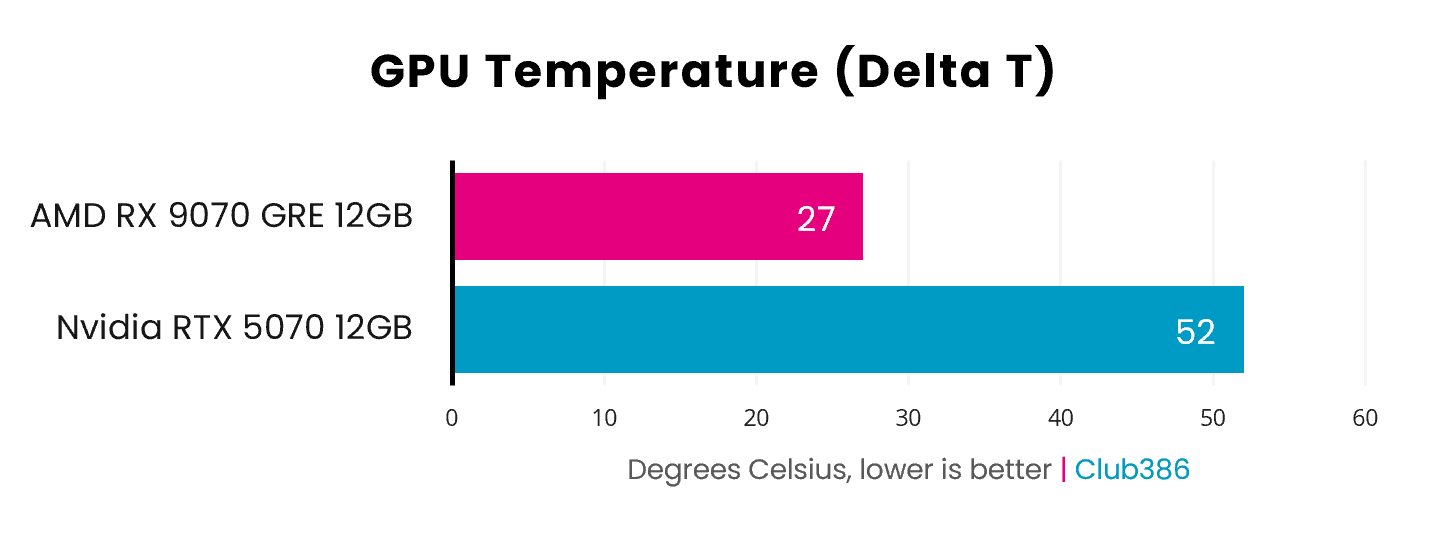
While running Cyberpunk 2077 with upscaling and frame generation, I noted the maximum GPU temperature of each card. After subtracting the ambient temperature of my office (26°C), we arrive at the Delta T values in the table above. As such, bear in mind that the figures in the graph aren’t the raw GPU temps.
The Founders Edition RTX 5070 runs notably hotter than the Sapphire Pulse RX 9070 GRE, but the card is also much smaller. Regardless, both coolers were able to keep their respective dies below the realms of thermal throttling without kicking up any distractingly audible noise levels.
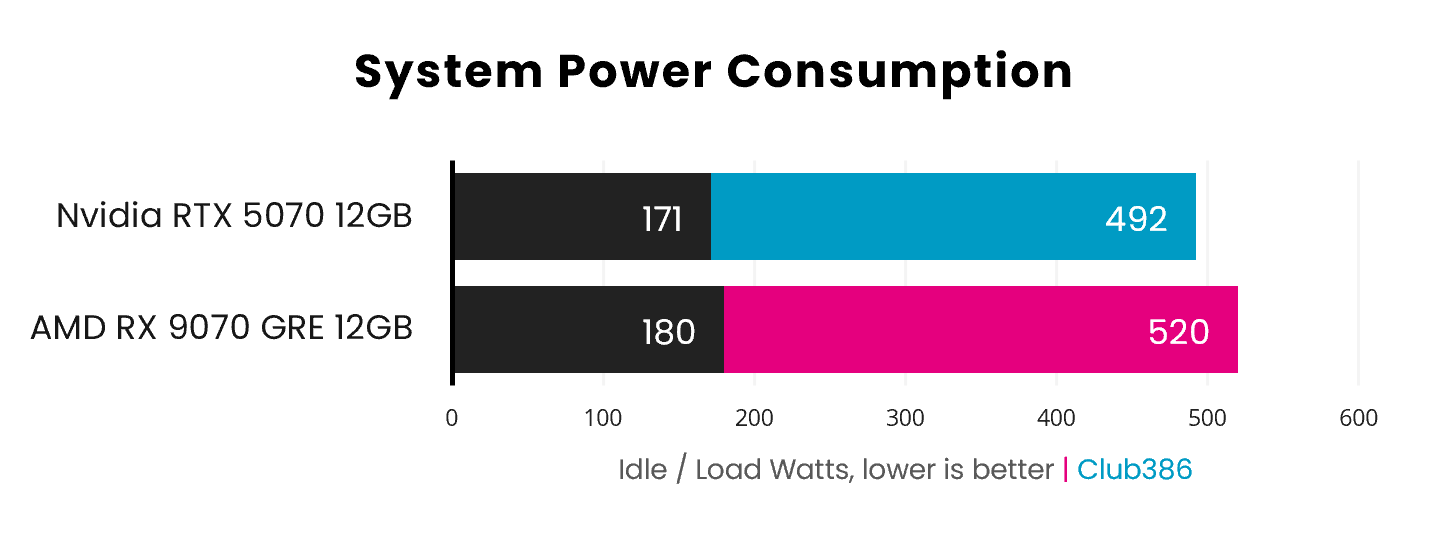
Moving to power draw, it’s no surprise to see these two GPUs close together, given their similar total board power ratings. However, when it comes to real-world testing, where we measure the power draw of our test rig directly from the mains, AMD’s contender is clearly more power-hungry, despite its ostensibly lower board power rating.
Conclusion
Averaging out the performance of both AMD’s RX 9070 GRE and Nvidia’s RTX 5070, sans our Cyberpunk 2077 frame rates, the latter proves the better performing graphics card by 3-4%. While that’s a technical win for Nvidia, this actually leaves AMD the better-value purchase for gaming, given it’s 9% cheaper at current prices. However, when it comes to creative workflows and AI performance, the Nvidia GPU’s value is far greater despite costing at least $50 more.
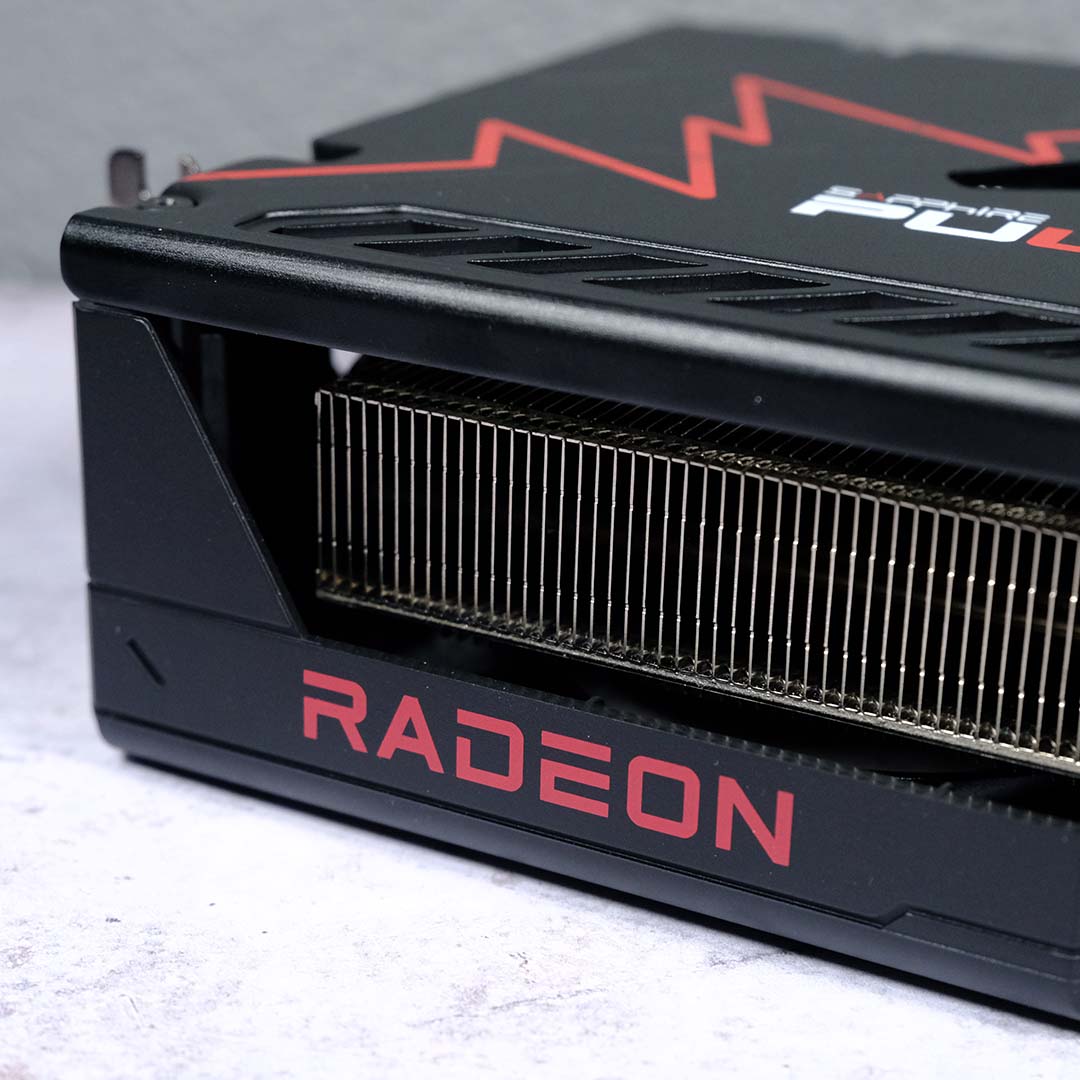
AMD Radeon RX 9070 GRE
Solid FHD and QHD performance across rasterised and ray-traced workloads, coming within 3-4% of RTX 5070 performance on average. Read our review.
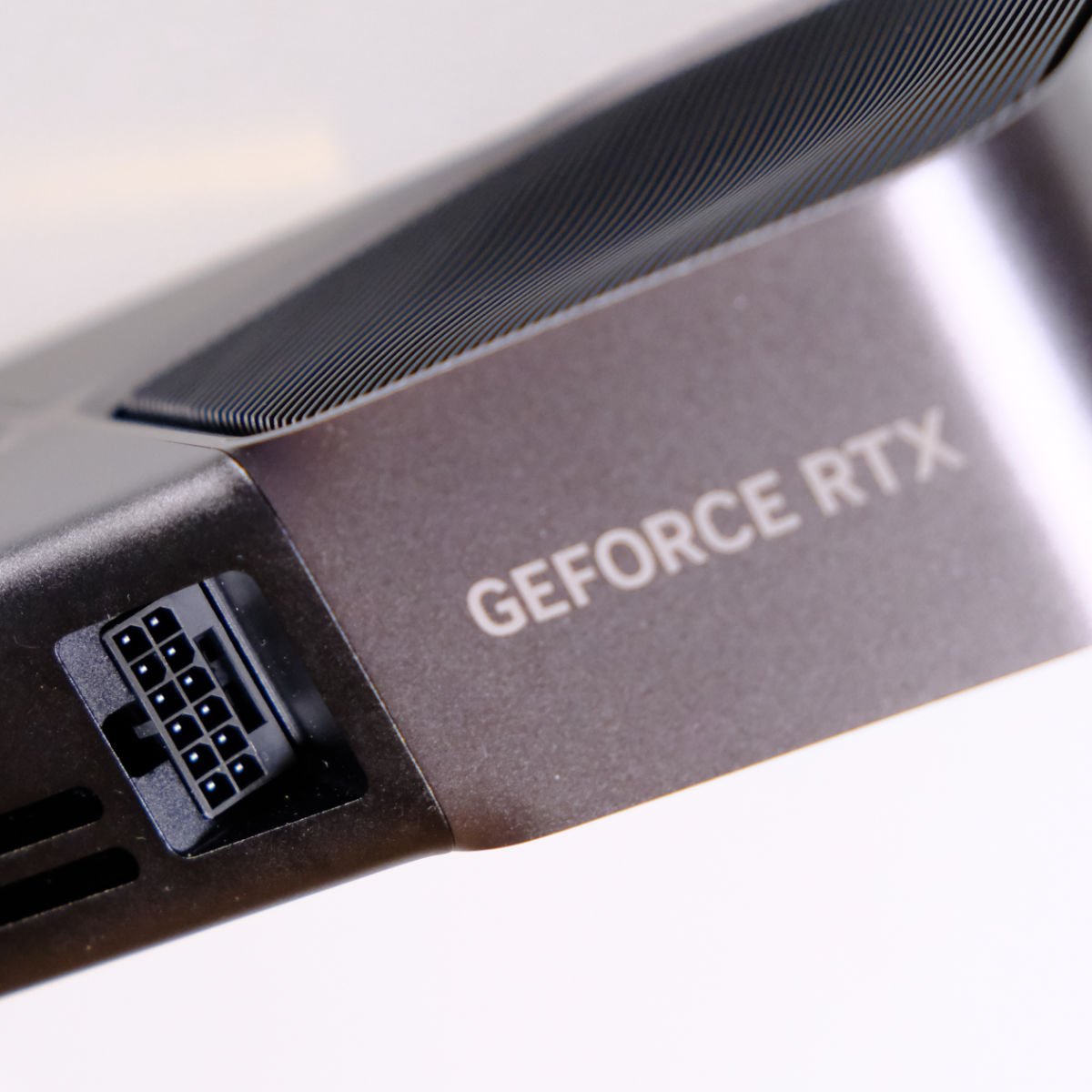
Nvidia GeForce RTX 5070
Offers better overall performance than the RX 9070 GRE, particularly in AI and Blender, but carries a 9% higher cost at the time of writing. Read our review.
For pure gaming, this is a close race, with the RX 9070 GRE emerging as the better-value gaming graphics card by a hair. For those who require more from their GPU, though, whether for AI or 3D rendering, it’s worth spending the extra cash on the RTX 5070. The Nvidia GPU will also buy you access to the widely-used DLSS ecosystem and multi frame gen, which you won’t get with the AMD card.
Note, however, that the graphics card market is particularly volatile at the time of writing. While relative performance will remain the same across the two cards, make sure to take into account any decreases/increases in price before making any final purchase decisions.
For more graphics card recommendations, check out our best GPU guide.