

Intel is seemingly planning to put a surprisingly powerful integrated GPU into its upcoming Razor Lake-AX chips. Regular (and often reliable) Intel leaker Jaykihn claims that the new chips can contain an iGPU with up to 32 Xe3 cores, the same number of cores found in the company’s biggest Battlemage desktop card.
According to Jaykihn on X, Intel could be working on two integrated GPU configurations for its next-gen Razor Lake-AX processors, boasting either 16 or 32 Xe3 cores. For comparison, the largest GPU Intel is currently offering, the Arc Pro B70, also carries 32 Xe2 cores. Considering that the Pro B70 delivers RTX 5060 Ti-level performance, such an iGPU would be fantastic on a thin and light laptop.
Adding the improved Xe3 cores to the mix would push performance even higher, perhaps rivalling next-gen dedicated mid-range GPUs. While it’s not clear if Razor Lake-AX features an optimised variant of the Xe3 architecture, the one already available on Intel’s Core Ultra 300 Series Panther Lake CPUs has shown great results. In our Intel Panther Lake review, the Intel Core Ultra 9 388H’s 12 Xe3 cores showed great performance even with maxed-out graphics presets, coming closer to AMD’s famous Ryzen AI Max+ Pro 395 Strix Halo than its predecessors.
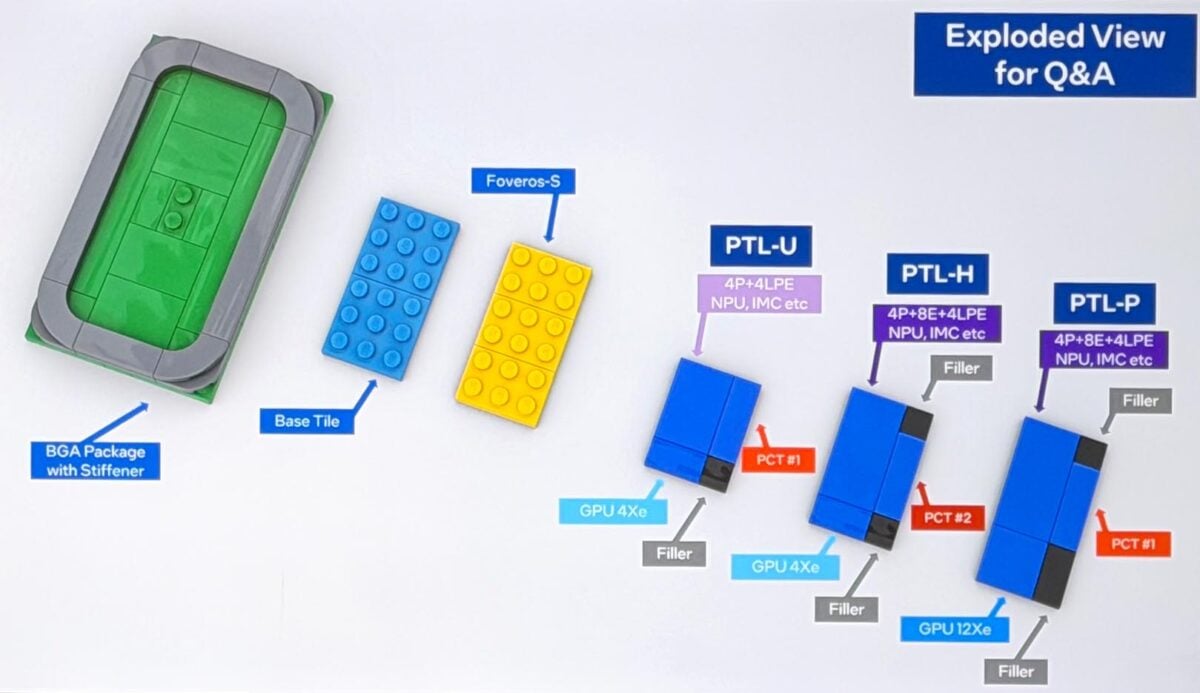
Needless to say, with 16 or 32 of these graphics cores under the hood, Razor Lake-AX could set a new standard for built-in graphics, to the pleasure of thin-and-light laptops fans. Understandably, power and frequency limits will also play a role in performance, as will the memory speed, but there is no reason to expect anything less than what Panther Lake offers. Indeed, it’s the reliance on system memory that will ultimately determine how well this rumoured iGPU compares to desktop cards with high-speed dedicated VRAM.
Jaykihn also indicated that forthcoming Intel processors with integrated Nvidia GPUs are different, and should come after Razor Lake-AX. Perhaps we’ll see them with Serpent Lake? At the moment, Intel Razor Lake-AX has no official release date yet, only rumours that talk about a late 2028 launch. If that’s correct, it could potentially go up against AMD’s next-gen Medusa Halo chips, which wouldn’t be an easy fight. Regardless of who ends up being the fastest, users will surely appreciate the performance bump.