

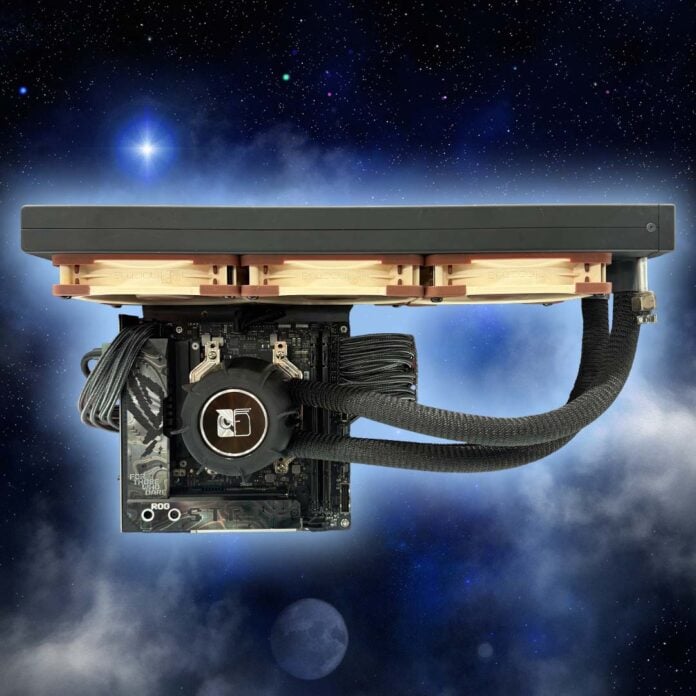
Never a company to simply go along with the flow, so to speak, Noctua is going one step further than standard AIO liquid cooler designs with its thermosiphon. With no pump embedded in its waterblock, or even a radiator as we know it, this cooler’s design means it’s entirely up to physics to move the coolant, and it’s very clever indeed.
After seeing a thermosiphon prototype at Computex happily cooling a Ryzen 9 9950X3D, I had so many burning questions that I couldn’t wait to ask. How much will it cost? Will it beat an AIO cooler? Is the finished version going to have that massive cap on top of the CPU? More to the point, how on earth does it actually work? A few weeks later, I had a really good chat with Noctua chief product officer, Jakob Dellinger, to find out all about this intriguing new cooling tech.
What is a thermosiphon?
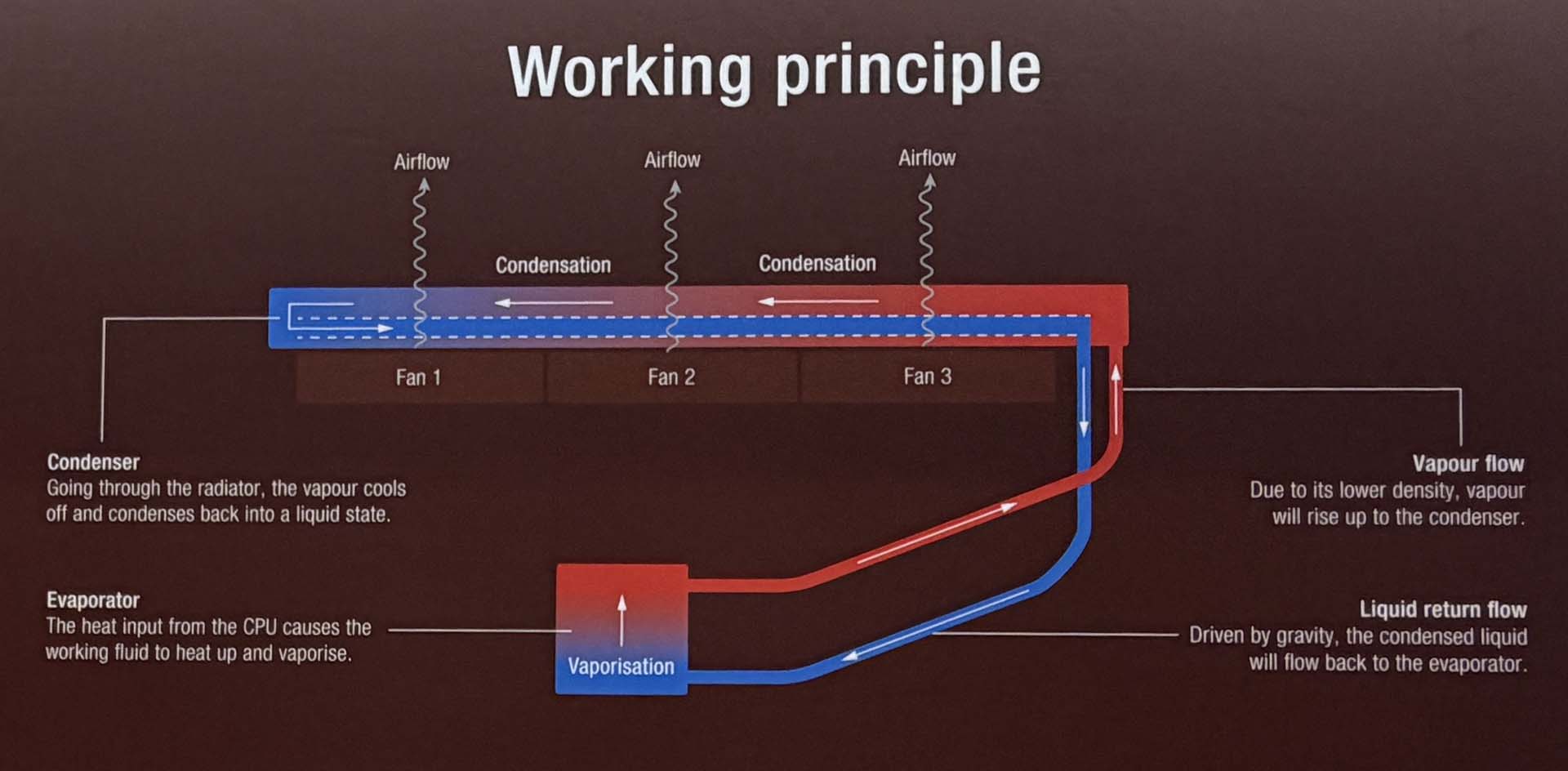
I start by asking for a crash course in how this pumpless AIO cooler does its job. “A thermosiphon is a passive heat transfer device,” explains Dellinger. “There’s no pump inside the loop, and we rely entirely on density changes of the working fluid to make it circulate inside the loop.
“We have a heat input part, where we heat up the working fluid. Heat rises, right? So density decreases, the fluid goes up to the loop-to-air heat transfer part, where it cools off and then cycles back down. That’s a thermosiphon in a nutshell, or at least a single-phase thermosiphon.”
Noctua’s design goes a step further than this, though. “What we’re building is a two-phase thermosiphon,” expands Dellinger, “so we’re not just warming up and cooling off the working fluid, but we’re evaporating and condensing it.”
This vaporisation element is key to Noctua’s design, and it’s what enables it to offer such potent cooling power. “Vaporising the same amount of water takes roughly 50 times more energy than heating it up by 10°C,” says Dellinger. “So when you have that working fluid evaporating over the CPU, you can just remove a ton of heat.” It’s basically a gravity-driven phase-change loop.
That’s no radiator
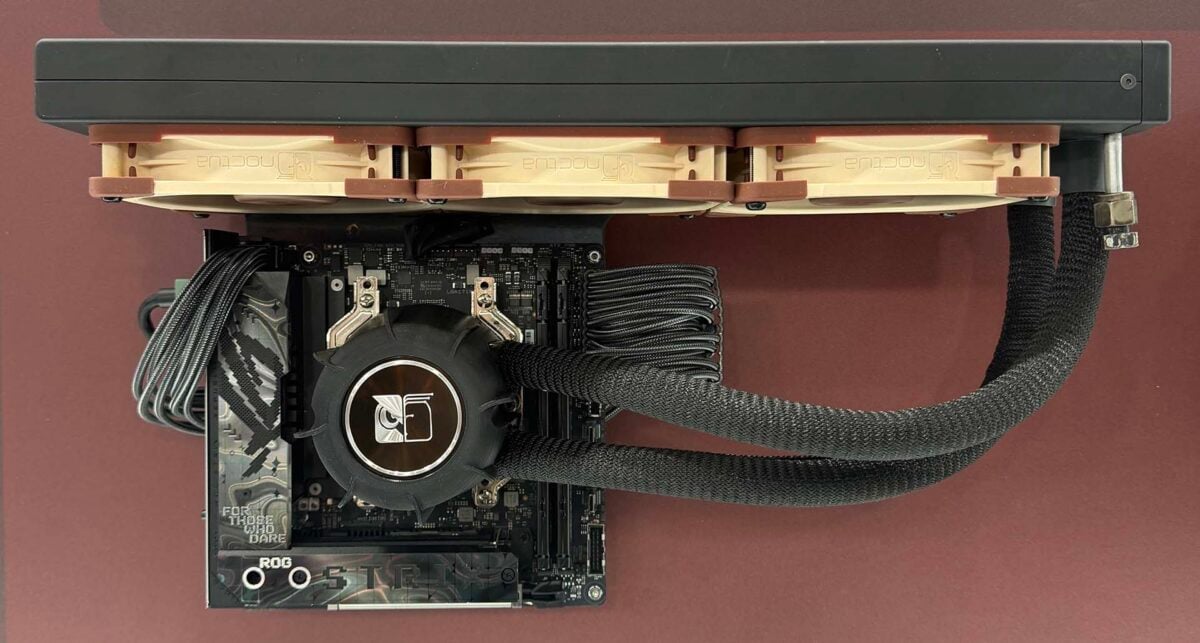
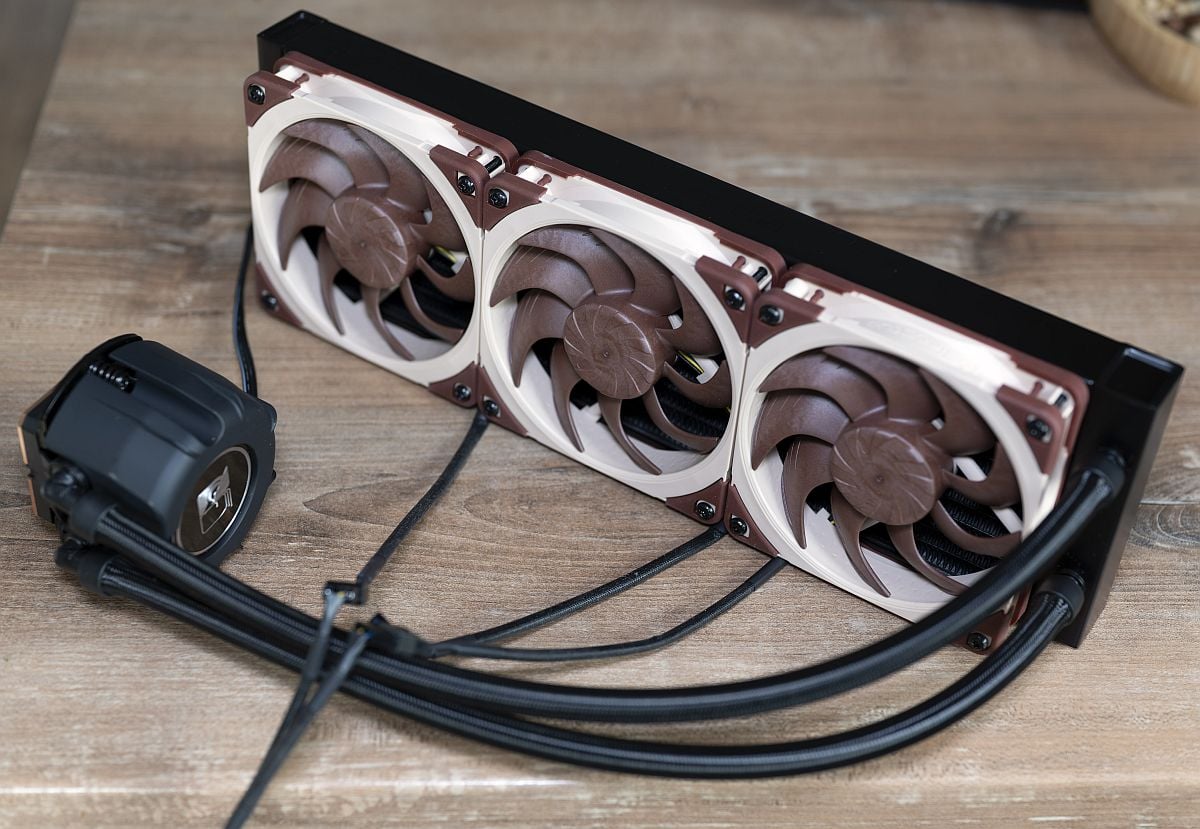
The vapour then goes up to the bit at the top, which looks like a radiator from a standard AIO cooler at first glance, but it’s actually a condenser. “It’s only a radiator in the sense that it technically radiates heat,” says Dellinger. “Its main job is condensing the vapour back to a liquid state, so it can flow back down to the evaporator unit on top of your CPU.
“We’re not driving warm liquid up there and then cooling it off to release heat to the air.”
“But from an inside-of-the-loop perspective, it’s a condenser. We’re not driving warm liquid up there and then cooling it off to release heat to the air. We’re condensing the working fluid, and through the condensation, it releases that thermal energy to the microchannels, then the cooling fins, and then off to the air, through the airflow that the fans produce.”
Basically, those Noctua NF-A12x25 G2 fans at the top aren’t there to maintain the temperature of the coolant, as in a traditional radiator, but to remove heat from the cooling fins afterward. Dellinger likens it to a fridge, as opposed to a traditional radiator-based cooling system. “You have the backside condenser releasing the total energy that you’ve taken out of the fridge, but you have that huge condenser on the backside, right? So you don’t need fans to push air through.”
So why does this condenser need fans, I ask. “In our case, we’re maybe removing, let’s say, 200-300W from the CPU, and then only have a 360mm size condenser to work with,” answers Dellinger. “Doing that purely passively, without the fans, would mean cooling off the microchannels and fins would just not be possible.
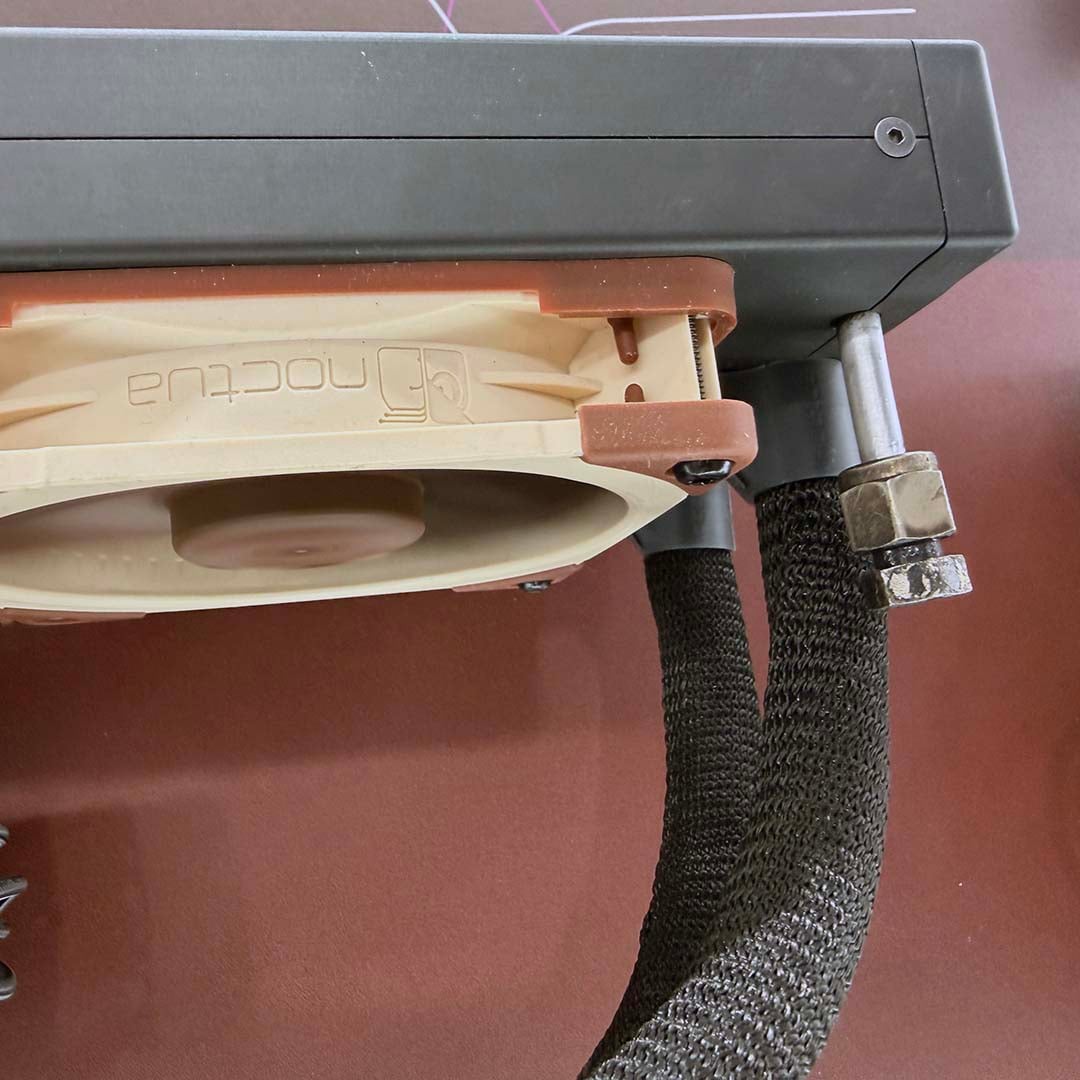
“If we didn’t have the fans up there to cool off the channels and the microfins, the fluid would not condense. It would stay in vapour form, and then the whole cycle wouldn’t work.” In case you’re wondering, the big metal bolt coming out of the prototype condenser unit in the picture below is a fill port.
Will there be a 240mm thermosiphon?
Speaking of 360mm condenser units and fans, my next question is whether we’re going to see any different sizes available. So far, we’ve only seen a 360mm version in action. Does the intricate engineering involved with this project mean that’s going to be the only size for sale, or might we see a smaller 240mm version, or even a larger 420mm model?
“We’re definitely going to start with 360,” confirms Dellinger, “just because it’s the size we currently need to get the required performance level out of it, and because it’s very well supported in terms of case compatibility.” Going bigger than 360mm has a challenge in terms of compatibility, he explains. That’s because the thermosiphon relies heavily on gravity to do its work with the fluid passing between this cooler’s components, and a lot of large cases support 420mm radiators in the front, but not in the roof.
“240 is something that we would like to make happen, but that’s going to be much more challenging.”
“We could definitely do a 420,” says Dellinger. “I would say that the likelihood of a 420 model following not too long after the 360mm one is quite high.” Going smaller is tricky, though, as you then have a much more limited amount of space for the condenser. “240 is something that we would like to make happen,” he says, “but that’s going to be much more challenging.”
Dellinger also makes the case that “in the enthusiast space, if you’re running a large tower case, there’s just no reason to go for a 240.” Instead, he says that “the bulk of the enthusiast-level 240 AIOs nowadays go into small form factor systems.” However, in these SFF cases, the cooler will “often sit at the side, and that just wouldn’t work with a gravity-driven system.” Nevertheless, a 240mm thermosiphon isn’t out of the question. Dellinger says it’s “something that we would definitely like to do further down the road, but it’s going to take more time, for sure.”
At this point I think about suggesting that I’d like a 240mm thermosiphon in my ATX tower case, as I still stubbornly insist on fitting an optical drive into my 5.25in drive bay, but I think better of it.
Thermosiphon vs AIO liquid cooler
It’s all very clever, but there’s also the question of why. The company has already released its first AIO liquid cooler, which did very well in our Noctua NL-LC1 review, earning it a place in our guide to buying the best CPU cooler. What’s the benefit of this thermosiphon design over the LC1, and could it actually beat it?
“There’s zero pump noise and zero vibration coming from the pump.”
“For further iterations, that’s definitely going to be the goal,” enthuses Dellinger, but that’s not the plan for the first version. In this case, “the goal is to be on the same level as LC1.” It sounds like there won’t be much in it, though. “We’d rather under promise and over deliver with the first iteration of this technology, rather than the other way around,” admits Dellinger.
“If we can make it happen – that every now and then you’ll see slightly better numbers than with the liquid cooler – that’s great, but it’s not the goal for now.”
Dellinger is excited by the future potential here, though. “Maybe in the long run, there’s even the potential to outperform today’s traditional liquid coolers,” he says. Plus the key advantage of this tech is the lack of a pump.
“It has huge benefits in terms of quietness of operation,” says Dellinger. “There’s zero pump noise and zero vibration coming from the pump.” It’s not just quiet operation that’s a selling point here – it also eliminates a potential point of failure. “It definitely has massive advantages in terms of longevity compared to all-in-one liquid coolers because there’s no pump that could possibly fail. The only lifetime-limiting factor with a thermosiphon is really air permeation through the tubes.”
How long will it last?
How long are we talking about here? “We’re targeting a 10-year-plus lifespan,” claims Dellinger. “That’s definitely above what you’re going to get with your average all-in-one cooler.” In fact, you may well get a lot more than a decade of CPU cooling out of your Noctua thermosiphon, according to Dellinger.
“What we want to achieve is that there’s no relevant performance impact within 10 years of usage,” he says. “You’re probably going to be able to run the units much longer before you actually see any relevant impact.” However, it’s difficult to put an exact figure on how long the cooler will last beyond that point.
“We’re targeting a 10-year-plus lifespan.”
“The longer you go, the harder it’s going to be to specify,” explains Dellinger. “It’s quite similar to fan bearing lifetime predictions. You can run those accelerated lifetime tests, extrapolate from the results you’re seeing, and calculate from the permeation specifications that you have, and the measurements you’ve done, but the further you extend those predictions, the less reliable they become.
“That’s why we want to be very confident with that 10-year prediction. The chances are you’re going to be able to run these for much longer before you actually see issues.”
Peak cooling power
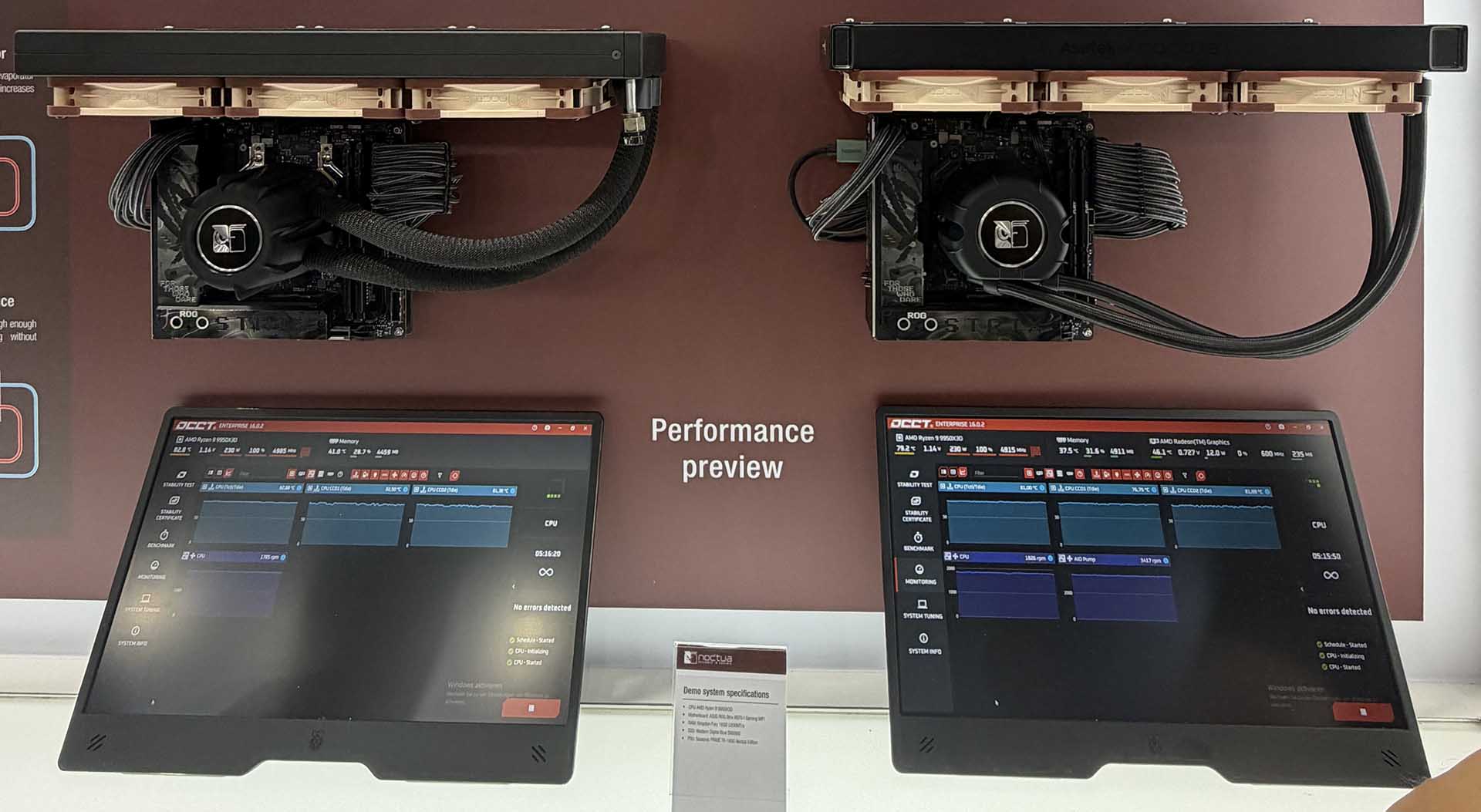
The performance results were already looking good at Computex, where the thermosiphon was shown cooling a Ryzen 9 9950X3D with its fans running at 1,800rpm. The 9950X3D is a top-end CPU, but it also has a comparatively conservative TDP of 170W. I ask if it could cope with a higher wattage, such as the peak 253W from Intel’s Core Ultra 9 285K.
“Yeah, definitely,” replies Dellinger. Is there a limit in terms of TDP? “I wouldn’t want to give something like a single wattage figure,” he says, “because that can ultimately be misleading, as it just differs so much from CPU to CPU, depending on the heat flux density, and the internal limitations of the CPU. There are units that you just cannot push above, let’s say 150W, just because of internal bottlenecks in that CPU. So no matter what cooler you put on it, it’s not going to go much higher.
“We target the same performance levels that you can currently reach with our LC1 liquid coolers.”
“Ultimately, I think the best reference we can give for now is to say that we target the same performance levels that you can currently reach with our LC1 liquid coolers. So, whatever you see on your CPU, let’s say a 285K, we want to make sure that the thermosiphon can perform on a similar level. Take the 9950X3D2. This typically tops out at 250W, even if you improve the cooling capacity.
“We currently see the LC1, the 360 version, keeping that CPU in the low 80°Cs. And that’s exactly what you should see with a thermosiphon as well. Assuming you’re running in the low 80s with your fans at 1,800rpm, you’re going to have quite a bit of headroom to actually reduce fan speed and make your unit run super quiet.”
That massive evaporator cap
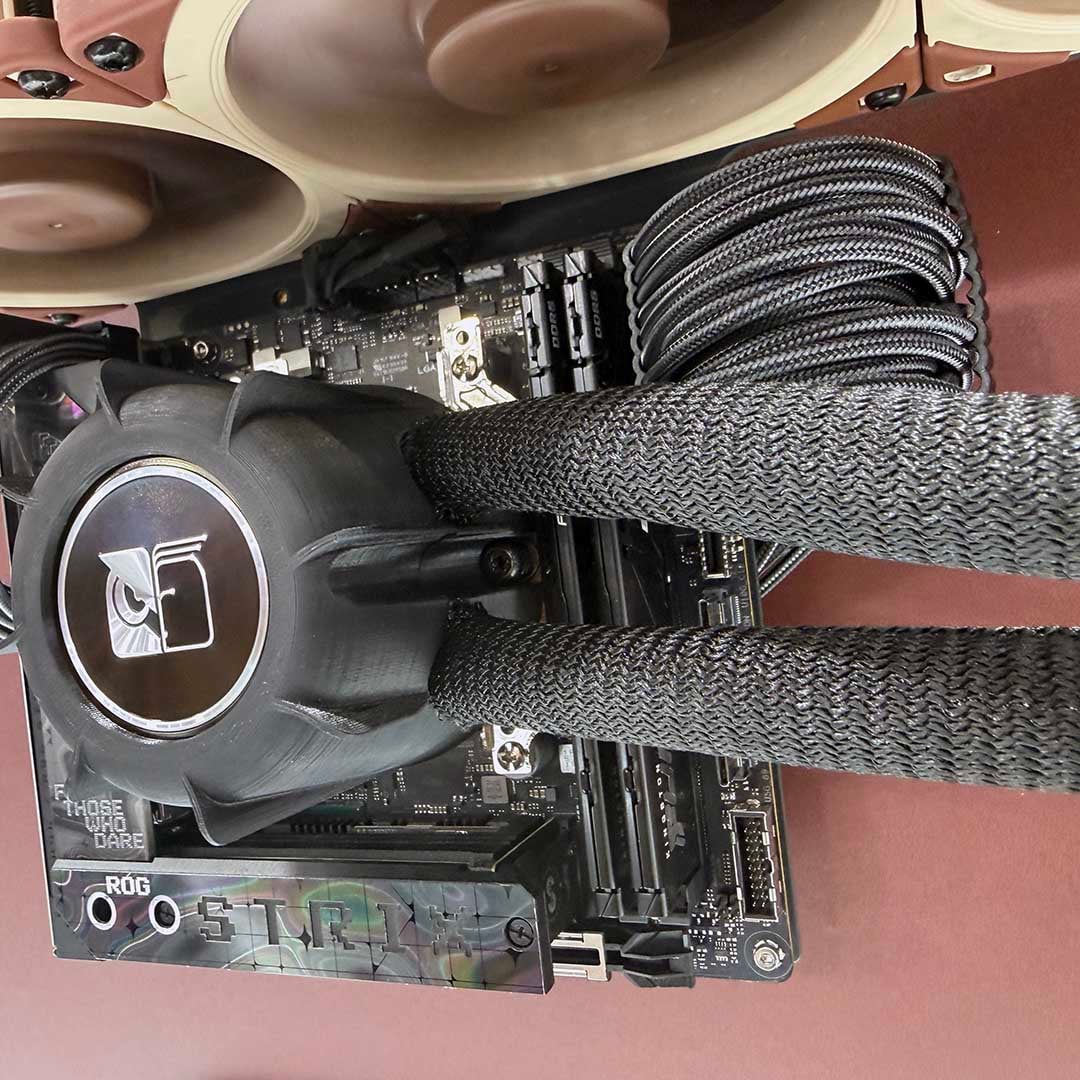
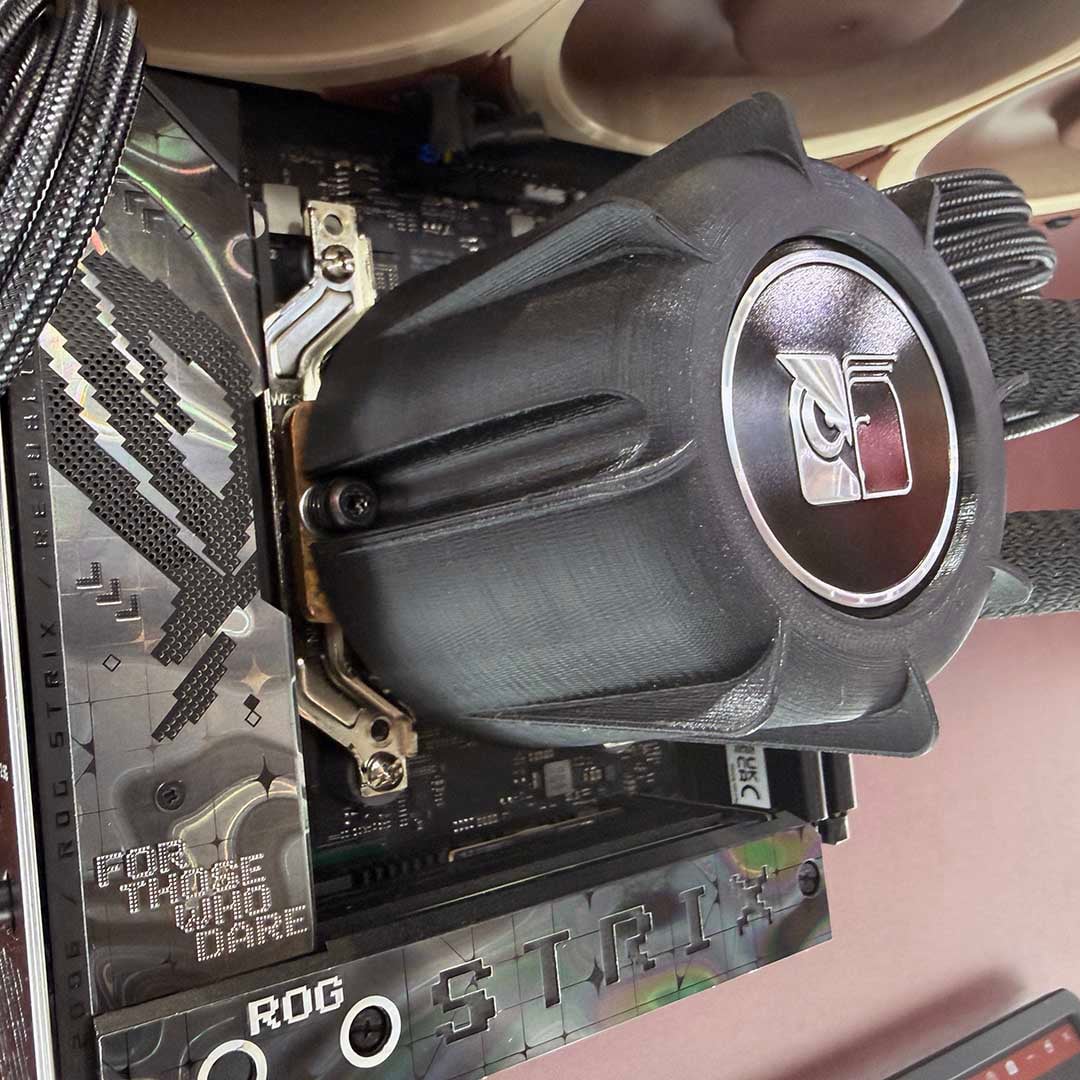
One part of the prototype thermosiphon rig at Computex that was really noticeable was the massive cap on top of the evaporator unit. It’s several inches tall and, despite Noctua’s best efforts to make it look better with an owl logo, it sticks out like a sore thumb. However, you’re not going to have this unsightly tower on top of your CPU if you buy the finished version – it was just there to cover up a load of monitoring gear.
“It’s actually going to be slightly smaller than the LC1 pump’s cover.”
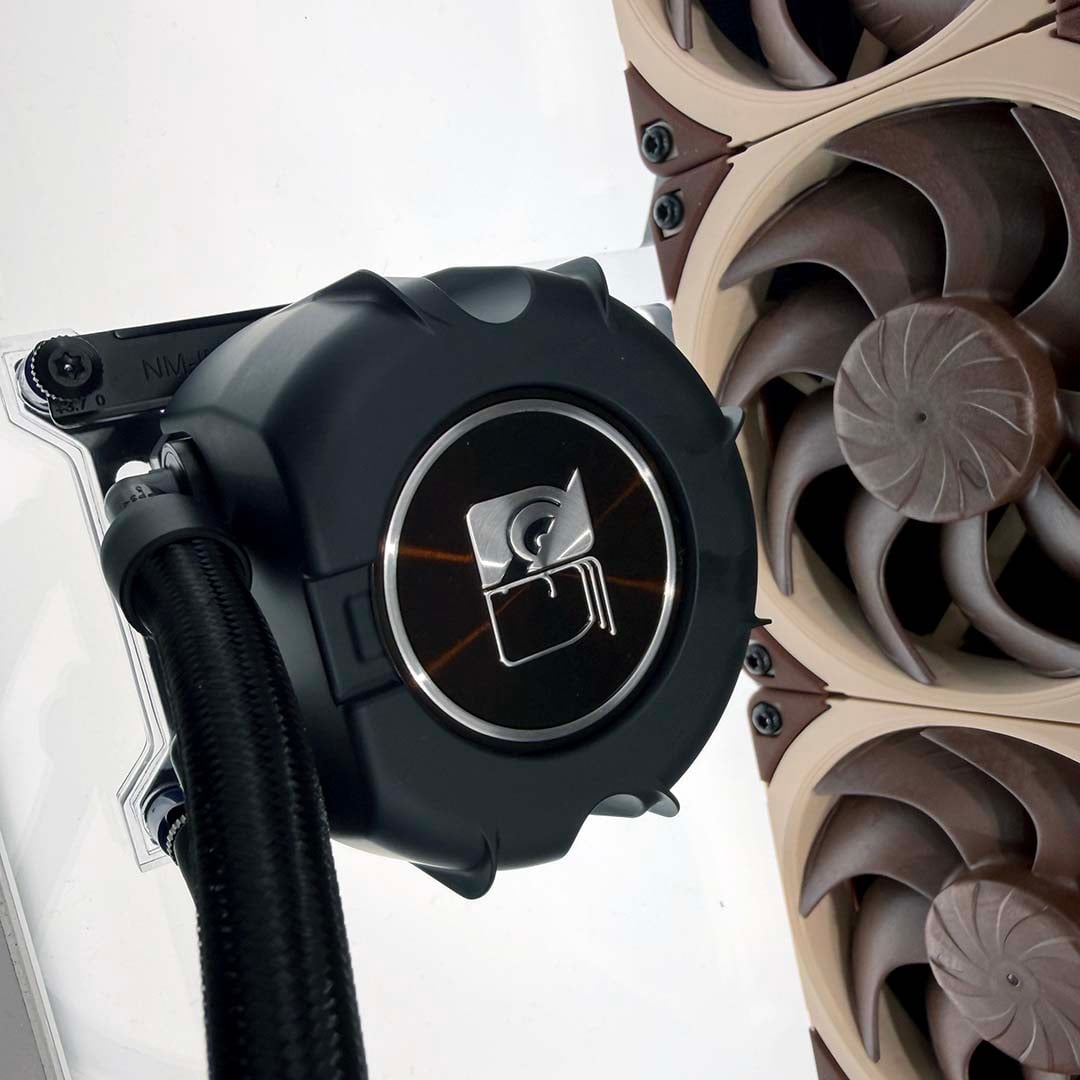
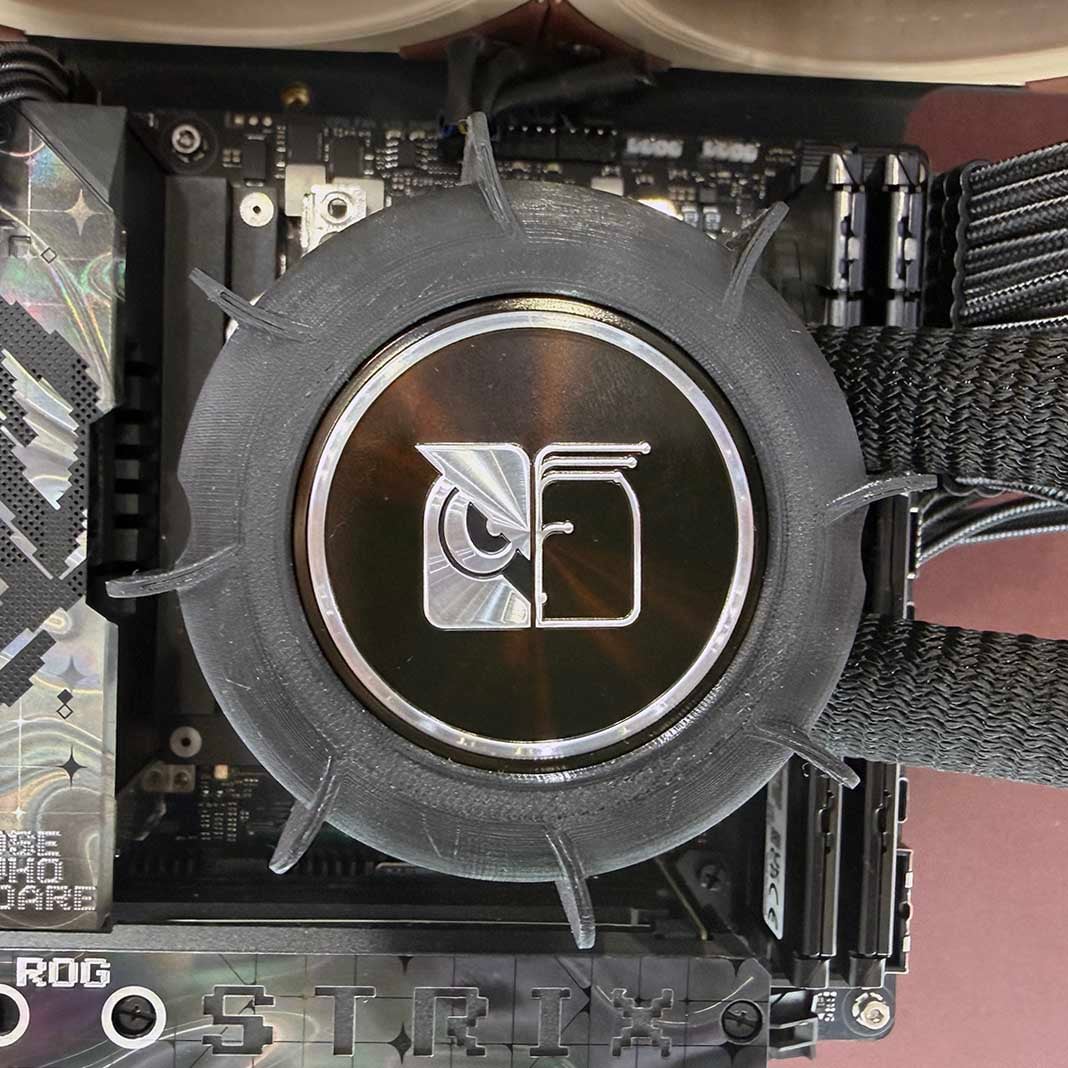
“That unit basically came straight out of the lab,” explains Dellinger, “and it has a huge fill port and extra monitoring setups underneath the hood. That’s thankfully not going to be required on the final product.” How big will the cap on the final unit be? “It’s not 100% locked yet,” says Dellinger, “but it’s actually going to be slightly smaller than the current LC1 pump’s noise-absorbing cover.” That’s good news. As you can see in the image below, the NC-LC1’s waterblock/pump unit occupies a tight space, despite all its noise-blocking layers.
How much will the thermosiphon cost?
So on to the big question. What’s the Noctua thermosiphon price? Noctua has poured a lot of R&D resources into this project, and needs to recover its costs. “We’re dealing with a completely new technology where we have to figure out production processes, production methods, validation methods,” explains Dellinger. That’s very different from Noctua’s development of the NC-LC1 in collaboration with Asetek.
“All-in-one liquid cooling is a very mature technology that’s been mass-produced for around two decades now,” he says. The result is that the thermosiphon is “definitely going to see a price premium over the LC1 360. It’s going to be more costly.”
What sort of premium are we talking about here? “Obviously, we want to keep the price as low as possible,” says Dellinger. “Just to give you a ballpark, we definitely don’t want it to cost twice as much as the AIO or something like that. But there’s going to be a premium.”
Given that the 360mm model of the Noctua NC-LC1 costs $249.99 / £229.99, that means the thermosiphon price will come in under $500 / £460. At a guess, I’d say it’s likely to be priced somewhere around the $399 / £375 mark, but we’ll have to wait and see.
Engineering challenges
Developing this new tech has clearly been a colossal undertaking in terms of research and development. “We’re collaborating with a Belgian company, Calyos, and they have a four-person team just working on our project,” says Dellinger. “Then we have our Swedish team contributing a lot to the thermosiphon, and our Taiwanese team, but also the Vienna team. I would say it’s around ten engineers collaborating on the thermosiphon project at the moment.”
“If you take a pot of water and heat it up, it will slowly start boiling and then get more and more violent.”
It’s now close to being finished. “We have seen very good progress in terms of development and performance numbers,” claims Dellinger. “We’re now moving more and more resources to preparing mass production, and that’s where more people from the Taiwan team start to get involved, to make sure that everything is ready to really kick off mass production as smoothly as possible.
“It’s a very different thing to have a handful of prototypes that perform at the desired level, versus making sure that 1000s of units really consistently deliver that performance level.”
It’s not been a smooth process, though. I ask what sort of engineering difficulties the team has faced over the development period. “The most critical challenge is dealing with the high heat-flux densities of modern CPUs,” he replies, and then provides a little thermal engineering explainer to provide some context.
“Let’s start with boiling. Boiling is not a uniform thing,” Dellinger explains. “We can use a kitchen example here. If you take a pot of water and heat it up, it will slowly start boiling and then get more and more violent. So as the boiling starts, you see isolated bubbles rising in the pot, and then it becomes jets and columns of vapour shooting up.
“The problem is that the heat-transfer characteristics of that vapour content are much worse than the liquid content of the fluid. The more vapour you have in the pot, the poorer this heat transfer becomes. There’s a so-called boiling curve, which describes this phenomenon. The boiling behaviour changes depending on the excess temperature – the temperature delta between the hot surface and the saturation temperature of the liquid.
“In the case of water, it is 100°C. The higher you go above that temperature, the higher the risk of vapour bubbles, or even full vapour blankets, forming on that hot surface. And that will result in the vapour content insulating, from a thermal perspective, the surface against the remaining liquid fluid. That’s the so-called Leidenfrost effect.
“When you put a drop of water on a very hot surface, like a pan, it will not completely evaporate right away, but it will form a small vapour cushion, and that droplet will remain for a while, skidding around on the hot surface. That’s because the vapour cushion insulates the remaining droplet of liquid against the hot surface, and that’s exactly what happens if the surface temperature gets too high.”
The problem with all this, when it comes to your PC, is that modern CPUs have “a very distinct, small hotspot reflected on the inside surface of the evaporator.” This, explains Dellinger, means “we have the risk of such a big vapour cushion forming exactly above the hotspot where we need cooling the most, resulting in insufficient cooling performance right on the hotspot of the CPU. I would say that this has been the major challenge we’ve been dealing with.”
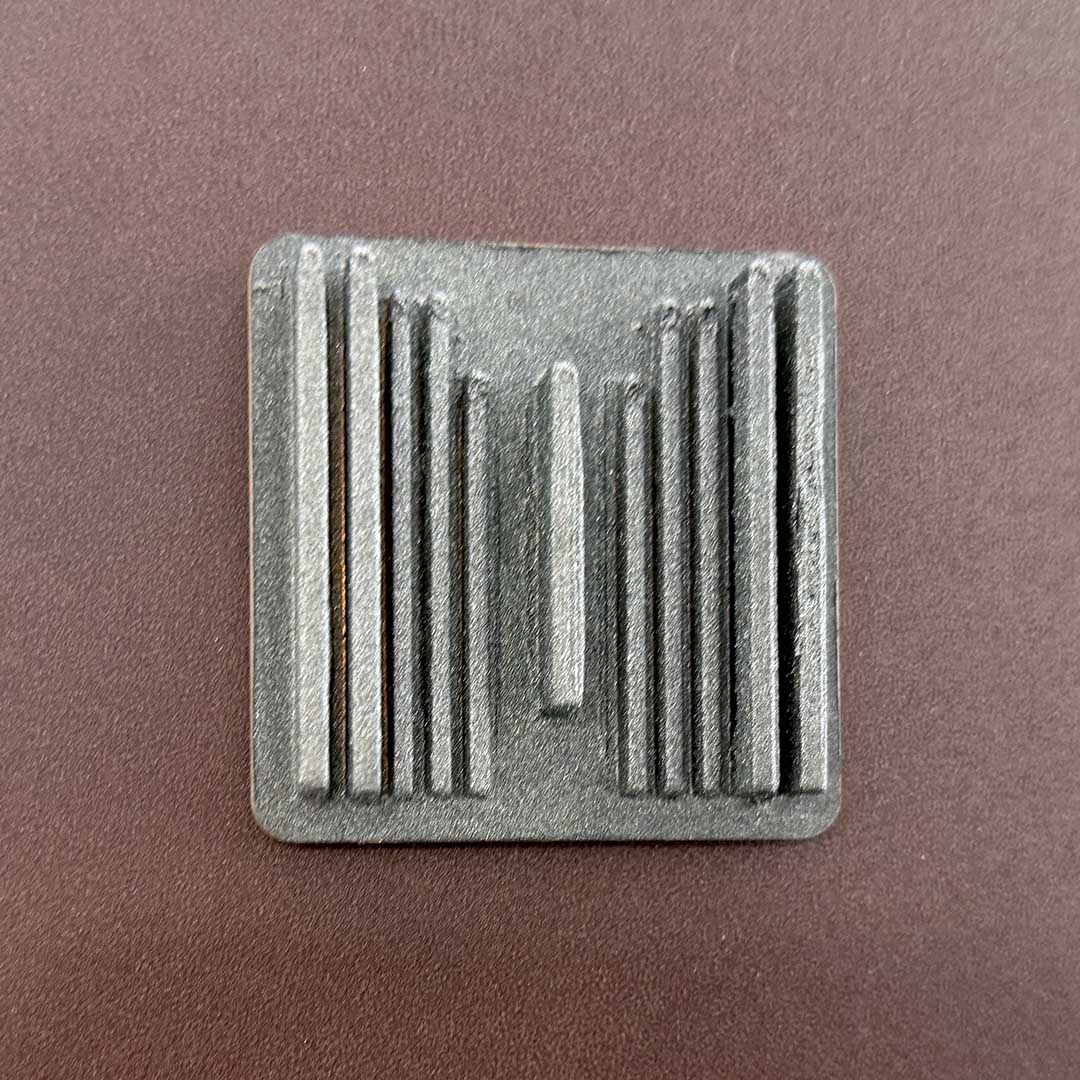
Solving this problem has involved several interventions. “One is improving fluid circulation within the evaporator, and making the circulation more controlled, more predictable, which generally improves hotspot resistance,” says Dellinger. “And we’re also adding a sintered copper microlayer that improves surface wetting, while still ensuring very efficient vapour release, and that also helps to reduce that hotspot challenge.
“What still requires some work is ensuring optimal performance consistency – that we really reach the desired performance level on different CPUs, with different heat maps, different hotspot locations, making sure that the performance is right where we want it on all likely scenarios.”
Air permeation
The other challenge is air permeating the tubes over time, as any bubbles forming in the loop can have a serious impact. That’s not an issue that’s ever going to be entirely solved, as there will always be a degree of permeation. “Even with a solid copper heatpipe, you have permeation through that thin copper wall,” says Dellinger. “It always happens, and it’s the same with the tubes. You can choose the best possible tubes.
“There is always going to be a certain level of permeation, but with the materials we are going to choose, we will be able to make sure that there is no relevant performance impact within 10 years of usage. So, yes, there’s still going to be permeation. There’s just no way to solve that because it is inevitable physically. But we’re going to be able to keep it in check to ensure, I would say, a really impressive lifetime figure.”
It’s certainly a really exciting project for anyone interested in CPU cooling, with all the heat being shifted from your CPU using phase-change physics rather than a pump circulating fluid. There will be no noise or vibration from the pump, and it looks like it will see you through several generations of CPU upgrades too.
Ultimately, for PC enthusiasts who’ve been starved of innovation in recent years, the thermosiphon harks back to an era of intrigue and fascination. With generic AIO coolers dominating the space, cooling aficionados will have something genuinely interesting to put through its paces. It’ll be a niche technology, at least to start, but I for one can’t wait to see how Noctua’s years of development translate to real-world user experiences.
Noctua says the thermosiphon release date is currently planned for the third quarter (Q3) of 2027, so there’s a while to wait yet, but we look forward to seeing the finished result. In the meantime, check out our features on why Noctua coolers are brown in their classic livery, and why there won’t be any Noctua RGB coolers on the company’s roadmap.