
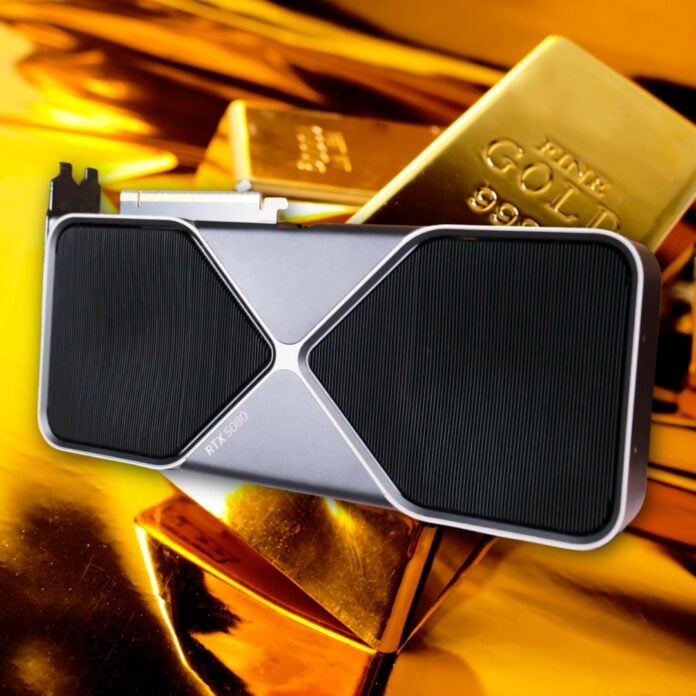
Nvidia has reportedly pulled the plug on its GeForce RTX 5080 16GB graphics cards, as it ushers in a 24GB RTX 5080 Super to replace it. However, according to sources on Chinese tech industry forum Board Channels, the 24GB cards aren’t ready yet, and spot prices for the 16GB version are climbing rapidly.
According to one post [machine translated], “The RTX 5080 16G series has been discontinued, and its replacement, the RTX 5080 24G series, has not yet been released, but the 16G series has already seen a price increase of around 2,000 Yuan.” For reference, 2,000 Chinese Yuan is around £224 or $299.
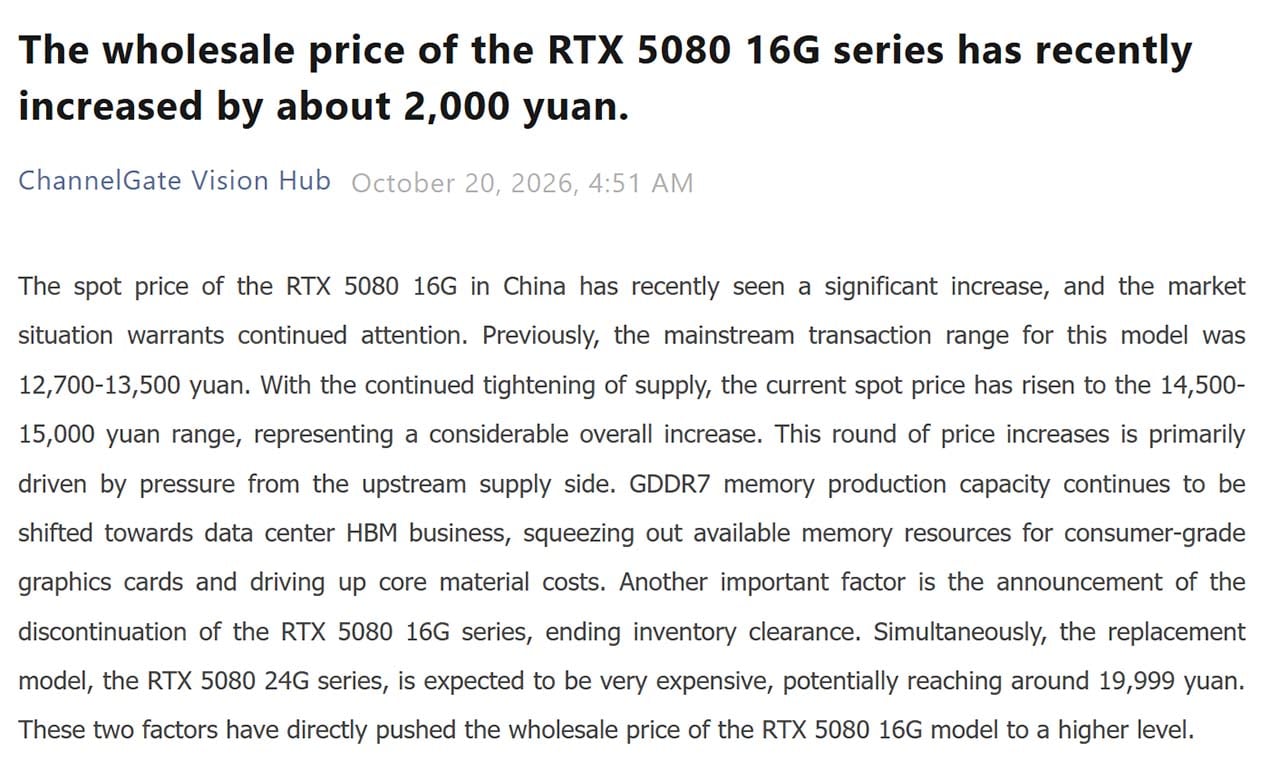
Another post describes a “second city-level distributor price adjustment policy for October” compared to 8 October, just a couple of weeks ago, claiming that all RTX 5080 series cards have increased by 1,200 Yuan (around £134 / $180) since then. Meanwhile, another post says all Asus RTX 5080 16GB prices have been increased by 1,000 Yuan (around £112), as of October 20th, compared to the start of the month.
That’s not the only one either. This entry from 20 October also claims there’s been an “announcement of the discontinuation of the RTX 5080 16G series, ending inventory clearance.” This post claims the “RTX 5080 24G series, is expected to be very expensive, potentially reaching around 19,999 Yuan.” If that’s true, we could be looking at a price of around £2,250 / $2,999 for the RTX 5080 24GB if and when it materialises.
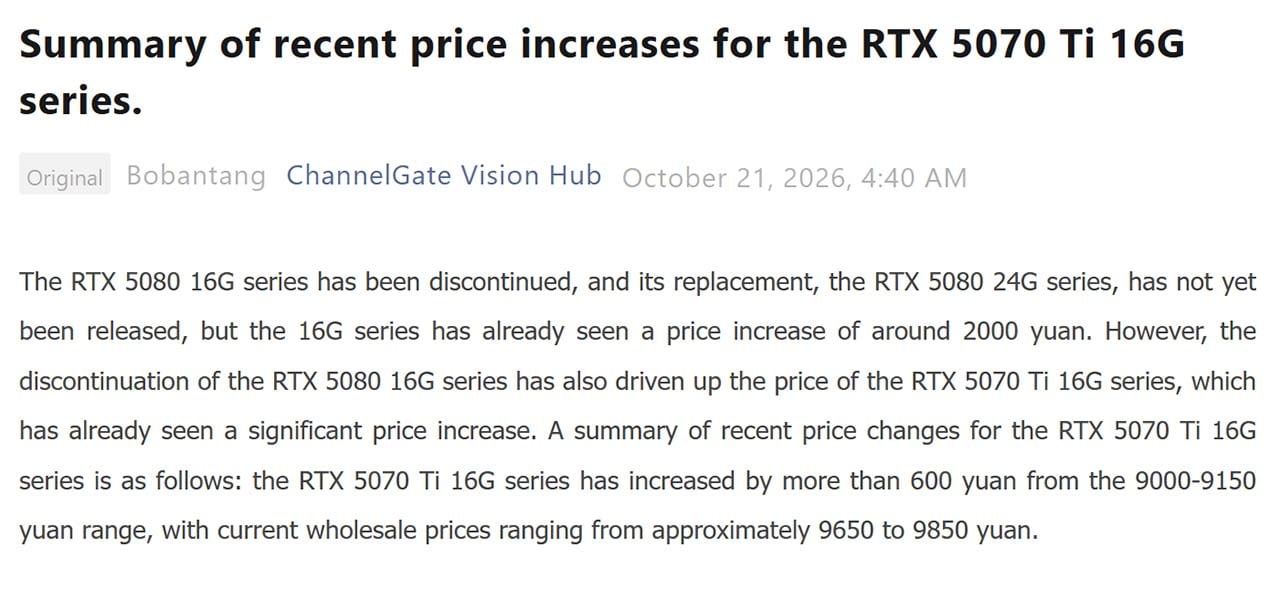
Many of the above posts also point to further price rises for the RTX 5070 Ti, with spot prices apparently increasing by 600 Yuan (around £67) in the same timeframe. Wholesale RTX 5070 Ti prices currently top out at 9,850 Yuan, according to one of the posts, meaning it costs around £1,100 before even adding any retailer margin to it.
Of course, Nvidia hasn’t even officially confirmed the existence of the RTX 5080 Super 24GB, let alone announced any pricing for it, so bear in mind this is all in leaks and rumour territory at the moment. However, all these posts paint a picture of huge price rises for the 16GB card, as the cost of GDDR7 VRAM rockets.
Strap in, folks. It looks like we’re in for a very rough ride for Nvidia GPU prices in 2027. For our best advice on a graphics upgrade now, check out our recently updated guide to buying the best GPU for your needs.