
Nvidia has just released Game Ready driver 621.01, finally bringing support for Microsoft’s Advanced Shader Delivery feature to GeForce graphics cards. The technology promises to practically eliminate tedious shader compilation steps in games, meaning you can launch your games much more quickly. My first-hand testing shows that it works as well, although there are a few limitations.
We’ve already had Advanced Shader Delivery on Radeon GPUs for a little while now, with Microsoft now expanding support to Intel and Nvidia GPUs. You don’t need to do anything to unlock the feature on your graphics card, other than complete the aforementioned driver update.
However, to reap the benefits of Advanced Shader Delivery, you’ll need to be playing a compatible game via the Xbox app. Microsoft promises the technology will arrive on other storefronts, including Epic Games and Steam, but didn’t give a release estimate beyond a frustratingly broad “soon.”
This limitation understandably stomped on my initial excitement to test the feature via my Steam copy of Gears of War: E-Day, which can take upwards of 10 minutes to compile shaders on my system. Thankfully, I also have access to Game Pass, and was able to see my GeForce RTX 4080 put Advanced Shader Delivery to work and compare results.
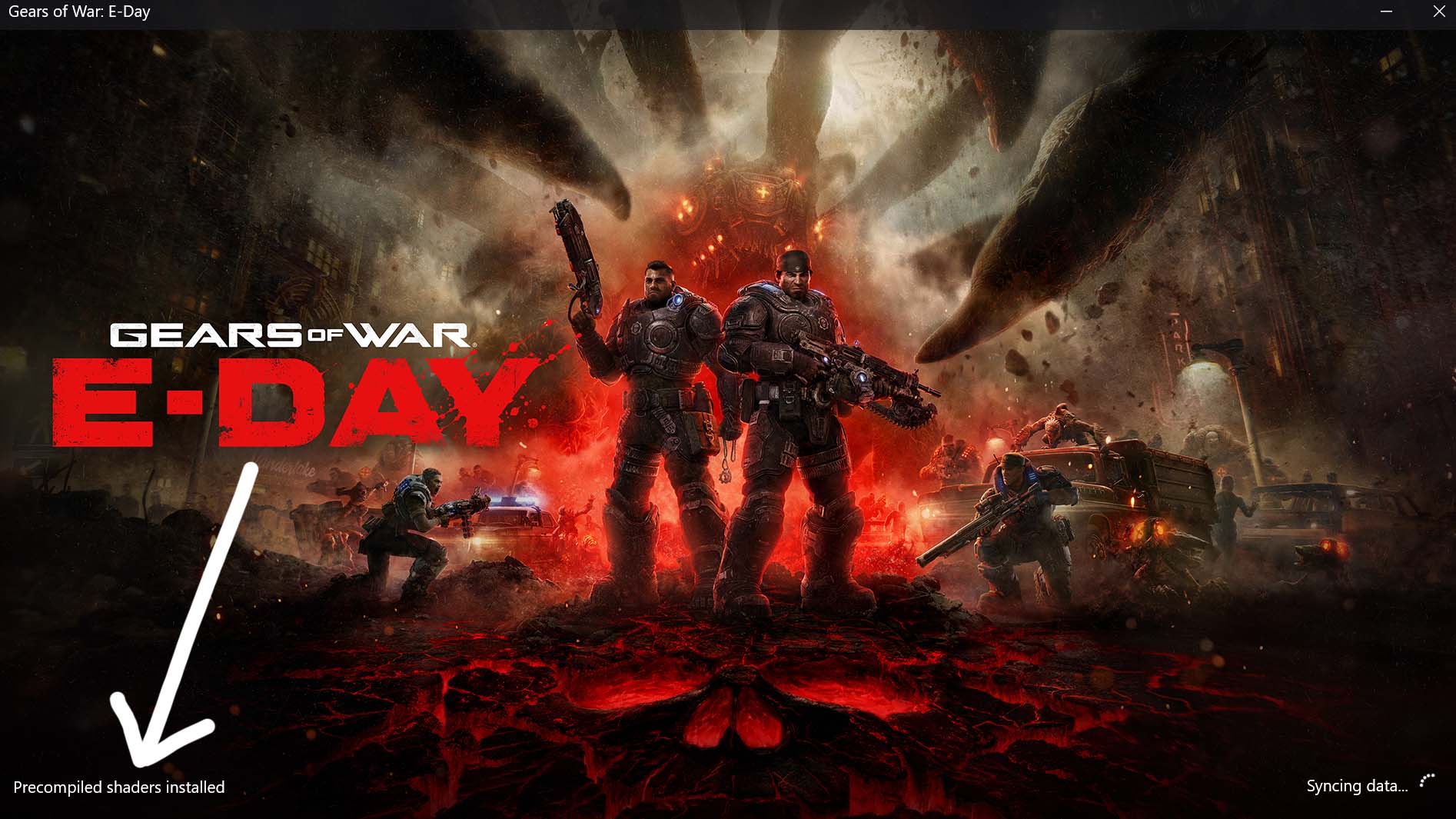
Starting this game from the Xbox App, a tooltip appears in the bottom-left of the splash launcher that reads “precompiled shaders installed”, so I know without a doubt that the feature is active. Sure enough, the slog of a shader compilation step now completes within a matter of seconds. No more reluctant tea brewing to kill time following driver updates for me.
Aside from saving time, Advanced Shader Delivery should also reduce potential stuttering caused by on-the-fly shader compilations. I’ve seen plenty of reports from others suggesting this is the case, but I’d like to test this claim more in-depth before declaring the feature a win in this regard.
It will take time for developers and Microsoft to build out the supported title library, but having heavy-hitters like Gears of War: E-Day and Call of Duty: Modern Warfare 4 are promising signs. You can find other games that support Advanced Shader Delivery here, although the list doesn’t appear to be comprehensive, as it lacks the aforementioned releases.
For more tech talk on Gears of War: E-Day, check out my thoughts on the game’s use of dynamic Nvidia DLSS upscaling, where I make the case that more titles should have this option.