
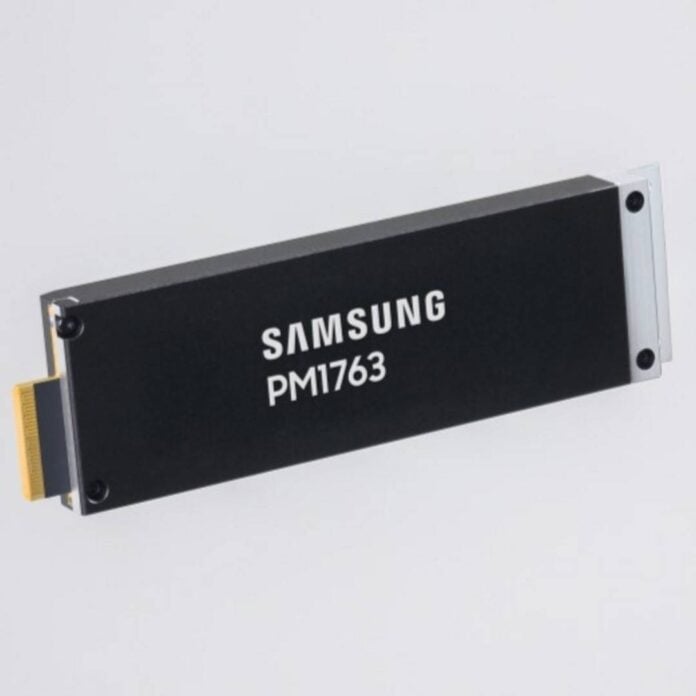
Samsung has announced mass production of its PM1763 series of PCIe 6.0 SSDs, targeting next-gen AI and HPC server environments. The company claims these enterprise-grade SSDs nearly double the performance of their predecessors, while keeping power consumption under control.
The performance claims are massive. Samsung is advertising up to 28,400MB/s for sequential reads, and up to 21,900MB/s for sequential writes on the fastest model. Samsung also claims that these PM1763 drives can sustain their peak performance under heavy workloads, thanks to their direct-to-chip cooling design.
To reach this level of performance, Samsung is using its 9th-gen V-NAND flash memory and latest controller, with the latter built on a 4nm process. While the PCIe 6.0 x4 interface can theoretically deliver a bit more speed than what’s on offer here, these drives are still absurdly fast, showing what we can expect from consumer SSDs in a couple of years.
Samsung says this throughput allows 40GB large language models (LLMs) to be transferred in approximately 1.4 seconds, aiming to minimise data latency between processors and accelerators, while improving overall AI processing efficiency. What’s more, power efficiency is also said to have been improved by 1.8x compared to the PM1763’s predecessors, helping reduce operating costs for datacentres.
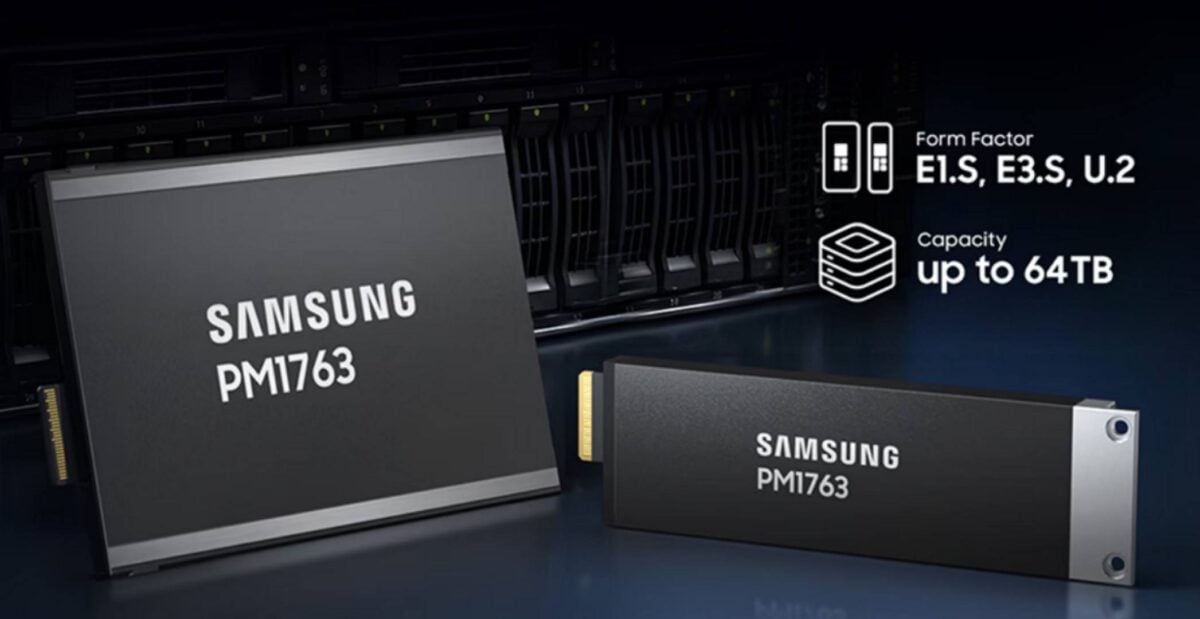
In terms of capacity, Samsung has announced three sizes: 4TB, 8TB and 16TB, available in E1.S, E3.S and U.2 form factors. The company has also talked about capacities reaching 64TB with NVMe 2.1 and OCP 2.6 standards. However, these weren’t mentioned in the mass production announcement, indicating that they may not be ready for prime time yet.
Performance aside, the PM1763 series comes equipped with the latest security features required for AI and virtualisation infrastructure, including post-quantum cryptography (PQC) algorithms designed to protect against future quantum computing threats. Meanwhile, TEE Device Interface Security Protocol (TDISP) support is there to help secure data pathways in virtualised environments, and preventing unauthorised access or tampering.
There’s no word on pricing for these SSDs yet, but they’re almost certainly going to demand a hefty premium in these times.