
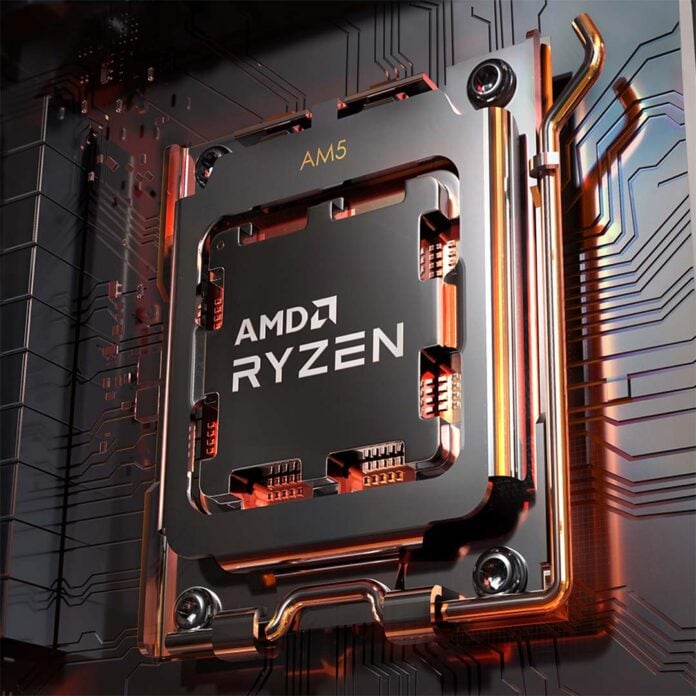
It looks as though AMD’s Zen 7 CPU microarchitecture will herald the swansong for its AM5 socket. While the company hasn’t officially confirmed this is the case, tech site Wccftech has had a good look at AMD’s roadmap and chip-release cadence in relation to AM5, suggesting that Zen 7 is the logical endpoint for this socket, and it’s hard to argue with it.
AMD initially planned to support AM5 with broad 2025+ and subsequent 2027+ processor release plans, shifting to a “through 2029” commitment during Computex 2026. While there’s still some chance the platform could see new CPU releases based on older architectures beyond this timeline, particularly if AM4 is any indication, this effectively indicates that we should see the launch of a successor, presumably AM6, around 2030.
With the above in mind, AMD has launched new generations of Ryzen processors just under every two years since 2020, from Zen 3 onwards. Zen 6 continues this trend, with the release of 6th Gen Epyc CPUs, and the Ryzen family sure to follow soon after. Should AMD keep up this cadence, we should expect Zen 7 in 2028 and Zen 8 in 2030.
Importantly, Zen 6 marks the first support for PCIe Gen 6 on AMD platforms, namely SP7 and SP8, while retaining support for DDR5. Looking forward to Zen 7, the company has stated thus architecture will support “next-gen memory,” specifically MRDIMM & LPDDR standards, but without a change in socket.
Come 2030, a shift to DDR6 looks likely on Zen 8, which would require a new internal memory controller, giving cause to switch to a new platform across Epyc and Ryzen families. If so, this would make Zen 7 the last stand for AM5.
Given that the Zen 7 launch is a fair way off in the distance, we understandably know little about it. However, some leakers claim we can expect processors designed with the architecture to sport up to 32 cores and 448MB of cache. There are signs that AMD is looking to expand core counts and cache in its latest Epyc CPUs, but we need to see if these trickle down to Ryzen before we can be sure a pattern is forming.
Regardless, the prospect of four CPU generations running on AM5 is worth celebrating, as this would see the platform match the now-legendary (and still kicking) AM4. After all, it’s successes such as this that pressure Intel to match AMD’s support longevity, with talks of LGA1954 supporting multiple architectures.
For more processor talk, check out our picks of the best CPUs that you can throw into your motherboard.