
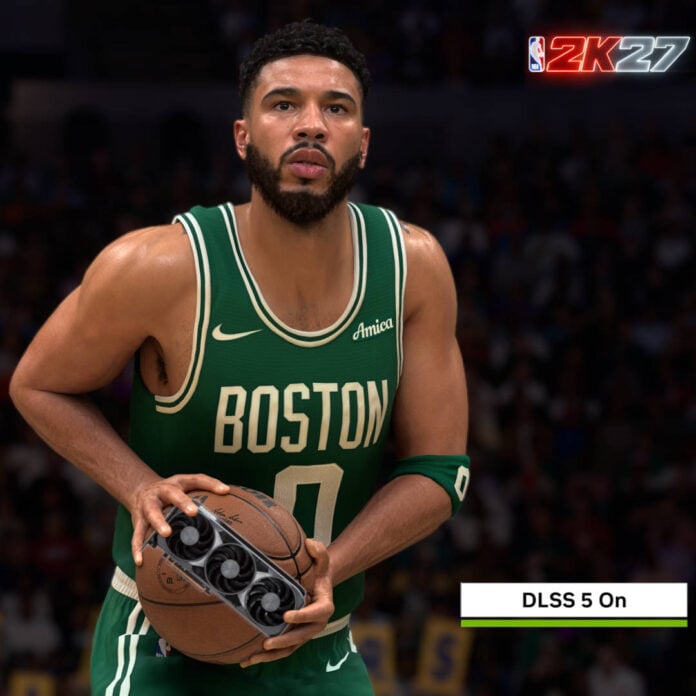
An intrepid modder has worked out how to get Nvidia DLSS 5 running on a Radeon RX 9000 and 7000 series graphics cards, sharing the means to do so via their GitHub. The tool, dubbed ‘DLSS-NR-on-AMD’, brings the green firm’s neural rendering tech across the aisle, which while impressive certainly has room for improvement in its current form.
As detailed by modder danielblnc, DLSS-NR-on-AMD has three requirements. Most importantly, this tool is only available for RDNA 4 (Radeon RX 9000) and RDNA 3 (Radeon RX 7000) cards. Furthermore, you need a copy of the DLSS 5 DLL (nvngx_dlssnr.dll), and the game you plan to run the mod on must use the DirectX 12 API in addition to supporting either FSR 4 or 3.
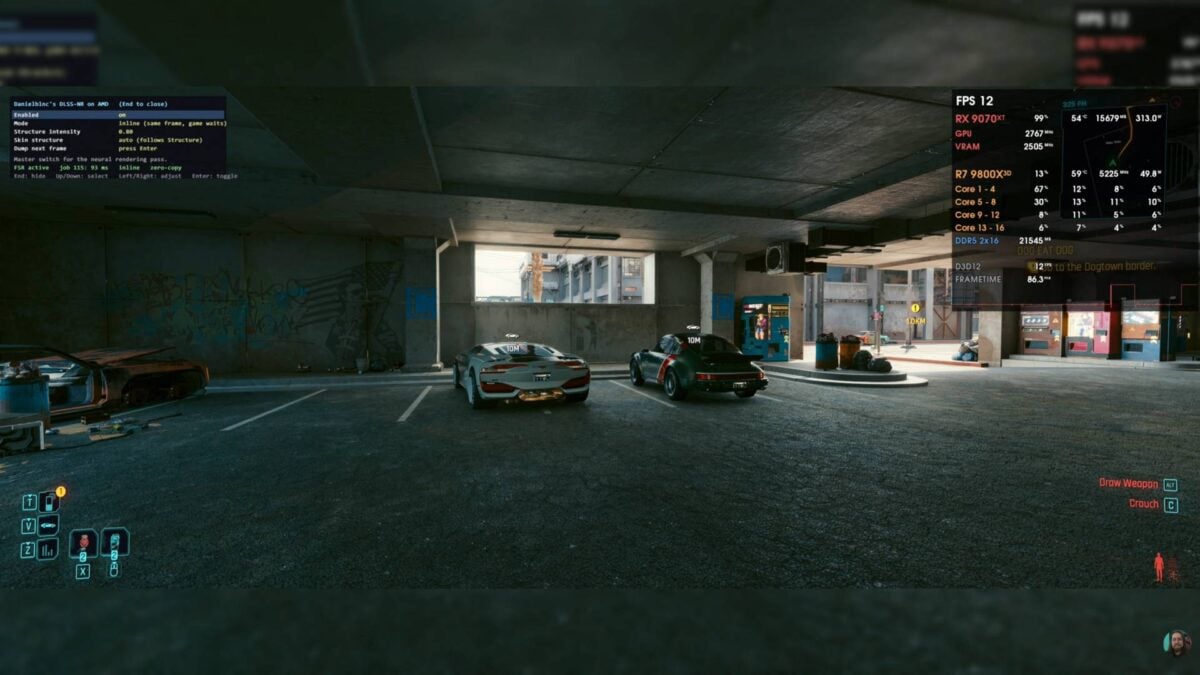
With all those conditions met, you simply place the Nvidia DLSS 5 DLL and DLSS-NR-on-AMD executable into a game folder, follow the instructions, and you have neural rendering running on Radeon. danielblnc has tested the mod on both Cyberpunk 2077 and GTA V Enhanced Edition, but there’s no reason this won’t work in other games.
Given that DLSS 5 tanks performance on a GeForce RTX 5090, you’d rightly guess that running the feature on Radeon GPUs is highly taxing. Case in point, the Radeon RX 9070 XT barely manages to deliver 30fps in Cyberpunk 2077 at 1080p. However, danielblnc is working hard to improve performance, which has already seen a 26% increase from the first version. The goal is to get frame rates in line with the GeForce RTX 5070 Ti.
While we’re short of side-by-side visual comparisons of DLSS 5 running on Radeon and GeForce GPUs, the modder claims their mod’s output quality is very similar to the official implementation. This is all the more impressive considering this is a “ground-up, full reimplementation of the neural network runtime.” However, some effects are still not working correctly at the time of writing. You can see the mod in action through the video above from YouTube channel Ancient Gameplays.
Given the performance hit that DLSS-NR-on-AMD incurs for the moment, I’d sooner stick to path tracing for a better balance of fidelity and performance. Regardless, this is an impressive and entirely unexpected feat from danielblnc, and we’re certainly keen to see what improvements they can muster in future updates.