

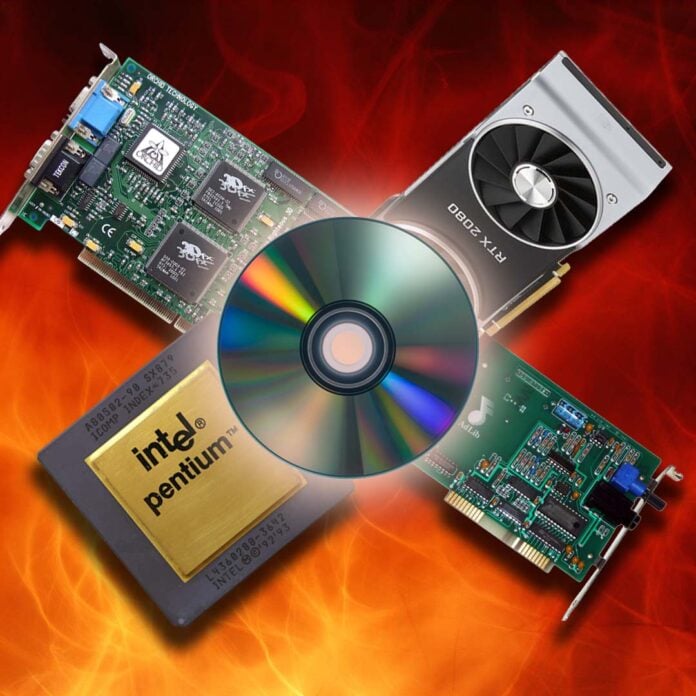
Very, very occasionally, a ground-breaking piece of silicon alchemy turns up on the scene, and complete rewrites the game rules. Everything seems to be ticking along as normal, and then suddenly this one idea chucks a grenade at the industry and turns the whole lot on its head. It doesn’t happen very often, particularly these days, but we thought it was worth celebrating the components that set the PC on its path to becoming the ultimate games machine.
There are only eight entries on this list, and it was hard to whittle them down. I decided not to include keyboards, mice, and, joysticks (although that’s definitely an idea for a future feature), and instead focus on the core bits and pieces you’d slot into the tower on your desk. There have been loads of fantastic hardware releases that didn’t quite make the cut as well, as I was brutal with my requirements.
You stuck this latest piece of electronic wizardry in your rig, and suddenly your gaming experience was transformed to a new level.
For this piece, I wanted to focus on single upgrades that completely changed PC gaming. You stuck this latest piece of electronic wizardry in your rig, and suddenly your gaming experience was transformed to a new level that wasn’t previously possible on PC. You’d grin, and feel pleased with yourself, just waiting to be able to show it off to your pals. I’m not talking about getting a faster frame rate here – that almost goes without saying when hardware progresses, although I’ll make an exception here for Intel Pentium 4, AMD Bulldozer, and Intel Arrow Lake.
For example, Nvidia’s GeForce GTX 1080 Ti may have been a beast of a GPU when it was unleashed, but ultimately it did more of what came before, just very, very well. Likewise, AMD’s Ryzen 7 5800X3D broke new ground in terms of designing CPUs for games and improving performance, but there’s fundamentally nothing you can do on it that you couldn’t do a bit slower on another CPU. Even Nvidia’s first GeForce 256, with hardware transform and lighting, didn’t really move the needle at the time – it made changes the 3D pipeline under the hood, but it was hardly as transformative to games as the move from software to hardware rendering.
These components that didn’t make the grade definitely deserve their own halls of fame, which you can find in our guides to the top 10 CPUs of all time and greatest ever GPUs. For this feature, though, I’m solely looking at the big wow factor. In no particular order, let’s bring on the literal game changers.
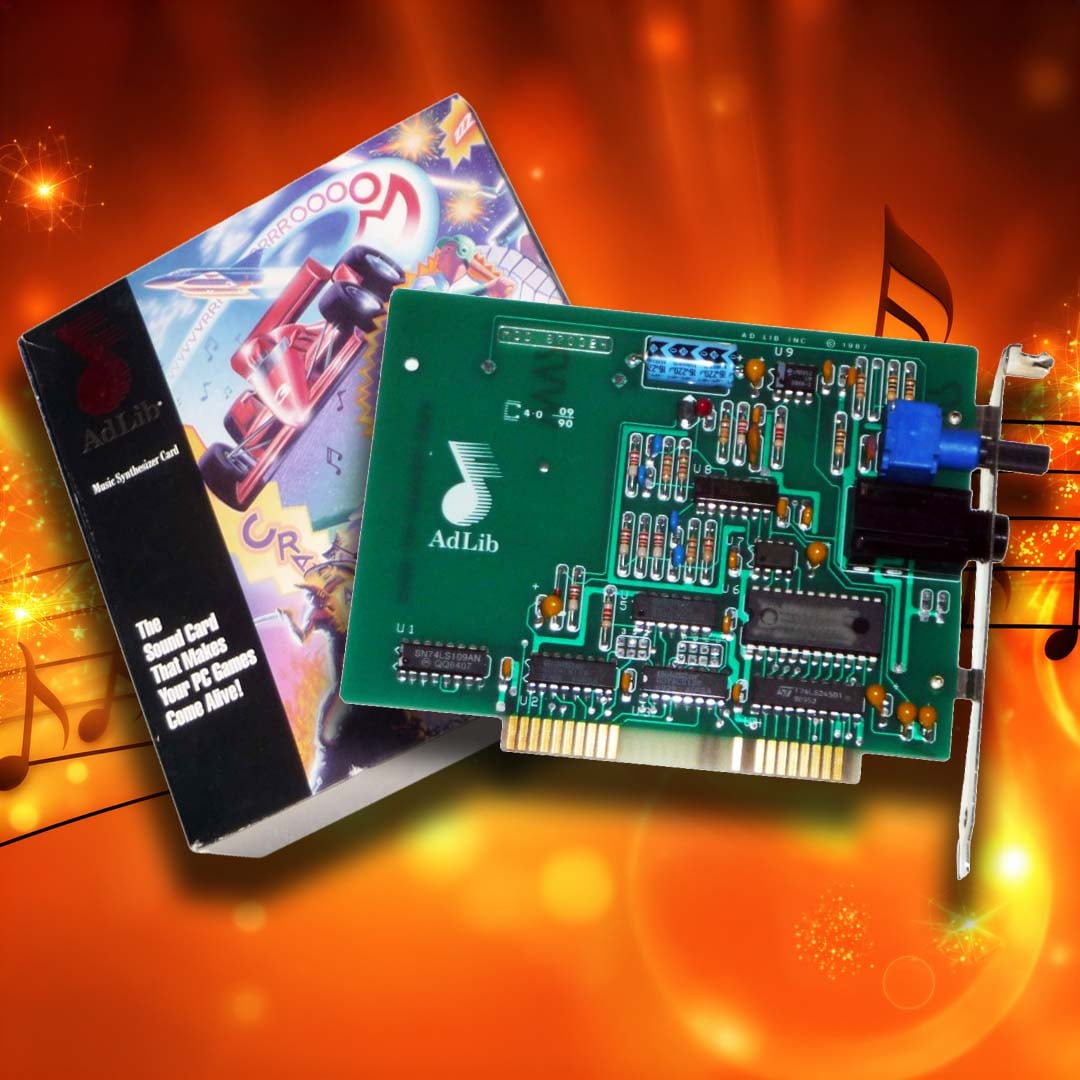
AdLib Music Synthesizer Card
Now that the PC is like the F1 of gaming hardware, it can be hard to get your head round the fact that, once upon a time, it had no decent sound capabilities. By default, it came equipped with a rudimentary speaker that was only one step up from a bike bell.
Games suddenly had proper musical soundtracks, and the difference was astounding.
It could play one note at a time, and it sounded like an old-school telephone. Even the basic 8-bit home computers and consoles of the time could produce a superior chiptune racket. There were attempts to force PCs to play sampled music through this speaker, with mixed results, but latency was a big problem.
However, that all changed when Canadian firm AdLib produced its first PC sound card, the AdLib Music Synthesizer card. This modest 8-bit ISA card couldn’t reproduce sampled sound, but its onboard Yamaha YM3812 FM synthesizer chip enabled your PC to actually play multitimbral music. Games suddenly had proper musical soundtracks, and the difference was astounding.
It made all the difference to games at the time, starting with the folky tones of Pan’s pipes in 1987’s King’s Quest IV: The Perils of Rosella, and later kicking out Doom’s tremendous stomping soundtrack, as well as the atmospheric atmosphere of Dune.
Support soon became ubiquitous in PC games. Many clones sprang up, and Creative also made sure its first Sound Blaster cards ticked the “AdLib compatible” box. Sadly, AdLib couldn’t keep up with the fast pace of competition, and went bankrupt in 1992 shortly after releasing the AdLib Gold, but its first card completely transformed PC gaming audio, helping the PC on its journey to becoming the ultimate games machine.
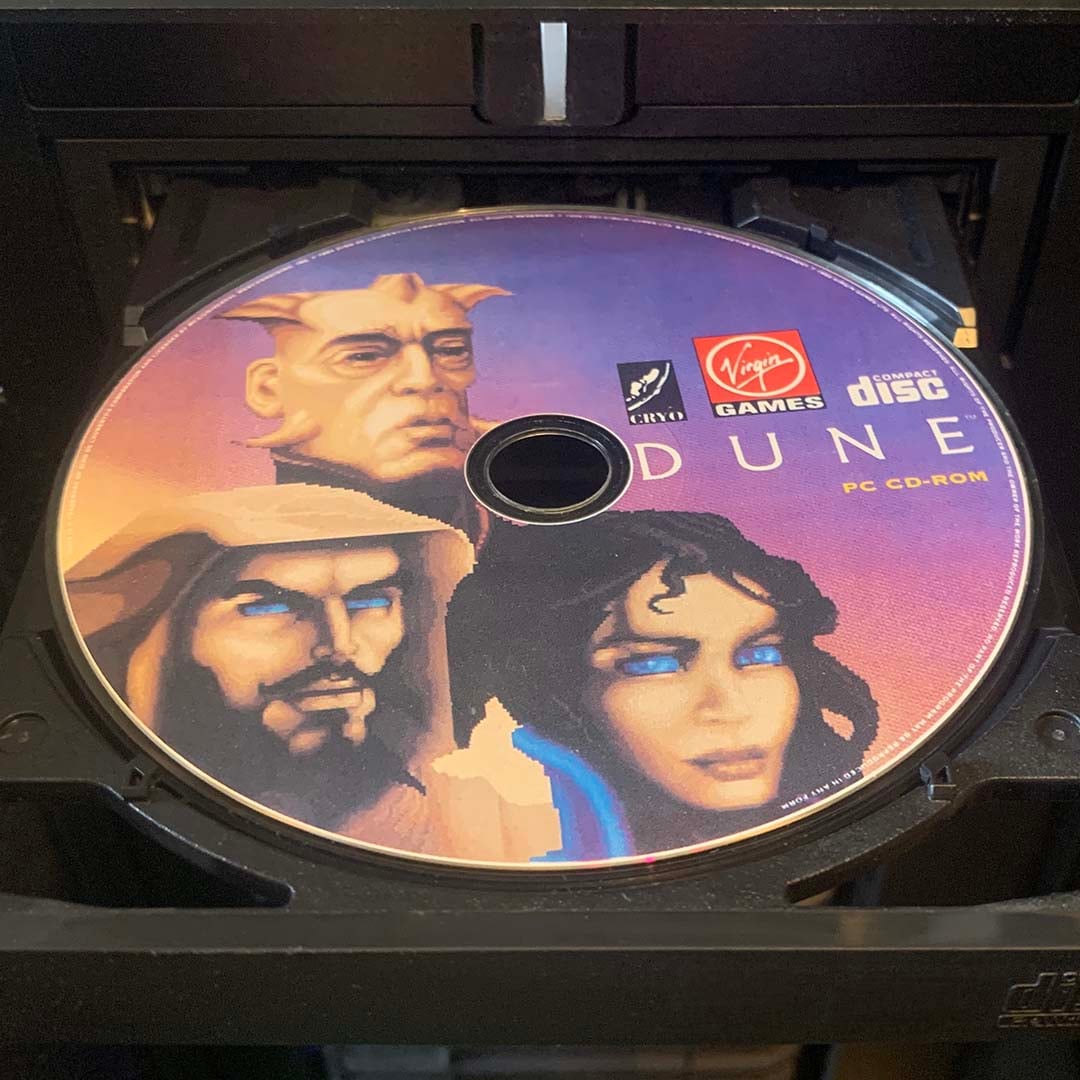
CD-ROM
Optical drives might be old hat for PC storage now, but in their day they revolutionised the way we use PCs, and not always for the best. Up until this point, the main removable storage devices for PCs were floppy disks, peaking at a 1.44MB capacity if you had 3.5in HD drive. Meanwhile, hard drives only offered capacities of a few hundred megabytes, if that.
Just to illustrate this point, when I bought my first quad-speed CD-ROM drive in 1995, my 20MHz 386 machine had a 120MB hard drive, 4MB of RAM, and a 1.44MB floppy drive. Conversely, a single CD could hold up to 650MB of data, or even 700MB on an 80-minute disc – the equivalent of a skyscraper constructed from 450 floppy disks. You can see why it changed everything.
It’s the equivalent of a skyscraper constructed from 450 floppy disks.
Instead of packing game boxes with a huge stack of floppy disks, publishers could put it all on a single CD, which you often needed to have in the drive while you were playing. Not only that, but they could pack those CDs with a seemingly endless array of features that were previously held back by storage demands.
Full-motion video (FMV) was now doable, as was having fully sampled soundtracks rather than MIDI music. I particularly liked the addition of speech in Dune, which you didn’t get on the original floppy disk version.
What followed was a bit of a horror show, where publishers often used all that extra storage to shoehorn cheesy full-motion video into games where it really wasn’t needed. There were a fair few rail shooters and adventure games that were heavily reliant on dodgy interactive video capture, but they also really showed off the PC’s capabilities at the time. Love them or loathe them, we wouldn’t have had 7th Guest, Phantasmagoria, Myst, or Star Wars: Rebel Assault without it.
It wasn’t all good, but a lot of it was, and there’s no doubt that CD-ROM’s bumper increase in storage capacity completely transformed what was possible in PC gaming.
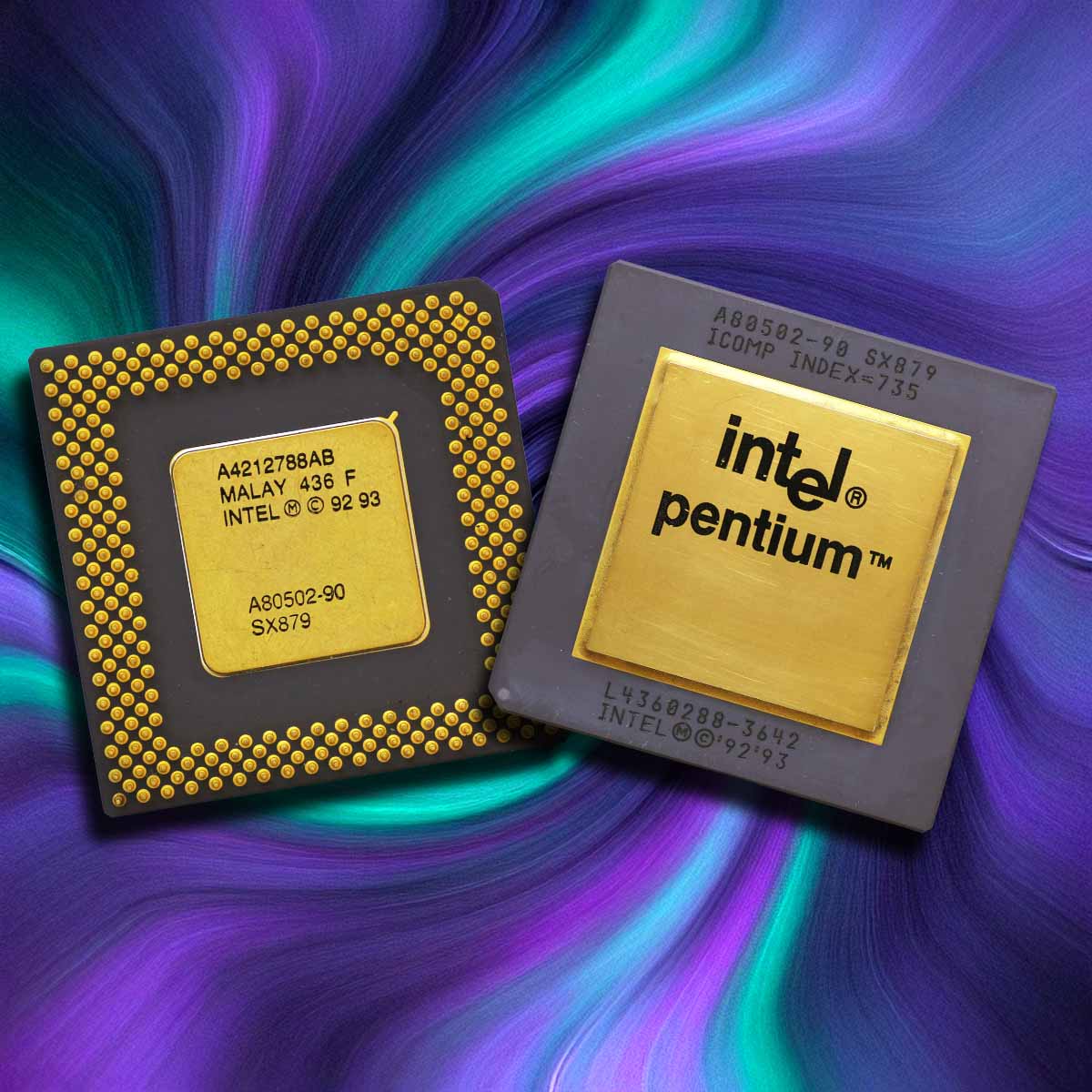
Intel Pentium
A lot of PC gamers learned a new piece of hardware lingo when Quake came out, and that was “floating point unit.” The system requirements sticker on the box made a big deal of the fact that a Pentium CPU was “strongly recommended” even if you could just about run it on a 100MHz 486 DX4 if you got out and gave it a push. The reason was that Intel, for the first time, had integrated a floating point unit into every Pentium CPU as standard, and it was a good one too.
Previously, the vast majority of desktop CPUs were only integer units, with the ability to quickly calculate numbers with decimal points being the domain of complicated spreadsheets and CAD software. If you wanted a floating point unit, you bought a separate math coprocessor, such as the 80387 for your PC – it was considered specialist equipment, and most computers didn’t come with one.
PC gamers learned a new piece of hardware lingo when Quake came out, and that was “floating point unit.”
Intel started integrating floating point units into its 486 DX chips, but the cheaper, mainstream 486 SX processors remained integer units. It was only with the Pentium that Intel committed itself to fitting FPUs into all its desktop chips as standard, leaving its previously licensed x86 manufacturing partners, AMD and Cyrix, in the lurch. You could previously buy a PC with an AMD or Cyrix 386, for example, and assume it would be largely the same as an Intel model.
That very much changed with the Pentium, when Intel trod its own path and stuck two fingers up at its former partners. AMD’s K5 and Cyrix’s 5×86 tried to compete, but their comparatively woeful floating point performance, particularly from Cyrix, handed Intel a straight up win for gamers. It made all the difference to rendering the Quake engine’s 3D graphics quickly.
In fact, 3dfx cofounder Ross Smith told us that Intel’s introduction of the Pentium was a part of the reason why the first Voodoo cards weren’t prohibitively expensive. The Pentium “had the geometry processing power we needed for good 3D graphics,” he says. “That meant we could save a bunch of money. Everyone else put in a geometry engine, or tried to put a geometry engine in their chip, which was very expensive silicon.”
Starting at 60MHz, and eventually topping out with the 233MHz MMX, the original Pentium lineup set a new standard for desktop CPUs, particularly when it came to gaming. The message was heard loud and clear – if your CPU didn’t have a decent FPU, gamers would go elsewhere.

Nvidia GeForce RTX 2080
Nvidia was so far ahead of the curve when it unleashed its very first RTX GPUs that it took AMD several generations to catch up. Forget being caught napping, the competition had seemingly settled in for a good long snooze at this point. Nvidia knew it was going to have a tough time following its acclaimed Pascal architecture in terms of raw shader power, and its answer was to take a sideways step and follow a very different path.
For a start, this was the first gaming GPU with real-time ray tracing hardware, and it’s worth taking a step back at this point to realise just how big a milestone this was. Ray tracing was a highly sophisticated light calculation tool used to create photo-realistic visual effects in movies. For decades, it required workstations comprising many CPUs to crunch through the work a frame at a time – the idea that you could ever do it in real time, especially at a decent resolution, was for the birds.
Forget being caught napping, the competition had seemingly settled in for a good long snooze.
By this time, Nvidia had already shown off a few real-time ray tracing tech demos, but with the RTX 2080, the firm had developed its own dedicated hardware for it, and embedded 42 ray tracing processors in the GPU. It was early days – I remember benching Battlefield V on the RTX 2080 at launch time, and it had to be run with low settings to get a reasonable frame rate.
A load of optimisations later, though, ray tracing is now supported as a standard feature in games. Some titles, such as Indiana Jones and the Great Circle, even require it. With gorgeous reflections and photo-real lighting effects, it added a whole new dimension to 3D graphics.
That wasn’t enough, though. Nvidia also added a second new processor to the mix – its Tensor core, designed for AI calculations, enabling Nvidia to accompany the RTX 2080 launch with its very first version of DLSS upscaling. Effectively running your game at a lower resolution than the one in your game settings, and using machine learning to upscale it as accurately possible, it looked horrible and blurry at first. Again, though, a load of optimisation and new models later, it’s now supported by hundreds of games, and often looks better than native resolution, thanks to its superior temporal stability.
It wasn’t perfect, but Nvidia established a new baseline for what was to come with the RTX 2080, completely changing the future of 3D gaming graphics.
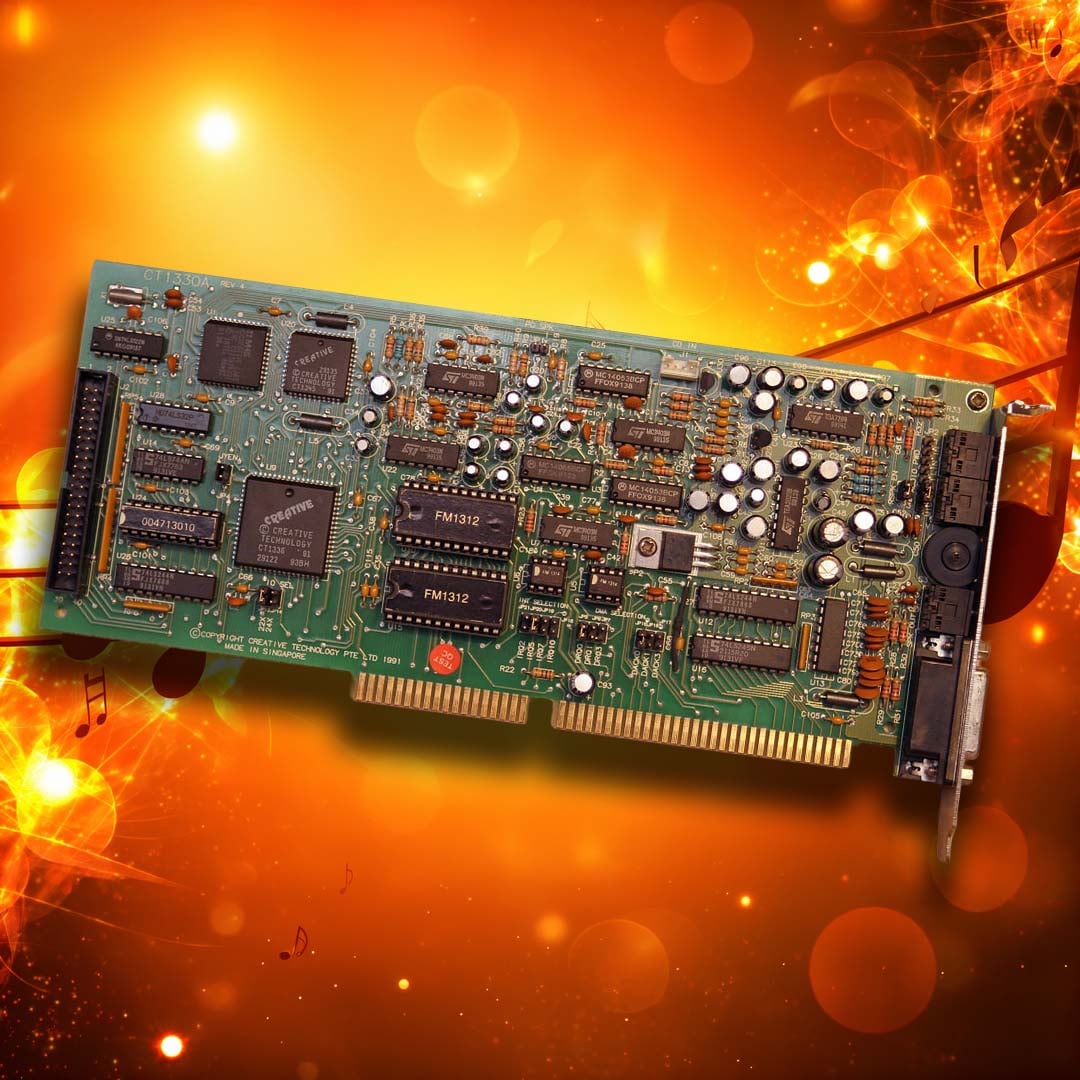
Creative Sound Blaster Pro
AdLib might have given us our first taste of decent music in PC games, but Creative was on a mission to complete the picture with sampled audio. The Sound Blaster Pro wasn’t the first of its cards to provide that mix, but it was the first one to properly do it in stereo and create a new standard in PC audio when it launched in 1991. From then on, clone cards would be marketed as “Sound Blaster Pro” compatible, and this was the phrase to look out for in system requirements.
Similarly, the Sound Blaster Pro also offered AdLib compatibility, meaning it could play all those MIDI game soundtracks from the last few years too. Thanks to its pair of Yamaha YM3812 (OPL2) chips, it could even play MIDI music in stereo, and unlike the AdLib, it could accompany this with stereo sampled audio. You could finally have proper explosions, gunfire, and even human voice in your games.
You could finally have proper explosions, gunfire, and even human voice in your games.
Despite coming on a 16-bit ISA card, the Sound Blaster Pro was still an 8-bit device at heart – Creative wouldn’t give us full CD-quality audio until the Sound Blaster 16 launched. However, the Pro’s ability to play samples at 22.5kHz in stereo, or 44.1kHz in mono, made all the difference to games. From voice narration in Space Quest IV and King’s Quest V, to the evocative sounds of X-Wing and TIE-Fighter weapons, the PC now had a proper sound system.
It wasn’t just a sound card either. The 15-pin socket at the bottom of the I/O plate enabled you to plug a joystick or game controller into your machine, while doubling as a MIDI interface. There was even an IDE controller onboard, so you could plug in a CD-ROM drive without needing extra hardware. Better sound cards came out after this one, of course, but it was the Sound Blaster Pro that really set the baseline standard for PC gaming audio in the 1990s.
VGA
Designed primarily for text and number crunching, graphics felt like a bit of a frivolous afterthought for the PC in its early days, like a pretty toy that should be waved away by serious professionals. Business, business, it’s all about business – get out of here with your silly games! In fact, you could buy a PC without any graphics abilities at all – the default MDA adaptor only enabled you to display text characters in mono. Early graphics standards were also woeful, even compared to 8-bit home computers of the day.
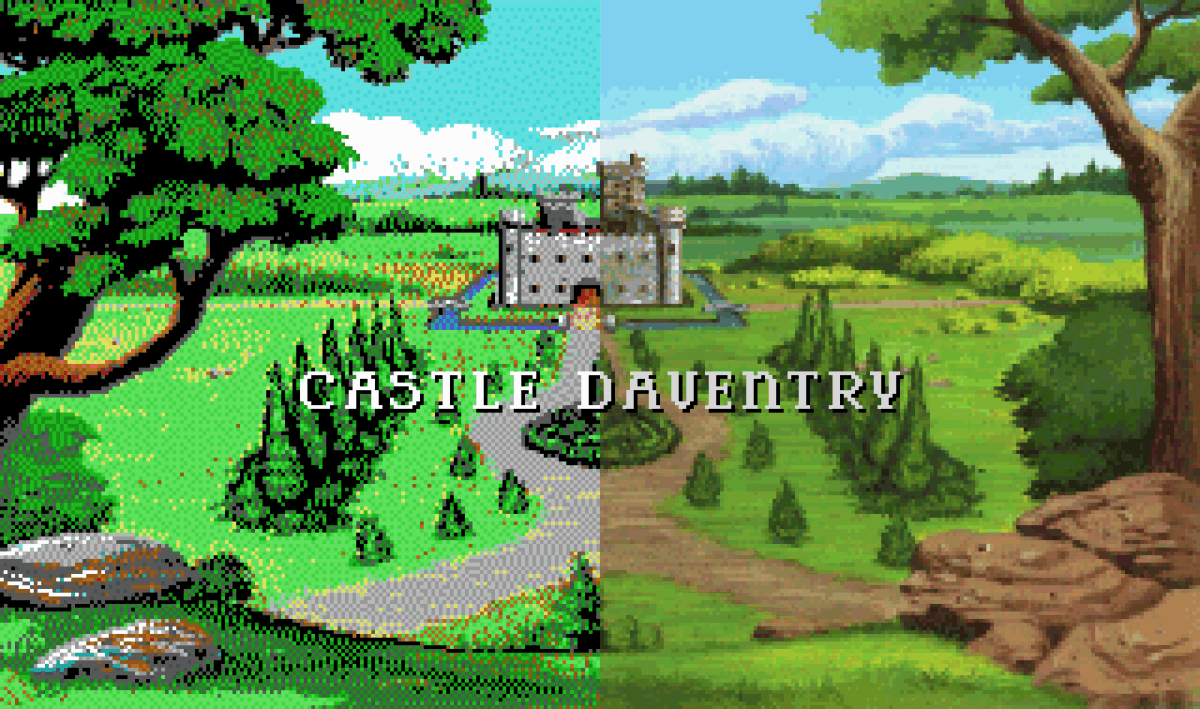
As a case in point, the PC’s first colour graphics adaptor (CGA) could only display four colours at 320×200, and usually in a hideous palette of magenta, cyan, black, and white. My first PC was CGA, and it was mightily depressing when you were greeted by this horrific colour combo after seeing the full-colour Amiga screenshots on the back of the box. The later Enhanced Graphics Adaptor improved this to 16 colours at 640×350, but it was the Video Graphic Array (VGA) that really stopped PC gaming graphics from looking laughable.
It felt like going from Ceefax to Pixar.
With the ability to churn out 256 colours at 320×240, or 16 colours at 640×480, putting a standard VGA card in your PC meant those game screenshots finally lived up to reality. Developers could finally implement shading and gradients, making for much better-looking artwork – even photo-realism started to become possible to an extent. It felt like going from Ceefax to Pixar.
VGA cards were extremely expensive at first, and you needed a new monitor to go with it as well, but the price came down over the years, as it became clear that VGA was the way to go. Later Super VGA cards with new interfaces upped the specs further with higher resolutions, and much wider colour palettes, but it was VGA that made all the difference. It proved that the PC genuinely benefitted from full-colour graphics, especially in games, setting it on its way to finally being a cracking gaming machine.
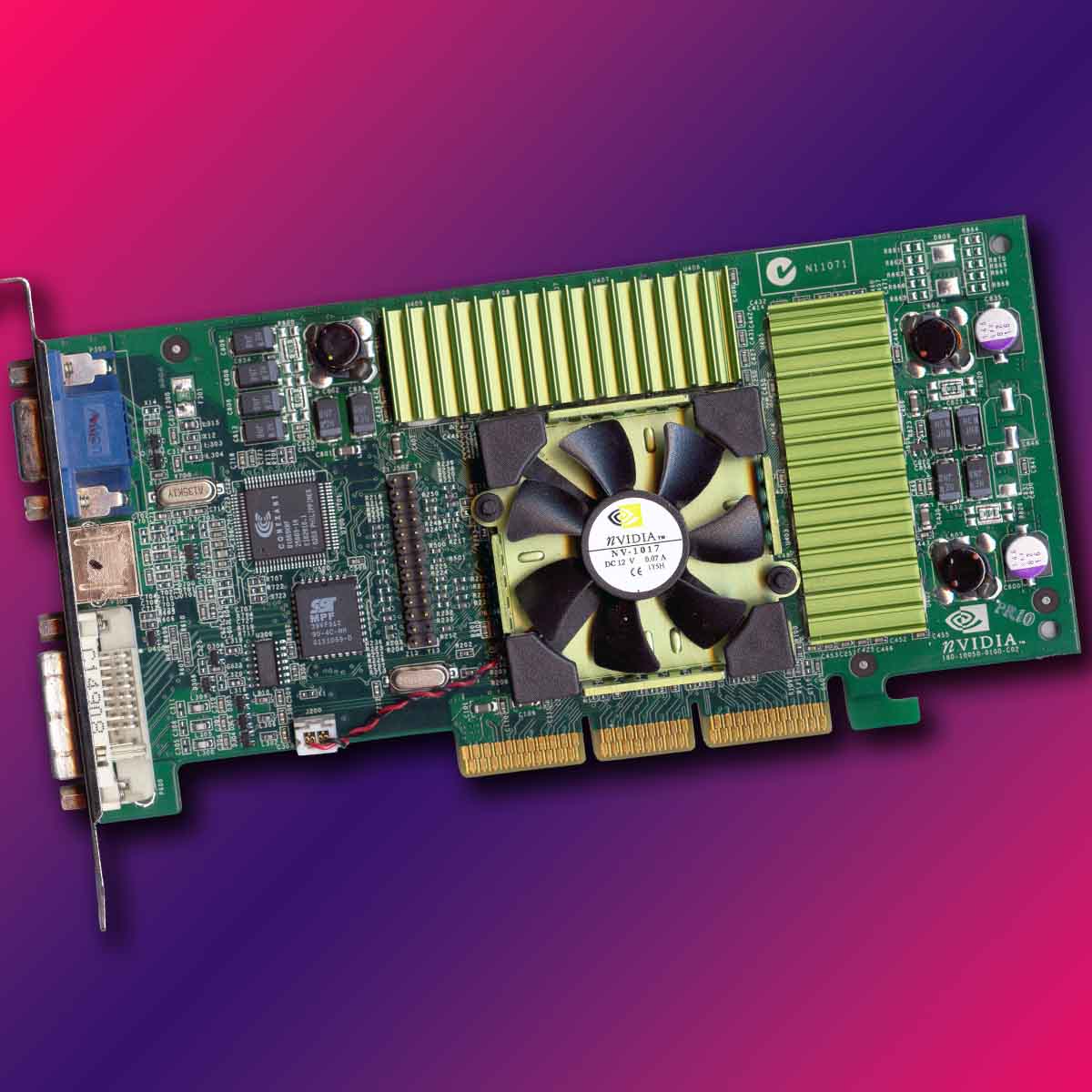
Nvidia GeForce 3
Recently celebrating its 25th birthday (no, I can’t believe it either), Nvidia’s GeForce 3 took 3D gaming graphics to a whole new level of realism. Its secret was a nifty feature we all take for granted in games now – programmable shaders. Instead of just accelerating the traditional fixed-function 3D pipeline of previous graphics cards, GeForce 3 gave game developers the ability to run small programs called shaders directly on the GPU.
Your GPU could suddenly make water look realistic, and draw trees and grass that swayed in the breeze.
Instead of requiring an unwieldy high-res texture to make a realistic-looking brick wall, for example, you could instead write a shader to draw it using the GPU’s dedicated units, which at this point came in the form of vertex and pixel processors (sometimes called shaders or pipelines). As 3DMark2001’s Nature test showed, shaders meant your GPU could suddenly make water look realistic, draw trees and grass that swayed in the breeze, and even make human skin look a whole lot better. Games no longer looked flat, but could be brought to life by this new dynamic form of 3D rendering.
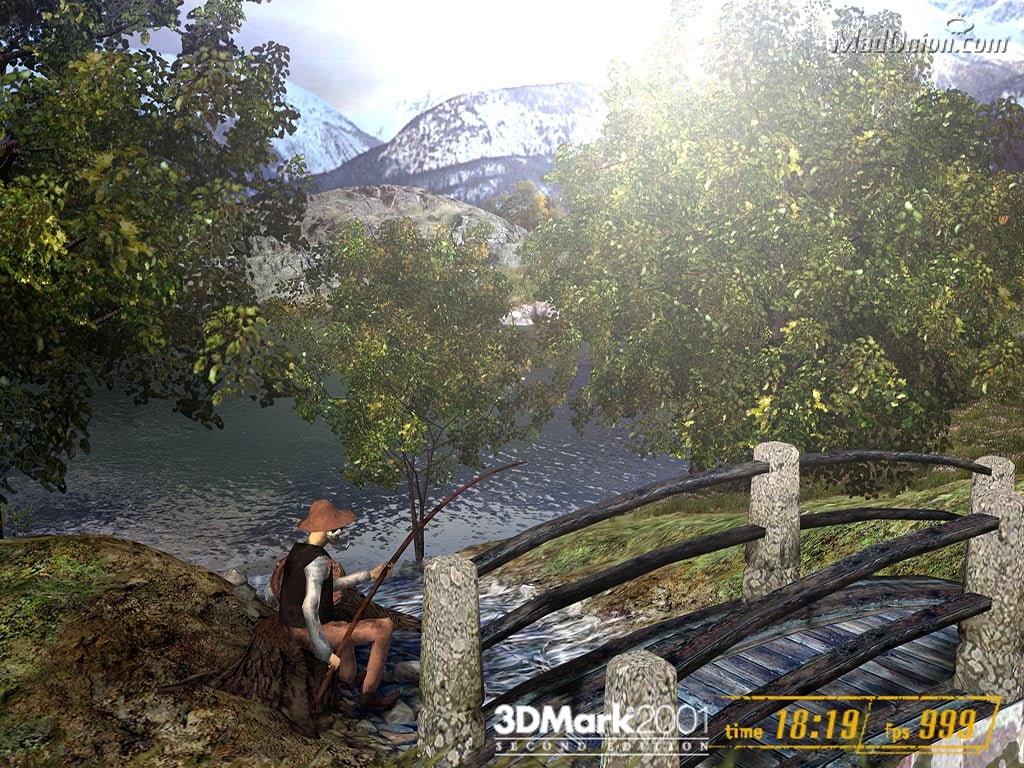
Sadly for the GeForce 3, it came a bit before its time. Launching alongside Microsoft’s DirectX 8 API, barely games supported its shader features in its lifetime – the best showcase was The Elder Scrolls: Morrowind, but even that didn’t turn up until over a year later in 2002. With just one vertex processor and four pixel pipes, it didn’t have much shading power at its disposal either.
You only needed to look at the demos to see that this was the start of something new and exciting in PC gaming, though. We were on the cusp of a revolution in gaming visuals, and it all started with GeForce 3.
3dfx Voodoo Graphics
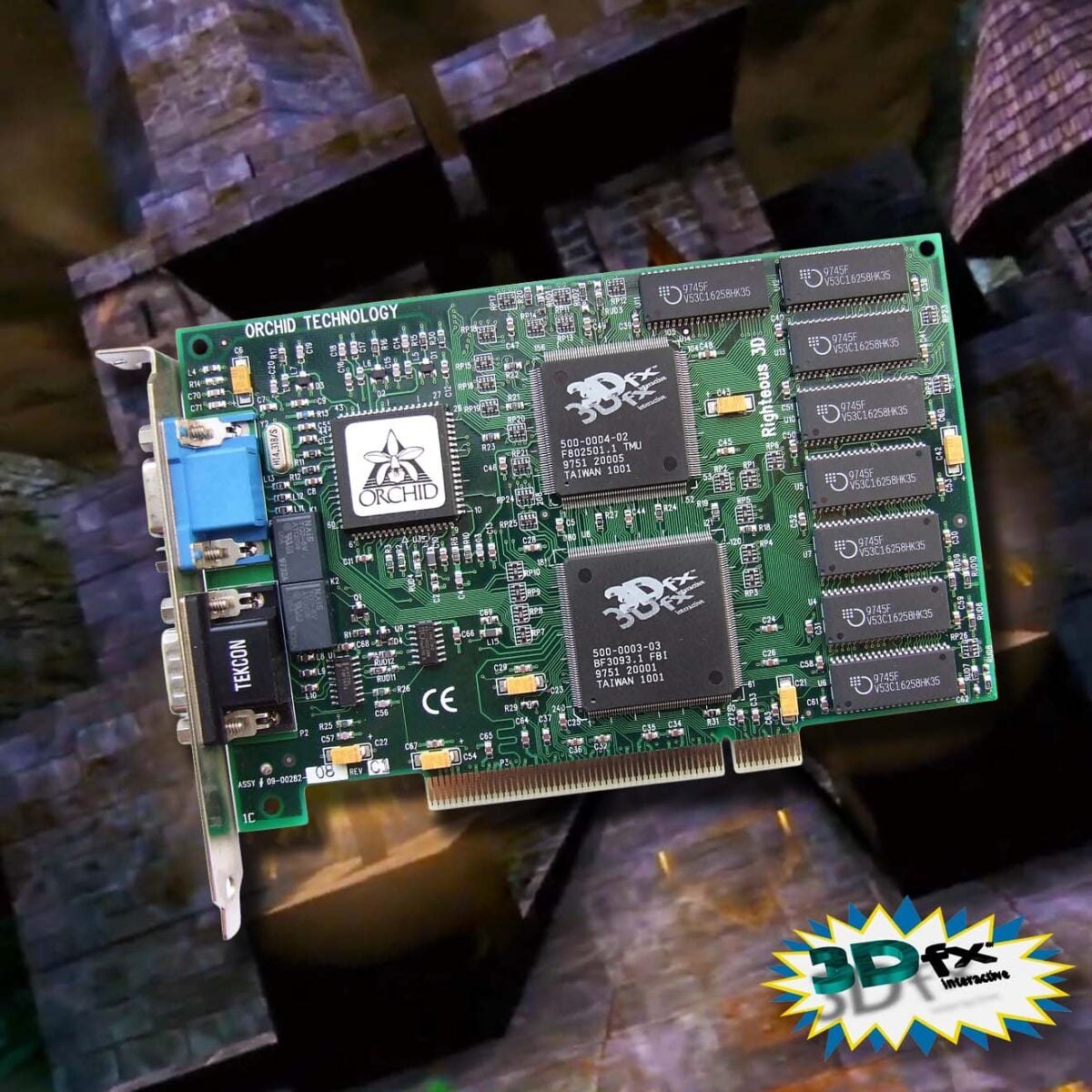
When it comes to single upgrades that change everything, they don’t come much bigger than the OG 3dfx Voodoo Graphics card. It wasn’t the very first 3D card, and there were several competitors, but it’s the Voodoo that nailed the formula. It’s now 30 years since this landmark 3D accelerator first made our eyes pop out of our skulls, and while there have been graphical leaps since, I’ve never seen anything quite like the mind-blowing jump from software rendering to glorious hardware-accelerated 3dfx visuals since.
Designed solely for gaming, you’d slot this card into a spare PCI slot, and then hook it up to your existing graphics card with an analogue loop-back VGA cable round the back. The difference it made was astounding. Until this point, 3D games such as Quake were rendered in software by your CPU. Even if you had a top-end processor, and maxed out the resolution and detail settings, it still looked rubbish compared to the magic of Voodoo Graphics.
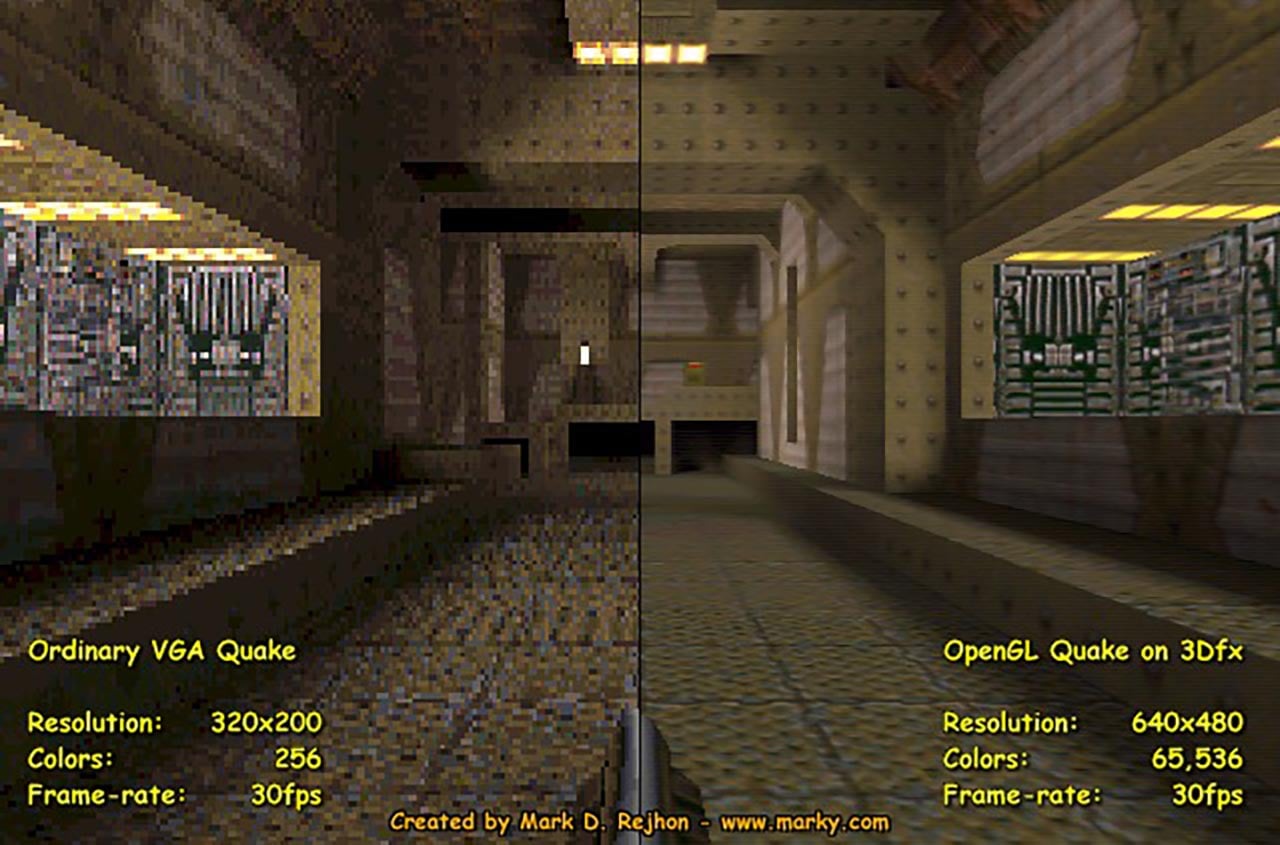
With a Voodoo card, you only needed a 90MHz Pentium chip and you could run your games at 640×480 in 16-bit colour (65,536 colours), and it was so smooth. 3D games no longer looked like a blocky, pixellated, distorted mess, and instead rewarded you with slick graphics and fast movement. You just couldn’t believe what you were seeing from your previously humble beige PC tower.
It wasn’t long before 90s games such as Formula 1 and Wipeout 2097 started requiring a dedicated 3D card to even run, and the PC was now on top of the gaming world. Meanwhile, classic games such as Jedi Knight II, Tomb Raider, and Quake II, made 3D acceleration an option if you had the hardware.
No longer playing second fiddle to consoles, the PC was the gaming king, with graphics that put other machines to shame. For more insight into this early 3D accelerator, read our full 3dfx interview with cofounder Ross Smith, where he shares loads of insight into how it was developed, as well as the origin of the Voodoo name.
Honourable mentions
That brings us to the end of our roundup of hardware that changed PC gaming forever, but before we sign off, it’s worth noting a few of the parts that didn’t quite make the cut. All these upgrades definitely have their place in PC gaming history, but we didn’t think they were quite as ground-breakingly transformative in games as the eight products above. However, we’re going to give them an honourable mention all the same. Here they are:
- AMD Ryzen 7 5800X3D
- Nvidia GeForce 256
- Nvidia GeForce 8800 GTX
- AMD Athlon 64
- Solid state drives
- Intel Core 2 Quad
We hope you’ve enjoyed this look back at the big gaming breakthroughs in PC hardware. For some fun and snarky PC history at the other end of the scale, read our roundup of the worst CPUs ever, as well as the worst GPUs of all time.