
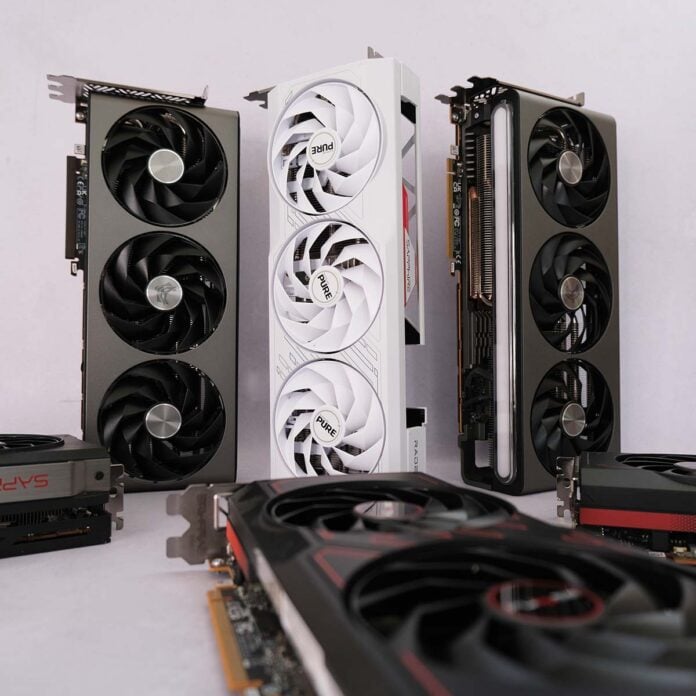
AMD’s next-gen RDNA 5 GPU lineup may not arrive for well over another year, extending the Radeon GPU refresh cycle beyond its usual two-year cadence. This information reportedly comes from multiple AMD board partners, who estimate that RDNA 5 is unlikely to be released before mid-2027 at best, with some estimates even pointing to a 2028 launch.
Tech site Tweakers says it spoke to several AMD partners during Computex 2026, who say that RDNA 5 GPUs are still at least a year away, with estimates going as far as 2028. One of the questioned partners reportedly expects the first RDNA 5 GPUs to launch in the second or third quarter of 2027, while another, less optimistic one, speaks of a launch in late 2027 to early 2028. If these estimates turn out to be accurate, this could be the longest gap between major architectural updates in recent years.
Considering that RDNA 4, which powers graphics cards such as the recently-released Radeon RX 9070 GRE, first launched on March 6, 2025, 15 months ago, a 2028 release date for RDNA 5 would result in a three-year gap between generations. For reference, the gap between RDNA 3 and RDNA 4 was about two years, and the gap between RDNA 2 and RDNA 3 was also about two years.
This situation seems to be the result of – you guessed it – the ongoing memory shortage caused by demand for AI hardware. Memory makers are switching capacity from standard DDR5 to the HBM demanded by datacentres, with consumer hardware now becoming a low priority. At current GDDR7 prices, a new GPU with more VRAM than today’s cards would end up being very expensive.
Assuming these estimates are accurate, AMD’s next Radeon lineup would be in close competition with Nvidia’s GeForce RTX 60 Series, which is also expected to launch between late 2027 and early 2028. Earlier rumours suggested RDNA 5 would see AMD return to high-end GPUs following RDNA 4, which focused on mainstream mid-range graphics cards.
This means that you may need to hold onto your current hardware for longer, as it looks as though neither AMD nor Nvidia is planning to release a new gaming GPU architecture any time soon. Hopefully, this delay will be used by AMD and Nvidia to further optimise their software stack, perhaps featuring better upscaling technology.