
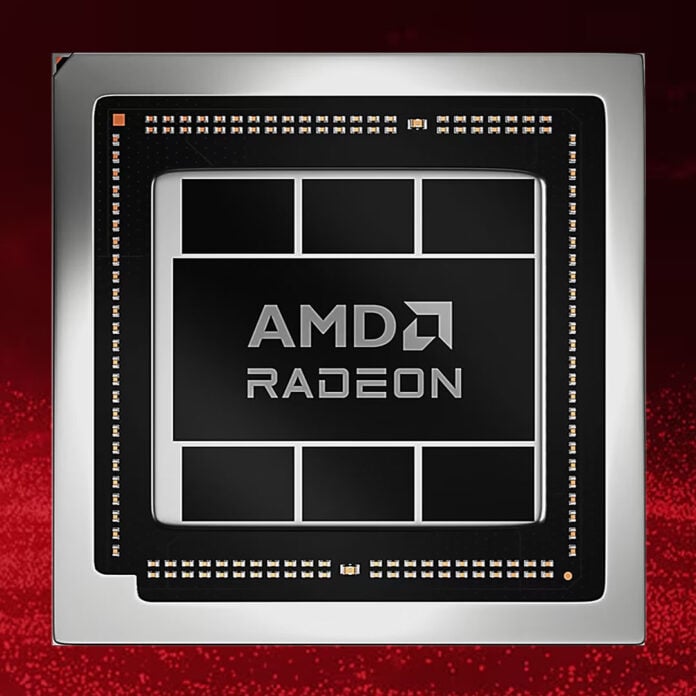
AMD’s upcoming RDNA 5 GPUs could boast higher clock speeds than the firm’s current-generation RDNA 4 offerings. According to a recent leak, future dies based on the new architecture will arrive with peak frequencies of 3.1-3.4GHz.
These clock speed figures come from Kepler_L2, a regular voice in the Radeon rumour mill. The leaker claims to have seen internal AMD documents pertaining to RDNA 5, which contain references to 3.1-3.4GHz clock speed targets. However, Kepler_L2 hasn’t shared any screenshots of said materials, so we only have their word to go on. As such, we recommend applying due scepticism, as is the case for all leaks.
While a 3.1-3.4GHz target sounds promising, we lack key context of how these frequencies apply across desktop graphics cards and mobile GPUs. While RDNA 4 has remained resolutely desktop-focused with the Radeon RX 9000 series, AMD has applied its RDNA 3 architecture across both spaces. RDNA 5 should hopefully follow the latter architecture’s path, as pressure from Intel Panther Lake pushed the company to innovate beyond RDNA 3.5.
In a best case scenario, a 3.4GHz target on a high-end GPU would translate to a 14.5% (+430MHz) increase over the Radeon RX 9070 XT, which tops out at 2,970MHz. Conversely, aiming for 3.1GHz would make for a measly 4% (+130MHz) bump. Of course, neither of these calculations take into account any automatic dynamic boosting behaviour stemming from available thermal headroom. It’s also worth noting that the cheaper 9060 XT already boosts to 3.13GHz.
While clock speeds are important, though, instructions per clock (IPC), the total number of compute units (CUs), and a variety of other architectural factors will all work together to determine performance. All we can conclude from this rumour is that AMD is aiming to push the raw speed of RDNA 5 higher than with RDNA 4, and final frequencies remain up in the air for the moment.
The RDNA 5 launch won’t be until 2028, according to the last whisper we had on this GPU family. If true, we’ll be waiting a while long for finalised specifications and models using this architecture, across consoles, desktop, handhelds, and laptops.
If you’re hungry for a new pixel pusher, check out our picks of the best graphics cards you can pop into your PC right now.