

I’ll admit to initially feeling a bit baffled by the AMD Radeon RX 9070 GRE when it first rolled up in the Club386 lab. It was barely any cheaper than its bigger sibling, the RX 9070, but had 4GB less VRAM and slightly slower performance. While it was originally a bit of a chin stroker, though, fast forward three months, and this GPU is now the only one that makes sense to buy.
Thanks to skyrocketing memory prices, gaming GPUs are in a sticky situation. The cheapest models only have 8GB of VRAM, which is right on the limit if you want to run many of the latest games at high graphics settings.
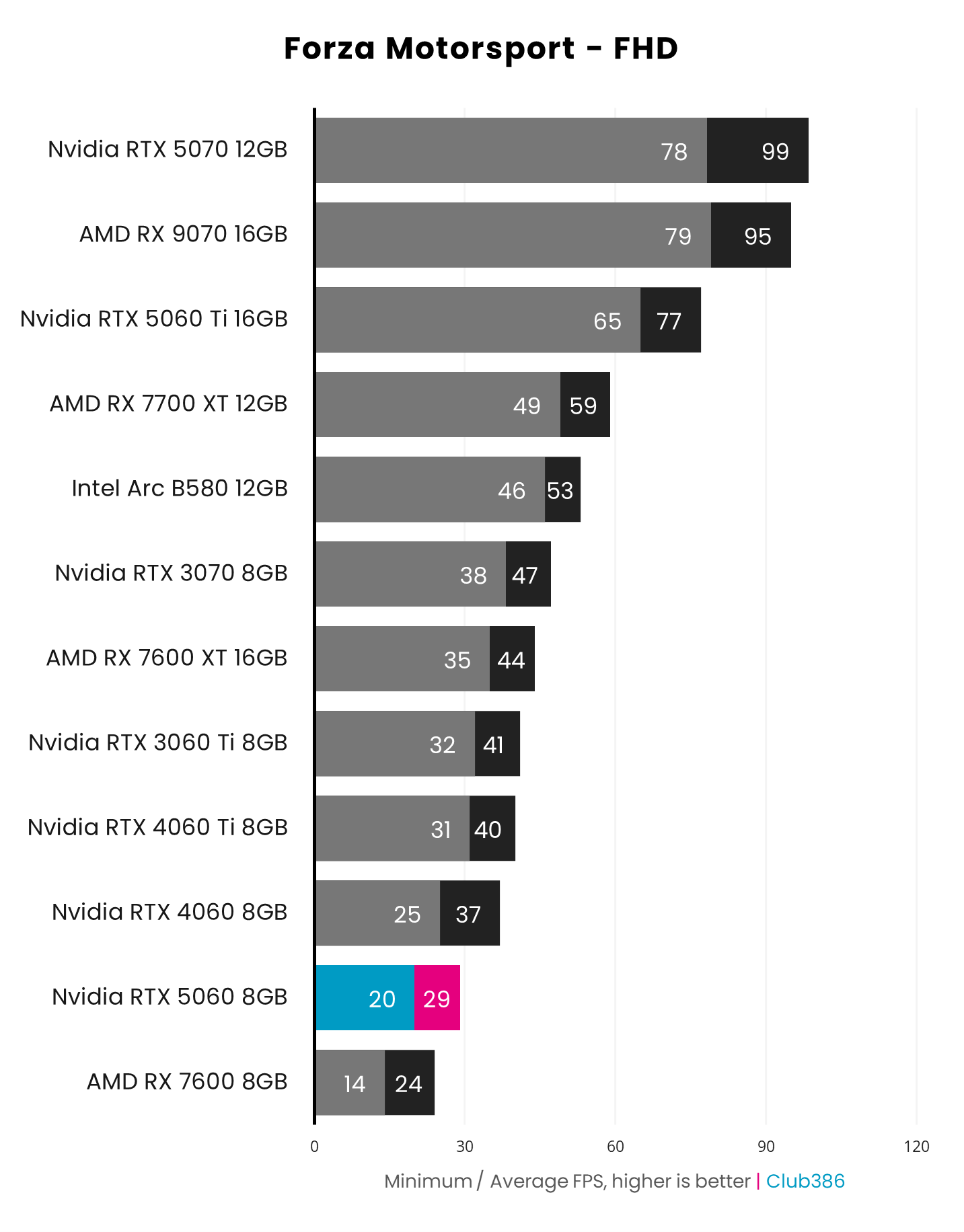
As a case in point, Indiana Jones and the Great Circle starts to struggle at any graphics preset above Low if you don’t have more than 8GB of VRAM. We’ve also seen performance in Forza Motorsport fall off a cliff on 8GB cards.
16GB budget GPU prices are now silly
Last year, buying the 16GB models of the GeForce RTX 5060 Ti and Radeon RX 9060 XT was a no brainer. They cost a little bit more money than the 8GB ones, but gave your GPU loads of breathing space to enable higher graphics settings, and brought you some future proofing headroom for tomorrow’s games too. That’s now very far from the case.
A quick check on Amazon shows that a Radeon RX 9060 XT 16GB now goes for at least $519 / £449, while RTX 5060 Ti 16GB cards, with their GDDR7 memory, are demanding truly ridiculous sums of £615.97 / $788. Even 8GB 5060 Ti cards now have silly prices of around $499 in the US.
In case it needs saying, you absolutely shouldn’t buy these GPUs at today’s prices. Yes, you get 16GB of VRAM, but the GPU power on offer isn’t anywhere near good enough to justify these extreme costs. In this current market, the only budget GPU that’s worth buying now is the Intel Arc B580 – a 12GB card that you can remarkably still pick up for around $309.99. Meanwhile, an RTX 5070 with 12GB of VRAM now has a bonkers price tag of £672 / $799 – that’s $250 above MSRP for a card that we didn’t think was even really worth its original cost.
AMD’s 16GB GPUs, the Radeon RX 9070 and its XT version, aren’t quite as expensive, now costing at least $649 and $749 respectively, but that’s still a lot of money, and they’re well above MSRP. Even last-gen GDDR6 memory is still demanding a hefty premium in 16GB quantities.
All herald the Radeon RX 9070 GRE
One GPU is notably bucking this trend, though. In the UK, you can still pick up a 12GB AMD Radeon RX 9070 GRE for its sub-£500 MSRP, and you can get one in the US for $549.99. That’s a massive $250 below the current cost of an RTX 5070, but performance between these two GPUs is actually very similar.
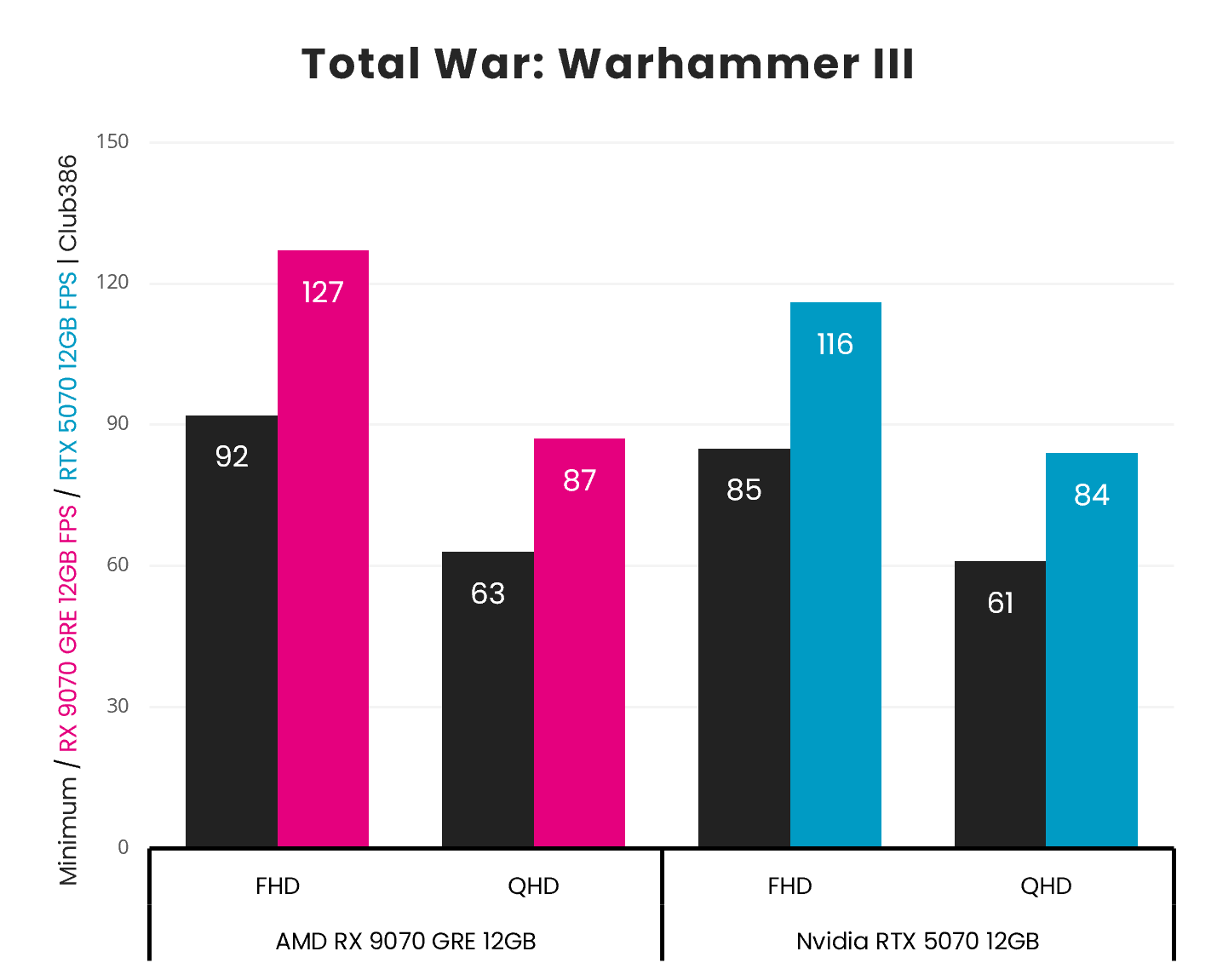
In fact, as you can see in our graph plotting Total War: Warhammer III performance above, taken from our 5070 vs 9070 GRE guide, in some cases this cheaper GPU is even faster than the RTX 5070. Most of the time, though, the 9070 GRE is a little bit behind the Nvidia GPU.
The difference is far from huge, however, and the 9070 GRE is usually only a few frames per second behind the RTX 5070, and that includes ray tracing. The graph below shows performance in Cyberpunk 2077, for example, run at the RT Ultra preset, and with FSR 4 and DLSS 4 running at their Quality settings (without any frame gen).
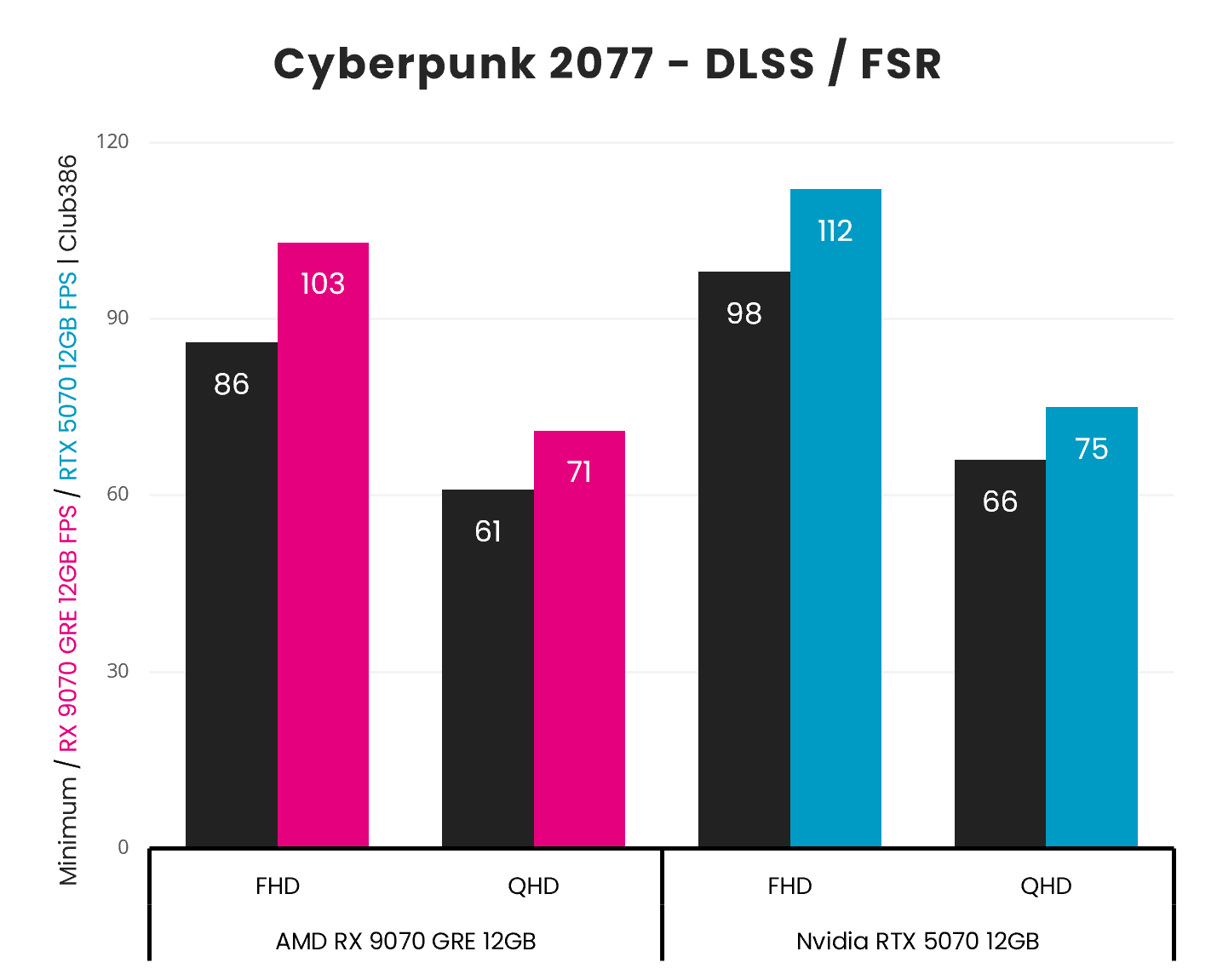
The game looks fantastic on the AMD GPU at these settings, and it’s playable at 2560×1440 – we’re talking about a 4-5fps deficit at this resolution. I’d happily take that tiny performance hit if it saved me $250.
What you don’t get with the Radeon RX 9070 GRE, of course, is access to Nvidia’s DLSS ecosystem. That means there’s no multi frame gen, or the divisive (but undoubtedly transformative) effects of DLSS 5. If these GPUs were the same price, that would be a big selling point for Nvidia, but it’s no longer relevant when an RTX 5070 now has such a silly cost associated with it.
The best GPU in non-deal times

It might only have 12GB of VRAM, but the 9070 GRE’s core GPU is also much more powerful than the 5060 Ti and 9060 XT. As such, it remains a significantly better buy than the 16GB versions of those cards, especially at today’s prices. Just to demonstrate this point, you can see in the Final Fantasy XIV: Dawntrail graph above that the 9070 GRE is 43.5% faster than a 16GB 9060 XT, and 28% quicker than a 16GB 5060 Ti.
Even in this heavily AI-assisted age, raw GPU rendering power is still the most fundamentally important aspect of a GPU, along with its VRAM, and at current prices, the Radeon RX 9070 GRE offers the best balance.
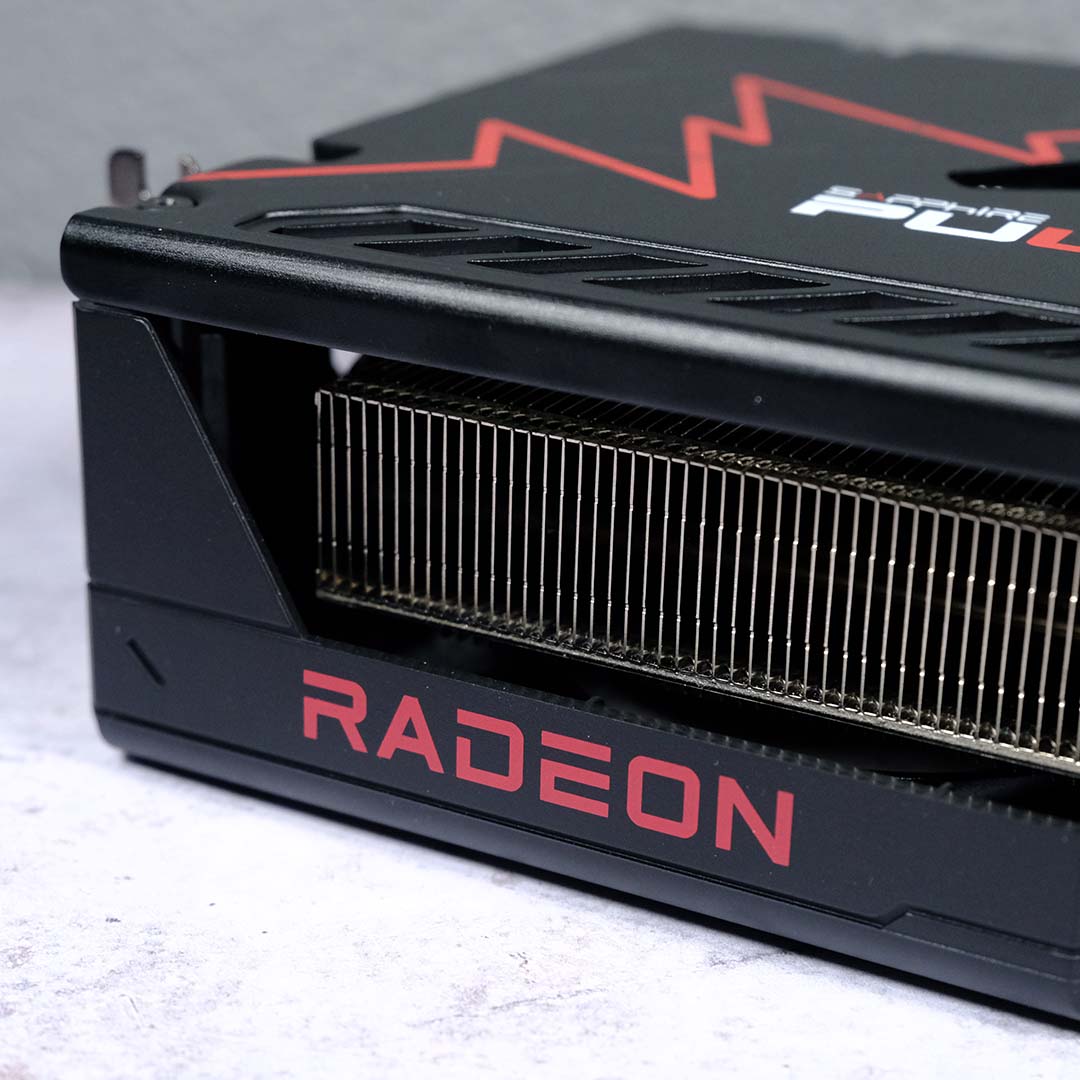
AMD Radeon RX 9070 GRE
Solid FHD and QHD performance across rasterised and ray-traced workloads, coming within 3-4% of RTX 5070 performance on average. Read our review.
This situation is undoubtedly a product of today’s broken PC component market, rather than a result of the 9070 GRE being an outstanding GPU. In an ideal world, this graphics card would have 16GB of memory and an even lower price, but we really don’t live in ideal times any more. If you want to upgrade your graphics card now, and you have around £500 / $550 to spend, 16GB cards are now out of the question, and the 12GB RTX 5070 is prohibitively expensive. There’s just one GPU that makes sense, and it’s the Radeon RX 9070 GRE.