
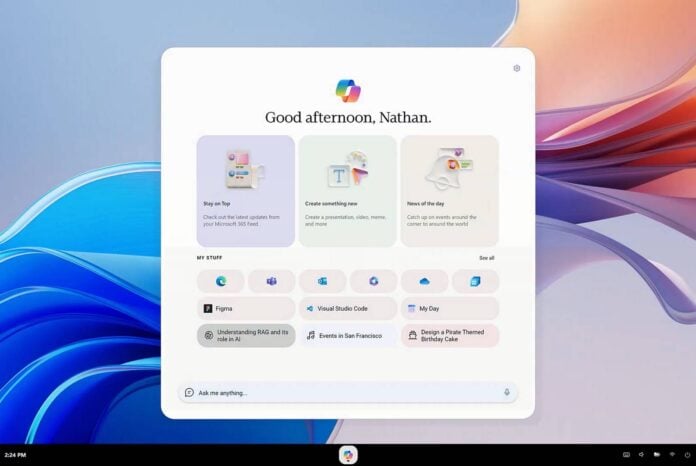
A leaked video has surfaced, revealing that Microsoft may have been experimenting with a dedicated AI operating system (OS). Called Aion, this OS was seemingly powered by Microsoft Edge, and a new lightweight Windows codebase called Win3, focusing solely on web-based apps.
According to Windows Central, Aion was a 2024 project built around the features of Copilot and agentic AI. The leaked presentation video refers to it as “an example of a web-based agent OS that natively builds Copilot into the core of the shell.”
Since Aion is unable to install and run native Win32 apps, it was apparently designed to rely exclusively on web-based apps, in a similar way to Microsoft 365 Office software and Windows 365 cloud PCs. In other words, users would do most of their tasks using web-based Word, Excel, PowerPoint, Outlook, and so on, turning back to cloud PC streaming to run any specialised software unavailable in the web version.
This seemingly made it light and fast to load, all while offering better battery life and security than Windows, since you can’t install potentially infected software.
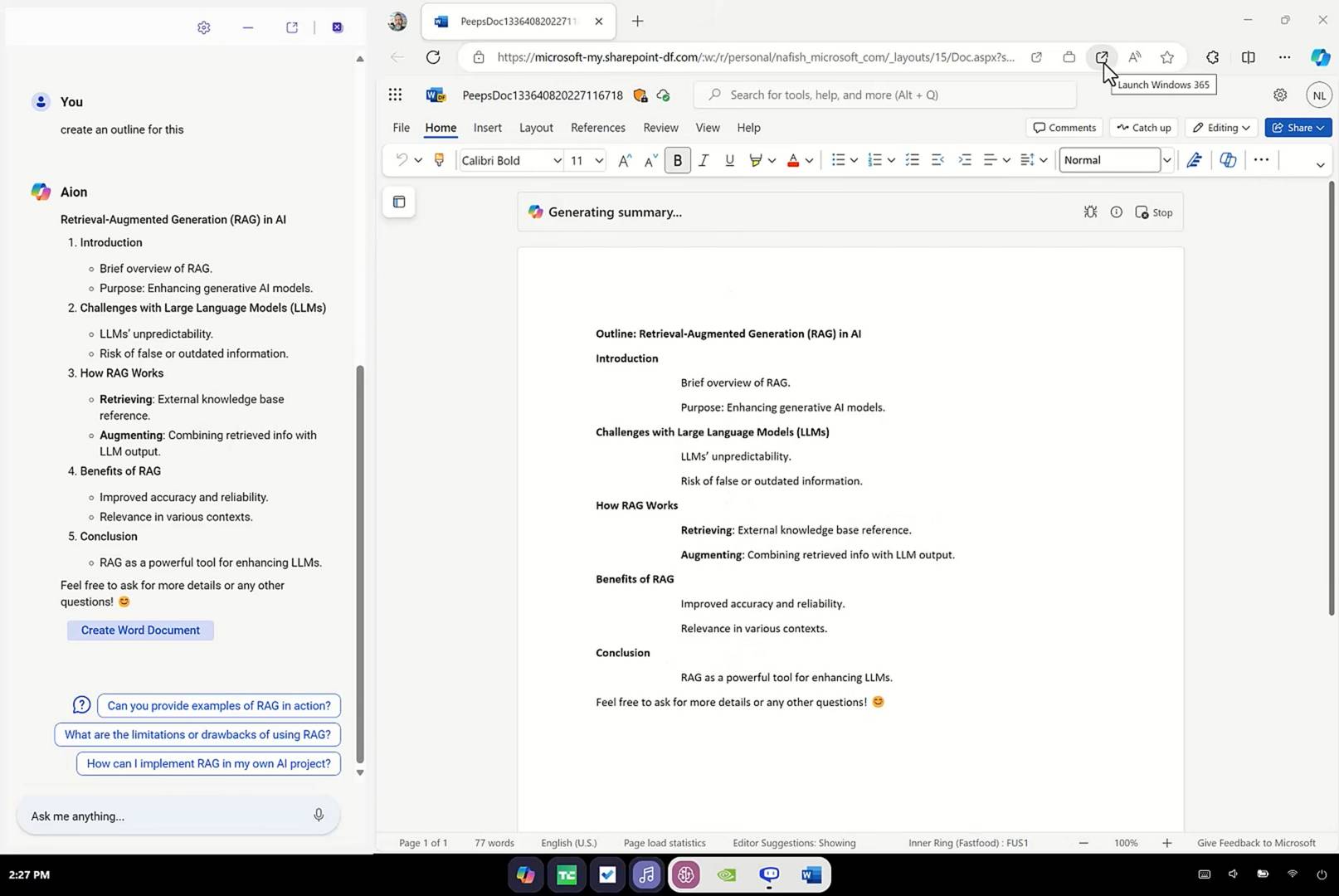
On the positive side, this means that Aion could run on practically any machine. On the other hand, though, your computer would be subject to the reliability of Microsoft’s Azure server. That said, the video also mentions a version of Aion able to run as a layer on top of Windows 11, which this time can run Win32 apps locally.
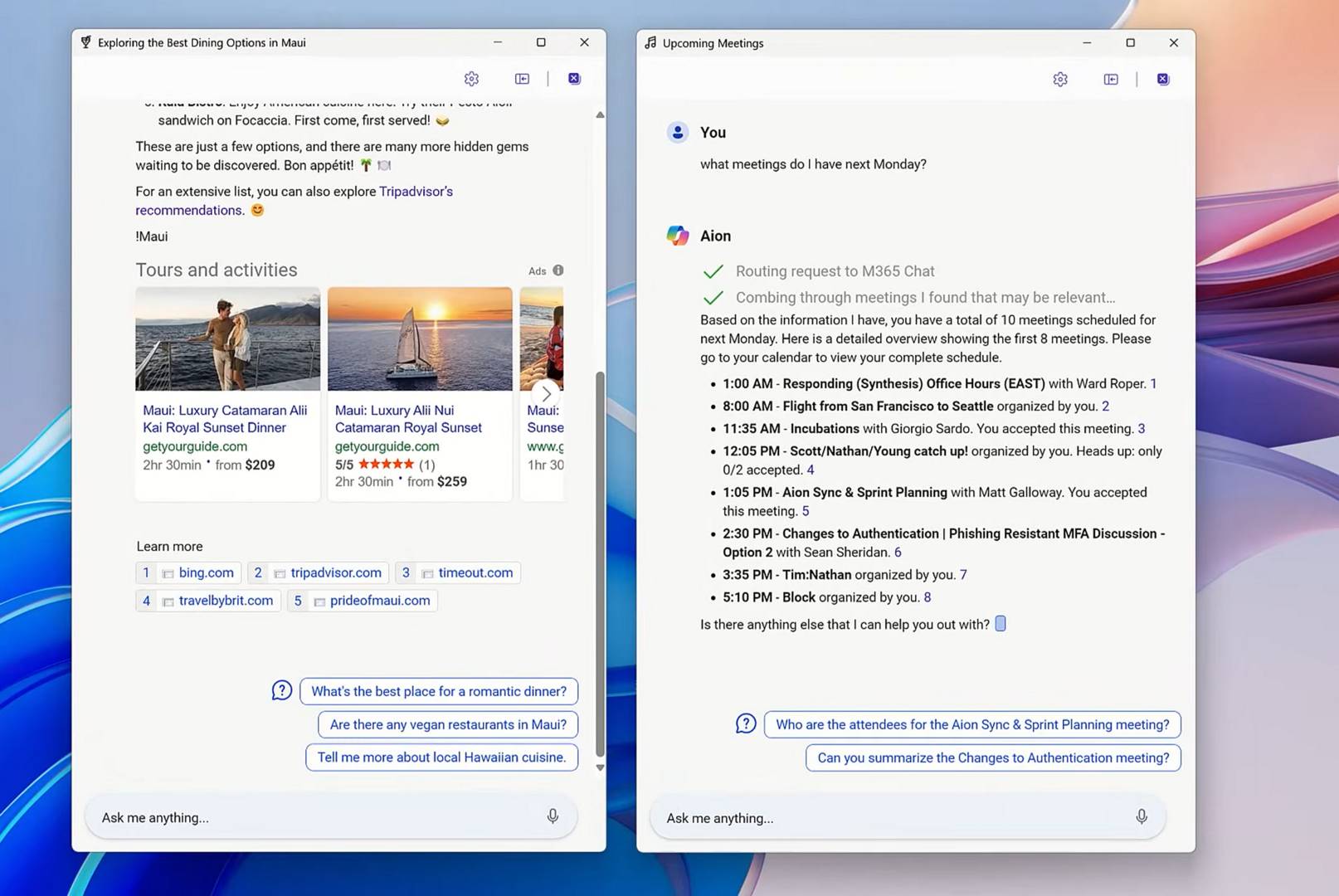
Apps aside, the name of the game with Aion is Copilot AI, which appears to be incorporated everywhere. The video shows that, when you launch the OS, you’re greeted with a curated box featuring your most-used web apps, events, and news. A Copilot-style input box is located right below it, allowing you to ask questions or enter commands. The OS will then open a new window next to the Copilot box, so you can monitor the second task you’ve initiated, helping you multitask easily.
While it’s unclear if Aion was ever intended to ship as a final product, the leaked material appears to show a working OS, at least when it comes to tasks such as web browsing, email, and schedule planning. The project dates to a time when Microsoft was heavily pushing its Copilot AI. Windows Central says it reached out to Microsoft for a comment, but the company declined to provide one.