
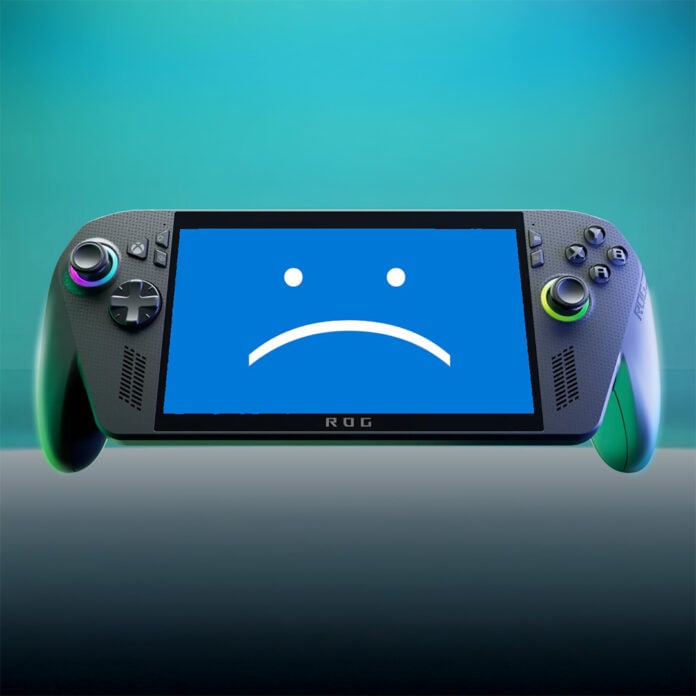
Recent changes to Windows 11 aren’t playing nice with first- and third-party applications, while also breaking integral features on ROG Xbox Ally devices, according to Reddit users. The problems stem from overly aggressive policing by Windows Security, namely the operating system’s Smart App Control system.
Owners of ROG Ally handhelds are taking to Reddit to share how recent patches have broken multiple functions on their devices. Smart App Control is making it impossible for those affected to update, re-/uninstall, or even open Asus Armoury Crate, breaking access to firmware patches, software controls, and more.
Similar issues are plaguing Windows 11 desktops, with Smart App Control bizarrely taking issue with the likes of the Windows Snipping Tool, Notepad, and other mainstay Microsoft applications. The problem in this case, according to a support thread, is that the Microsoft Store cannot verify the license for these applications.
I’ve had personal run-ins with Smart App Control in 2026. After installing the latest version of Davinci Resolve, Microsoft’s over-vigilant protector saved me from the dastardly functions of my video editing suite, more dumb knight than dark, completely bricking my software.
Like others, I’ve found the only way of resolving these problems in the short term is to disable Smart App Control entirely. Frustratingly, there’s no way to turn it back on – what should be an integral and useful security feature – without reinstalling Windows 11 entirely.
Microsoft is testing the ability to toggle Smart App Control without the need for a reinstall. However, this is only in Windows 11 preview builds, and there’s no guarantee it will make it to the stable release channel. More importantly, such a toggle doesn’t fix the problems with this feature, whereas something simple like a whitelist would really help.
We’re only one month into 2026, and Microsoft has already inflicted massive damage to Windows 11’s already-rocky reputation. In addition to the problems I’ve discussed, other January updates have caused black screens, as well as making it impossible to boot into the operating system for some users.
These developments follow on from years of botched patch deployments. Don’t forget Microsoft described Windows 11 24H2 as “the most reliable” version of the operating system ever, only to then admit a few months later that the cumulative update was effectively a complete mess.
Users should rightfully expect more from a company boasting a market cap of 3.195T, at the time of writing, especially when Microsoft has been crafting operating systems for over four-decades now. It’s no wonder that chatter around Linux and Mac is growing, particularly with impending launches like the Steam Machine.
As much as I’m also entertaining a switch, I hope Microsoft can mount a comeback for Windows 11 in 2026. The reach and influence of the operating system is so vast that these unreliability problems are impossible to ignore. Whether the company can actually turn this ship around, though, is only something time will reveal.
For more on Microsoft, follow Club386 on Google News. Don’t forget to add us to your list of Google Preferred Sources too, if you’re keen to see our coverage more frequently in your searches and feeds.