
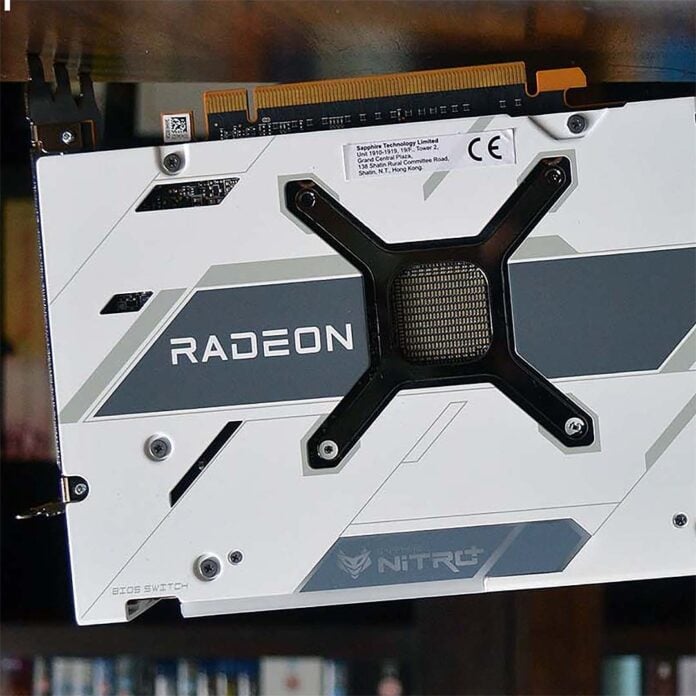
Radeon RX 6000 series owners received support for FSR 4.1 upscaling earlier this month, well ahead of AMD’s initial target of 2027. Thankfully, it turns out the feature is just as excellent on these graphics cards as on newer GPU architectures. While the upscaler can be notably heavier on these near-six-year-old pixel pushers with no dedicated AI cores, the enormous leap in visual quality relative to FSR 3.1 is worth every sacrificed frame.
Tim Schiesser from Hardware Unboxed tested FSR 4.1 on a Radeon RX 6950 XT, the fastest graphics card in the series, across several games. He also compared performance improvements relative to the Radeon RX 7900 XTX using the same INT8 upscaling model, as well as the Radeon RX 9070 XT running the native FP8 version.
In a bid to maintain base frame rate parity across the three graphics cards for easier comparisons, Schiesser ran games at the same settings across the 7900 XTX and 9070 XT, while turning some options down on the RX 6950 XT. However, he captured all data at the same 4K (3840×2160) resolution.
In Mafia: The Old Country and Horizon Zero Dawn Remastered, FSR 4.1 provided the RX 6950 XT with performance boosts that were within 1-5% of the RX 7900 XTX, relative to their respective native performance. However, Cyberpunk 2077 widened this gap to 10-31% in favour of the newer graphics card, with that percentage increasing as the upscaler dropped down from Quality, through to Balanced, and finally to Performance.
Comparing results to FSR 3.1, frame rates on the RX 6950XT, the newer upscaler ran 13-34% slower across the range of tests. While this difference is notable, we saw similar gaps while testing FSR 4.1 on Radeon RX 7000 earlier this year. However, analysing the quantity of frames doesn’t take their quality into account, and it’s here that the true value of machine learning upscaling becomes apparent.
The image quality of FSR 4.1 on the 6950 XT was practically identical to that of the RX 7900 XTX and RX 9070 XT, and markedly better than FSR 3.1. Schiesser’s analysis here matches up with our prior conclusions, in that the newer upscaler delivers far cleaner and more stable image quality, with greater sharpness and far fewer artefacts, plus notably less shimmering.
Suffice it to say, there’s rarely if any reason to continue using FSR 3.1 on Radeon RX 6000 series cards and we’re glad this release is every bit as good as hoped it would be. AMD has also released a hyper-optimised version of FSR 4.1 for RDNA 3.5 handhelds, like the ROG Xbox Ally X. We’d expect similar results on those GPUs as we see here, but this release is due its own analysis.
Sadly, the Steam Deck doesn’t benefit from FSR 4.1, despite sharing the same RDNA 2 bones as the Radeon RX 6000 series. I certainly hope AMD can find a way to squeeze the model down for that system’s SoC, but there’s no word on whether that wish is likely to come true.
For more graphics card chatter, check out our picks of the best GPUs on the market today.