
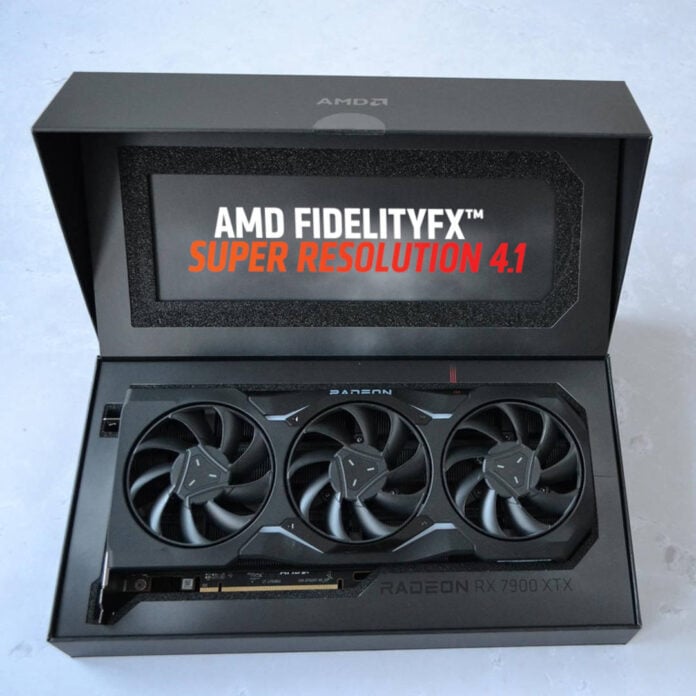
AMD has given us an update on FSR 4.1 coming to older Radeon GPUs, saying that the upscaler will have the same level of image quality on RDNA 3 GPUs as current models such as the Radeon RX 9070 XT. The company also clarified why FSR 4.1 support on older RDNA 3 (Radeon 7000), and especially RDNA 2 (Radeon 6000) GPUs, has required so much time to implement.
It seems that bringing FSR 4.1 to older architectures is hard, at least if you want the same quality as the latest RDNA 4 (Radeon 9000) GPUs. According to AMD’s senior vice president of GPU Technologies, Andrej Zdravkovic, and senior director of software, Terry Makedon, who spoke to TechPowerUp during Computex 2026, FSR 4.1 will look just as good on RDNA 3 GPUs as on RDNA 4 GPUs, despite using a slightly different model.
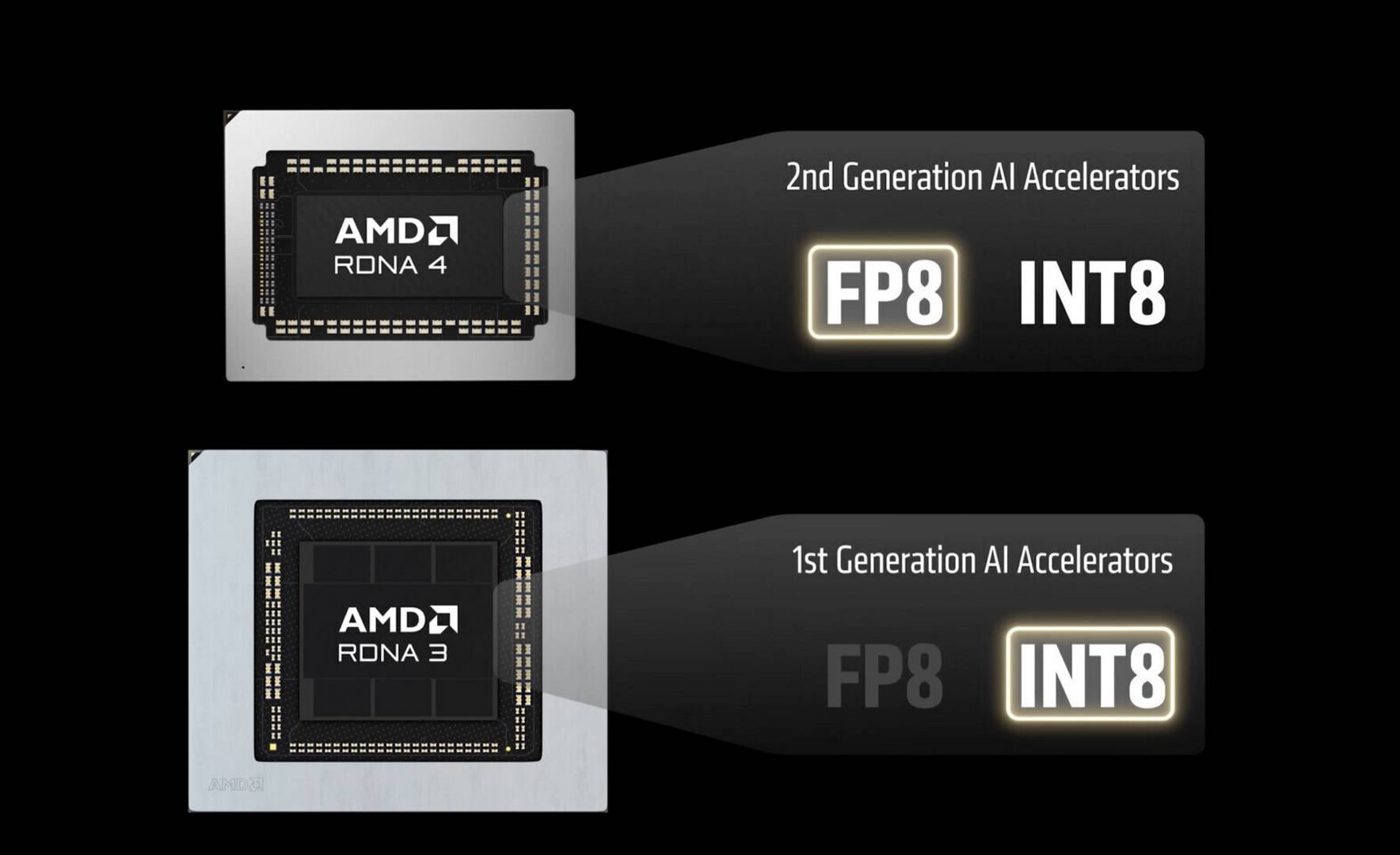
As a reminder, unlike RDNA 4, the AI hardware in RDNA 3 GPUs do not provide native FP8 (8-bit floating-point) hardware acceleration, which is needed to run the AI algorithms necessary for FSR 4.1 upscaling. As a result, AMD had to modify FSR 4.1 to work with the INT8 (8-bit integer) format available on RDNA 3, hence the delayed support.
Reportedly, AMD had to completely modify the FSR 4.1 model for this new data type to maintain identical image quality to the original FP8 implementation. This is great news for the millions of owners of RDNA 3 GPUs, such as the Radeon RX 7900 XTX, as well as iGPUs in Ryzen 7040/8040 CPUs, who have been left behind when FSR 4.1 first launched exclusively on RDNA 4 GPUs, such as the new Radeon RX 9070 GRE.
The situation on RDNA 2 (Radeon RX 6000 and Ryzen 6000/7035 series) is more complicated. For starters, this architecture lacks dedicated AI acceleration, meaning that even the INT8 operations are handled by the general-purpose shader ALUs. In other words, FSR 4.1 would compete with graphics rendering for the same compute resources.
So, to avoid diverting a lot of valuable resources towards upscaling, AMD has worked extensively to reduce the number of shader cycles used by FSR 4.1. The company said that FSR 4.1 on RDNA 2 required a great deal of optimisation to make it work efficiently. This explains why AMD doesn’t plan to ship FSR 4.1 on RDNA 2 GPUs until 2027, unlike RDNA 3 GPUs, which are set to receive it in July 2026.
AMD also explained the algorithm refinement process, which starts with general training on Instinct MI accelerators, before moving to workstation-grade Radeon Pro GPUs for further refinements. The algorithm goes through a final testing phase using hundreds of thousands of PC configurations powered by regular Radeon GPUs.
Now, while AMD promises image quality parity between RDNA 3 and RDNA 4 GPUs, it didn’t speak much about the performance impact on RDNA 3. The company previously indicated that it won’t compromise on either performance or quality, but I will believe it when I see it. We shall find out very soon, as FSR 4.1 is set to launch on RDNA 3 GPUs next month.