
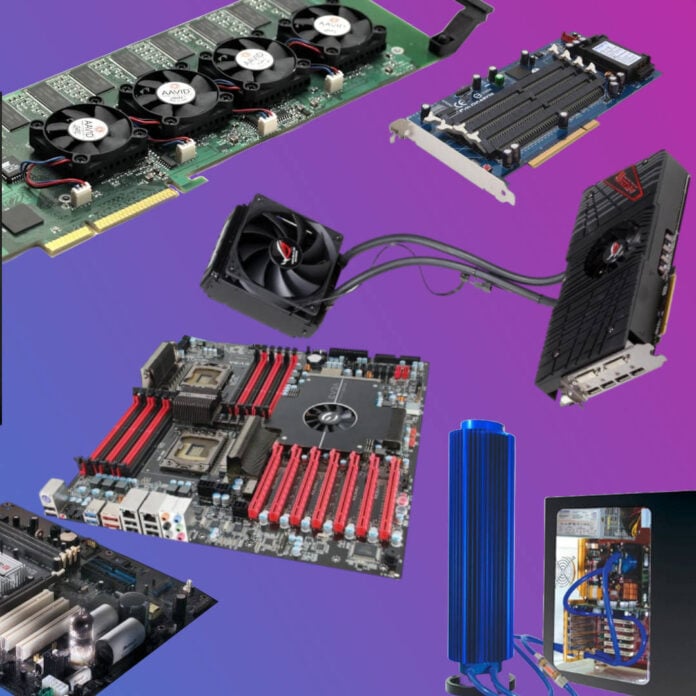
Roll up, roll up, witness the outlandish curiosities and bizarre trinkets from the PC’s hardware history. There is no shortage of strange or outlandish concepts here, with some of them looking like they came straight from the Wacky Races. From over-the-top motherboards to borderline gimmicky PC add-ons, there’s been no shortage of extraordinary ideas.
In this piece, we’ll fire up the flux capacitor, and charge our Delorean back in time to remember some of the most unusual and absurd PC components ever released. If you’re lucky, you can sometimes spot some of these specimens in secondhand markets. That said, you’d better have deep pockets if you want to grab some of them, as some of them are highly sought by hardware enthusiasts.
Before we start, note that I’m going to mainly focus on PC hardware here, so there won’t be any console-related accessories or peripherals. Don’t let this stop you from sharing your favourite curios from console land with us on social media, though – we’d love to see them. Anyway, let’s bring on the component carnival.
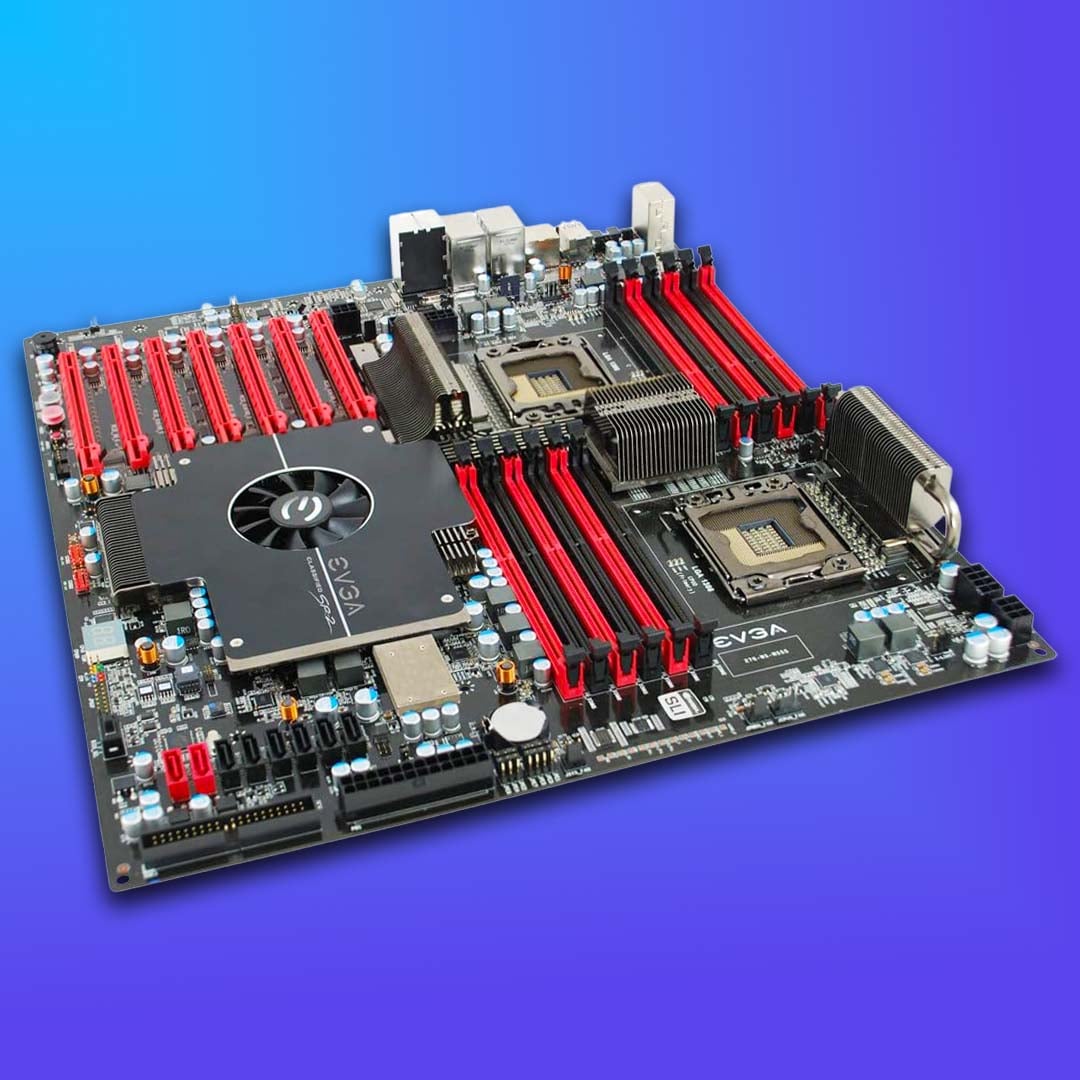
EVGA Classified SR-2
EVGA’s Classified SR-2 was one of the most outrageous and over-engineered motherboards ever released. Launched in 2010, it targeted enthusiasts wanting to go even further than flagship boards from the time. It blurred the line between enthusiast and workstation hardware, offering the opportunity to install two Intel Xeon processors, while keeping the features you would expect from a gaming desktop platform, such as overclocking.
The EVGA Classified SR-2 was for multi-threaded power users who thought one CPU wasn’t enough, or who just wanted bragging rights. Thanks to its Xeon CPU support, you could pack it with two 6-core Xeon X5690 chips for a total of 12 cores and 24 threads, at a time when most consumer chips topped out at four cores.
Compared to traditional enthusiast boards, the SR-2 was in a league of its own, boasting support for 12 DDR3 slots, with triple-channel memory support, enabling you to install up to 48GB of RAM. Meanwhile, seven full-size PCIe slots were compatible with four-way Nvidia SLI and AMD CrossFireX multi-GPU setups. For comparison, most gaming boards were limited to dual-channel memory plus a couple of PCIe x16 slots, unless you were lucky enough to own an Intel Gulftown rig.
Unsurprisingly, accommodating all this hardware meant the SR-2 was quite oversized. It ended up fitting the 345x381mm HPTX form factor, making even E-ATX boards look small by comparison.
As you may have guessed, the SR-2 wasn’t a practical purchase for most people. It required a lot of equally expensive components to make it worthwhile. On top of its $599 MSRP, you needed to stomach another $3,300 for two Xeon X5690 CPUs, several hundred dollars if you wanted to fill it with DDR3 RAM, not to mention your GPU (or indeed GPUs) of choice. Despite that, many enthusiasts rushed our to grab it because, put simply, there wasn’t anything else like it.
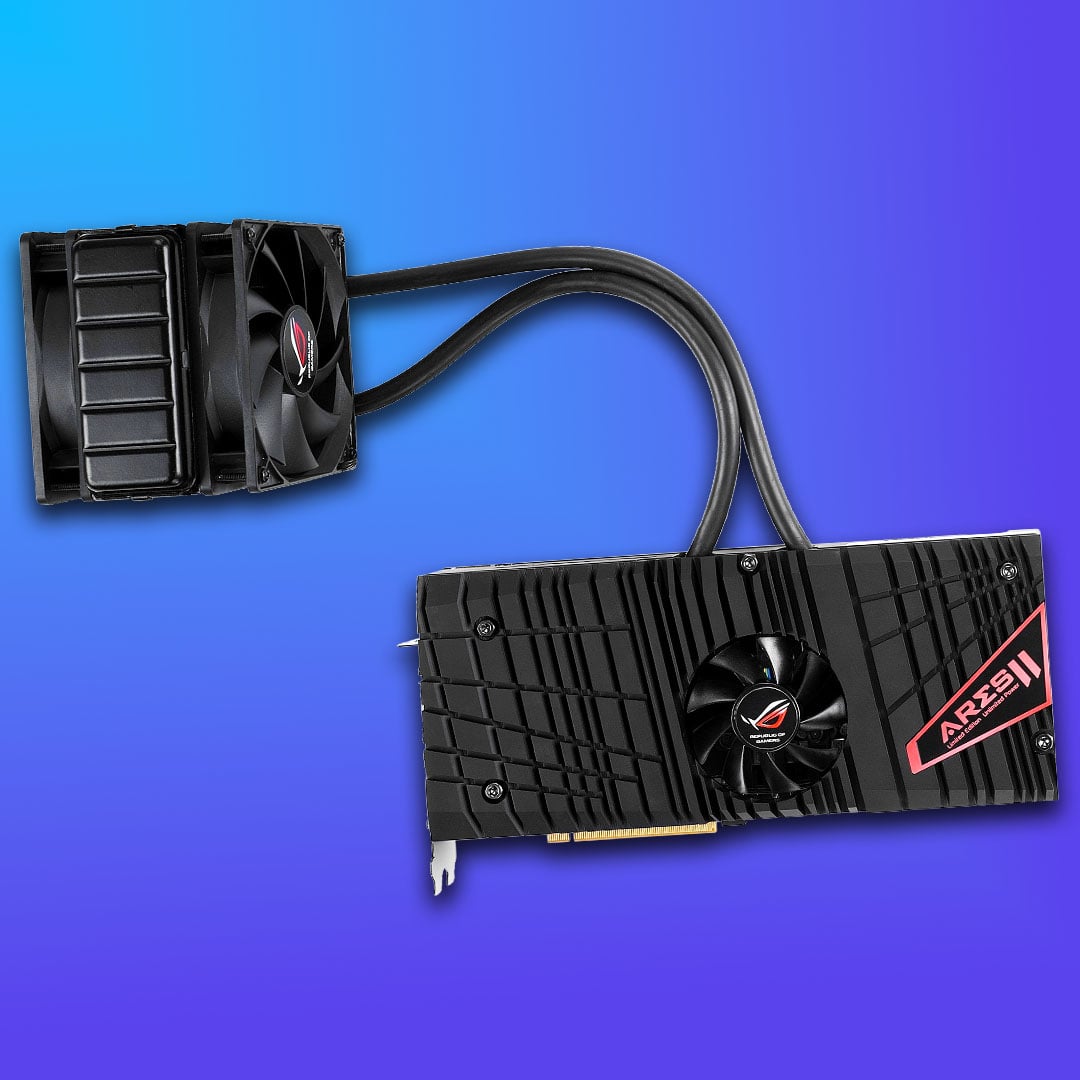
Asus Ares II
Asus’ Ares II was an extravagant piece of graphics hardware, this time combining two fully enabled AMD Radeon HD 7970 GPUs onto a single PCB. Unlike traditional CrossFireX setups, which linked two separate graphics cards, the Ares II squeezed both GPUs and their memory onto a single, dual-slot card, effectively delivering the same performance while taking up half the space.
It wasn’t the first dual-GPU card by a long way, but it added so many bells and whistles that it made it to our top six – it even came supplied in a suitcase. To tame this concentrated heat, Asus went with a factory-installed, hybrid cooling system that combines a closed-loop liquid cooler for the GPUs, and also featured a fan to keep the power delivery components and memory cool.
Compared to its contemporaries, the Ares II stood in a class of its own, gobbling nearly 500W of power via triple 8-pin cables. It also packed 6GB of GDDR5 memory split between the two GPUs, which was quite generous at the time, though not unique to this card. Add in factory overclocking, premium circuit components, and six display outputs, and you get a one-of-a-kind card. Unfortunately, its performance wasn’t twice as fast as a regular HD 7970, due to CrossFireX scaling, but that didn’t stop it from being one of the fastest cards available, especially when overclocked.
The Ares II wasn’t intended for the average PC user; it came at an enormous cost of around $1,500, consumed a lot of power, and relied heavily on multi-GPU scaling, which was far from perfect. Yes, nowadays, fancy single-GPU cards cost above $3,000 if you’re lucky to grab them at MSRP, but at the time, you could get high-end cards for $500 to $700. Plus, even if price wasn’t an issue, you still had to be lucky enough to score one of the 1,000 available units, since the Ares II was a limited-edition card.
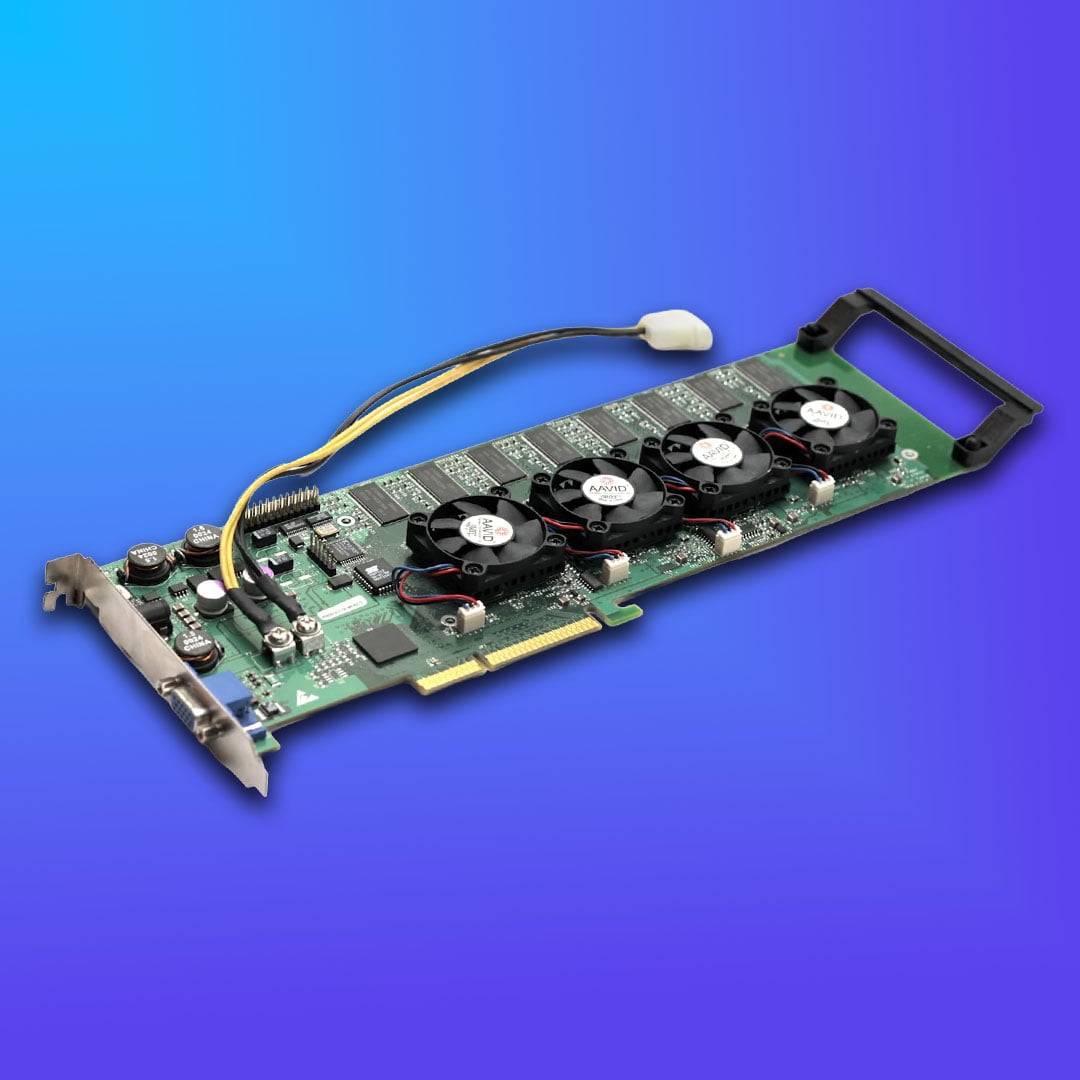
3dfx Voodoo 5 6000
If two graphics chips on one PCB weren’t enough for you, how about four? Enter the Voodoo 5 6000, a legendary graphics card that never saw the light of day outside of unfinished prototypes. The Voodoo 5 6000 packed four VSA-100 chips on a single PCB, combining their power using scan-line interleave (SLI) technology, with each chip drawing alternate lines on your screen to make up the full scene.
Each chip was clocked at 166MHz and paired with 32MB of 166MHz SDRAM, which resulted in the first 128MB graphics card. This design was unlike anything available to consumers at the time, making it one of the most ambitious graphics cards ever conceived. Preview images of the time even showed it coming with an external power supply that plugged into the back.
Unfortunately, this made its development highly complex at a time when 3dfx struggled with production delays and financial troubles. On the opposite side, Nvidia had already released the GeForce2 series and was preparing to launch the more powerful GeForce 3, leaving no time for 3dfx to reap the Voodoo 5 6000’s rewards.
Had it been launched in time, the Voodoo 5 6000 would have ranked among the fastest gaming cards of its generation in terms of brute force power, while also offering full-scene anti-aliasing. However, with no support for hardware transform and lighting, its feature set lagged behind the GeForce 256, let alone the GeForce2 – the chips weren’t technically even GPUs. What’s more, not many gamers were likely to find its $600 price appealing at the time.
We wouldn’t see four-chip gaming again until Nvidia released its GeForce 7900 GX2 quad-SLI system, which we listed as one of the worst GPUs ever. Ambitious and massively over the top, we’d love to have a play with a Voodoo5 6000, but this kind of impractical over-engineering ultimately contributed to the demise of 3dfx.
Gigabyte i-RAM
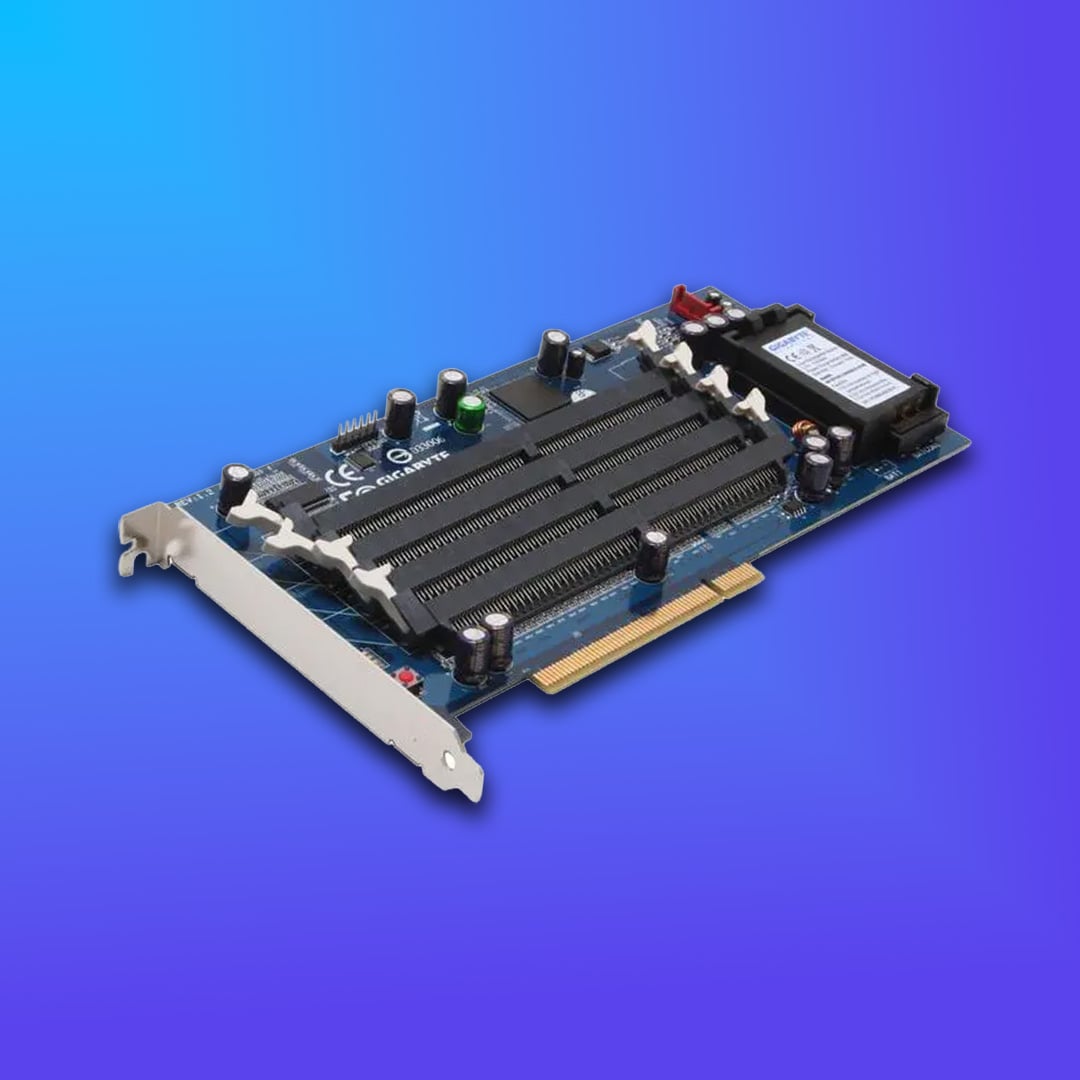
Back in the age of mechanical hard drives, the Gigabyte i-RAM was a forward-thinking PCI add-on card that functioned as a solid-state drive (SSD), well before flash-based drives were a thing. Instead of storing data on slow HDDs, the i-RAM used standard DDR memory modules, which were becoming readily available as users transitioned to their new DDR2 platforms. With no moving parts, and loads of bandwidth from this RAM, this card far exceeded the speeds of mechanical drives at the time.
In practice, the i-RAM delivered around 130MB/s of transfer speed, which was better than the 50 to 70MB/s you would get from an HDD. However, on the other hand, this was far slower than the 1.6GB/s per channel you could get out of a DDR-200 stick, which would have been unbelievable at the time. Most importantly, the i-RAM offered dramatically lower access times, which made systems feel responsive, with 0.1ms or lower latency.
While the i-RAM offered great performance for the time, it also suffered from DRAM’s downside, specifically its volatility. So, to avoid having to install Windows or games every time you cut power to the system, Gigabyte equipped the card with a battery pack that was supposed to keep data for up to 16 hours. Total capacity was another major drawback, giving you just 4GB of space, even when using the largest memory kits at the time. This was barely enough for Windows XP plus a couple of frequently-used apps.
Although it was ultimately a niche product, the i-RAM demonstrated the potential of SSDs years before they became mainstream, giving us a taster of the performance revolution later brought by PCIe NVMe drives.
Zalman Reserator 1
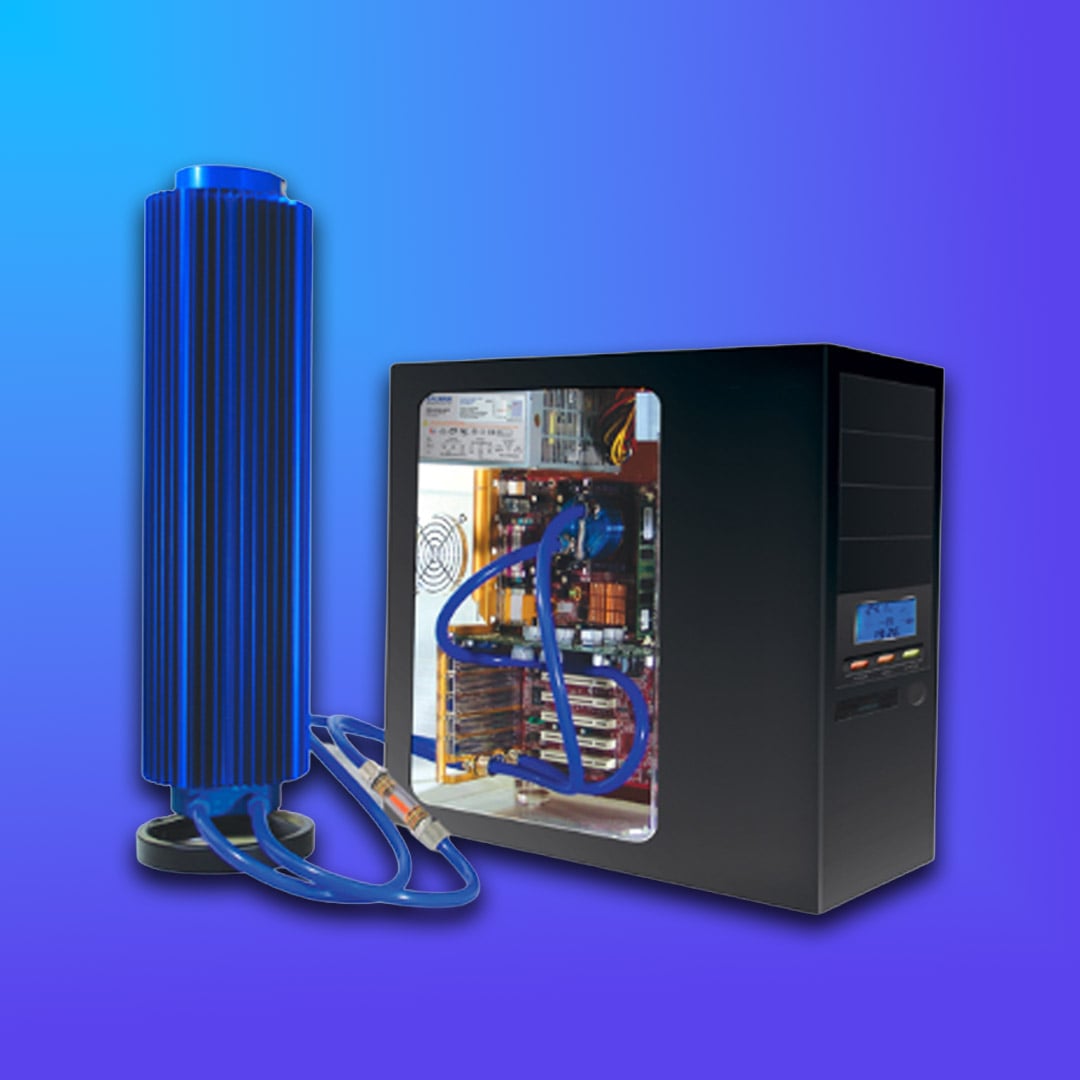
The Zalman Reserator 1 remains one of the most unconventional cooling systems to date – there’s just nothing else like this passively-cooled water tower. It ditched the traditional approach of mounting radiators and fans inside the case in favour of an external system, linked to your CPU via flexible tubes. This gave Zalman more design freedom, which it used to build a massive 150x150x592mm cooling cylinder that weighs 6.5kg, making it taller and perhaps heavier than the PC it cools.
This tower, which acts as both the radiator and reservoir, sits beside your PC, and is linked via tubes that thread through to your CPU via expansion slot holes. The pump lives inside the hollow core of the cylinder, drowned in up to 2.5L of coolant. Thanks to its massive size and heat exchange area, the Reserator 1 was capable of keeping a 3.2GHz Core 2 Duo E6400 cool, all without a single fan. Those wanting more performance could install a fan on top to help with air circulation. Zalman also offered an optional GPU waterblock for those interested.
Compared to other coolers available at the time, the Reserator 1 focused on silent operation, which was feasible thanks to its large size. That said, while performance was fine on mainstream CPUs, enthusiasts and overclockers quickly uncovered the limits of such a passive design, especially if you add GPU heat to the mix.
Despite these limitations, the Reserator 1 became an icon of silent computing, showing that effective cooling doesn’t necessarily require fans. Some of us even put our Reserators outside on cold days, threading tubes through our windows. To this date, it remains one of the boldest and most distinctive cooling systems ever released.
AOpen AX4B-533 Tube
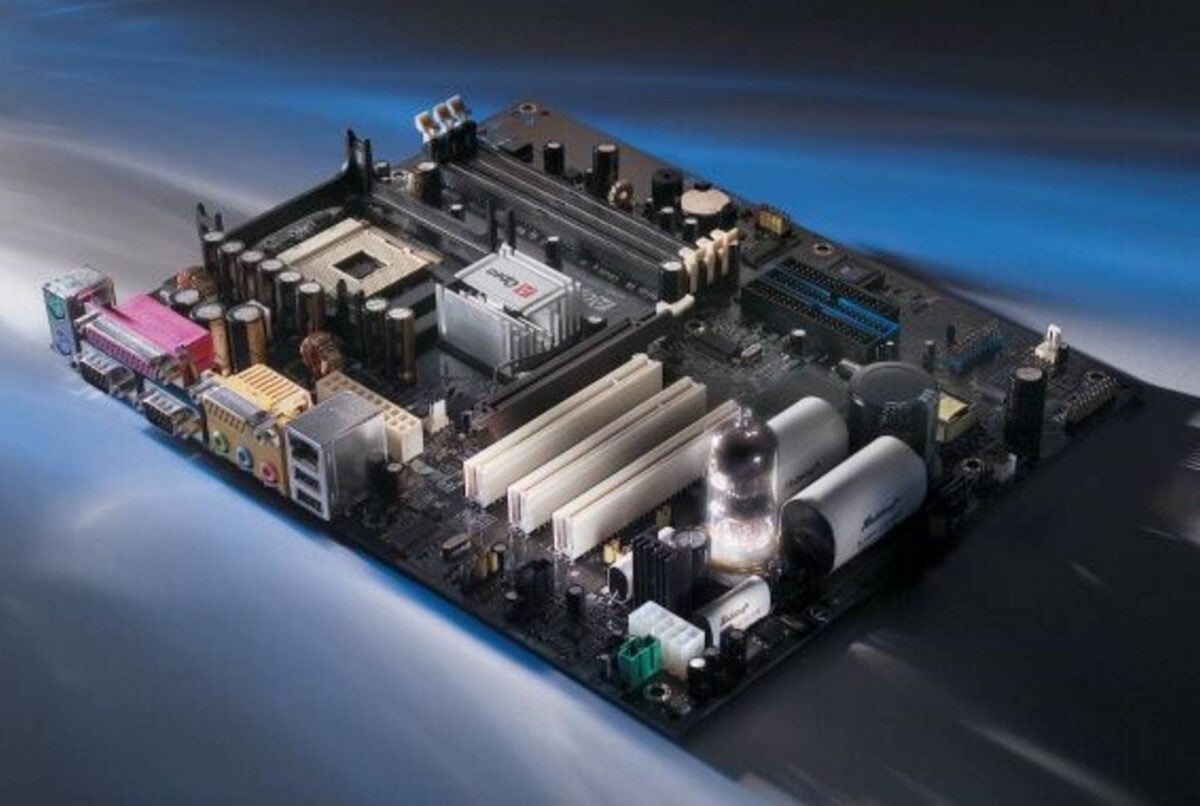
The AOpen AX4B-533 Tube represents one of the strangest attempts to merge Hi-Fi audio with PCs. It takes a regular motherboard design and attempts to enhance it with a sound technology that predated computers by decades. What technology you may ask? The answer is vacuum tubes. Yes, this motherboard has a vacuum tube, and no, it’s not from the 1950s; it’s a 2002 board supporting Intel Pentium 4 CPUs.
The idea behind it is to reproduce the warm and rich sounds associated with high-end tube amplifiers, without needing complicated analogue equipment. To do so, it incorporates a Sovtek 6922 dual triode tube plus ELNA capacitors, Vishay resistors, and Cardas wiring, instead of relying solely on the Realtek ALC650 AC97 codec. Strangely enough, the latter is far from what one would call an audiophile chip. AOpen’s marketing materials claimed this setup would offer warm sound, sweet tonality, soft treble, silky vocals, and liquid midrange – whatever that means.
To put it into perspective, at the time, onboard audio was generally inferior to dedicated sound cards from companies like Creative. So, instead of fighting in the performance and overclocking department, AOpen chose to focus on audio quality, dedicating valuable PCB space to a full tube preamplifier section, which resulted in an unmistakable appearance.
Despite its ambitious design, the AX4B-533 Tube remained a niche product, not helped by users questioning the effectiveness of this tube amplifier assembly. After all, enthusiasts seeking the best sound quality could simply buy an external DAC/amplifier, which has the additional advantage of not locking you into a specific motherboard. Successful or not, the AX4B-533 Tube remains one of the very few motherboards that prioritised audio over raw computing performance.