
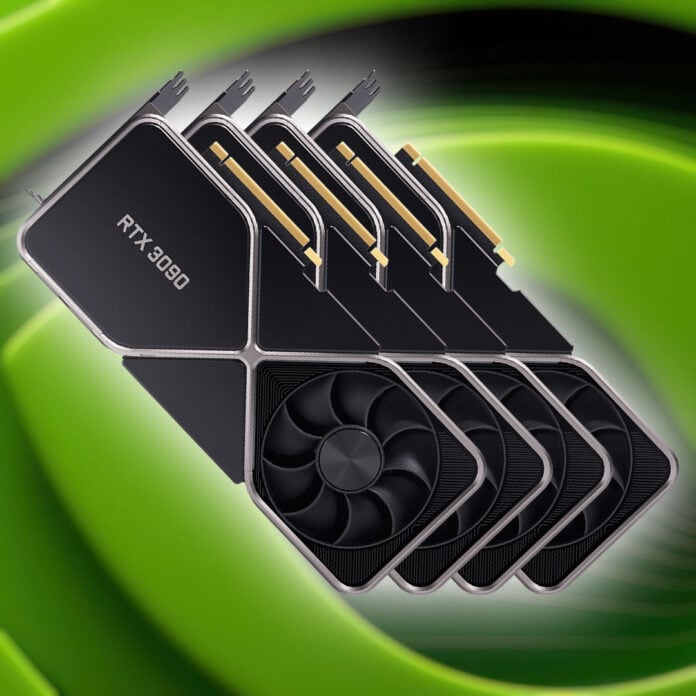
Despite Nvidia’s best efforts to keep DLSS frame generation exclusive to the GeForce RTX 40 series and beyond, modders now have the feature up and running on older RTX 30-series graphics cards. Better still, this mod brings both single and multi frame generation for the older Ampere stock.
Dubbed DLSSG SM86, the mod unlocks DLSS frame generation for GeForce RTX 30 series cards using a DLL and INI file. The installation process is simple, merely requiring you to paste both files into the directory containing a game’s executable. It’s possible to tweak some settings, if you like, such as the maximum additional generated frames, but the tool is ready to go out of the box.
You can run DLSS Framegen on RTX 3000 cards now!
by
u/fogoticus in
nvidia
As the GitHub page explains, DLSSG SM86 serves as a proxy for Nvidia’s DLSSG 310.1 runtime. The tool keeps the original DLSS frame generation models and pipeline intact, but redirects any requests through an SM86-compatible layer that GeForce RTX 30 series cards can then execute.
Such a workaround was previously impossible upon the launch of DLSS single frame generation, as the process relied on optical flow accelerator hardware exclusive to the GeForce RTX 40 series. However, since the advent of DLSS 4, Nvidia has switched to an AI-powered optical flow model, leaning on a GPU’s Tensor cores instead.
YouTuber fogoticus shared footage of the feature running on a GeForce RTX 3080 in Cyberpunk 2077, toggling between DLSS single and multi-frame generation at will. However, while frame rates expectedly increased in line with the number of interpolated frames in play, there’s no indication of the impact on latency.
While this is a potentially exciting development for GeForce RTX 30 series owners, I’d advise tempering expectations until we know how this mod affects latency. Hopefully performance in this regard either falls in line or isn’t too far behind newer graphics card architectures. If so, the pressure for Nvidia to release an official means of enabling DLSS frame generation on Ampere would be palpable.
For more GPU chatter, check out our picks of the best graphics cards on the market.